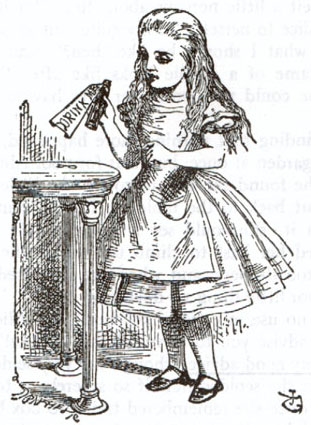
Sir John Tenniel's drawing of Alice
It’s one of the paradoxes of both history and human nature that the man who wrote some of the most enduring literature for children has been accused of pedophilia. I refer to Lewis Carroll — that is, the Rev. Mr. Charles Dodgson — author of “Alice’s Adventures in Wonderland” and “Through the Looking Glass and What Alice Found There.” The notion that Carroll had improper relations with under-aged girls evolved from his real relationships with females in general and young girls in particular — neither of which was entirely consistent with the norms of Victorian England — and his career as an amateur photographer, which included photographing naked young girls.
This characterization of Carroll has been debunked in the past, but it persists in the popular imagination, probably because the popular imagination would find a pedophile more interesting than the person Carroll seems to have been in reality. The issue is examined again in a new book by journalist Jenny Woolf, “The Mystery of Lewis Carroll.”
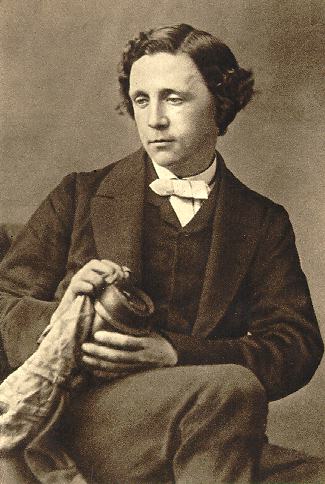
Lewis Carroll and his camera, 1863, in a portrait by Swedish photographer Oscar Rejlander
Based on her research of primary and secondary sources — and a certain amount of logic and common sense — Woolf comes to the conclusion not only that Carroll was not a pedophile, but that the most prominent features of his life and his mind militate against such a thing — that, in fact, he had a horror of abuse of women and children that was consistent with his horror of sin in general.
Woolf emphasizes a point about this issue that is useful to remember when we are reflecting on any historical figure. She points out that those who have charged Carroll with every crime from adultery to murder — one author even wrote that Carroll and a confrere were jointly Jack the Ripper — have often tried to interpret his behavior and his work without taking full account of the Victorian context in which he lived. The most telling evidence she presents, in fact, is that neither the children whom Carroll photographed nor their parents thought of the sittings as anything but proper, and that some of those children grew to adulthood and even old age with only the highest regard and affection for Carroll.
This is not to say that Carroll’s life was without its complications, including sexual ones. One important aspect of his life was odd even for that time, and it has to have figured prominently in some of the behavior that contributed to rumors about him then and since. Carroll took a position as a mathematics instructor at Christ Church, one of the colleges at Oxford. The school continued a medieval discipline in which a man accepting that position must receive holy orders as an Anglican deacon and remain celibate until he was ordained a priest, at which point he would take a parish, marry and begin a family.
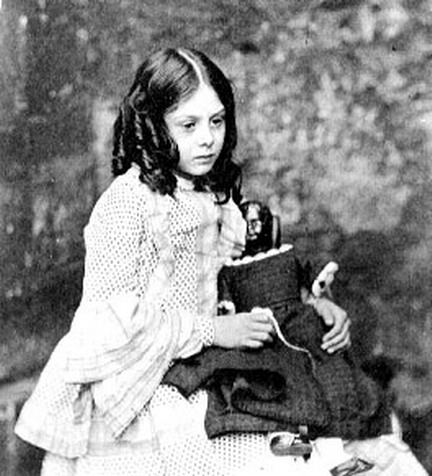
Lorina Liddell, in a portrait by Lewis Carroll. Lorina was an older sister of Alice Liddell, the namesake for the title character in Carroll's most famous works.
Although it was expected of him by everyone beginning with his father, a priest himself, Carroll postponed and eventually opted out of priestly ordination, which meant that — unless he gave up his position, which he could not afford to do — he opted out of married life and, therefore, sexual relations. At the same time, while he outwardly kept up the grim image of a Victorian college don, he maintained a lively social network, more often than not conducted in the company of women. He loved women, and he didn’t disguise that, and they were charmed by him. On one hand, these relationships — including private tet-a-tets in Carroll’s rooms, were not usual in Victorian England. On the other hand, Woolf explains, there is no evidence at all that any of them crossed the lines that everyone in that time and place knew to be unmovable.
Still, Woolf shows convincingly that Carroll at a certain point in his life began to grieve over some unstated offense that he perceived he had committed, and this guilt ran head-on into the strict sense of morality that he measured himself by throughout his life. It was this crisis, Woolf thinks, that at least in part inspired Carroll’s cultivation of friendships with young children, and especially young girls, who — in Victorian society — were regarded as the antithesis of sexual. In these relationships, Woolf argues, Carroll could have beauty and affection without the complicating ingredient of sexual attraction. And, of course, he could indulge in his lifelong fascination with word games and fanciful stories and children’s playthings.

Alice Liddell, for a time one of Carroll's child friends and the namesake for his most famous literary character. Carroll's portrait of her as a beggar girl has been used by some of his critics as evidence of peversion.
One of Woolf’s frustrations — and she is hardly alone in this — is that Carroll and his family seldom talked about his private life, not an unusual scruple for the time, and significant documentation of his life, including some of his diaries, were either redacted by his survivors or simply vanished.
Woolf does write about the possibility, or the likelihood, that the much-discussed rift between Carroll and the family of Alice Liddell — at whose request he committed the original “Alice” story to writing — may have had to do with his attention, not to Alice but to her attractive older sister Lorina. Marriage in those days often had little to do with romance, and the Liddell family may have had bigger plans for Lorina than a liaison with a math lecturer, and a mediocre one at that.
The Boston Globe’s review of Jenny Woolf’s book, which treats many aspects of Carroll’s life and work, is at THIS LINK.
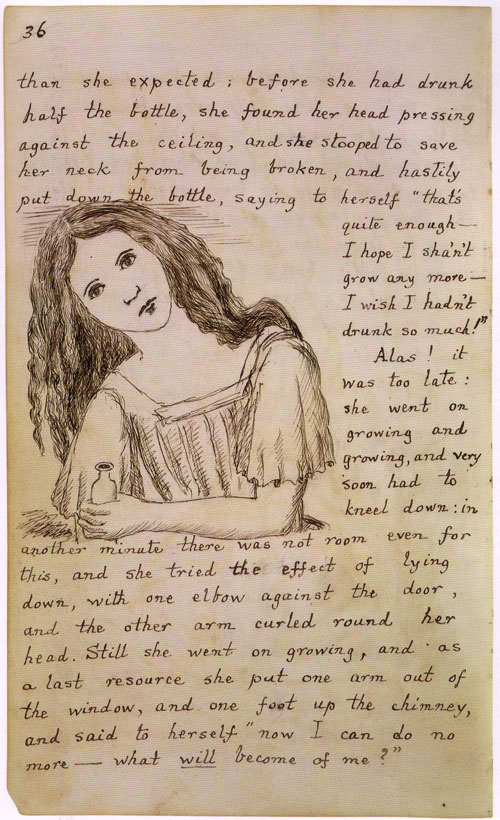
A page from "Alice's Adventures in Wonderland" with Carroll's own sketch of the title character.
“. . . and shall forever be revered by his fellow countrymen.” — George Washington, establishing the Badge of Military Merit”
March 6, 2010
 Richard Owen died on June 6, 1944. Yes, what the date implies is true: He died during the Allied invasion of Normandy. Sgt. Owen was a paratrooper with the Army’s 101st Airborne, 506th PIR-E Company — the “Band of Brothers.” His plane was hit during the early hours of the operation; it crashed during a landing attempt and burned for three days.
Sgt. Owen was posthumously awarded the Purple Heart, one of the most precious possessions for an American or his or her family. I was born a little less than two years before Sgt. Owen died. As I was growing up, remnants of the war were still evident in our house. My Dad was 30 years old when the war began, and I guess that’s why he was assigned to civil defense and aircraft construction on the Home Front. But there were letters and uniform buttons on shelves and in drawers that evoked the recent service of our cousins, Mike Aun in Europe and his brother Fred in the Pacific, and our dear friend Jack Mawhinney, also in Europe.

The Silver Star
Among the keepsakes from the recent war were clippings from the Paterson Evening News, and there I read that Mike Aun, who by then had married and moved to Lexington, S.C., had been awarded the Bronze Star, the Silver Star, and the Purple Heart with three Oak Leaf Clusters. I asked my Mom, to whom Mike was like a brother, what those awards meant. She explained as best she could to an ignorant child, but I was much older before I understood the implications of “meretorious service” and “gallantry in action.” I already understood, though, what she meant when she said that Mike had been hurt four times while he was “overseas,” as my Mom always expressed it. I loved Mike for a lot of reasons, but I idolized him for that Purple Heart. No doubt because I was introduced to the award in such a personal way, I have always paused over references to men and women who have earned the Purple Heart, and so I was particularly attracted to the story of Sgt. Owen, whose award certificate turned up at a Salvation Army center in a box of donated household tchotchke.

The Bronze Star
Personnel at the Salvation Army, Capt. Ron Heimbrock and Darlene Pelkey, were aware of the importance of that certificate, and they were upset to think of it as discarded along with things of no value. They launched a search that eventually involved many other folks, and the combined effort led to members of Sgt. Owen’s family who honor his memory. One of them has custody of the medal itself, and she treasures it.
The fact that people who had no direct connection to Sgt. Owen thought enough of what that certificate represented is a comment on their own sensitivity. It is also a fitting salute, across the decades, to one of the many who never should be forgotten.
You can read the Washington Post story about Sgt. Owen himself and about the discovery of the certificate and the search for Sgt. Owen’s family by clicking HERE.
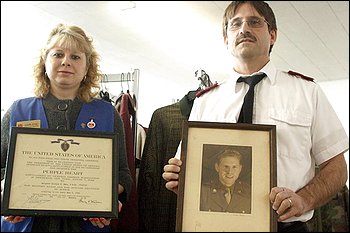
Darlene Pelkey and Salvation Army Capt. Ron Heimbrock with the Purple Heart Citation and a photo of Sgt. Richard Owen / Daily Courier-Observer photo by Bob Beckstead
Who wouldn’t love a guy named “Vinegar Bend”?
March 3, 2010

JIM BUNNING
I suppose Jim Bunning is used to being taken off the mound. As good a pitcher as he was, he still got the hook from time to time, so the maneuver tonight to put an end to his filibuster so the Senate could pass a bill extending unemployment benefits and other programs should have felt familiar.
If Republican leaders have found Bunning hard to handle, they will get some sympathy from Gene Mauch, who managed — some say mismanaged — Bunning when he was playing for the Phillies and Mauch was his manager. Mauch, who is a partaker in Glory at present, was an early practitioner of calling pitches from the bench — that is, giving signs to the catcher as to what pitch to call for.

GENE MAUCH
Bunning would irritate Mauch by shaking off pitches repeatedly when he knew the signs were coming from the manager. Mauch, who is deservedly well respected as a manager, has come in for some criticism of the way he used Bunning and Chris Short during the 1964 National League pennant race. The Phillies that year performed the flop heard ’round the world. They had a 6 1/2 game lead on September 21, but they lost 10 games in a row to finish tied for second place while the Cardinals won the pennant. Mauch, some say, overdid his reliance on Bunning and Short, who were worn out by that time in the season. I think he started Bunning three times in one week.

WILMER MIZELL
It’s a shame that Bunning, whose baseball career was outstanding, chose to make himself a laughing stock in Congress. He might have emulated Wilmer “Vinegar Bend” Mizell, who pitched in the majors for nine years and ended up with a winning record and a respectable lifetime earned run average. He was no Jim Bunning on the mound, and he was no Jim Bunning in Congress. A conservative Republican like Bunning, he was one of the most popular men in the House of Representatives, where he represented a North Carolina district from 1968 to 1974, when he was swept away in the voters’ reaction the scandals of the Nixon Administration. He later served in a number of appointed federal offices.
“Tell me a story before I go to bed” — Sam McBratney
March 1, 2010

The PJ Library
The Boston Globe has an interesting story today about a real estate magnate who was inspired by Dolly Parton to give away two million books to the children of Jewish families — and he’s just getting started.
The subject is Harold Grinspoon, who unloaded most of his expansive real estate holdings when he sniffed something sour in the market. Grinspoon is concerned about children who for any one of a variety of reasons are at risk of losing touch with their Jewish heritage, and his solution has been to establish the PJ Library — “pj” for pajamas — through which he sends books with Jewish themes to kids all over the country. The program is administered through local Jewish organizations that have to add their own financial contribution to Grinspooon’s funding. He intends to will his estate to the program as permanent endowment and envisions a day when its books will reach virtually every Jewish child in North America.

HAROLD GRINSPOON
Grinspoon, who started this project after hearing about Dolly Parton’s Imagination Library, isn’t just writing checks. He is intimately involved in the project, including the selections of titles. That kind of passion doesn’t come along every day.
The Globe’s Story is at THIS LINK. Information about PJ Library is at THIS LINK. And information about Dolly Parton’s program is at THIS LINK.

MARIE OSMOND
The news that Marie Osmond’s son, Michael Blosil, has “committed suicide,” is unsettling, as such stories always are. What I find particularly sad about a person dying in that way is the loneliness that seems to be a necessary part of the context. I don’t even like the term “committed suicide,” because it evokes the notion that the person involved was ipso facto guilty of wrongdoing, whereas he or she was most likely making a solitary decision to end the torment of fear or confusion or sadness, or perhaps an indefinable feeling that made life unbearable.
I am shaken whenever I hear of someone taking his or her own life, and I had plenty of opportunities to be shaken in that way in more than 40 years of newspaper reporting. My mind almost involuntarily imagines the path that led that person from the potential with which most of us are born to the mental illness or physical ailment or poor choices or bad luck or combination of factors that made only death seem reasonable.

BILL BIXBY and BRENDA BENET
I went through that exercise when I heard of the death of the actress Brenda Benet in 1982. About a decade before, I had interviewed Brenda and her husband at the time, Bill Bixby. I was struck by how animated they were and especially how charged up they were about their lives together. They both talked at once, and he paced back and forth so vigorously that a couple of times he paced right out of the room and into the hallway. They had struck a balance, they told me, between the intimacy of their marriage and the independence of their separate careers, and they were almost defiant in proclaiming it — so much so, that I began my account of the meeting by writing, “You don’t interview Bill Bixby and Brenda Benet so much as you defend yourself.”
They had a child in 1974 and were divorced in 1980, and the child – a boy – fell suddenly ill and died in 1981. Brenda ended her own life in 1982. How alone she must have felt with her grief.
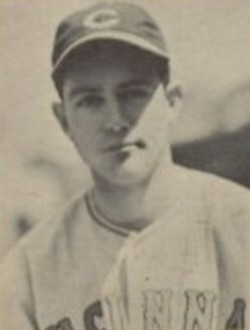
WILLARD HERSHBERGER
News of suicide also reminds me of Willard Hershberger, who died by his own hand — when he was 30 years old — two years and a month before I was born. I know of him because he belongs to a class of men who never die to memory — major league baseball players.
Hershberger, whose home town had the comforting name of Lemon Cove, California, had a distinction that he shared with only a few dozen others; he played for the 1937 Newark Bears. The Bears — who had no connection to the present team of that name — were a Yankees farm club and are reputed in baseball lore to have been the greatest minor league team ever. Their record that year was 109-43, and they finished 25 1/2 games ahead of Montreal. The lineup included Joe Gordon, Babe Dahlgren, George McQuinn, and Charlie “King Kong” Keller.

Willard Hershberger
It must have been an exciting experience for Hershberger, a catcher, who appeared in 96 games that season and batted .325 on a team that collectively batted .299 for the season. He was already 27 years old when he made his major league debut with the Cincinnati Reds in 1938. He was the backup to Hall of Fame catcher Ernie Lombardi. During the 1940 season — with the Reds in contention for the National League pennant — Hershberger was standing in for Lombardi when the team lost games on July 31 and August 2. Hershberger picked up a buzz among the players that they would not have lost if Lombardi had been in the lineup. Hershberger was distraught, and he expressed himself to manager Bill McKechnie.

BILL McKECHNIE
Hershberger evidently told McKechnie that he felt responsible for the losses, mentioned that his father had taken his own life about a ten years before, and intimated that he might make the same decision. This was a private conversation, but accounts say that the manager thought he had calmed the young man. But Hershberger didn’t appear before the next day’s game, and he was found dead in his hotel room.
He was a member of a team, but in the end he felt that failure was his alone. Linda Loman could have been speaking of Hershberger when she said of her husband: “Attention, attention must be paid to such a person,” and I’m sure McKechnie second-guessed himself every day after Hershberger died. But I have had the experience of trying to help such a person and found, in the end, that the loneliness can be intractable, insistent, and that’s the most frustrating and the saddest thing about it.
“Poor, poor little Alice!” — G.K. Chesterton
February 27, 2010

MIA WASIKOWSKA
So Tim Burton’s “Alice in Wonderland” opened in London, and Chris Tookey of the Daily Mail says it’s long on visuals and short on story. Tookey’s take — get it? — is that Linda Wooverton diluted the project with her attempt to write a sequel to Lewis Carroll’s “Alice” books instead of re-telling the original stories — or, at least, one of them. So everybody — including Mia Wasikowska as Alice, Johnny Depp as the Mad Hatter, and Anne Hathaway as the White Queen — looks great, but has nowhere to go.
“The story becomes a very different beast from the ones Lewis Carroll created,” Tookey writes. “It’s a tale of feminist empowerment, with an entrepreneurial, pro-capitalist ending that is unlikely to endear it to readers of the Guardian.” In other words, it’s a 3-D version of the health-care summit.
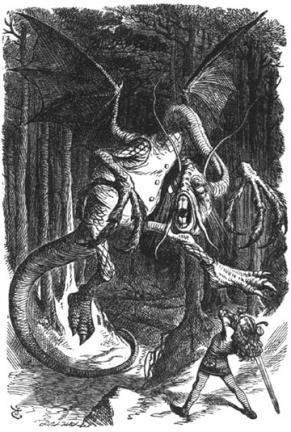
Sir John Tenniel's drawing of the Jabberwock
According to Tookey’s account, a central issue in this tale is that the Red Queen has enlisted the Jabberwock, the Jubjub Bird and the Bandersnatch as enforcers in her reign of terror. In Carroll’s dream within a novel, of course, these were characters in a poem, not “real” creatures. Alice reads about them in a looking-glass book, which means a book in which the print is backwards so that one has to hold it up to a mirror in order to read it.
This poem, which Carroll meant as a parody of overblown poetry and pointless criticism, has been subject to so much serious study that it’s a shame Carroll didn’t live to see it. G.K. Chesterton remarked on this in 1932: “Poor, poor, little Alice! She has not only been caught and made to do lessons; she has been forced to inflict lessons on others.”
“Jabberwocky,” incidentally, is a particular challenge to translators who want to make “Alice” available to the non-English-speaking world. There’s a French version that begins: Il brilque: les toves lubricilleux / Se gyrent en vrillant dans le guave …. A German translation begins: Es Brillig war. Die schlichte Toven / Wirrten und wimmelten in Waben ….
Chris Tookey’s review of Tim Burton’s film is at THIS LINK.

CHAN HO PARK
The news that Chan Ho Park has signed to pitch for the Yankees got me to thinking about men from other countries who have played in the Bigs. Players from the Spanish-speaking Americas and from the Caribbean have been around the majors for a long time, but the signing of Park shows that there are still frontiers to be crossed: He is the first big-league player to have been born in South Korea — or in any Korea, for that matter.
The first player from outside the United States was probably Andy Leonard, who was a native of County Cavin, Ireland. Leonard broke in in 1876 as a second baseman and left fielder with the Boston Red Caps and appeared with that team until 1878. In 1880 he played shortstop and third base with the original Cincinnati Red Stockings.

ANDY LEONARD
Although Leonard was born on the Auld Sod, he was raised in Newark, N.J., and got some of his early playing experience with a club in Irvington. In ’76, when he broke into the majors, five other players from Ireland appeared with major league teams, along with five from England and one from Germany, which means that England and Ireland had more representatives in the big leagues than all but four states of the Union — New York, Pennsylvania, Massachusetts, and New Jersey.
Other than the United States, the Dominican Republic has contributed the most players to the Major Leagues — 494 through the 2009 season. Venezuela is second with 246 and Canada is third with 225. Puerto Rico, which is part of the United States, has chipped in with 228.

RENO BERTOIA
Considering all the Italian-Americans who have played Major League baseball — not the least of whom were the three DiMaggio brothers — it’s curious to find that there have been only six players who were born in Italy. The first of these was Lou Polli, who was born in Baveno, which is up there in the Piedmont region. Polli pitched a few innings of relief for the St. Louis Browns in 1932 and didn’t appear again until 1944 — a war year in which a lot of guys who otherwise wouldn’t have been in baseball got a crack at it while the regulars were Over There. In ’44, Polli pitched almost 36 innings for the Giants.
The most successful Italian-born player was Reno Bertoia, who might as well have been a Canadian inasmuch as his family moved there when Reno was a year old. He was born in St. Vito al Tagliamento in the comune of Udine, which is near the border of Slovenia. He played in the big leagues from 1953 to 1962, the first six and last two of those years with the Tigers. He was an infielder — a second and third baseman — and he had a lifetime batting average of .244 over 612 games. After he retired from baseball, he was a Catholic-school teacher for 30 years in Windsor.
The Baseball Almanac has a lot of stats about foreign-born baseball players at THIS LINK.
“Half the lies they tell about me ain’t true” — Yogi Berra
February 21, 2010

MICKEY MANTLE
I’m ready to talk baseball, not that I ever stop. The camps are up and running, Johnny Damon has signed with the Tigers, George Steinbrenner was out watching his grandson play in a high school game, and the Yankees are starting to say “Chamberlain” and “bullpen” in the same sentence with more and more consistency.
The more things stay the same, they more they stay the same, and Yogi Berra turned out for yet another spring training. It seems to me that there is a doctoral dissertation in Yogi Berra, maybe in American Studies. Some scholar should examine the history of Berra’s public image, which is more like Babe Ruth’s image than is immediately apparent. The man hasn’t been a day-to-day part of baseball for decades, and his name is still known to people who know nothing about the game, who weren’t yet born when Berra played his last game or, for that matter, managed his last game. He has ears like flapjacks and a hound-dog mug that now looks like a relief map of northern Greece. And we love him.

LAWRENCE PETER BERRA
It is a little early for serious talk about the 2010 season, what with Joe Girardi saying things like this: “I think our No. 1 concern is ironing out our lineup. When I say it’s a concern, I’m not concerned that we don’t have the players to do it, I’m concerned with where you place them.” Uh, did he read that in one of Casey Stengel’s old notebooks?
In my search for some baseball intelligence, the most interesting thing I found today was about a game played in 1953. Several sites have picked up on this story, originally published in the New York Times. This is a hilarious account of Whitey Ford and Mickey Mantle arguing about how the Yankees aborted an 18-game winning streak by losing a game to the St. Looie Browns. As the writer demonstrated, both players were sure of themselves and both had it very very wrong. It’s an object lesson for the rest of us when we’re cock sure of our memories. You can read it by clicking HERE.
Book Review: “Newton and the Counterfeiter”
February 19, 2010

ISAAC NEWTON
I was working in the faculty room yesterday when one of the instructors asked the open air, “Does anyone know anything about Newtonian physics?” I told him his question was coincidental, because I had just finished reading a book about Isaac Newton, the 17th century physicist, mathematician, and natural philosopher.
I think I correctly answered my colleague’s question, which had to do with Newton’s Second Law of Motion: “A change in motion is proportional to the motive force impressed and takes place along the straight line in which that force is impressed.” But while the book I just read explained the achievements for which Newton is still regarded as one of the greatest of geniuses, its purpose is to recount the work of his later life, when he was warden of the Royal Mint — and particularly the relentless detective work with which he brought to justice Britain’s most brazen counterfeiter.

Statue of Isaac Newton - and the apple - at the Oxford Museum of Natural History
Newton did his signature scientific work at Trinity College in Cambridge, but he lobbied friends for many years to get him a political appointment in London. It finally came in the form of position at the mint, which made the silver coins that were Britain’s only hard currency at the time. When Newton arrived at his office in the Tower of London, the kingdom’s economy was on the verge of collapse, partly because of expensive military operations undertaken by William of Orange and partly because the royal currency was, in a word, disappearing. An old issue of coins was being degraded by so-called “clippers” who shaved bits of silver from the money to be melted down and sold. Meanwhile British silver was leaving the country altogether because it was worth more in exchange for gold in other countries than it was in exchange for commodities in England. The result was a bull market for counterfeiters, including the audacious and dangerous William Chaloner.
Newton’s predecessors as warden of the mint had not taken the job seriously except as a source of income, and that was expected of Newton, too. But he applied to the mint the same combination of energy and curiosity that had fueled his discoveries in fields like gravity and the behavior of light and his development of the mathematical system known as the calculus.

Isaac Newton's image on a one-pound note
First, Newton took control of a program already underway when he arrived – the recall and replacement of all British coins then in circulation. This project was limping along when Newton took over, and he put the means in place to accelerate it and get the job done in a fraction of the projected time. Then he turned his attention to the counterfeiters, employing a network of spies and informers and counter-agents and double crossers to gather information and pounce on “coiners” – eventually including Chaloner, whose career as a counterfeiter had had its ups and downs.
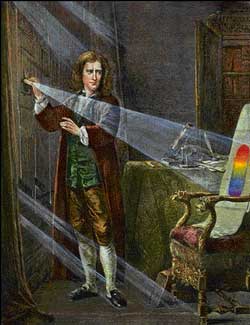
Isaac Newton investigates the refraction of light.
Like most such scoundrels, Chaloner made his share of mistakes, and one of them was to publicly claim that the heart of the nation’s counterfeiting problem was in the mint itself, and imply that Newton’s incompetence was partly to blame. Don’t knock the Rock. Newton went after Chaloner with a vengeance, spending hundreds of hours personally interrogating people who could help build a case against the fraud. Chaloner had been in and out of prison several times and had dodged the noose that was reserved for counterfeiters, whom British law regarded as traitors. In Newton, he had met his match and – ultimately – his maker.
“Newton and the Counterfeiter,” both informative and entertaining, was written by Thomas Levenson, who is a professor of science writing at MIT.
A topic that Levenson discusses throughout this book – in fact, it’s an important thread that runs through all of Newton’s activities – is Newton’s search for contact with God. In fact, Levenson reports that religious matters became the preoccupation of Newton’s life when he had put most scientific inquiry behind him. I discussed that aspect of the book in a column in the Catholic Spirit, and it’s available at THIS LINK.
Read the book
February 15, 2010

CHARLES LAUGHTON
I turned on a TV yesterday morning — an unlikely thing for me to do — and wound up watching part of “The Hunchback of Notre Dame” on Turner Classic Movies. It was the 1939 version starring Charles Laughton as Quasimodo and Maureen O’Hara as Esmeralda. It is one of at least 14 movie and television adaptations of Victor Hugo’s novel “Notre Dame de Paris” — the formal name of the cathedral in Paris — and is generally accepted as the best of the lot. Among silent films, the 1923 version starring Lon Chaney was a benchmark achievement on several accounts — the sets recreating 15th century Paris, Lon Chaney’s portrayal of the deformed bell ringer, and the box office receipts of more than $3 million, Universal’s highest gross in the silent era.
I was pretty young when I first read Hugo’s novel, which is always marketed under the misleading title used on most of the films — misleading in that while Quasimodo might, ironically, be the most attractive figure in the story, he is not more important to the story than Esmeralda or Claude Frollo. Although the story has been retold 14 times on film TV, none of the re-tellings are entirely true to the original. Writers and directors have departed in many ways from Hugo’s plot and characters.
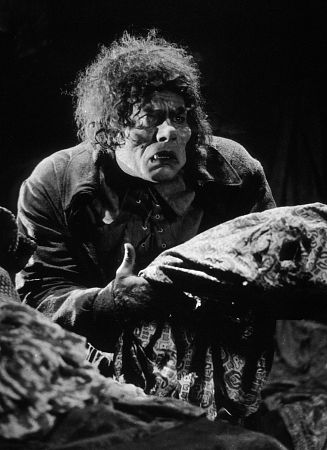
LON CHANEY
It is central to the tragedy of Hugo’s story that Esmeralda is executed and Quasimodo vanishes after her death, and Hugo leads his readers to believe that the bell ringer died in his grief, embracing Esmeralda’s body in a cemetery for social castoffs. In the Laughton version both characters are alive at the end of the film; in the Chaney version Quasimodo dies, but Esmeralda lives. These are not details; they are significant deviations from Hugo’s intent.
Among the other actors who have played Quasimodo are men as different as Anthony Quinn, Anthony Hopkins, and Mandy Patinkin — the latter in a TNT cable production in 1997. Quinn was paired with Sophia Loren in a 1956 French production in which he and Loren were the only actors who spoke English. The rest of the dialogue had to be dubbed over the French.
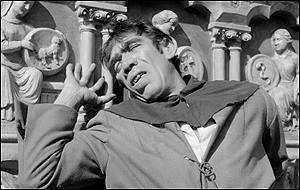
ANTHONY QUINN
That was the first color film based on the novel. Whereas Patinkin tried to duplicate as closely as possible Laughton’s image of Quasimodo, Quinn’s makeup was mild, not coming close to the grotesque features that Hugo describes and that constitute the context for the bell ringer’s place in — or, rather, outside of — society. In that version, Esmeralda is killed accidentally which, of course, dilutes the injustice inherent in the story. But who would want to execute Sophia Loren?

Walt Disney Productions
There have also been a couple of attempts to stray so far from Hugo’s work as to turn Quasimodo into a huggable cutie — as in Walt Disney’s 1996 animated feature — or even a comic figure, as in the 1999 French romp, “Quasimodo d’El Paris.”
I hope that folks who have seen even the best of these films don’t think they’ve experienced what Victor Hugo created in his novel. On the other hand, who has the patience to read classical novels in the Twitter age?
Incidentally, the bell ringer was named Quasimodo because, as an infant, he was abandoned at the cathedral by his mother and found on Quasimodo Sunday — the first Sunday after Easter. The Introit of the Mass for that day is taken from the second chapter of the First Letter of Peter: Quasi modo geniti infantes, rationabile, sine dolo lac concupiscite ut in eo crescatis in salutem si gustastis quoniam dulcis Dominus. That passage is often translated, As newborn infants do, long for pure spiritual milk so that through it you may grow into salvation, for you have tasted that the Lord is good.
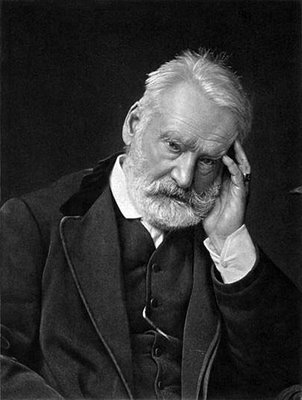
VICTOR HUGO
I have read what I consider to be a spurious explanation that Quasimodo’s name was a play on words — an idea that depends on translating quasi modo to mean “partly made” — meaning that Quasimodo was born incomplete. I can’t find my Cassell’s Latin Dictionary right now, but if memory serves me right, the literal translation of the first two words of the passage is not “partly made” but “in a similar way.”
 CharlesPaolino's Blog