
Pete Sheehy in the clubhouse of the real Yankee Stadium
I don’t think many journalists ever interviewed Pete Sheehy, but I was among the few who did. Pete, who was the clubhouse man at Yankee Stadium for about seven decades, didn’t like to talk, and I suppose that accounts for the fact that he made only rare appearances in print. I arranged an interview through a mutual friend, and I wasn’t with Pete for very long before I realized what a challenge I had taken on. In fact, Pete was forthright about it — in his way. He told me that he figured he had kept his job for so long, being in the confidence of members of the Yankees and, for a time, the football New York Giants, because he knew how to keep his mouth shut. Whatever he knew about Babe Ruth, Billy Martin, and Mickey Mantle, he kept it to himself.
 So I asked Pete if it were possible that a man who had had such intimate contact with the Yankees of the ‘twenties to the ‘eighties could have a favorite. This was how Pete answered: “Joe.”
He didn’t have to say any more. “Joe” meant DiMaggio, and his choice didn’t surprise me. My father had been a Yankee fan since the Ruth era, too, and although I never asked him, I am confident that he would have said “Joe” too — despite a reverence for Lou Gehrig.
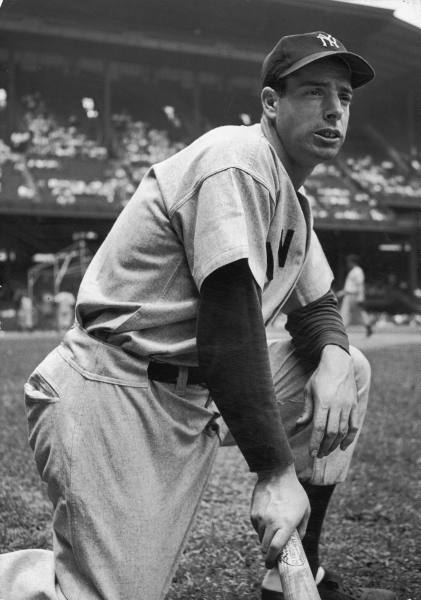 DiMaggio had an outstanding career. He was among the very best hitters, baserunners, and outfielders of his time or any time. Not the very best, necessarily, but one of the best. As Kostya Kennedy mentions in his book, 56: Joe DiMaggio and the Last Magic Number in Sports, a poll taken in 1969 named DiMaggio the “greatest living baseball player.” DiMaggio believed it; he was that kind of a guy. But there were skeptics who noted, for instance, that Ted Williams, DiMaggio’s contemporary, outstripped the Yankee in every major hitting category and had a longer career, despite combat duty tours in two wars.
If there is an inequity in the way DiMaggio is regarded, it may be attributed at least in part to the fact that he played for the New York Yankees while they were the preeminent team in baseball if not in sports in general. DiMaggio appeared in 10 World Series in his 13 years in the majors.
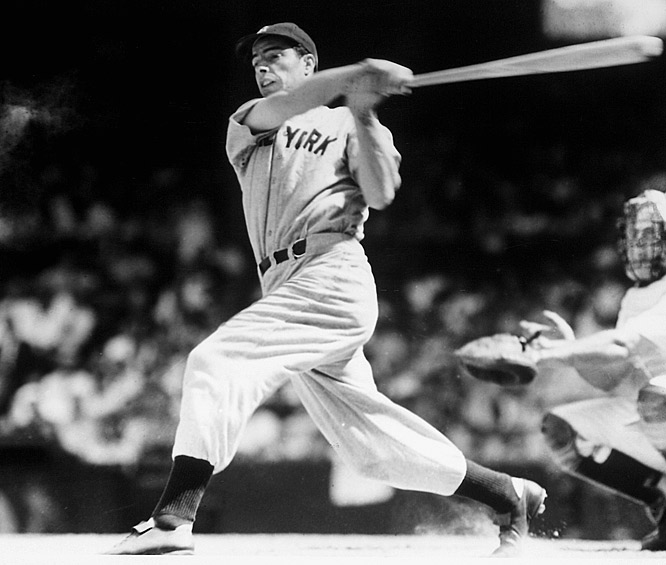
But the primary reason for the aura around Joe DiMaggio may be the record he set 60 years ago this season — the record that was the occasion for Kennedy’s book. In the 1941 campaign, DiMaggio got a base hit in 56 consecutive games.
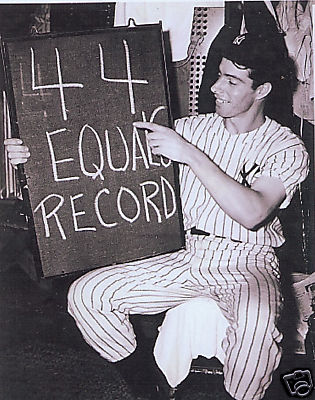 To put that record in context, Kennedy points out that more than 17,000 men have played Major League baseball, and only DiMaggio has achieved it. The only others to come close were Willie Keeler, who hit in 44 straight games in 1897 in the dead-ball era, and Pete Rose, who hit in 44 in 1978. (Keeler’s streak began on the first day of the ’97 season, so the hit he got in the last game in ’96 puts his official record at 45.)
The subtitle of Kennedy’s book refers to the fact that while DiMaggio’s record once formed a holy trinity with Babe Ruth’s single-season and lifetime home run records, Ruth’s marks have been exceeded several times and in some cases under questionable circumstances. DiMaggio’s 56 is the only individual record of its kind still standing.
Kennedy describes in his very literate book the atmosphere in which the streak occurred. It captured the attention of the whole country — and even folks in some other countries. DiMaggio’s sizable family, people who were tight with him, baseball fans, and people who didn’t know anything else about him or the game were all caught up in his day-day-progress. Everywhere, Kennedy writes, people stopped to ask each other: “Did he get a hit today?”
 And, as Kennedy artfully shows, this didn’t happen in a vacuum. In 1941, there was something far more ponderous on people’s minds — the increasing aggression of Nazi Germany. The idea that the United States could stay out of the war seemed more and more like wishful thinking as American plants turned out material to assist the European allies and as more and more American men were drafted into military service. DiMaggio’s streak was a fortuitous respite in such an atmosphere — the counterpart, in a way, to Susan Boyle’s triumph on Britain’s Got Talent in the midst of worldwide recession and seemingly pointless wars.
 The streak served another purpose, too. It was something for Italian-Americans to cling with pride as they — thanks to Benito Mussolini — came under the same kind of suspicion that was being directed at Americans of Japanese and German background. Even at that, DiMaggio’s own father, Giuseppe, who had made his living as a commercial fisherman, was placed under wartime restrictions that kept him from approaching San Francisco Bay.
 In telling this story, Kennedy carefully constructs a portrait of DiMaggio that isn’t at all endearing. DiMaggio was a cold fish. He was known from his youth for his spells of silence. Kennedy writes a lot about DiMaggio’s relationship with his first wife, movie actress Dorothy Arnold, and that isn’t a happy tale. DiMaggio — in spite of the girls he invited to his hotel rooms — missed Dorothy when he was on the road. But when he was home, he stifled her, resented her, and often subjected her to his emotional and sometimes his physical absence.
This book is peppered with the interesting characters who played large and small parts in DiMaggio’s life — his relatives, including his major league brothers, Don and Vince; his somewhat “connected” Italian-American friends in Newark; his fans — not the least of whom were the boys Mario Cuomo and Gay Talese; and, of course, his fellow ballplayers: Gehrig, Phil Rizzuto, and DiMaggio’s wacky road-trip roommate, Lefty Gomez.
On the field, DiMaggio appeared impassive as the streak progressed. If a pitcher had boasted that he would stop DiMaggio, and DiMaggio got a hit off him, there would be none of the fist pumping that cheapens the game today. Inside, however, Kennedy writes, DiMaggio’s stomach was often in knots. And, of course, if he didn’t have to talk about the streak, he didn’t:
” ‘You nervous about the streak?’ a reporter would call out and it would be Lefty who would turn and reply, ‘Joe? Nah, he’s fine. Me? I threw up my breakfast.’ “
 Like most people, I suppose, I haven’t been able to get Joplin out of my head for the past few days. It’s hard to get your mind around the kind of destruction that occurred there or to imagine how a city can recover from such widespread loss.
In the midst of the disaster I recalled that Joplin was the birthplace of a talented musician and composer — Wayne Shanklin. I don’t know why I know that he was born in Joplin — maybe the same reason I know that Bix Beiderbecke was born in Davenport, but I thought of it this morning when I heard a brief report on WNYC radio about Anna Calvi. The report mentioned that she had recorded “Jezebel” as a single last year. The title apparently refers to the Phoenician woman described in the first and second books of Kings who became queen of Israel but ran afoul of the prophet Elisha. “Jezebel” was one of Wayne Shaklin’s most successful songs, and you can hear Calvi’s take on it by clicking HERE. The newscaster mentioned that Calvi had been influenced by Edith Piaf’s recording, which you can hear by clicking HERE.
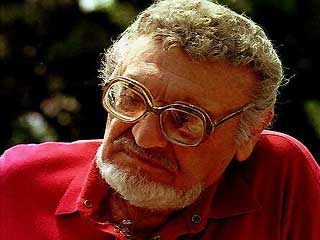
FRANKIE LAINE
Being of a certain age, I associate this song with Frankie Laine, perhaps the only singer whose career lasted 75 years. His interpretation of “Jezebel” is, of course, entirely different from either Piaf’s or Calvi’s. It reached No. 2 on the Billboard chart in the U.S. I have it on vinyl. You can hear it by clicking HERE.
Wayne Shanklin, who died in 1970, wrote other hits, including “Primose Lane,” “The Big Hurt,” and “Chanson d’Amour,” which was unusual in that it was introduced in 1958 in two recordings — both of them successful. There were outstanding cover versions after that, and the song was used, more than 40 years after it was written, in the soundtrack of the Stanley Kubrick film “Eyes Wide Shut.”
I see that Langston Hughes also was born in Joplin, as were Robert Cummings, Dennis Weaver, Charles McPherson, and, I’m sure thousands of other folks whose names we don’t know but who did their best in whatever sphere they chose. Their hometown deserved better than this.
Books: “No Regrets: The Life of Edith Piaf”
May 22, 2011
 If it was Sunday night, I wanted to see Señor Wences. I did not want to see Edith Piaf, who turned up from time to time on Ed Sullivan’s TV show, “Toast of the Town.” It was all a part of being young and ignorant. I later learned to appreciate what an astounding singer Piaf was, but I knew nothing of her background before reading Carolyn Burke’s recent biography.
Piaf had a rough life in many respects. She was born in 1915 in a poor part of Paris to nearly indigent parents – her father an acrobat named Louis Gassion and her mother a drug-addicted street singer whose professional name, as it were, was Line Marsa. Louis and Line separated and Line played almost no part in Edith’s life except to occasionally surface and ask for money — which Edith usually provided. Louis took responsibility for his daughter, although that meant, for a time, that he left her to live in a brothel that was managed by his mother. He later reclaimed the girl and took her “on the road” with him — first while he performed with a circus and then when he returned to the streets. Edith had to work, keeping house, passing the hat when Louis performed on the street, and eventually singing for coins herself.
 When she was 16, Edith convinced her father to let her live on her own, but she maintained a close relationship with him for the rest of his life, which eventually meant supporting him. As a result of one of the first of a very long string of romantic and/or sexual relationships, she bore a child, a girl, who died at the age of two — an experience that affected Edith for the rest of her life. She gradually developed as a singer on the street and in Paris dives, but her career took off after she was discovered by a shady character named Louis Léplee, who booked her in his cabaret and taught her some things about performing before the public. He also dubbed her “piaf” — “sparrow” — because of her stature (4’10”) and her bird-like gestures.
Edith Piaf specialized in chasons réaliste, songs of realism that expressed the sorrows of the lower class — including the prostitutes, beggars, and love-starved sailors who were among the singer’s earliest acquaintances. Frustrated love was a constant theme in these songs and in Edith Piaf’s life.
 In addition to having a powerful and expressive voice, Edith Piaf was a prolific songwriter, creating the lyrics for many of the songs she introduced. Many of her love affairs were with men in whom she also had an artistic interest, and she played the mentor to them, demanding almost excruciatingly hard work but, almost without exception, helping them to solidify their careers. Edith herself became a star in several media in both hemispheres — night clubs, movies, records, radio, and television.
 Edith Piaf lived in France during the World War II period, and was criticized in her own time by people who thought she was too accommodating to the German occupation. But Burke reports that the singer was instrumental in helping Jewish friends hide from the Nazis and that she irritated the Nazis, perhaps deliberately, by singing the work of a Jewish songwriter. But Edith was even bolder than that, by Burke’s account. She agreed to visit French soldiers who were being held in prisons in Germany, and she made a point of being photographed with them. Then she returned, as part of a plot by the French Resistance, and slipped some of those soldiers false identification that included their faces cropped from those photos. Some 188 of those men escaped, using those fake credentials.
It’s an understatement to say that Edith Piaf didn’t take care of herself. She worked very hard, both in rehearsals and in a hectic schedule of bookings, partly because of the cost of maintaining not only her own lifestyle but also a coterie of friends, hangers-on, and just plain cheats, whom she deliberately cultivated as a sort of salon. She drank heavily and she became dependent on a complex of pain killers — for debilitating arthritis — sleeping pills, and uppers. This regimen apparently contributed to the ruin of her liver which in turn caused her death in 1963.
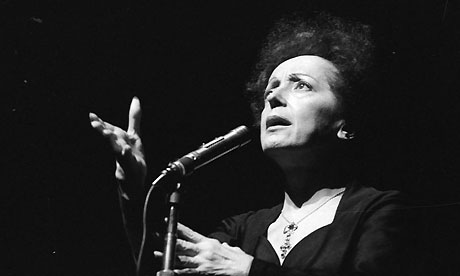 The poet Jean Cocteau — a close friend of the singer — described Edith Piaf as a genius and called her “this astonishing little person.” “A voice rises up from deep within,” he wrote, “a voice that inhabits her from head to toe, unfolding like a wave of warm black velvet to submerge us, piercing through us, getting right inside us. The illusion is complete. Edith Piaf, like an invisible nightingale on her branch, herself becomes invisible. There is just her gaze, her pale hands, her waxen forehead catching the light, and the voice that swells, mounts up, and gradually replaces her.”
For a good example of that voice, click HERE.
“No Vivaldi in the garage!” — Louie De Palma
May 20, 2011

- JEFF CONAWAY

Like everyone else, I suppose, I was very sorry to read that Jeff Conaway was comatose in a hospital in Encino. Conaway occupies a special pantheon in my family because of his role as Bobby Wheeler on the television series Taxi. Like some other entertainment media, television can do that for a person, throw at least one role his way that guarantees that his career will never be thought of as altogether ordinary.
Conaway was perfectly cast as the egotistical but insecure young actor, and he played the part in the midst of an ensemble of performers, many of whom were already experienced and all of whom were also perfectly cast. This fact, plus the excellent writing, made Taxi, one of the best situation comedies in television history.

JUDD HIRSCH
There were 114 episodes of Taxi from 1978 to 1983, and every one was an artistic success. The series won 18 Emmy awards, a fact that speaks for itself.
The cast was remarkable: Judd Hirsch, Danny De Vito, Rhea Perlman, Christopher Lloyd, Andy Kaufman, Carol Kane, Marilu Henner, and Tony Danza. The selection of Danza was a particular stroke of genius. He was a prize fighter (9-3) when he was cast as boxer/cab driver Tony Banta and, although he had been type cast, he displayed impressive acting acumen, including pinpoint timing and a worthy double take, throughout the series.
Besides the regular cast, the producers imported outstanding guest players, including Julie Kavner, Barry Nelson, Louise Lasser, Jack Gilford, Ruth Gordon, Wallace Shawn, J. Pat O’Malley, Victor Buono, and Vincent Schiavelli.
A particular strength of the writers of Taxi was their ability to create unique characters – the nasty dispatcher Louie De Palma (De Vito), the dizzy immigrant Latka Gravas (Kaufman), the pickle-brained Jim Ignatowski (Lloyd), and the glowering Reverend Gorky (Schiavelli). The faux Eastern European language spoken by Latka, his wife Simka (Kane), Reverend Gorky, and Latka’s mother and cousin, was an ingenious and hilarious invention.
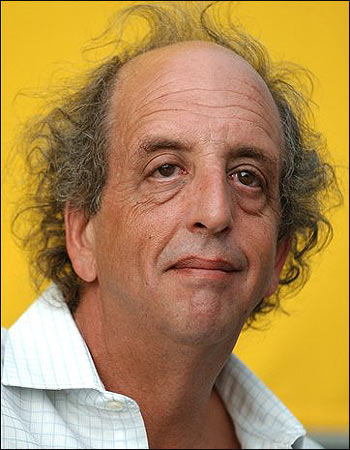
VINCENT SCHIAVELLI
Taxi dealt with ordinary people with recognizable, ordinary problems, and in the context of its comedy it tastefully touched on sensitive topics such as bisexuality, blindness, old age, single parenthood, obesity, premenstrual mood disorders, drug addiction, and sexual harassment. Taxi’s writers never went for cheap laughs.
Taxi was similar to The Honeymooners in its heyday in the sense that it had a kind of grim realism. Until Jackie Gleason made the fatal error of moving the Kramdens and Nortons out of their tenement milieu, a haunting aspect of that show was the realization that those folks were never moving out of that neighborhood, Ralph and Ed were never leaving the bus company and the sewer system, no matter how hard they dreamed. The same thing was true of the characters in Taxi –ironically, with the exception of Bobby Wheeler– and the writers were faithful to that truth.
 Little things bother me.
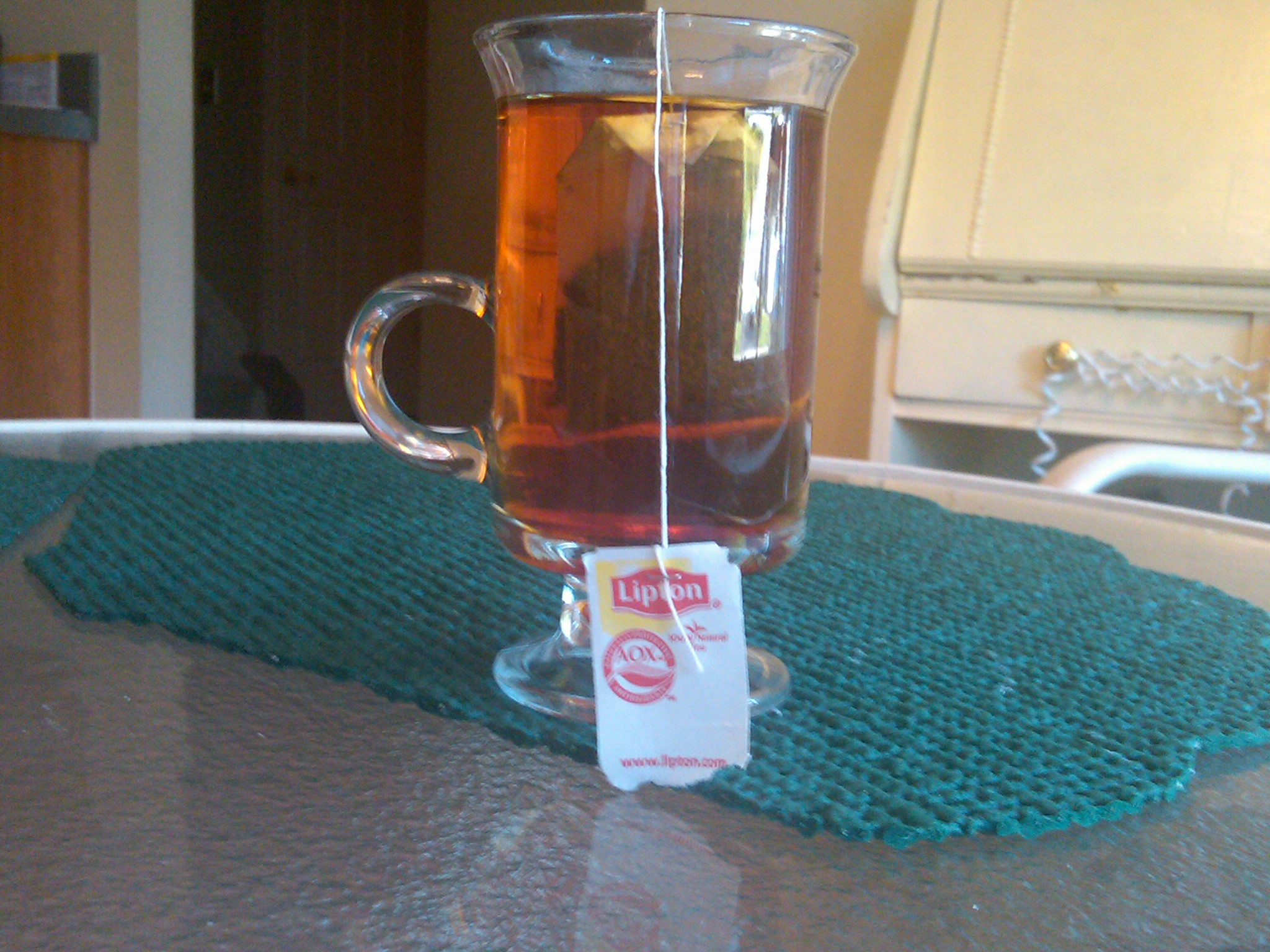
I am troubled, for example, by the tags on Lipton tea bags. They’re flimsy and problematic. The design is ingenious enough. The tab is part of the envelope in which each tea bag nestles. In this respect, Lipton has it all over most brands, whose tea bags lie naked in the box. The envelope is perforated so that the user can detach the part that serves as the tag, but the envelope is made of such thin paper that the staple doesn’t grip the string very well, and as often as not the tag slips off. And that means that the whole string often winds up in the cup when the water is poured.
Most other brands — Wegmans and Twinnings, for instance — while eschewing the envelope, make the tags out of sturdier stuff.
 It has occurred to me to call Lipton’s 800 number about this, but I had such an unsatisfying experience about a decade ago when I called Nabisco to complain about the way graham crackers are wrapped that I don’t have the heart to try it again.
There are two reasons why I don’t just drink another brand of tea. One is that Lipton tea is the only kind I like — at least, as compared to other ones that I have tried. Some people (you know who you are) sniff at this, implying that there is something pedestrian about Lipton and, therefore, about me, but that doesn’t move me. I have, to borrow a phrase from Jefferson Davis, “the pride of having no pride.”
 The second reason I don’t switch brands is loyalty — not so much to the brand as to the salesman. When I was a kid, I was a devoted fan of Arthur Godfrey, who was a radio and television mogul back in the Bronze Age. Lipton was one of his sponsors and probably the one the public most associated with him. He pitched the tea and Lipton’s packaged soup. In those days before the highly produced commercials we see now, the host of a show often was the one who sold the products. Godfrey used to kid the sponsors; he might have been the first one who dared to do it. When he did his spiel for Lipton’s chicken soup, he used to assure the audience that a chicken had at least walked through the concoction.
Godfrey was troublesome. He was talented and bold as a showman, but he also was kind of full of himself, and many people my age and older might remember him best for having fired Julius La Rosa and several other regular members of his variety show cast — without warning, on live television.
 Nobody’s perfect. I made a commitment to Arthur Godfrey that I would drink Lipton tea and no other, and I have been more loyal to him than he was to Julie La Rosa.
Besides my one-sided deal with Godfrey, I might as well mention that I’m not happy when I don’t find a prominent portrait of Sir Thomas Lipton on the box of tea. Lipton, who founded the brand, was one of the great self-made businessmen of the latter 19th and early 20th centuries. I identify with him because he was a grocer, as were my father and grandfather. Of course, we had one store and Lipton eventually had about 300.
When Lipton got into the tea trade, he broke the established wholesaling patterns so that he could sell the product at low prices to the working poor. Lipton tea boxes used to feature a large picture of Thomas Lipton with a tea cup in his hand and a yachting cap on his head – an image that has been relegated to a tiny logo. Lipton was a yachting enthusiast and tried five times with five different yachts to win the Americas Cup. What he finally won was a special trophy honoring him as the “best of all losers.”
Lipton also did a lot to assist medical volunteers in Europe during World War I, including putting his yachts at the disposal of organizations transporting medical personnel and supplies and traveling himself to Serbia to show his support for doctors, nurses, and soldiers at the height of a typhus epidemic. Twinnings? I don’t think so.

Sir THOMAS LIPTON
 The last time I saw Arthur Laurents, he sat in the row in front of me during an opening at The George Street Playhouse — a theater where he felt very much at home. He was with several people who were at least six decades his juniors. Arthur had them in stitches; he told them one story after another and they hung on every word and then exploded in laughter.
Arthur died yesterday at the age of 93, and I’m glad my last memory of him is the animated man with the sharp-edged wit holding the attention of yet another generation.
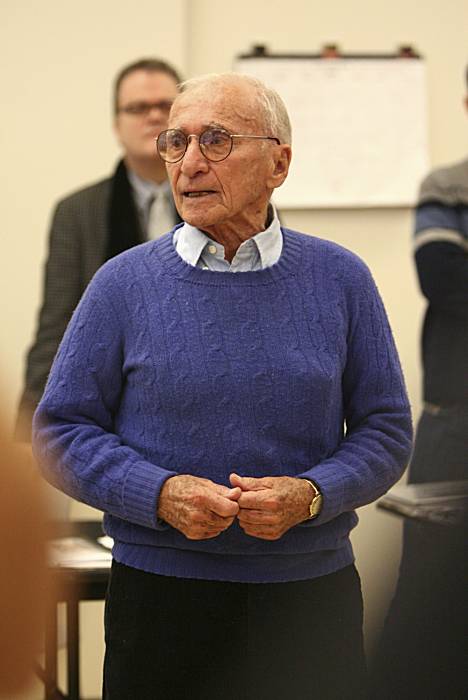 I got to know Arthur through numerous encounters at George Street, whose impresario, David Saint, was his colleague and close friend. Arthur, a writer and director, introduced a couple of his more recent plays at George Street, and he was sometimes there just as a member of the audience.
Arthur was blunt, and some folks didn’t like him on that account, but in a world in which obfuscation is the norm, some of us found that refreshing – especially when his bluntness was directed at hypocrisy or intolerance of any sort.
As a friend and I were reminding each other this morning, Arthur had a knack for making every conversation seem personal — a quality not always found in people of his stature.
Arthur was blackballed during the McCarthy era, and he remained angry at his peers who had cooperated with the House Un-American Activities Committee — not the least of them being Elia Kazan, who had “named names.” But Arthur picked his spots. I bumped into him at George Street one day in 2003, and I mentioned that Kazan had died not long before. “Yes,” Arthur said. “He was a great director.”
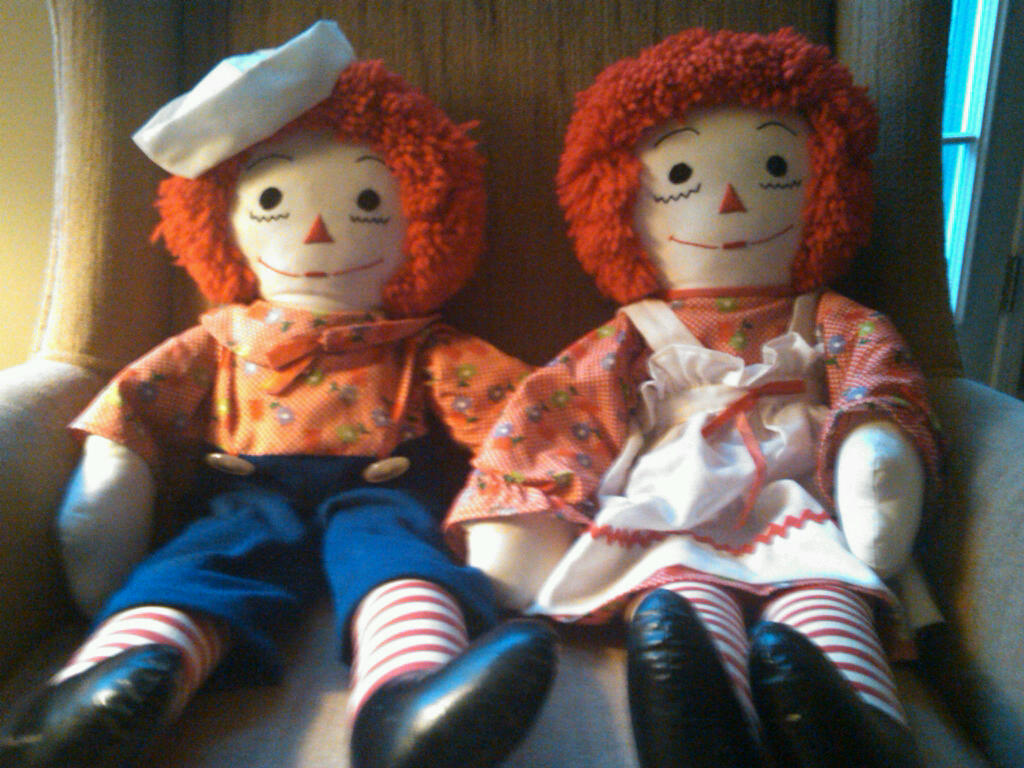 Once a year I have the terrifying privilege of preaching to children who are about to receive the Eucharist for the first time. It’s a May experience, and it took place again last Sunday morning. I am serious about both the noun – privilege – and the adjective. In fact, I told the children last Sunday that I approached them with trepidation, because I am accustomed to having a written homily lying in front of me there in the ambo, even if I seldom look at it. When I speak to the children, I have to do it standing in the center aisle, close to them, and speak informally. I’m not comfortable doing that.
In order to have at least something to cling to, I always bring a prop on these occasions. I have brought my Howdy Doody dummy, my “first communion” picture, a set of juggling balls – anything to create a focal point other than me for the three or four minutes of this enterprise.
 So last Sunday I brought Raggedy Ann and Andy, two large dolls that I bought for Pat about 35 years ago. They were hand-made by a woman who at the time was about 100 years old, and they are exquisite. Pat’s appreciation of their exquisite-ness has faded as the house has become increasingly burdened with more than 40 years of such acquisitions, and she has encouraged me to sell the dolls or give them away. Instead of doing that, I have taken possession of them, and I keep them in my clothes closet where I can see them every day.
I used that image to build a homily about friends who never turn their backs on you. I began by producing the dolls out of a large gift bag and asking the children to identify these two stuffed characters. Most of the kids didn’t know. Only one girl was able to identify both dolls. My homily didn’t depend on the children knowing the names of the dolls, but I couldn’t help feeling a little twinge of melancholy as I saw the boys and girls look blankly at the once iconic figures.

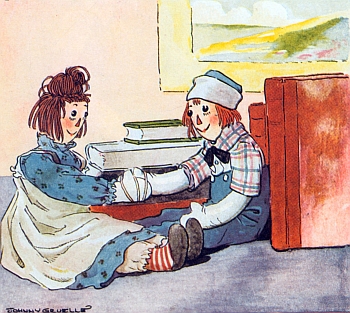
Raggedy Ann was created in 1905 by a talented writer-cartoonist, Johnny Gruelle, when he drew a face on a rag doll for his daughter, Marcella, and derived the name from the titles of two poems by James Whitcomb Riley– The Raggedy Man and Little Orphant Annie. The term “orphant” was an example of the Hoosier dialect Riley adopted in his work. The second poem was the inspiration for the cartoon character Little Orphan Annie. WhenMarcella was 13, she contracted diphtheria after being vaccinated at school. She died shortly thereafter, and the Gruelles attributed her death on the medication she had received. Johnny Gruelle became a leading critic of vaccination, and Raggedy Annie was for a time the symbol of the movement.
In 1918, Gruelle – who was the son of American impressionist painter Richard Buckner Gruelle– published a children’s book, Raggedy Ann Stories, and a doll was sold in connection with it. The brother of the original character was introduced in 1920 in Raggedy Andy Stories. There were more than 40 subsequent books, some of them written and illustrated by Gruelle and some by others. The characters spawned a wide variety of other products, many of which are still on the market — even if the parents in my parish aren’t buying them.
 I heard a report on National Public Radio last fall about the closing of the Liberace Museum in Las Vegas. The museum once drew 450,000 visitors a year — as many as stopped by Hoover Dam — but the outlandish pianist’s appeal had no staying power, and the people who did care grew old. Who thought that would happen to reliable old Raggedy Ann and Andy, but it has. Their museum, which was located in Gruelle’s home town of Arcola, Illinois — admittedly not on The Strip — closed its doors in 2008.
Books: “The House that Ruth Built”
April 30, 2011
 “Jumpin” Joe Dugan, who spent a few seasons as Babe Ruth’s teammate, had this to say: “To understand him, you have to understand this. He wasn’t human.”
I get that. Ruth may not have had it all — he wasn’t much of a base stealer — but he had more of it than anyone else. There’s no point in arguing about it. I love Aaron, Mays, Banks, and Mantle as much as the next fellow, but none of them went 94-46 with a 2.16 ERA before becoming one of the best hitters in history and a fine outfielder to boot. In addition to that, his bombastic personality and his enormous charity revitalized a flagging game in a way that no one else could have done, making his name familiar to people around the globe — down to our own time — no matter how much or how little they know about baseball.
I get that. John McGraw didn’t get that. McGraw was the manager and a part owner of the New York Giants, and he was by reputation one of the best skippers ever. He believed in “scientific baseball,” which was the only way to play the game successfully in the dead-ball era. McGraw was all about place-hitting, bunting, stealing, studying your opponents and taking advantage of their weaknesses.
 McGraw was not about the long ball — especially not the home run — which was coming into vogue at the beginning of the 1920s. As Robert Weintraub explains in this lively and entertaining book, Babe Ruth – the first home run hitter par excellence – represented to McGraw the ruin of the game. McGraw, by Weintraub’s account, despised Ruth, called him a “baboon” and a “bum,” and predicted that he would hit into a hundred double plays a year.
Weintraub’s book covers the 1923 season, the Yankees’ first season in the original Yankee Stadium – not the knockoff they play in now. The team first appeared in the city when three New York guys bought the minor league Baltimore Orioles franchise and moved it north in 1903. The Highlanders, as they were known for most of the first decade, played in Hilltop Park — the present site of the Columbia Presbyterian Medical Center — until 1913, when they moved into the Polo Grounds as tenants of the Giants. At the point at which Weintraub picks up the story, McGraw was fed up with the Yankees in general and Ruth in particular.
 McGraw, as Weintraub recounts, was accustomed to being the toast of the town, and he became increasingly agitated as the Yankees gained in popularity. By 1921, he engineered the Giants management’s decision to tell the Yankees to move out of the Polo Grounds. This, it turned out, was a serious error, because it spurred Jacob Ruppert and Cap Huston — whom McGraw had inspired to buy the Yankees — to build Yankee Stadium just across the Harlem River.
McGraw had a brief period of satisfaction left to him, because the Giants and Yankees won their respective pennants in 1921 and 1922, so that the whole World Series was played in the Polo Grounds, where Giants pitching made a monkey of Ruth. After the ’22 affair, there was widespread talk that the Babe was through.
 In the ’23 season, though, Ruth — seriously chastened by his failures — made at least a show of curbing his appetites — sexual and otherwise — and he tore the league apart, winning the Most Valuable Player award. The rest of the Yankees, led by their dour little manager, Miller Huggins, had an outstanding year, and the momentum carried them to a World Series win that finally took the wind out of McGraw. McGraw was so bitter that he made the Giants dress at the Polo Grounds for the away games and cab it over to Yankee Stadium. The manager himself walked across the Macombs Dam Bridge.
The only bright spot for McGraw in that ’23 series was his reserve outfielder, “Casey” Stengel, who hit two game-winning home runs, one of them inside the park. During the off season, McGraw traded the aging Stengel to the Braves. “It’s a good thing I didn’t hit three home runs,” Casey said. “McGraw might have sent me out of the country.”
This is a colorful book, loaded with the characters of the ’20s – Warren G. Harding, Charles Chaplin, Damon Runyon, Fanny Brice. And, of course, all those ballplayers – Frankie Frisch, Bob and “Irish” Meusel, Everett “Iron Man” Scott, George “Highpockets” Kelly.
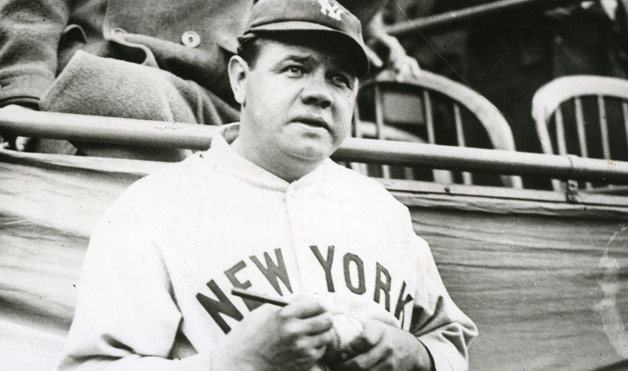 The real heart of this book, though, is found in the stories of McGraw and Ruth, two low-born, hard drinking, brawlers who clawed their way to the top where their lives intersected at a pivotal time in baseball in general and in New York baseball in particular.
Where have you gone, Carmen Miranda?
April 21, 2011
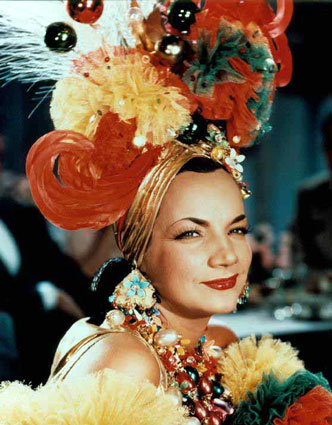 The allusion to Carmen Miranda on this week’s episode of “Modern Family” got us to thinking about her for the first time in recent memory. Our first reaction was to wonder how many people in, say, their 40s or less who were watching that show would have known who Carmen Miranda was. When she was in her heyday, there was no need to ask; she was very popular — with good reason — and she was very successful.
 Carmen Miranda was born in Portugal in 1909, but she grew up in Brazil. She began performing at an early age, although financial stresses on her family led her to a short-lived but profitable career as a milliner. She continued to pursue her musical career, though, and before she came to the United States in 1939, she was already established as a star on radio, recordings, and film. She ultimately made 14 Hollywood movies and at one point was the highest-paid woman in the industry. She also made occasional appearances in the variety-show format that was a staple in early American television.
 Carmen Miranda was subject to some criticism in Brazil during her lifetime on the grounds that she had become too Americanized and was presenting an inaccurate image of Brazilian culture. She was so upset by this evaluation of her work that she stayed away from Brazil for many years. Now, however, she is memorialized by museums in both Brazil and Portugal. She is also the namesake of Carmen Miranda Square at the intersection of Hollywood Boulevard and Orange Drive, across from Grauman’s Chinese Theater.
John Surratt: On the lam in Rome and Alexandria
April 16, 2011
 Maybe I’ve read too much about the plot against Abraham Lincoln; that may be why I can’t get up any enthusiasm about Robert Redford’s film “The Conspirator.” For more than 50 years, I’ve been wading through so many accounts either exonerating or condemning Mary Surratt for complicity in the crime, that I’m practically schizophrenic on the subject. I first took interest in the assassination when my dad subscribed to the Reader’s Digest condensed book series. The first book we got included a truncated version of Jim Bishop’s 1955 history The Day Lincoln Was Shot. Being a sucker for a sob story, my first inclination was to sympathize with Mrs. Surratt as an innocent victim of Edwin Stanton’s over-the-top response to the death of the president — which occurred, incidentally, 146 years ago this very day. I was about 14 when I read that book, and I think the idea of a woman being hanged superseded any calm analysis of the evidence.
I’m probably more suspicious of Mary Surratt now than I was then, although I think the way the defendants were tried in that case was outrageous. Meanwhile, the most interesting figure in that case — well, the most entertaining, anyway — was Mary Surratt’s son John, whose story — as far as I know — has yet to be put on film. John Surratt was 20 years old at the time of the murder, and he had been active as a messenger and a spy for the Confederacy.
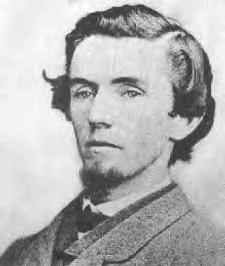 Surratt was involved with John Wilkes Booth in a conspiracy to kidnap Lincoln, take him to the Confederate capital in Richmond, and try to exchange him for southern war prisoners. That plot was unwittingly derailed by Lincoln, who changed the travel plans that the conspirators were relying on. It’s well established that Surratt wasn’t among the little circle of characters Booth enlisted after ramping his plan up to murder. But Surratt beat it out of the country as soon as the foul deed was done, leaving his mother behind to face the wrath of a seething Union. He may have been in upstate New York on a spying mission when Lincoln was killed. At any rate, he turned up in Canada and, after his mother had been hanged, he went to England, then to Paris, then to Rome. The unification of Italy hadn’t been completed yet, and John Surratt was able to enlist in the papal army and engage in combat with the forces of Giuseppe Garibaldi. According to Surratt, he wrote to an influential person in the United States to ask if it would be safe for him to return — by which he meant, would he be tried in a civil court or by an illegal court-martial like the one that had convicted his mother.
 Although his correspondent advised him to stay away for three more years, Surratt decided to take his chances and go home. Before he could do so, however, someone in the Vatican recognized him, and Pope Pius IX ordered him arrested. Surratt was confined to a monastery on a mountain somewhere between Rome and Naples. Meanwhile the Vatican secretary of state informed the United States Secretary of State William Seward, and a man-of-war was dispatched from the Indian Ocean to fetch Surratt. When he was removed from his cell to be transferred to Rome, he broke away from his captors and dove over a wall onto a rock ledge about thirty five feet below. He was momentarily unconscious, but came to himself and scrambled down the mountainside to the village below. As he continued his flight, he fell in with a company of Garibaldi’s troops and told them he was an American deserter from the pope’s forces. They protected him until he departed for Alexandria, Egypt. There, he decided again that he should return to the United States, and he stopped disguising his identity. He was tracked down and arrested and sent home via Marseilles on the U.S. Navy sloop Swatara.
 At home, Surratt got his wish, as it were, when he was tried for murder by a civil court in a proceeding that lasted from June 10 to August 10, 1867. The jury was divided — eight voting to acquit and four to convict — and Surratt was a free man. He lectured on his involvement in the Lincoln case without much success. He later became a teacher and eventually worked in the offices of a steamship company. He married, and he and his wife had seven children. He died in 1916.
John Surratt is one of those captivating figures who flit around the outskirts of historical events which we sometimes think about only in terms of the major players. Judging by his previous relationship with Booth, this story probably would have been very different if Surratt hadn’t been out of town on April 14, 1865. As it is, he comes across as a scamp who makes good copy and probably would make an even better movie.
The text of one of Surratt’s lectures is at THIS LINK.
 CharlesPaolino's Blog