Books: “You Stink!”
June 8, 2012

President Franklin Roosevelt asks Congress to declare war on Japan.
The authors of a new book on baseball describe the Japanese attack on Pearl Harbor, which occurred on Dec. 7, 1941. The writers continue: “The next day, calling it ‘a day of infamy,’ President Franklin Roosevelt asked Congress to declare war on the Japanese and their allies, Germany and Italy.”
The ambiguous pronoun makes it unclear which day Roosevelt was referring to — December 7 or “the next day” — but the record shows that was December 7 and that Roosevelt did not call it ‘a day of infamy’ but ‘a date that will live in infamy.’ The record also shows that Roosevelt did not mention Italy or Germany, both of which declared war on the United States about a month later.
The title of this book is “You Stink!” It is a compilation of what the authors, Eric Wittenberg and Michael Aubrecht, regard as the worst teams, players, plays, and decisions in the history of major league baseball.

In my opinion, the book is pointless and, despite the authors’ disclaimer to the contrary, mean spirited. What else but a mean spirit would prompt writers to spend their time compiling a monotonous stream of statistics to memorialize the failures and disappointments of one team and one player after another. There is nothing original about that, despite the author’s claim that their purpose was to write something original about baseball. Any baseball fan knows that there is much more failure than success in the game; reporting on the failures alone, without the context of the successes, is sophomoric.

JOHN HUMPHRIES
But, then, everything about this book is childish, which is especially jarring because of the credentials the writers present: one is an “award-winning Civil War historian,” and the other “dedicated his studies to the histories of Major League Baseball, the Civil War, and the American Revolution.” These history buffs report that the Brooklyn Dodgers won the 1953 World Series. It was the Yankees.
The adjectives alone are suffocating. How bad was that batting average, that ERA, that season, that decision? It was “atrocious,” “staggering,” “eye-popping,” “wretched,” “anemic,” “terrible,” “mind-boggling,” “horrible,” “pathetic,” “dismal,” “stunning,” “miserable,” “incredible,” “ghastly,” “abysmal.”
There are grammatical errors, a few misspellings, and outrages in style that affect almost every sentence. There is a quote from Roger Maris used twice in the same chapter and numerous other lapses that suggest that this book and a competent editor were never in the same county.
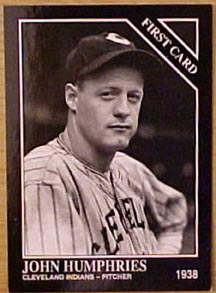
JOHN HUMPHRIES
One of the most conspicuous signs that this book is headed for deep discount is the case of poor John Humphries, whom the authors singled out for opprobrium as the worst catcher of all time. Humphries appeared in a total of 103 games over two seasons in the 1880s. He played catcher in only 75 of those games. It is true that Humphries committed 74 errors in those 75 games, but no serious student of baseball would take into account such a short career in ranking fielders. To emphasize their point about Humphries, the writers included a photograph of him, except that any 15-year-old kid would know that that picture wasn’t taken in the 19th century.
That’s a picture of the other John Humphries, who is in the photo above left, the John Humphries who pitched in the majors in the 1930s and 1940s. The John Humphries whose humiliation was probably sufficient without any help from these writers, is in the photo above.
Wait for the movie.

GIANNI Di GREGORIO
There used to be a TV panel show titled Life Begins at 80. That may be true, and I’ll find out in about ten years, but meanwhile Gianni Di Gregorio has gotten a head start.
Di Gregorio is an Italian filmmaker who got people to take him seriously when he was in his late 50s. He did it with a film called Pranzo di Ferragosto, known in English as Mid-August Lunch or Lunch for Ferragosto. “Ferragosto” — from the Latin meaning “feasts of Augustus” — is a mid-summer holiday that has its origins in the Roman Empire.
Di Gregorio, who has said that he had trouble getting financial backing because his 2008 film is about old people, directs and plays the principal character — Gianni. The use of the name is not so much the result of a lack of imagination as it is a result of the autobiographical aspects of the film.

Gianni — the character, not the director — keeps himself supplied with bottles of “nice” wine, and puts them on the tab.
Gianni, the character, is a middle-aged man who lives in Rome with his aged mother in a condominium they cannot afford. Gianni hasn’t paid the maintenance fee in two years, and the condo administrator comes around to say that Gianni and his Mama may be evicted. But the administrator has a problem that Gianni is in a position to solve, and the quid pro quo would be cancellation of some of Gianni’s debts. The administrator wants to take a short vacation, and he would like to leave his own aged mother in Gianni’s care. Gianni is in no position to turn down this offer, and he agrees to accept the woman as a guest.
Almost simultaneously, Gianni’s family doctor arrives for a house call. He, too, it turns out, needs a place to park his Mom — and there’s something in it for Gianni. When the doctor arrives with his mother, he brings along an aunt as well, and suddenly Gianni finds himself the chef and maître d’hôtel for a gaggle of ancient females who don’t always do as they are told.
The story of this odd situation and the events that result from it are told in this film, which DiGregorio directed, in manner so understated that one gets the feeling of observing people going about the minutiae of their everyday lives. Much of the dialogue (in Italian with English subtitles) consists of mumbled sentence fragments. The interchanges among the characters feels so natural that I suspect that much of the story was filmed without a firm script, or perhaps with no script at all.

Gianni presides at dinner with his mother, left, and guests. His mother is played by Valeria De Franciscis, who was 93 when this film was made.
If the cast didn’t depend heavily on a script, that would be appropriate, because several of them were not actors. For example, Valeria De Franciscis, who plays Gianni’s mother, was a family friend who, the director wisely thought, fit the part. De Franciscis was so well suited to the role that she played Di Gregorio’s mother again in his 2011 film, “The Salt of Life.”
Mid-August Lunch was well received when it first appeared and won some prestigious awards. It is highly regarded for the light touch with which it portrays some of the realities of middle and old age. It also reflects the relationship many Italian men have with their doting and possessive mothers. Many a tenor has enthusiastically sung about this phenomenon: “Mama . . . Tu sei la vita, e per la vita non ti lascio mai piu.” And, in fact, Di Gregorio shot much of this film in the apartment in which he lived for many years with his elderly mother.
Di Gregorio is, by reputation, a charming guy, and he certainly communicates that through the character in this film. He got off to a late start as a filmmaker, but I hope we’ll be seeing him and his work a lot more,
Books: “How to Teach Relativity to Your Dog”
June 3, 2012
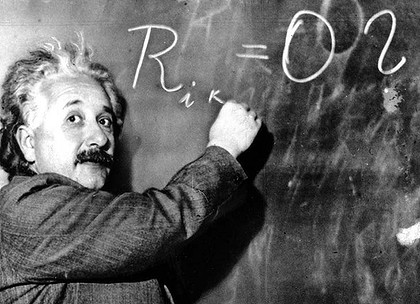
ALBERT EINSTEIN
I still argue with the voice on my GSP. Don’t look at me that way: You do it, too! The voice has a British accent; we call her Petula. And I still argue when I want to stay on I-95 and she tries to send me onto US-1. But I do have a little more respect for her — or, at least, for the device — now that I’ve read Chad Orzel’s book “How to Teach Relativity to Your Dog.”
Orzel, a professor who also wrote “How to Teach Physics to your Dog,” explains in this more recent book that the technology of global positioning systems relies on a principle of the theories of relativity first formulated by Albert Einstein. A principle of the special theory of relativity holds that a clock that is in motion will “tick” increasingly more slowly as the speed of its motion increases. The general theory of relativity, on the other hand, holds that a clock runs faster the higher it is — that is, the greater its altitude in the gravitational field.

The atomic clocks aboard the GPS satellites speed up because of their altitude and slow down because of the speed at which the satellites orbit the earth. At the altitude of those satellites, the clocks are quickened more than they are slowed, but they are still keeping time at a different rate than clocks on the surface of the earth. Each satellite emits a radio signal with the time on its atomic clock. The GPS unit picks up two or three of those signals, calculates the difference between the time on the satellite clock and the time on the surface of the earth, and uses that information to determine the distance to each satellite and, from that, the location of the unit on the ground.
Pretty cool, huh?
Still, I don’t read about physics because I’m interested in the practical applications so much as because I’m interested in the theories and principles. It can be mind-bending stuff, but if given enough concentration and persistence, it can lead to some moments of enlightenment about how the universe works. And studying the theories of relativity, in particular, can be an eye-opening series of reminders that things are not always what they appear to be.
 Orzel’s technique in this book is to explore the special and general theories of relativity, and some other matters, as though he were discussing them with his real-life dog, Emmy. This is the writer’s way of making the material more accessible to people like me, but frankly, it gets tiresome. The dog’s constant references to Orzel as “Dude” and the overworked jokes about Emmy’s appetite, disdain for cats, and fixation with chasing rabbits, grow old pretty quickly. And the premise crumbles as the dog begins to talk about physics as if she were a graduate student at Princeton.
I think anyone who picked up this book thinking that the dialogue with the dog, and the use of dog-world examples, would make physics easier to understand would be disappointed. Orzel’s explanations are clear, but he could have been just as clear without the input from the dog. More important, with or without the dog, a reader won’t get much out of this book without focusing attention on it, frequently stopping to think hard about what Orzel has just written, frequently re-reading paragraphs or whole sections and consulting the glossary at the back of the book.
 Both the special and general theories of relativity depend on the idea that the laws of physics work the same for observers who are in motion and observers who are stationary, even though an event — such as a person dropping a ball from above his head to the floor at his feet on a moving train — will appear differently to the person dropping the ball and a person observing the event while standing still on the station platform.
An interesting thing that comes up again and again in Orzel’s book is the fact that researchers are still discovering implications of these theories that Einstein expounded at the beginning of the 20th century. Already Einstein’s work has led to the understanding that the mass of an object is a measure of its energy and the two properties are connected by the constant e=mc²; that time and space are expressions of the same thing; that gravity bends light; that large objects bend space; that a moving object shrinks in length in the direction in which it is moving — the faster it moves, the more it shrinks.
Orzel’s also discusses black holes, those concentrations of mass so dense that even light can’t escape their gravity; the principles behind nuclear energy — both the relatively weak energy that holds atoms together and the enormous energy that can power cities or destroy them; the discovery that the universe is expanding at a constantly increasing rate; and the likelihood that this expanding universe began as a single point that exploded in what we know call the “big bang.”
The dog? I can take or or leave her. But reading this book — some of it two or three times — was worth the energy (which, by the way, equals mass times the speed of light squared)
A gift horse of sorts
May 24, 2012
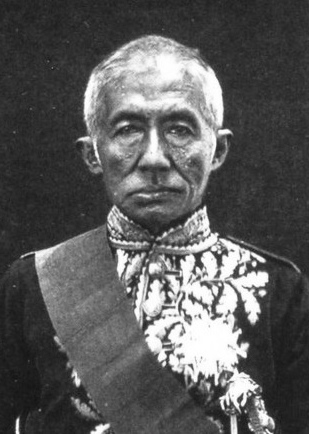
KING RAMA IV MONGKUT
When I discussed the book I wrote about in a post here this week, I got an unexpected response from several people who thought I couldn’t distinguish a camel from an elephant.
The book was “The Last Camel Charge” by Forrest B. Johnson, which reports on an experiment in which the U.S. Army imported several dozen camels from North Africa in the 1850s to see if they would perform better than horses and mules in the difficult conditions in the American Southwest. In about a half dozen cases in which I started to discuss this book, my companion asked me if I didn’t mean elephants. In all of these cases, they were mixing up the episode Johnson wrote about with the incident in which the King of Siam offered to send elephants to the United States for use as beasts of burden.
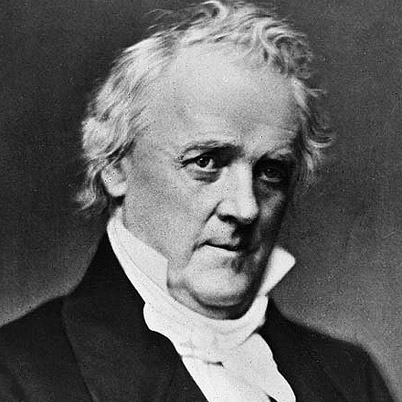
Most people who know about that offer heard about it in the musical play or the movie “The King and I,” in which, not surprisingly, it was badly distorted. In the movie and the musical, the King of Siam—Rama IV Mongkut—dictates, in English, a barely literate letter to Abraham Lincoln, offering to send the elephants. In reality, the king — who was fairly fluent in English — wrote such a letter, in his own hand, to Lincoln’s immediate predecessor, James Buchanan.

ABRAHAM LINCOLN
The king’s idea was that the elephants could be set free in the American wilderness and allowed to breed so that, as the herd grew, the animals could be captured and trained to carry cargo. Transportation being what it was in those days, that letter didn’t reach the White House until Buchanan had left office. So it was Lincoln who responded.
Lincoln, who signed the letter “your good friend,” wrote in part,
“I appreciate most highly Your Majesty’s tender of good offices in forwarding to this Government a stock from which a supply of elephants might be raised on our own soil. This Government would not hesitate to avail itself of so generous an offer if the object were one which could be made practically useful in the present condition of the United States.
“Our political jurisdiction, however, does not reach a latitude so low as to favor the multiplication of the elephant, and steam on land, as well as on water, has been our best and most efficient agent of transportation in internal commerce.”

YUL BRYNNER
From what I can tell, the portrayal of Mongkut in the stage show and the film was inaccurate in broader ways. While Yul Brynner, who created the role in both cases, represented the king as ignorant and in some ways boorish, Mongkut — a Buddhist monk and eventually an abbott — seems to have been well informed. He studied English, Latin, and astronomy and was an admirer of Jesus of Nazareth if not of Christian theological dogma.
Books: “The Last Camel Charge”
May 22, 2012

Sam Bishop
Samuel Bishop wanted to cross the Colorado River. Several hundred Mojave warriors objected. The factor that decided the argument: camels.
Forrest B. Johnson tells the story in his history “The Last Camel Charge.” It was April 1859, and Bishop’s friend and business partner — Edward “Ned” Beale — was leading a company of workers building a wagon trail between Arkansas and Los Angeles. The plan was for Bishop and a group of men from his ranch to rendezvous with Beale at the river and deliver supplies. But Bishop found his way blocked by Mojaves, whose people had lived in the region for a great many years. The Mojaves repelled Bishop’s first attempt to cross from California to the Arizona territory. After thinking things over, he hid the supplies, sent most of his men, wagons, and animals back to the ranch, leaving himself with 20 armed young men and 20 camels.
Camels? Six dozen of them had been imported from North Africa by the U.S. Army in an experiment championed by Jefferson Davis when he was a member of Congress and, during the administration of James Buchanan, secretary of war. The object was to determine if camels would be more serviceable than horses and mules in the punishing conditions in the American Southwest.
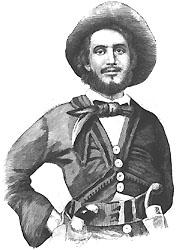
EDWARD BEALE
This experiment was carried on both by the Army and by civilians — namely Beale and Bishop. For the most part, it demonstrated exactly what its proponents expected. Camels could carry hundreds of pounds in excruciating heat without showing signs of fatigue. They would eat mesquite and cactus and almost any other vegetation that crossed their paths, whereas mules and horses required some form of grass. And, of course, camels could go for days without drinking, whereas desert travelers relying on horses and mules were frequently obliged to leave the trail and search for water to keep the animals alive.
Bishop had borrowed the camels from the Army. Now, although he was leading a troupe of civilians, he put them to military use. As he approached the river, he found an estimated 500 Mojave assembled there to deny him a crossing. He assembled his men, mounted on camels in four rows of five each. They galloped — likely at 40 miles per hour — directly into, and through, the ranks of the Mojave. Bishop crossed the river and didn’t lose a man.

A MOJAVE WOMAN
In spite of all the evidence that camels were more suited than other animals to travel in the deserts of the Southwest, the experiment didn’t last very long after Bishop’s charge. There was a complex of reasons for that, not the least of which was the outbreak of the Civil War in 1860. Among other effects of the war was the departure of Jefferson Davis, camel proponent par excellence, from the federal government. Davis, of course, took up the secession cause and became president of the Confederacy.
In spite of the title of this book, camels aren’t the only subject Johnson covers.
JAMES BUCHANAN
The writer places the camels in the wild milieu that was the American West in those days. For example, he reports extensively on the conflict between the Mormons who had migrated to the Utah Territory to escape from the turmoil they had become embroiled in further east. When they were settling in Utah, they wanted to live on their own terms, and that brought them into conflict with the national government. At one point, while the Beale expeditions and the camel experiment were going on, President Buchanan, perhaps hoping to distract attention from the growing crisis over expansion of slavery into the western territories, declared the Mormons in rebellion against the United States and ordered the Army to deal with them— something, fortunately, that became unnecessary.
The writer also gives vivid accounts of the rigors encountered by folks traveling across country — the weather, the terrain, the hostile and violent people, not all of them natives.
“We are all brothers. . . .”
May 4, 2012

Spencer Williams Jr., Alvin Childress, and Tim Moore
I gather from schnibles I’ve seen on the Internet that 30 Rock caught some flack for a parody of the 1950s television series Amos ‘n’ Andy. In the 30 Rock sketch, which was called Alfie and Abner, the characters were played by Tracy Morgan and John Hamm, who was in black face and an Afro wig, an image some folks found offensive. Somewhat incongruously — not to put too fine a point on it — the set was a replica of the Kramdens’ Bensonhurst kitchen rather than the most frequent Harlem scenes on Amos ‘n’ Andy — the Mystic Knights of the Sea lodge hall and the apartment of George and Sapphire Stevens.
The premise of the 30 Rock sketch was that one actor was in black face because NBC thought it would be too big a step to have two black actors on the stage at the same time. The irony is that Amos ‘n’ Andy, which had its original run from 1951 to 1953, was the first television series to have virtually an all black cast. White actors appeared in incidental roles in only a handful of episodes. I think it’s fairly well known that the show was driven out of production because of objections — most prominently from the National Association for the Advancement of Colored People — on the grounds that it presented negative stereotypes of black Americans. It continued in reruns on some stations into the 1960s.

Alvin Childress
The television series evolved from a radio series that ran from 1928 until 1960. At the height of its success, Amos ‘n’ Andy was not only the most popular radio show on the air but the most popular diversion of any kind. And yet that series featured white actors mimicking black characters — namely Freeman Gosden and Charles Correll, who created the show. For a while, Gosden and Correll performed all the male roles and some of the females. Later, other actors and actresses were cast in the supporting parts while Gosden and Correll continued to play the principal figures: Amos Jones, Andrew H. Brown, and George “Kingfish” Stevens. Gosden and Correll went a step further in the 1930 RKO movie “Check and Double Check,” donning black face to play Amos (Gosden) and Andy (Correll). Duke Ellington and his orchestra appeared in that movie.
The TV series is now controlled by CBS, which has withdrawn it from circulation and has at times taken legal action in an attempt to squelch the widespread Internet sale of bootleg tapes and DVDs of the episodes.

Tim Moore
The Amos ‘n’ Andy television show is in a unique position, I think, in the sense that if it were judged in a vacuum — with no reference to who created it and when it first appeared — the conclusion might be different than it is when the show is viewed in its historical context. It was introduced when black American citizens in large numbers were still being denied their civil rights, when black people in many parts of the country were regularly threatened with violence, and when black people were freely lampooned in movies, cartoons, and minstrels. The show was still being broadcast in syndication in 1955, when Sarah Louise Keys, Claudette Colvin, and Rosa Parks in turn refused to give up their seats on the Montgomery, Alabama bus system to make way for white passengers. With Jim Crow making his last stand against legal equality and common decency, it shouldn’t have been surprising that black society and others would object to some of the characterizations on Amos ‘n’ Andy.

Ernestine Wade
I have owned copies of all 78 known episodes of the series for many years, and I have watched them all several times and assigned students to write about them. I have also done a lot of research about the show itself and about the actors who appeared in it, and I have interviewed several people who were connected to it, including Nick Stewart who played Lightnin’ — the janitor at the lodge hall. Based on all that exposure, I think one can at least make the argument that, taken out of its milieu, Amos ‘n’ Andy would be no more offensive than all-black sitcoms that have appeared since, including Sandford and Son and Family Matters.
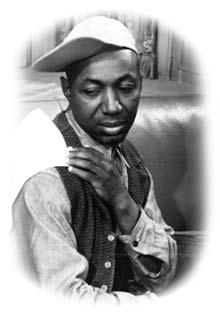
In fact, Amos ‘n’ Andy is fashioned on the same model as The Honeymooners. The rap on Amos ‘n’ Andy has been that it perpetuates stereotypes of black men as lazy, shiftless, and dumb, and of black women as shrewish and unattractive. As for the men, those characterizations apply to only four characters in the series: Andy Brown (Spencer Williams Jr.), George “Kingfish Stevens (Tim Moore), Lightnin’ (Nick Stewart, billed as Nick O’Deamus), and the lawyer Algonquin J. Calhoun (Johnny Lee).
Nick Stewart
These men live in a universe in which virtually everyone is black and, significantly, in which everybody but them is dignified, moral, and responsible. Just as The Honeymooners didn’t imply that all white men were naive schemers like Ralph Kramden or good-natured dumbbells like Ed Norton, Amos ‘n’ Andy didn’t imply that all black men were lummoxes, wasters, or charlatans. In both cases, the point was that the main characters were out of step with everyone around them; they were the exceptions, not the rules.
The most prominent female character on Amos ‘n’ Andy was Sapphire Stevens, the Kingfish’s wife. Sapphire was played by Ernestine Wade, who actually was a pretty woman. Sapphire longed for a more genteel life in which she wasn’t hounded by bill collectors and in which she could associate with folks a little more erudite and stimulating than Andy Brown. Wade portrayed her as a decent woman who was faithful to a husband who didn’t deserve it; if Sapphire nagged the Kingfish and at times lost her temper with him, no one could blame her any more than they could blame Alice Kramden from blowing up at Ralph.

Johnny Lee
Less sympathetic a character, perhaps, was Ramona Smith, Sapphire’s mother, who was presented as the classic bellicose battleship of a mother-in-law — an accessory the Kingfish had in common with Ralph Kramden.
The broadest of the regular characters were the shambling, drawling Lightnin’, and Calhoun, a loudmouth and a fake.

Amanda Randolph
There was a shift in emphasis in the television series in which Amos, although a title character and often the voice that introduced the episode (“Hello, folks. This is Amos. . . .”), became a secondary figure, and the Kingfish became the focal point of almost every episode. In the TV series, Amos was a level-headed, intelligent, soft-spoken, man who owned his own taxicab and led a quiet life with his lovely wife, Ruby, and their two daughters. Amos was often the Jiminy Cricket to the Kingfish and Andy, giving them sound advice and sometimes directly getting them out of trouble.
An aspect of this show that is always overlooked is the quality of the cast it brought together. Many of the actors had long careers as entertainers, persisting through an era in which they were unappreciated, type cast, and often rudely treated.
Tim Moore, who played the chronically unemployed and finagling Kingfish, had a remarkable life as a vaudevillian, entertaining all over the world. He also appeared in several Broadway shows and in films. He was even fairly successful as a boxer. He was lured out of retirement to play the role in Amos ‘n’ Andy. His character’s sobriquet was actually his title as head of the lodge — the kingfish. When he wanted his pals to bail him out of some scrape, he often reminded them, “After all, we are all brothers in that great organization, the Mystic Knights of the Sea.”
Jester Hairston
Spencer Williams Jr., who played the sweet but gullible oaf Andy Brown, was an important figure in the history of American film. A World War I army veteran who worked in many aspects of the movie business, including as a sound technician, eventually became a writer, director, and producer of so-called “race movies,” films that were made specifically to be shown in segregated theaters. His film “Go Down Jesus,” which was made on a $5,000 budget and with nonprofessional actors, was one of the most successful “race films” of all time. Time magazine called it one of the “25 most important films on race.”

Lillian Randolph
Alvin Childress, who played the sensible and gentle Amos Jones, held a bachelor’s degree in sociology. He began working as an actor with a Harlem theater company, and he worked on both the stage and on film. He appeared on Broadway as Noah in Philip Yordan’s play Anna Lucasta, which ran for 957 performances. Although he appeared in a couple movies and in episodes of Perry Mason, Sandford and Son, Good Times, and The Jeffersons, Childress, who felt he had been typed by casting directors as Amos Jones, had a hard time sustaining his career. His first marriage, which lasted for 23 years, was to a well known writer and actress, Alice (Herndon) Childress.
Nick Stewart, who played Lightnin’, was a dancer and comedian who appeared in night clubs, Broadway shows, films, and radio. Stewart was the voice of Br’er Bear in the 1946 Disney movie Song of the South. In 1950, He and his wife, Edna, founded the Ebony Showcase Theater in Los Angeles, where for many years they provided a venue in which black actors could appear in quality productions.

Roy Glenn
Johnny Lee, who played the blustering, incompetent lawyer, Algonquin J. Calhoun, was a dancer and actor who appeared in a couple of dozen films and television shows, perhaps most notably as the voice of Br’er Rabbit in Song of the South. He had featured roles in Come On, Cowboy! (1948) and She’s Too Mean for Me (1948) and he played a stuttering bill collector in Boarding House Blues (1948). He also starred in an all-black musical comedy, Sugar Hill, at the Las Palmas Theatre in Hollywood in 1949. His last TV role was Mr. Gibbons the Locksmith on Dennis the Menace in 1963.
In addition to these regular players, Amos ‘n Andy provided occasional roles for some very talented actors, including the sisters Amanda and Lillian Randolph. Amanda Randolph, who played Ramona Smith, mother of Sapphire Stevens, was the first black actress to appear on a regularly-scheduled network television show. That was The Laytons, which appeared on the old Dumont network for two months in 1948. She was an exceptional jazz pianist and a composer. She appeared in New York musicals, entertained in Europe, performed in vaudeville, and cut records as both a musician and a vocalist. She appeared on Broadway, in films, and on radio. On radio, she played the title role in Beulah in the 1953-1954 season, inheriting the role from Lillian.

Tim Moore
She was the first black American actress to have her own daytime network TV show — Amanda, which ran on Dumont in the 1948-49 season. Among her many TV roles was Louise, the wisecracking maid on Danny Thomas’s comedy series.
Lillian Randolph, who appeared in Amos ‘n’ Andy as Madame Queen, a former girlfriend of Andy Brown, was also a multi-talented performer on radio, television, and film. She had played Madame Queen on the radio, too, and made the character’s name a household word in the United States. She played the maid Birdie Lee Coggins in The Great Gildersleeve radio series, and she repeated the role in Gildersleeve films and the later TV series. Her performance of a gospel song on the TV series led to a gospel album on Dootone Records. She also made regular appearances on The Baby Snooks Show and The Billie Burke Show on radio. Her best known film roles probably were Annie in It’s a Wonderful Life and Bessie in The Bachelor and the Bobby Soxer. Her television roles included Bill Cosby’s mother on The Bill Cosby Show, and Red Foxx’s aunt Esther on Sandford and Son. Altogether, she appeared in about 93 movie and television properties. In 1954, Lillian Randolph became the first black member of the board of directors of the Hollywood Chapter of the American Federation of Television and Radio Artists.

Spencer Williams Jr.
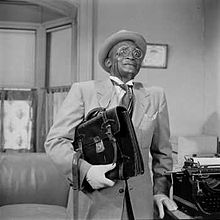
One of the most eminent persons to appear on the Amos ‘n’ Andy TV series was Jester Hairston, who made occasional appearances as both Sapphire’s brother Leroy and as wealthy and dapper lodge member Henry Van Porter. Although he appeared in about 20 films and several TV shows, acting was secondary to Hairston’s career as a composer, songwriter, arranger, and choral conductor. He wrote the song “Amen” for the 1963 film Lilies of the Field and he dubbed the song for Sidney Poitier to lip-sync. He also wrote the Christmas carol Mary’s Little Boy Child. Harry Belafonte’s recording of the song reached No. 1 on the charts in the UK in 1957. From 1986 to 1991, Hairston played Rolly Forbes in the TV series Amen.
Hairston was a graduate of Tufts University, and he studied music at the Julliard School. He was highly regarded as a conductor of choirs, including on Broadway, and as a composer and arranger of choral music. In 1985, when few foreign performers were appearing in China, he took a multi-racial choir to tour the country. Hairston was a founder of the Screen Actors Guild.
Also among the actors who appeared on Amos ‘n’ Andy was Roy Glenn, who had a rich baritone-bass voice that he got to use in one episode, singing some lines from “Red Sails in the Sunset.” Glenn had a long acting career, appearing in 96 films and television shows. His most prominent role probably was Sidney Poitier’s father in Guess Who’s Coming to Dinner (1967).

Jay Brooks
The only Amos ‘n’ Andy alumnus I’m aware of who not only is still living but has worked as an actor recently is Jay Brooks, who appeared in two episodes of Seinfeld, as Sid, the man who provides a service in Jerry Seinfeld’s neighborhood by moving cars from one side of the street to the other to comply with New York City’s alternate-side parking regulations.
The actors who appeared on Amos ‘n’ Andy were often criticized for accepting roles on a show that some people felt was demeaning to black people. More often than not, the roles offered to black performers in those days in any venue were stereotyped if they weren’t out-and-out offensive. Some of the actors — Alvin Childress, for example — argued that they had to work where they could and that by accepting parts on the first all-black show on television, they had paved the way for others to follow. It’s too late to resolve that question but, taken on its own merits, Amos ‘n’ Andy was a funny show, due in large part to the performances of a lot of experienced actors who, over their careers, made enormous contributions to American popular culture. They don’t deserve to be forgotten.
Netflix Update No. 64: “Pay it Forward”
April 30, 2012

Helen Hunt
The concept of “paying forward” evidently has been rattling around for a long time—at least as long ago as 317 BC, when it was woven into the plot of Dyskolos, a play by the Greek writer Menander.
We encountered the idea, known in sociology as “generalized reciprocity,” much more recently, namely in the 2000 film Pay it Forward, with Helen Hunt, Kevin Spacey, Haley Joel Osment, Jon Bon Jovi, and Angie Dickinson.
Hunt plays Arlene McKinney, a woman estranged from her husband and trying to raise her son by working both as a pole dancer and as a waitress in a Las Vegas casino. Arlene and her absent husband, Rickey (Jon Bon Jovi) are both problem drinkers; Arlene, who is in a program for alcoholics, still sneaks a nip when she’s under stress, which is most of the time.

Kevin Spacey
Arlene’s son, Trevor (Osment), is assigned to a seventh-grade social studies class taught by Eugene Simonet (Spacey) who has a badly scarred face. On the first day of class, Simonet gives his students a year-long assignment, which is to devise and at least attempt to carry out a plan that will change the world forever. Unlike many of his classmates, Trevor takes this assignment seriously, and he decides that his project will involve “paying forward,” by which he means that he will do a favor for each of three strangers and ask each of them to return the favor not to Trevor but to three other strangers. The goal, of course, is to set off an ever-expanding chain reaction of good will.
Trevor’s first attempt at putting this idea into practice is to invite a homeless drug addict to take a shower and have a meal at the McKinney home and to stay overnight. When Arlene discovers this plan already in progress, she has a predictable and understandable reaction, and it isn’t positive.

Haley Joel Osment
The incident inspires Arlene to visit the school and reprimand Simonet for making the assignment. The two don’t understand each other, and the interview is not successful. But Trevor decides to make the solitary Simonet the beneficiary of the next favor by tricking the teacher and Arlene into having dinner together, a scheme that does not succeed.
The story becomes increasingly complicated as Trevor runs away from home, Arlene and Simonet take a second look at their relationship, and Ricky reappears with the announcement that he is sober to stay.
This film begins with a sequence in which a Los Angeles reporter, Chris Chandler (Jay Mohr), stops at a crime scene and watches as a patrol car drives into his own vehicle, wrecking it beyond repair. A passer-by, an older and prosperous looking gent, hands Chandler the keys to a Jaguar, tells him to take it, and refuses to explain himself.

Jon Bon Jovi and Helen Hunt
Chandler eventually determines that this incident is part of a series of good deeds that he traces back to Trevor Chandler.In the process, Chandler comes across a woman identified only as Grace, a homeless alcoholic played by Angie Dickinson and a key figure in the McKinney drama.
I go along with the Rotten Tomatoes assessment of this film: the story line is much too emotionally manipulative, but the performances by everyone in the cast nearly redeem the movie. I think most viewers would also find the conclusion of the story, which I won’t spoil here, to be contrived and unsatisfying.
Watch it, but keep your expectations under control.
Books: “A Natural Woman”
April 27, 2012
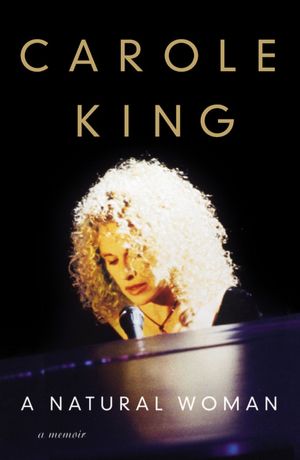 It may not be possible to dislike Carole King.
What’s not to like? She has written some of the best pop and rock songs of the past five decades, she has a record of social responsibility, and she’s a nice person.
In a way, her memoir, A Natural Woman, is similar: What’s not to like? It’s a conversational account of a remarkable American life; in some ways, it would be hard to believe if one didn’t already know that it’s true. King (Carol Klein) is a Brooklyn native who found herself in awkward straits in school because her mother enrolled her early, and then she skipped a grade — so she was perennially younger than her classmates and felt out of place.
She showed early signs of a bent for entertaining, and she was writing songs in her teens. In fact, she was only 18 when she and her husband, Gerry Goffin, wrote “Will You Still Love Me Tomorrow” for the Shirelles. She also became a mother for the first of four times at around the same time. Among the songs she has written since then, either on her own or with a collaborator, are “Where You Lead, I Will follow”; “I’m Into Something Good”; “It’s Too Late, Baby”; “The Loco-Motion”; “Take Good Care of My Baby”; “Go Away, Little Girl”; “I Feel the Earth Move;” “You’ve Got a Friend,” and “Natural Woman.’’

JAMES TAYLOR and CAROLE KING
For a long time, King saw herself as a writer and “sideman” — that is, one of the musicians playing and even singing behind a lead performer. By King’s account, James Taylor changed that single-handedly. It occurred in 1970 while Taylor was touring to promote his album “Sweet Baby James.” King was to play piano for Taylor at a performance at Queens College, which was her alma mater. As the show was about to begin, Taylor told King he wanted her to sing lead that night on “Up on the Roof,” a song she had written with Goffin and a favorite of Taylor’s (and mine, not that it matters).
King writes that she was taken aback by this request but had no time to talk Taylor out of it. When that spot in the set came around, Taylor introduced King to the audience as an alumna of the college and a co-writer of the song and, without rehearsal, she took her first turn as a lead singer. In time, of course, she become a good enough lead that her album Tapestry become one of the best selling collections of all time.

CAROLE KING and GERRY GOFFIN
King devotes a lot of space in this book to a personal life that is difficult for an outsider to fully understand. She married Goffin when she was 17, and the pair, barely more than children, settled into suburban life in West Orange. But Gerry got restless, he fooled around with drugs, he eventually plunged into serious depression. The marriage ended, but King and Goffin continued to be friends and collaborators. King had three more marriages, none of which, based on her own accounts, seem to have been well thought out. Two ended in divorce and one ended when her husband — who she says struck her on several occasions — died as a result of a drug overdose.
King emphasizes in this book that she didn’t like touring and that she didn’t seek stardom because of the baggage that came with it. She had a yen for a simple life, particularly as compared to life in the New York City and Los Angeles areas. From both a cultural and environmental point of view, she carried that quest to its logical extreme by buying a ranch in Idaho. Before she picked the spot, in fact, she and her fourth husband, Rick Sorensen, and her two youngest children lived for three years in a cabin that had no electricity, running water, or heat.
 When King first decided to make Idaho her principal residence, her oldest child, Louise, then 17, declined to make the move, and she stayed behind in Los Angeles. Eventually, all of King’s children would wind up in California. All of those children apparently have had fruitful lives, but King’s priorities are still a little hard to grasp.
I found it disconcerting, too, that she devoted a chapter to her decision to practice yoga, remarking that the discipline helped her find her “center.” She presents this as a life-shaping event, but she never explains what she means by finding her center, and except for one glancing reference, she never mentions yoga again.
Perhaps because she is such a nice person, King chooses her words carefully when she’s describing her interactions with other people, even the husband who brutalized her. While it wouldn’t necessarily be useful for her to share any rancor she might be harboring, her approach is tentative enough to make a reader wonder what else she chose to withhold.
King mentions an editor in the acknowledgments, but I was happy to find that it seemed as if this book was largely King’s own work. It has the feel of a kitchen-table conversation. Apparently it is as much as King wanted to share, so it will have to do for now.
Books: “Nixon’s Darkest Secrets”
March 30, 2012
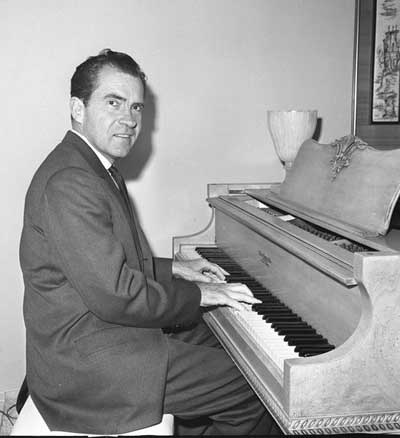
NIXON AT THE KEYBOARD
There is a scene in a PBS documentary about Jack Paar that illustrates as well as anything why William Shakespeare would have loved Richard Nixon.
The scene comes from a 1963 episode of Paar’s groundbreaking talk show. Nixon, since leaving the vice presidency, had lost elections for president and for governor of California, but for a two-time loser, he was in a good mood — one might say light-hearted, a term not often associated with RMN.
Paar reminds the audience of something that was widely known at the time, namely that Nixon was a piano player. Paar also explained, to Nixon’s obvious amusement, that Nixon had also written some music for the piano and that his wife had made recordings of him playing his own tunes.
Paar said that bandleader Jose Meles had used one of those recordings to write an arrangement to back up one of Nixon’s compositions, and Paar asked Nixon to take to the keyboard.

JOHN F. KENNEDY and NIXON
Before complying, Nixon noted that Paar had asked earlier about Nixon’s political ambition. “If last November didn’t finish it, this will,” Nixon said, “because — believe me — the Republicans don’t want another piano player in the White House,” a reference to Harry S. Truman whose musical virtuosity was about on the same level as Nixon’s.
When I saw this incident on a PBS documentary about Paar, I thought about what a complex creature a human being is, and I thought about that again when I read Don Fulsom’s book, Nixon’s Darkest Secrets. Considering the depth and breadth of Nixon’s corruption and paranoia, I wouldn’t have thought it possible for a writer to do a hatchet job on the old trickster, but Don Fulsom has managed it.
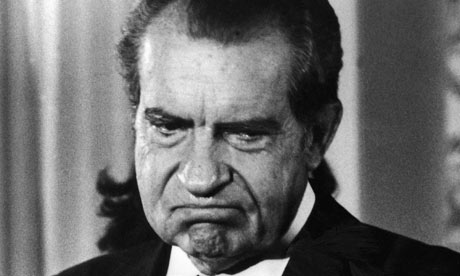 On paper, at least, Fulsom has some credentials to be writing about this subject. He covered the White House and was Washington bureau chief for United Press International, which once upon a time was a viable news agency. Having been a journalist myself for more than 40 years, I would have expected a writer with Fulsom’s resumé, producing a book this long after Nixon’s death, to provide some insight into the whole man. As deeply immersed in muck as he was, after all, Nixon didn’t spend his whole time drinking himself blotto, assaulting people who annoyed him, beating his wife, raking in dough through his bag men, or plotting to have people like Jack Anderson killed.
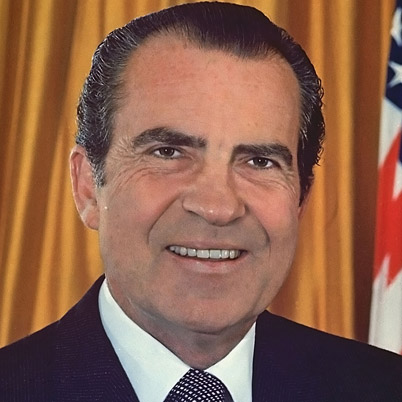
And while his administration was forever besmirched by his prolongation of the Vietnam war and his order for the secret and murderous bombing of Cambodia, it was productive in many ways, including creation of the Occupational and Health Safety Administration , the National Endowment on the Arts, and the Environmental Protection Agency. Nixon approved the first significant step toward a federal affirmative action program. And Nixon — as probably only he could have — altered the course of modern history by changing the U.S. relationship with the Soviet Union and China.
Although Fulsom has riffled through some of the more recently released documents about Nixon, he hasn’t contributed anything to our understanding by recounting in nauseating detail the depravities of the man’s life. We get it. He was a sleaze. But he was also this other guy. This guy with a remarkable grasp of foreign affairs. This guy who supported a lot of moderate initiatives. And this guy who played the piano. And from this distance, that’s what’s so fascinating about him.
Look for Fulsom’s book with the scandal rags at the checkout counter. Shakespeare would have told the whole story.
You can see Nixon playing the piano on Jack Paar’s show by clicking HERE.
Books: “Eisenhower: The White House Years”
March 25, 2012
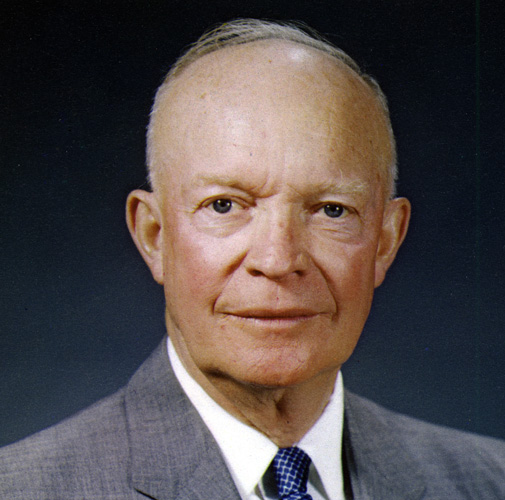 When I was a grad student at Penn State, former President Dwight Eisenhower visited the campus. It wasn’t a public event; he was speaking to a group of students from State College High School. But I was working in the public information office and found out about it and simply walked into Waring Hall at the appointed time. It was 1964 — a different era. Nobody asked who I was.
Eisenhower had been out of office for about four years. He was 74 and had suffered heart attacks and a stroke. Still, he stood at the edge of the stage with his head high and his shoulders back — in short, with the military bearing long associated with him. He encouraged those kids to take an interest in civic affairs and not to expect other folks to do all the work either inside or outside of government.
Eisenhower had been an iconic figure in our house, both because of his role in World War II and because he had kept the presidency out of Democratic hands for eight years.
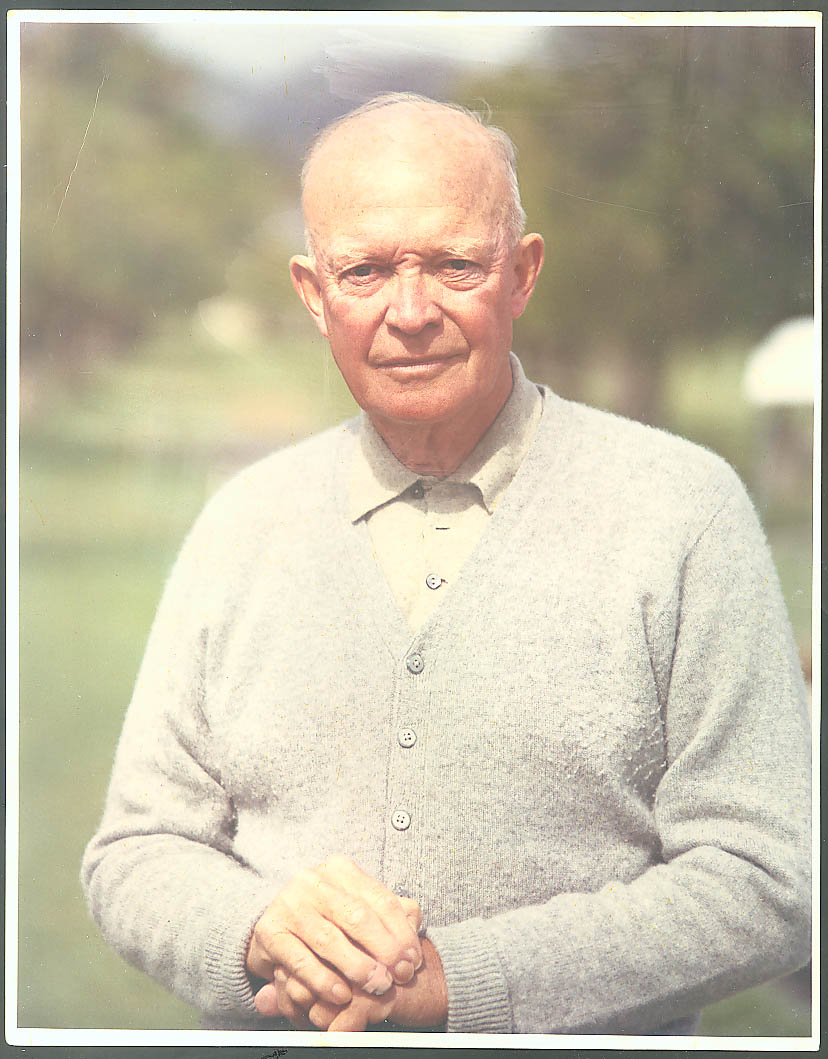
Some of the family’s faith in Ike was well placed, even given the straight party-line mentality, but of course he was more complicated than he was portrayed around our place.
And, in fact, the Dwight Eisenhower that Jim Newton describes in Eisenhower: The White House Years is a complicated guy. While he was still in office, especially during his second term, he was often lampooned as an absentee president who golfed while the Soviets and Chinese plotted to conquer the world.
While it’s true that Eisenhower tried to fit golf and bridge into his routine, that characterization seemed ludicrous at the time, and Newton demonstrates well that it was fantasy. He shows that, on balance, Eisenhower’s administration, which kept the United States out of a shooting war for eight years, launched the interstate highway system and the St. Lawrence Seaway, and left the country with its last budget surplus until 1999, was an overall success.
Newton doesn’t discuss this in detail in this book, but Eisenhower’s achievements as supreme allied commander in Europe during World War II were in a significant way due to his firm but understated command as well as his personal diplomacy as he coordinated military officers and heads of state who had little or nothing in common except an enemy.

Similar qualities came into play when Eisenhower took on the presidency. He wasn’t inclined to the grand gesture, and his credo was what he called “the middle way,” meaning that on any issue he looked for the ground that was equidistant from extremes on either right or left.
Meanwhile, while Ike might have seemed like a man obsessed with cutting down on his slice, he was engaging in intense discussions concerning the rising belligerence of the Soviets and Chinese, more than once talking his military brass out of resorting to nuclear weapons. He was also overseeing covert activities undertaken by the CIA to overthrow foreign governments whose behavior was perceived as inimical to American interests — Iran and Guatemala among them. Eisenhower also made flight-by-flight decisions about high altitude surveillance of the USSR, and his administration was embarrassed when one of the planes was shot down and the pilot captured.
From our perspective, two of the most disappointing things about Eisenhower were his unwillingness to take the lead on civil rights for black citizens and his public silence about the demagoguery of Sen. Joseph McCarthy.
 Eisenhower was content with the concept of “separate but equal,” and he was unhappy with the Supreme Court ruling in Brown vs the Board of Education. When the Board of Education in Little Rock, Arkansas, decided to obey the spirit of that ruling by admitting nine black teenagers to Central High School, there was immediately a crisis of authority as Gov. Orval Faubus, the Arkansas National Guard, and a howling white mob prevented the kids from entering. Eisenhower tried to finesse the problem by summoning Faubus to Washington and bargaining with him, but Faubus double-crossed Ike by withdrawing both the National Guard and himself from the scene. So Eisenhower was forced to do something distasteful to him, sending members of the 101st Airborne Division, with bayonets fixed, to escort the students into the school.
Eisenhower didn’t say or do anything publicly about McCarthy’s paranoid campaign of terror against real and imagined communists until the senator overreached and directed his venom at the U.S. Army. Then the president issued an order forbidding employees of the executive department from providing evidence to McCarthy’s committee.
 Eisenhower’s reticence concerning McCarthy extended to the point that Ike let McCarthy pillory Gen. George Marshall, Ike’s mentor and possibly the man he most admired. Eisenhower ostensibly regretted that for the rest of his life, but the damage had been done.
Newton probably is a little easy on Eisenhower, but if he is, he’s easy on a man who led one of the most unselfish and productive lives of public service in American history, a life untouched by the personal and professional corruption and the blind partisanship that has affected major figures in American history before and after him.
The motto of Eisenhower’s election campaign — “I like Ike” — was particularly apt. He had his flaws as we all do, but the quality of his public service flowed to a large extent from his character: He was a nice man.
 CharlesPaolino's Blog