“It’s all in the game”
October 28, 2012
 As we left for a long drive the other day, I grabbed a Johnny Mathis CD to play along the way. Among the songs was “All in the Game,” a favorite of mine and a song with a unique history: It’s the only song with a melody written by a man who both served as vice president of the United States and won the Nobel Peace Prize.
The composer was Charles G. Dawes, who served as vice president in the Calvin Coolidge administration — from 1925 to 1929. Dawes is forgotten today, but he was a prominent man in his time. His great-great grandfather was William “Billy” Dawes, who rode with Paul Revere, but somehow escaped Longfellow’s notice. The latter Dawes was a lawyer, banker, politician, and humanitarian. He was an army officer during World War I, and then President Warren G. Harding appointed him the first director of the Bureau of the Budget. In 1923, President Calvin Coolidge appointed him to the Allied Reparations Commission, and Dawes shared in the Nobel Peace Prize for his work on a plan to stabilize the economy of Germany, which had been devastated by the war and its aftermath.

CALVIN COOLIDGE and CHARLES G. DAWES
Dawes was about the fourth choice to run for vice president with Coolidge, who was elected to a full term of his own after finishing the term of Warren Harding, who had died in office. Dawes was clumsy in the position and alienated Coolidge from the first day of the administration. President Herbert Hoover appointed Dawes ambassador to Great Britain, and Dawes served effectively in that post for three years.
In 1911, Dawes, who played the piano and the flute, wrote a composition called “Melody in A Major.” The sheet music was published without Dawes’ knowledge, and it became an popular violin piece; in fact, the great violinist Fritz Kreisler used it to close his recitals.
In 1951, after Dawes had died, songwriter Carl Sigman modified the melody somewhat and wrote the lyrics that made the song a standard in American popular music: “Many a teardrop will fall , but it’s all in the game. …”
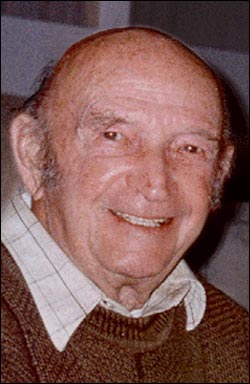
CARL SIGMAN
Sigman, who was a member of the New York Bar and a hero in World War II, compiled quite a track record for writing memorable lyrics. His songs include “Arrivederci, Roma,” “Ebb Tide,” “Shangri-la,” “What Now, My Love,” and the theme from the film Love Story.
“All in the Game” has been recorded by Dinah Shore, Nat King Cole, Louis Armstrong, Andy Williams, Robert Goulet, Johnny Ray, Jackie DeShannon, Cass Elliot, Van Morrison, Neil Sedaka, Merle Haggard, Barry Manilow, and many others.
Tommy Edwards had a major hit with it in 1958, and that recording is ranked No. 38 on Billboard’s Top-100 list. You can hear Tommy Edwards’ recording at THIS LINK.
“You’ve got to be taught to hate and fear”
October 23, 2012
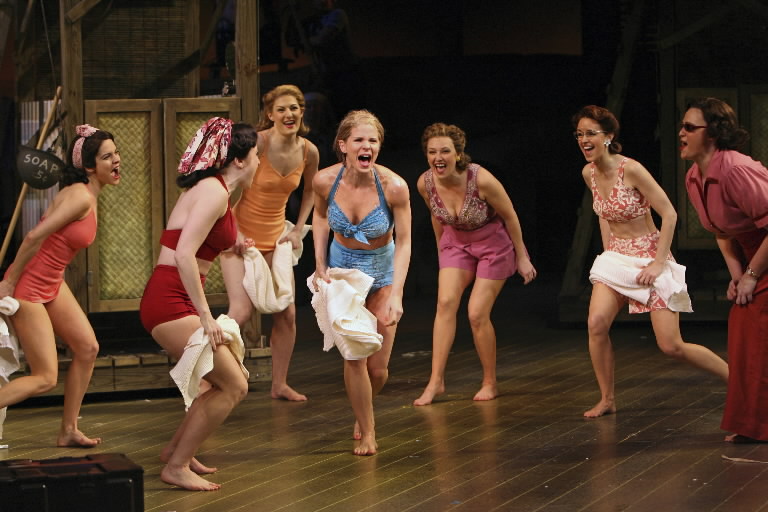
Nellie Forbush (Kelli O’Hara) and the navy nurses sing “I’m Gonna Wash that Man Right Outta My Hair” in the Lincoln Center revival of “South Pacific”
On one of our first dates, I took Pat, now my wife, to see a major production of South Pacific, the Rodgers and Hammerstein musical. Betsy Palmer played Nellie Forbush and William Chapman played Emile de Becque. Neither of us had ever seen the show on stage, but both of us had seen the 1958 film with Mitzi Gaynor and Rossano Brazzi (with Giorgio Tozzi dubbing Brazzi’s songs), and both of us owned the cast albums from that film and from the original Broadway production with Mary Martin and Ezio Pinza.

JAMES MINCHENER
The musical play, which first appeared in 1949, was based on James Minchener’s 1947 book, Tales of the South Pacific. This book, which won the Pulitzer Prize, is a collection of loosely connected stories based on Michener’s experiences as a Navy officer on the island of Espiritu Santo. I find it an absorbing book because of its ability to transport the reader into the unique environment of the Pacific Islands during that war.
Rodgers and Hammerstein combined three of Michener’s stories to create the musical play, and they determined to deal with two instances in which romantic liaisons were disrupted by racial prejudice. One of those situations arises when Navy nurse Nellie Forbush, whose previous life experience was confined to Little Rock, Arkansas, falls in love with French planter Emile de Becque but discovers that he had previously lived and had children with a Polynesian woman. For reasons that she herself cannot articulate, Nellie is repulsed by the idea, and she undergoes a wrenching internal struggle.

EZIO PINZA and MARY MARTIN
The other conflict involves a Marine lieutenant, Joe Cable, who falls in love with a Tonkinese girl who is not yet an adult, but refuses to marry the girl because of the color of her skin. In a scene in which De Becque and Cable discuss their contradictory crises, De Becque declares that he does not believe that racial prejudice is inborn, and Cable punctuates that idea with a lyric: “You have to be taught to hate and fear / You have to be taught from year to year / It has to be drummed in your dear little ear / You have to be carefully taught … to hate all the people your relatives hate.”
This lyric brought opprobrium down on Rodgers and Hammerstein from some quarters in the United States. Cable’s song was described as not only indecent, because by implication it encouraged interracial sex and — God forbid! — breeding, but that it was pro-communist because who but a communist would carry egalitarianism so far? Some Georgia politicians actually tried to stifle the song through legislation. Rodgers and Hammerstein’s position was that the song was about what the play was about and that, even if it sank the show, the song would stay.

RICHARD RODGERS and OSCAR HAMMERSTEIN
We saw the recent revival of South Pacific at the Lincoln Center twice, and this past weekend, we had the opportunity to see it again in a production at the non-profit Ritz Theatre in Haddon Township, New Jersey. One of the impediments to mounting this show is that it requires an outstanding cast and company; it can’t be faked. The Ritz was up to that challenge in every respect. In fact, Pat and I agreed that Anabelle Garcia was the best Nellie Forbush we had ever seen.
South Pacific was written shortly after World War II. The original production won a Pulitzer Prize and ten Tony Awards. In fact, sixty-two years later, it is still the only musical to win all four Tony Awards for acting.
What is striking about South Pacific is that although it is necessarily performed entirely in the milieu of the 1940s, it does not get old. Racism is still a serious issue in the United States, and some of the criticism directed at this show for addressing that issue sounds disturbingly like rhetoric we can still hear today.
Books: “Don’t Know Much about the American Presidents”
October 13, 2012
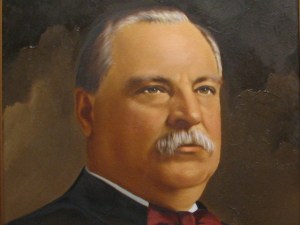
GROVER CLEVELAND
Some colleagues and I were traveling to Caldwell College recently, and just before we turned off Bloomfield Avenue onto the campus, I pointed out a cottage across the street. “That’s the birthplace of Grover Cleveland,” I said. Someone in the car might have grunted — I’m not sure — but otherwise there was no reaction.
How could this be? Cleveland was the only president born in New Jersey and one of only two who died here. But we get to count him twice, because he was both the 22nd and 24th presidents. And nobody cares?
OK, he wasn’t Mr. Glamor — no Washington, Jackson, Lincoln, or either of the Roosevelts. In fact, he was part of that lineup of boring personalities from Rutherford B. Hayes to William McKinley. Even his non-consecutive terms aren’t enough to make his name a household word, or even vaguely familiar.

Grover Cleveland’s birthplace
Well, my colleagues might disregard Cleveland, but he gets a lot of attention in Kenneth C. Davis’s new book, Don’t Know Much about the American Presidents. Davis reports that Cleveland was only four years old when his family moved to New York and that he didn’t return to New Jersey until after he had retired from the presidency.
Cleveland, a former mayor of Buffalo and governor of New York, was president during a period of violent labor strife in both of his terms and near economic calamity in his second. It the era of robber barons, rampant corruption in business and politics. The United States was still on the gold standard at that time and nearly ran out of reserves before Cleveland struck a deal in which J.P. Morgan, the Rothschilds and other financial interests bought American bonds, in several sales, to replenish the gold and stabilize what was then largely a free-market economy.

GROVER CLEVELAND
Davis gives final grades to most of the presidents he writes about, sparing those who died too soon after taking office and Barack Obama, who hasn’t yet served a whole term. Cleveland gets a B, not because he was a visionary or an inspiring leader, but because he was scrupulously honest and because he was the first president since the ill-starred Andrew Johnson to stand up to Congress and restore at least some of the prestige and power the presidency had lost after the murder of Abraham Lincoln.

PEYTON RANDOLPH
Davis provides some context for his discussions of the 44 presidential administrations with an opening section on how the presidency, more or less as we know it, was created. He points out that the title “president of the United States in Congress assembled” was conferred on 14 men — including John Hancock, who held the title twice — before the election of George Washington as the more succinctly named “president of the United States.” The first of these was Peyton Randolph of Virginia, who presided over the Continental Congress in 1774. Davis explains that the failures of the Articles of Confederation made it clear to many American leaders that the government needed a strong executive presence, but determining what that executive should consist of was problematic. There was no model to base it on, and many Americans were wary of a strong executive because they feared abuse of power and the possibility of the kind of hereditary succession they had left behind in Great Britain. Indeed, he writes, one of the reasons Washington was a favorite to take on the newly fashioned presidency was that he had no heirs. Davis follows his presidential profiles with a section in which he discusses what the office has become and what should be done with it.

FRANKLIN PIERCE
With its compact chapters and its career highlights and timelines, this book provides a means of scanning the whole sweep of American history from the adoption of the Constitution of 1787 to the present. The book also reminds us of the wide range of personalities who have occupied the presidency during that period, from the brooding and self-sacrificing Lincoln, whose murder plunged even some of his bitterest enemies into despair, to the handsome but hapless Franklin Pierce, whose spineless failure to deal with the crisis that led to the Civil War left him in such disrepute that he was the only former president whose death was not officially mourned.
Books: “I’d Like to Apologize to Every Teacher I Ever Had”
October 8, 2012

When I was teaching English grammar and composition at a New Jersey prison, one of my students told me about a visit he had received from his grandmother. “She told me she got the first letter from me that wasn’t all one sentence! That’s your fault, Mr. Paolino!” It was one of the nicest things anyone had ever said to me.
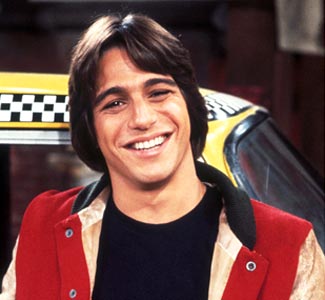
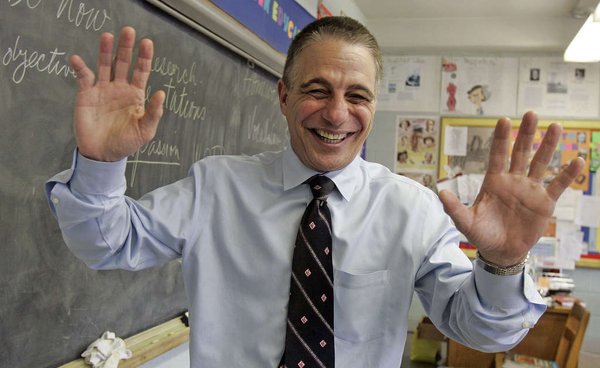
Tony Danza as Tony Banta in “Taxi“
I have never been a full-time teacher, but I have taught many college classes over the past 40 years or so, and in some cases the students really weren’t prepared for college. In recent years, I taught a lot of remedial English courses; the number of kids who need remedial English after graduation from high school is quite a scandal.
My experiences gave me a little extra appreciation of this book — I Want to Apologize to Every Teacher I Ever Had — written by the actor Tony Danza after he spent a year teaching an English class at Northeast High School in Philadelphia.
Danza, who first became a nationally known figure for his portrayal of cabbie and boxer Tony Banta in the TV series Taxi, writes that he had always harbored an ambition to be a teacher. When his most recent TV show was cancelled, he decided to fulfill that ambition. According to him, he loathes reality TV and did not intend for his experiment to become a television series, but it happened anyway.

TONY DANZA
The A&E network set out to create a series based on Danza’s stint in the classroom, but Danza writes that it was an uneasy relationship because the network wanted drama and was willing to stage it if it didn’t occur naturally, and Danza writes that he wanted the camera to record only what happened in the normal course of events.
Danza taught a double class … two 45-minute periods with the same students. But he had to show up in the morning at the same time as the other teachers and take on all the obligations they had outside the classroom: truancy duty, coaching sports, chaperoning dances, and attending planning meetings and in-service programs.
Not everyone in the school was happy to have him there, and there were several instances in which he got into trouble for violating procedures. For example, he took his students on a field trip to Washington, D.C., but he didn’t tell their other teachers that the kids would be absent from school that day.
Danza was feeling his way in teaching an English course for the first time, but it sounds as if he became a pretty creative instructor, particularly in the way he presented literature and prompted the students to see its relevance to everyday life. In that urban setting, Danza writes, he came face to face with the problems that many kids lug around with them every day, kids with dysfunctional families, kids who live in an atmosphere of violence, kids with no self esteem. And, of course, he came face to face with the impact such problems have on teachers.
Danza, who writes that he was a problem student at a Long Island high school, rode an emotional roller coaster at Northeast, sometimes parenting troubled kids, sometimes losing his temper — not an unusual experience for him — and sometimes succumbing in tears.
Danza came away from Northeast with some strong feelings about public education being underfunded, and about teachers and administrators being under appreciated, under compensated, and stymied by bureaucratic interference.
Of course, I didn’t accompany Danza to Northeast High School, so I can’t vouch for everything he writes about his time there. What I especially like about this book, though, is that it seems to be written in his voice. Anyone who is familiar with Danza as an actor can hear him speaking these words, and that makes them seem all the more credible.

“If it ain’t got that swing”
September 19, 2012

TAYLOR TEAGARDEN
Taylor Teagarden’s major league baseball career hasn’t amounted to much yet. As of yesterday, he had appeared in only 136 games in five seasons. He has shown a flair for the dramatic on a few occasions—last night being a notable example—but he hasn’t yet become the Jack Teagarden of the diamond.
Jack was another story altogether. As soon as I heard of Taylor T., I wondered if he and Jack were related. Naturally a guy would wonder that, what with the unusual last name and the fact that both of these Teagardens were from Texas.
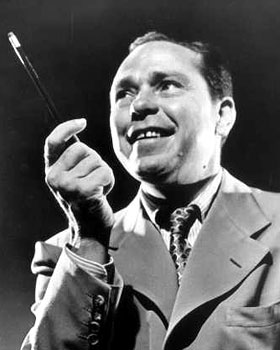
Well, I say “naturally.” It was natural for me, because of a 78 rpm record that belonged to my parents. I loved that record when I was a kid, and I still do. It’s a rendition of a 1941 Johnny Mercer song, “The Waiter, the Porter, and the Upstairs Maid,” sung by Bing Crosby, Mary Martin, and Jack Teagarden. It’s one of those witty, sophisticated lyrics that Mercer wrote best. You can hear and see that trio singing Mercer’s song at this site: http://www.youtube.com/watch?v=_0e1DF4TUYY. Or you can come over Saturday afternoon, and I’ll play it for you on the Victrola. If you don’t know what a Victrola is, you probably already stopped reading.
JOHNNY MERCER
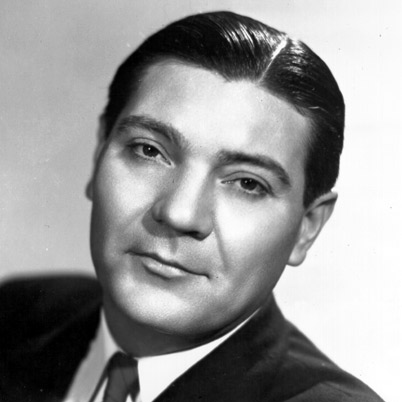
Jack Teagarden, who came from a family loaded with musical talent, was in heady company with Crosby and Martin, and he was a very good crooner himself, as well as a composer and bandleader. Among the highlights of his memorable career were his vocal turns with Mercer and Louis Armstrong. But he made his most indelible mark as an innovative jazz and blues trombonist. He is often referred to as “the father of jazz trombone.” You can learn a lot about this important figure in American cultural history at www.jackteagarden.info.
Although it’s a lot easier than it was in the pre-digital age to answer such questions as, “Is Taylor Teagarden related to Jack?”, I have had trouble finding out. Until I wrote this post, I had found only one reference, buried in an non-authoritative web site, reporting that the catcher thinks he might be the great great nephew of the musical genius. But my friend Brian VanderBeek, a sports writer with the Modesto Bee, responded to this post by reporting that he had met Taylor Teagarden in 2007 when Taylor was playing for Bakersfield in the California League and Taylor, on that occasion, confirmed that Jack Teagarden was his dad’s great uncle.
Taylor is with the Orioles now, and his season got a late start due to a back injury. It remains to be seen if he will leave in baseball a footprint like the one Jack Teagarden left in music, but Taylor has already taken advantage of baseball’s unique capacity for providing even the most obscure player with opportunities for heroics.
JACK TEAGARDEN
He came up with the Texas Rangers in 2008, and his first major league hit was a sixth-inning home run off Scott Baker of the Minnesota Twins. Baker had not given up a hit up to that point. And Teagarden’s homer produced the only run in what turned out to be a 1-0 game. When he came off the disabled list for the Orioles on July 14 of this year, he hit a two-run homer that broke up a 6-6, 13-inning tie with the Tigers.
Last night, Taylor got to play Mr. Clutch again as he pinch hit a single in the top of the 18th inning, driving in the winning run as the Orioles beat the Seattle Mariners and pulled into a virtual tie with the Yankees for first place in the American League East. No matter how the rest of his career goes, Taylor T. can always say with another lyricist, Ira Gershwin, “They can’t take that away from me.”
.
Netflix Update No. 72: “588 rue paradis”
September 12, 2012
RICHARD BERRY
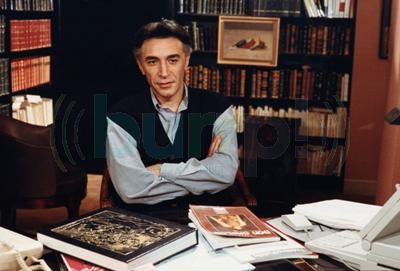
Henri Verneuil created a moving reflection on family ties and cultural roots in his 1992 film, the partly autobiographical 588 rue paradis. The French-language film, which Verneuil wrote and directed, concerns playwright Pierre Zakar (Richard Berry), who has been influenced by his socially ambitious wife Carole (Diane Bellego) to change his name from the Armenian Azad Zakarian, distance himself from his working-class background, and keep his parents at arm’s length. Carole is particularly determined that the couple’s two children not be influenced by their Armenian heritage.
As the film opens, Pierre is anticipating the Paris opening of one of his plays, and he has invited his father, Hagop (Omar Sharif), to attend. Carole arranges for the elderly man, who for decades has worked along with his wife and other family members as a shirtmaker, to stay in a ridiculously large suite in a sumptuous hotel — and not in his son’s home.

OMAR SHARIF and RICHARD BERRY
Pierre lets Carole know that he doesn’t approve of this arrangement, but he doesn’t insist on changing it. Instead, he spends as much time with his father as possible, making excuses for Carole, who has deliberately sent the children off on a trip so that they won’t see and be contaminated by their grandfather.
Throughout this period, the inscrutable Pierre entertains memories of his childhood, some more pleasant than others, but especially of his mother, Araxi (Claudia Cardinale), whom he calls “mayrig,” an affectionate Armenian term for mother. He also meets a young Armenian woman whose humility and earnestness contrast sharply with Carole’s personality.

OMAR SHARIF and CLAUDIA CARDINALE
While Hagop is still in Paris, an unexpected magazine article about the Zakarian family appears, and Carole uses the occasion to goad Pierre into reprimanding his father, something Pierre will forever regret. This incident and its aftermath is the stimulus for a long delayed confrontation between Pierre and Carole and for a decision by Pierre about taking control of his own life.

DIANE BELLEGO and RICHARD BERRY
Even with Omar Sharif and Claudia Cardinale as worthy distractions, Berry is irresistible in this part. His cool exterior in contrast to the turmoil inside him effectively creates the dramatic tension that underlies this domestic story. This is Henri Verneuil’s second film about the Zakarian family; the first, in which Sharif and Cardinale played these same roles, was Mayrig in 1991.
Books: “The Caliph’s Splendor”
September 1, 2012

ABBASID PLACE, BAGHDAD
When I attended elementary and high school (that was between 1947 and 1960) history was taught as though its only dynamic was a westward movement from Europe to the Pacific Coast of North America. One result of this skewed point of view was that Islam was mentioned only with respect to the Crusades.
In actual fact, however, the history of Islam is an integral part of the history of the whole world; in particular, it was an important factor in shaping the western world we know today.
Benson Bobrick takes on a part of that subject in his popular history “The Caliph’s Splendor,” focusing especially on the ninth and tenth centuries. His topic is an institution that is virtually unknown to westerners—the caliphate. This was the structure under which most of Islam was governed for generations following the death of the Prophet Muhammad.

ABU BAKR
Islam was divided on the subject of who should succeed the Prophet as the administrative and political leader. The role fell first to Muhammad’s father-in-law and confidant, Abu Bakr as-Saddiq, who was supported by the Sunni. Abu Bakr was the first caliph (successor), a position he held only a few years until his death. In the centuries following his death, Islam spread through the Near East, North Africa, and Europe. Because of the difference of opinion about succession, and because of geopolitical realities, not one but several caliphs ruled over Muslim territories.
The focal point of Bobrick’s book is Caliph Harun al-Rashid, the fabled “Sword of God,” who ruled over a territory that spread from Spain across southern Europe and North Africa through the Middle East and Arabia to the western edges of China. Most modern westerners who may be at least vaguely aware of the later Ottoman Empire are unaware of the extent to which Islam spread from its beginnings in what is now Saudi Arabia. Nor are many aware of the level of wealth that the caliphs accumulated. In 766, Harun, who was a caliph of the Abbasid dynasty, established his capital at Baghdad, which became one of the most influential cities of its time.

ABBASID PALACE, BAGHDAD
Bobrick writes that the administration of Baghdad “managed to harness the Tigris and Euphrates rivers for the cultivation of grain, and a brilliant system of canals, dikes, and reservoirs drained the surrounding swamps…. There were many rich bazaars and covered shops along the embankments, where all sorts of artisans and craftsmen—marble workers from Antioch, papyrus makers from Cairo, potters from Basra, calligraphers from Peking—plied their trades. … There was a large sanitation department, many fountains and public baths, and, unlike the European towns and cities of the day, streets that were regularly washed free of refuse and swept clean. Most households had water supplied by aqueducts. …”
By comparison, Bobrick writes, London and Paris during that same era were pest holes.

UMMAYAD COIN
As with the expansion of all empires, of course, the spread of Islam was accomplished in part by brute and bloody force, it was also accompanied at times by significant advances in learning, literature, and scientific discovery in areas such as mathematics and astronomy. The “intellectual awakening” that took place during the reigns of Hasrun and his son Mamun—and with their participation—was, Bobrick writes, “one of the most significant in the whole history of culture and thought.”
As much as it might fit some political agendas to believe that Islam arose and grew in a primitive desert context, nothing could be farther from the truth. It is well established, in fact, that a large body of western learning, including the works of such geniuses as Aristotle and Plato, would have been lost forever during the Dark Ages had they not been translated by Muslim scribes and preserved in Muslim libraries until they could be rediscovered by European scholars of a later period. Bobrick wrote this book for popular audience, and a popular audience might understand modern history a little better by learning more about such epochs as the “golden age of Baghdad.”
Netflix Update No. 71: “A Thousand Years of Good Prayers”
August 29, 2012

FEIHONG YU and HENRY O
It’s been done to death in the movies: an aging parent travels to visit an estranged child in an effort to repair the relationship. It was done again in the 2007 film “A Thousand Years of Good Prayers,” and with satisfactory results.
This film, directed by Wayne Wang, was adapted from a short story by Yiyun Lee , for whom this was a first turn at a screen play. The story concerns Mr. Shi (Henry O), who travels from Beijing to Spokane to visit his recently divorced daughter, Yilan (Feihong Yu). It is clear from the moment Yilan meets Mr. Shi at the airport that the two are barely on speaking terms and that she is not enthusiastic about his visit.

FEIHONG YU
When father and daughter are together, Yilan rarely makes eye contact with Mr. Shi and she says as little as possible to him, particularly in response to his softspoken but blunt observations and questions about her personal life. Subtitles are employed when they speak to each other in Mandarin Chinese. Soon Yilan invents excuses to be absent from her apartment, even when she has no reason to be.

HENRY O and VIDA GHAHREMANI
Left on his own, Mr. Shi finds evidence in Yilan’s apartment that she has been planning to send him on tours of other parts of the United States. He also spends time in a nearby park, where he strikes up a relationship with a mature Iranian woman, whom he knows only as “Madam.” Neither of them speaks much English, but in the skilfully directed scenes, they manage to make themselves understood to each other as they discuss their families. Madam is eagerly expecting the birth of a grandchild — something Mr. Shi devoutly wishes his only child would also provide — but the curve of Madam’s life takes an unexpected turn that Mr. Shi would have no reason to envy.
Mr. Shi, who proudly tells anyone he meets that he was a “rocket scientist” in China — a half truth, it turns out — is, philosophically at least, a devout communist, something that contributes to the distance between him and his daughter. He also acknowledges that he was not a good parent because he was away from home so much, and he answers Yilan’s complaint that he was cold with the rationale that he and her mother were “quiet people.”

VIDA GAHREMANI
But the most significant factor in the estrangement is Yilan’s resentment of what she construes to be her father’s infidelity — an ironic complaint in the light of his condemnation of her relationship with a married man. But neither knows all of what has happened in the life of the other, and the story hangs on the likelihood that people so closed off from each other for so long can ever repair the damage.
The movie is beautifully photographed with a high-end high-definition camera and even viewers with conventional receivers will notice the sharpness of the images. Silence is an important element in the drama itself and it plays an important part in the film. It’s a thoughtful story that will appeal to a thoughtful audience.
Books: “Master of the Mountain”
August 22, 2012

THOMAS JEFFERSON
My master’s thesis focused on an aspect of the impeachment trial of Andrew Johnson. As a grad student at Penn State, I had access to the stacks at Butler Library in order to do some of the research. That would have been a good thing for a person with singleness of purpose, but not for an undisciplined scholar like me. The route to the “Jo” section of the stacks took me through the “Je” section, where I frequently stopped to browse through the papers of Thomas Jefferson. I have always found his intellect irresistible, and he has had an important influence on my writing. Accordingly, my research in the “Jo” section took a lot longer than it should have.
Jefferson, of course, had his flaws, just as we all do. His biggest one, unfortunately, ruined the lives of hundreds of people over several generations — the people he held in slavery, this herald of equality for “all men.”
That’s the topic of Master of the Mountain: Thomas Jefferson and His Slaves,” a book by Henry Wiencek scheduled for publication in October.

MARTHA WAYLES JEFFERSON
Jefferson, by Wiencek’s account, carefully constructed a society of slaves to do the work at Monticello, Jefferson’s plantation estate in Virginia. Those slaves, like slaves on many other properties in that era, were arranged in a sort of hierarchy based on several factors: Jefferson’s assessment of their potential, the nature of the work they were consigned to, and their relationship to Jefferson. That’s “relationship” in the literal sense, because many of Jefferson’s slaves had a family connection to his wife, Martha. That relationship originated in a liaison between Jefferson’s father-in-law, Thomas Wayles, and one of his slaves, Betty Heming. There were several children born of that relationship and the whole lot, Betty included, became Jefferson’s property when Wayles died. One of those children was Sally Hemings, with whom, Wiencek and many others believe, Jefferson himself was intimate long after Martha Jefferson had died. That subject has gotten a lot of attention in recent years as researchers have tried to determine with certainty whether or not Jefferson fathered children with Sally Hemings. Wiencek presents arguments on both sides but is convinced by the evidence in favor of paternity, including contemporary accounts of household servants bearing a striking resemblance to the lord of the manor himself.

The MARQUIS de LAFAYETTE
Sexual relationships between masters and slaves were commonplace. If Jefferson and Sally Hemings had such a relationship it would not be nearly so remarkable as the fact that Jefferson owned slaves at all. “We hold these truths to be self-evident, that all men are created equal, that they are endowed by their Creator with certain unalienable rights, that among these are life, liberty, and the pursuit of happiness.” Tommy J wrote that. He also publicly denounced slavery and mixed-race sexual relations and argued for emancipation and citizenship for black Americans. He simply didn’t apply those principles to his own life and “property.” Privately he argued — although he knew from the achievements of his own slaves that he was lying — that he didn’t believe black people were capable of participating in a free society, that they were, in fact, little more than imbeciles. He compared them to children. Wiencek writes and documents that Jefferson once even privately speculated that African women had mated with apes. (CP: Mr. Wiencek points out in his comments below that Jefferson made this observation publicly.)
Perhaps Jefferson was trying to make himself feel better about his real motive for keeping people in bondage: profit. He had meticulously calculated what an enslaved human being could generate in income, and it was enough for a long time to allow him to live a privileged life, entertaining a constant train of distinguished guests and satisfying his own thirst for fine French wines, continental cuisine, and rich furnishings.
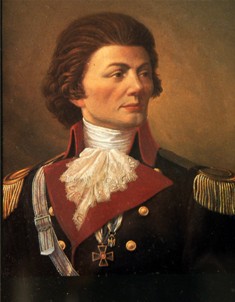
TADEUSZ KOSCIUSZKO
Jefferson wasn’t the only “founding father” to engage in this behavior. James Monroe, James Madison, and George Washington all kept slaves; Washington freed his only in his will. (CP: This is true but out of context, as Mr. Wiencek explains in his comment below.) It is often written in defense of such men that they had grown up in an atmosphere of slavery and were simply products of their time. That’s an idea that Wiencek debunks, both because Jefferson himself had so often excoriated the institution of slavery and because he had been urged by some of his contemporaries to free his slaves. In fact, Jefferson was upbraided by the Marquis de Lafayette, a hero of the American Revolution, who visited the United States in 1824 and bluntly expressed his disappointment not only that slavery was still in place but that Jefferson himself was still holding people in bondage.
Wiencek also reports that at the request of the Polish patriot Tadeusz Kosciuszko, who also had participated in the Revolution, Jefferson assisted in the preparation of Kosciuszko’s will in which he left $20,000 with which Jefferson was to buy and free slaves. When Kosciuszko died, Jefferson refused to carry out the will.
Wiencek’s book is a good opportunity to take a close look at how slavery was constituted, how enslaved men, women, and children lived in Virginia in the early 19th century. But its real value is in stripping away the veneer that has been placed over men like Jefferson in an effort to legitimize modern political philosophy through a distorted view of the purity of their motives and personal lives.

Books: “John Quincy Adams”
August 3, 2012

JOHN QUINCY ADAMS
A man of about my grandfather’s vintage was telling me that he once owned a house in Brooklyn and the candy store on the first floor. When I asked what had become of the property, he brought his hands together in a loud clap and said, “Mr. Hoover.” The implication was that he had lost the house and store as a result of the Great Depression and that the Great Depression was Mr. Hoover’s fault.
The history of the economic calamity of the 1930s is complex, and while Herbert Hoover’s approach to it is open to criticism, it is simplistic to argue that he was responsible for the losses suffered by millions of people. Unfortunately for Hoover, most Americans who can identify him at all are likely to describe him as the president who failed to solve the Depression. And that means that most Americans have forgotten — or more likely have never known — that Hoover was a great public servant and, in several instances, an American hero. As Casey Stengel said, you could look it up: Hoover organized the evacuation of Americans from Europe at the outbreak of World War I; he organized the delivery of millions of tons of food to Belgium after it had been invaded by Germany; he ran the commission that made sure American food supplies were conserved so that there would be enough to supply U.S troops in Europe during the war; he ran the administration that fed millions of people in Central Europe after the war; he oversaw the government response to the Great Mississippi Flood in six states in 1927; he organized a program that fed school children in impoverished occupied Germany after World War II; and under presidents Truman and Eisenhower he headed two commissions that successfully recommended reorganization and efficiencies in the federal government.
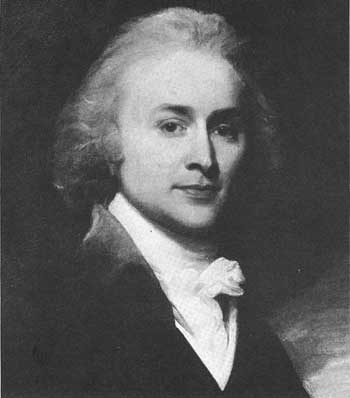
JOHN QUINCY ADAMS
Hoover had his failings and even his dark side, but the country’s ignorance of his accomplishments — to say nothing of his long career as an engineer and businessman — is out of whack.
Hoover is not alone in this. John Quincy Adams’ legacy has suffered a similar fate, as Harlow Giles Unger explains in a biography of the sixth president that will be published in September. Adams’ presidency was a dud, but he otherwise led one of the most outstanding public lives in the history of the country. He was the son of brilliant parents — Abigail and John Adams — and they expected big things of him. Unger reports, in fact, that John Adams, the second president, expected his son to eventually follow him into that office, after getting a classical education and learning and practicing law. John Q. grew up in the midst of the American Revolution; in fact, he and his mother were eye witnesses to the Battle of Bunker Hill.
Defining events in his life, though, were successive trips to Europe with his father, who was engaged in diplomacy. Those trips led to a career in diplomacy for the younger Adams who was not excelled by anyone serving in that capacity before or since. He later served as secretary of state in the administration of James Monroe and again did outstanding work, including his authorship of what became known as the Monroe Doctrine. He was, Unger argues, one of the most important experts on foreign affairs in American history.

ABIGAIL ADAMS
John Quincy Adams was elected to the presidency without campaigning for the office, and in a certain sense he wasn’t elected at all. The wildly popular war hero Andrew Jackson won more popular votes in the election of 1824 but not enough electoral votes to carry the day. Henry Clay threw the election into Adams’ lap by instructing the Kentucky delegation to vote for Adams, who had not won an electoral vote in that state. When John Q took office, he named Clay secretary of state, which was a much more powerful office then than it is now. Although it would have been out of character for Adams to have conspired with Clay in order to gain the presidency, that’s how many Americans read it, Unger writes, and it got Adams’ administration off to a poor start.
Adams had an ideal that would sound odd to Americans today: he believed that principle was more important than party. Tell that to John Boehner and Nancy Pelosi. Adams carried this idea to extremes, going to the mat first with his own Federalist party and then with the opposition Republicans on one issue or another. As a result, he really had no party, while Andrew Jackson was building the new Democratic party into a meaningful force. He also gave no thought to even conventional patronage when he appointed his cabinet, and so he was, as Jimmy Durante used to say, “surrounded by assassins.”

The short version is that Adams’ presidency didn’t amount to much, and he left office in a significant funk after losing the election to Jackson. But he was invited to run for Congress from a district in his native Massachusetts, and so he became one of three presidents to hold public office after leaving the White House. (The others were Andrew Johnson, who was elected to the U.S. Senate and William Howard Taft, who was appointed chief justice of the United States.)
Adams spent 17 years in the House of Representatives and it was, as Unger recounts in dramatic fashion, a wild scene. Adams hated slavery, which he had first seen up close when he traveled to Poland as a teenager. The House leadership didn’t want the subject broached in the chamber and passed rules to prevent the word “slavery” from being uttered or petitions against slavery from being presented. Adams fought furiously against this procedure, violating the rules repeatedly, and demanding over and over to know, “Am I gagged? Am I gagged?” He eventually became a highly respected figure in the House, even by those who disagreed with him, and reputedly was one of a handful of the best who ever served there.

SS Amistad
During this period, Adams also got involved in the legal case of a group of more than fifty African men and women who were being transported as slaves from one port in Cuba to another when they seized control of the ship, the Amistad. The ship was taken into custody in American waters, and the Africans on board sued to keep from being returned to bondage.
Adams gave a seven-hour argument before the U.S. Supreme Court which, although most of the justices were hard-nosed southern slave holders, ruled unanimously that the Africans should be set free.
In recounting Adams’ career, Unger provides a close look into the life of the distinguished and patriotic Massachusetts family: the relationship between John Q. Adams and his redoubtable parents, and between John Q. and his wife, Louisa, who at times lost patience with the demands her husband’s public service made on family life.
Unger’s book brings this good and great man back to life at least on the printed page. It was a life that deserves much more attention than it gets.
 CharlesPaolino's Blog