“Oh, bother!”
July 22, 2011

JIM CUMMINGS
I was shocked when a colleague told me the other day that she had never read the Winnie-the-Pooh books, and I suppose I should have hidden my surprise better than I did. That’s a conceit of mine – that everyone’s life experiences should be the same as my own. Then again, we’re talking about Winnie-the-Pooh, for heaven’s sake.
This conversation was occasioned by the fact that Pat and I went on Sunday to see the new Disney movie, Winnie-the-Pooh, with our daughter and our two grandsons. The film is well done with hand-drawn images and a story line that are true to the spirit of both A.A.Milne, who wrote the books, and Ernest Shepard, who illustrated them.
Milne and Shepard, of course, provided text and pictures, but they did not provide the voices of the characters. That was left to the Disney studio, where some genius cast Sterling Holloway in the title role of Winnie-the-Pooh and the Honey Tree in 1966. Holloway played the part in two more Disney short features, and his high-pitched, plaintive voice became the voice of Pooh for a couple of generations of kids and adults who, by the mercy of God, have not fully grown up.

STERLING HOLLOWAY
Holloway retired in the 1970s, and the Disney casting office had another epiphany, choosing voice actor Jim Cummings – who can be heard in about a hundred films – to speak for Pooh, as it were. It was a tough assignment for an actor who, I’m sure, wanted to do his work without a ghost looking over his shoulder but also wanted to keep the character authentic in the minds of the audience. No problem. Cummings’ performance is distinctive, but it has the ring of a bear, and a hungry one at that, of very little brain.
Cummings knows something about following a tough act. He also took over the role of Tigger in the Pooh films after the retirement of Paul Winchell, who entertained audiences in the 50s and 60s with a ventriloquist act that featured the mannequin Jerry Mahoney, and who was also the first person to design and build an artificial heart.
I can’t say I missed Holloway while we were watching Winnie-the-Pooh, but I miss him in general. I first became aware of him when he appeared in the recurring role of eccentric but gentle Waldo Binney, a neighbor of the title family on the series The Life of Riley, which starred William Bendix as Chester A. Riley.

HOLLOWAY and ALTER EGO
Holloway was unique, sui generis, in the quirkiness of his appearance, his demeanor, and his voice, so it was always a pleasure to run across him in movies or TV shows – the latter including The Amazing Adventures of Superman. He appeared in about 150 screen and TV properties over all. In the 1970s, he also did voiceover commercials for Purina Puppy Chow dog food, and sang what was then a familiar jingle: “Puppy Chow / for a full year / till he’s fully grown.”
As often happens with performers who have long careers, two of Holloway’s landmark achievements are largely forgotten – namely the fact that he introduced two songs that became a permanent part of the American musical repertoire. This occurred when he was appearing on Broadway in the 1920s and the songs were “(I’ll take) Manhattan” and “Mountain Greenery,” both composed by Richard Rodgers and Lorenz Hart.
Holloway, who never married because – he said – he liked his life the way it was, died in 1992 at the age of 87.
Click on THIS LINK to see and hear Sterling Holloway singing “A Perfect Day,” a song written in 1909 by Carrie Jacobs Bond. Holloway’s touching rendition occurred in the 1940 film “Remember the Night.”

George Reeves and Sterling Holloway in an episode of the TV series "The Amazing Adventures of Superman."
 Like most people, I suppose, I haven’t been able to get Joplin out of my head for the past few days. It’s hard to get your mind around the kind of destruction that occurred there or to imagine how a city can recover from such widespread loss.
In the midst of the disaster I recalled that Joplin was the birthplace of a talented musician and composer — Wayne Shanklin. I don’t know why I know that he was born in Joplin — maybe the same reason I know that Bix Beiderbecke was born in Davenport, but I thought of it this morning when I heard a brief report on WNYC radio about Anna Calvi. The report mentioned that she had recorded “Jezebel” as a single last year. The title apparently refers to the Phoenician woman described in the first and second books of Kings who became queen of Israel but ran afoul of the prophet Elisha. “Jezebel” was one of Wayne Shaklin’s most successful songs, and you can hear Calvi’s take on it by clicking HERE. The newscaster mentioned that Calvi had been influenced by Edith Piaf’s recording, which you can hear by clicking HERE.
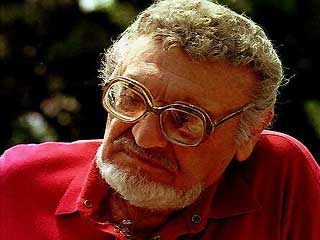
FRANKIE LAINE
Being of a certain age, I associate this song with Frankie Laine, perhaps the only singer whose career lasted 75 years. His interpretation of “Jezebel” is, of course, entirely different from either Piaf’s or Calvi’s. It reached No. 2 on the Billboard chart in the U.S. I have it on vinyl. You can hear it by clicking HERE.
Wayne Shanklin, who died in 1970, wrote other hits, including “Primose Lane,” “The Big Hurt,” and “Chanson d’Amour,” which was unusual in that it was introduced in 1958 in two recordings — both of them successful. There were outstanding cover versions after that, and the song was used, more than 40 years after it was written, in the soundtrack of the Stanley Kubrick film “Eyes Wide Shut.”
I see that Langston Hughes also was born in Joplin, as were Robert Cummings, Dennis Weaver, Charles McPherson, and, I’m sure thousands of other folks whose names we don’t know but who did their best in whatever sphere they chose. Their hometown deserved better than this.
Books: “No Regrets: The Life of Edith Piaf”
May 22, 2011
 If it was Sunday night, I wanted to see Señor Wences. I did not want to see Edith Piaf, who turned up from time to time on Ed Sullivan’s TV show, “Toast of the Town.” It was all a part of being young and ignorant. I later learned to appreciate what an astounding singer Piaf was, but I knew nothing of her background before reading Carolyn Burke’s recent biography.
Piaf had a rough life in many respects. She was born in 1915 in a poor part of Paris to nearly indigent parents – her father an acrobat named Louis Gassion and her mother a drug-addicted street singer whose professional name, as it were, was Line Marsa. Louis and Line separated and Line played almost no part in Edith’s life except to occasionally surface and ask for money — which Edith usually provided. Louis took responsibility for his daughter, although that meant, for a time, that he left her to live in a brothel that was managed by his mother. He later reclaimed the girl and took her “on the road” with him — first while he performed with a circus and then when he returned to the streets. Edith had to work, keeping house, passing the hat when Louis performed on the street, and eventually singing for coins herself.
 When she was 16, Edith convinced her father to let her live on her own, but she maintained a close relationship with him for the rest of his life, which eventually meant supporting him. As a result of one of the first of a very long string of romantic and/or sexual relationships, she bore a child, a girl, who died at the age of two — an experience that affected Edith for the rest of her life. She gradually developed as a singer on the street and in Paris dives, but her career took off after she was discovered by a shady character named Louis Léplee, who booked her in his cabaret and taught her some things about performing before the public. He also dubbed her “piaf” — “sparrow” — because of her stature (4’10”) and her bird-like gestures.
Edith Piaf specialized in chasons réaliste, songs of realism that expressed the sorrows of the lower class — including the prostitutes, beggars, and love-starved sailors who were among the singer’s earliest acquaintances. Frustrated love was a constant theme in these songs and in Edith Piaf’s life.
 In addition to having a powerful and expressive voice, Edith Piaf was a prolific songwriter, creating the lyrics for many of the songs she introduced. Many of her love affairs were with men in whom she also had an artistic interest, and she played the mentor to them, demanding almost excruciatingly hard work but, almost without exception, helping them to solidify their careers. Edith herself became a star in several media in both hemispheres — night clubs, movies, records, radio, and television.
 Edith Piaf lived in France during the World War II period, and was criticized in her own time by people who thought she was too accommodating to the German occupation. But Burke reports that the singer was instrumental in helping Jewish friends hide from the Nazis and that she irritated the Nazis, perhaps deliberately, by singing the work of a Jewish songwriter. But Edith was even bolder than that, by Burke’s account. She agreed to visit French soldiers who were being held in prisons in Germany, and she made a point of being photographed with them. Then she returned, as part of a plot by the French Resistance, and slipped some of those soldiers false identification that included their faces cropped from those photos. Some 188 of those men escaped, using those fake credentials.
It’s an understatement to say that Edith Piaf didn’t take care of herself. She worked very hard, both in rehearsals and in a hectic schedule of bookings, partly because of the cost of maintaining not only her own lifestyle but also a coterie of friends, hangers-on, and just plain cheats, whom she deliberately cultivated as a sort of salon. She drank heavily and she became dependent on a complex of pain killers — for debilitating arthritis — sleeping pills, and uppers. This regimen apparently contributed to the ruin of her liver which in turn caused her death in 1963.
 The poet Jean Cocteau — a close friend of the singer — described Edith Piaf as a genius and called her “this astonishing little person.” “A voice rises up from deep within,” he wrote, “a voice that inhabits her from head to toe, unfolding like a wave of warm black velvet to submerge us, piercing through us, getting right inside us. The illusion is complete. Edith Piaf, like an invisible nightingale on her branch, herself becomes invisible. There is just her gaze, her pale hands, her waxen forehead catching the light, and the voice that swells, mounts up, and gradually replaces her.”
For a good example of that voice, click HERE.
“Clang, clang, clang went the trolley”
March 17, 2011
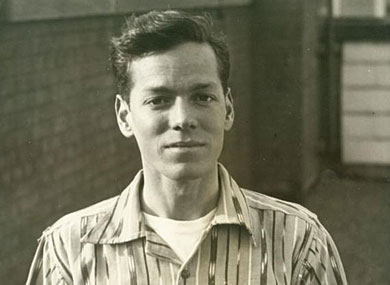
HUGH MARTIN
In the midst of the tragedies playing out in Japan and Libya and Bahrain, song writer Hugh Martin — an important figure in American musical history — slipped away last Thursday at the age of 96.
Martin wrote a lot of fine music for the Broadway stage and for films, but he etched his name in brass when he composed “Have Yourself a Merry Little Christmas,” “The Trolley Song,” and “The Boy Next Door” — all classics and all written for Judy Garland in the film “Meet Me in St Louis.”
The first of those songs set Martin apart in special way, because it is relatively rare for a writer to produce a song that becomes a Christmas standard. That one became not only a standard but one of the most recorded and most popular Christmas songs of all time.
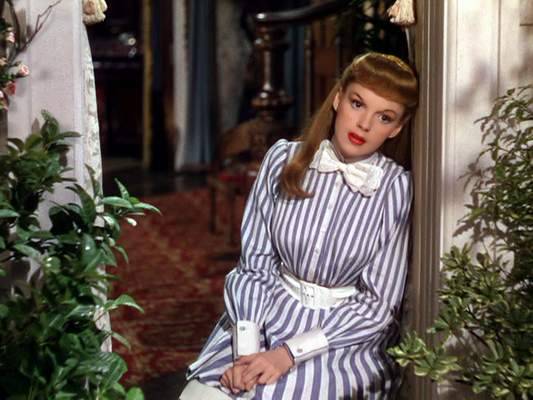
JUDY GARLAND
The song has an interesting history which is available in Martin’s own words at THIS LINK. This is the short version. Martin’s perennial songwriting partner, Ralph Blane, asked about a tune he had overheard Martin fooling around with, but Martin said he had given up on it. Blane had liked the melody and asked Martin to try it again. Martin wound up writing “Have Yourself a Merry Little Christmas.” Judy Garland’s character sang this song to her little sister (Margaret O’Brien) who was distraught because their father was moving the family from its homestead in Missouri to New York City.
In that context, the combination of Martin’s melancholy melody and his lyrics was heart-wrenching. So much so, that Judy Garland and others objected that it was too sad. Martin at first refused to change it, but actor Tom Drake talked him into it.

HUGH MARTIN
For instance, the song originally began: Have yourself a merry little Christmas. It may be your last / Next year we may all be living in the past. Martin changed that to Have yourself a merry little Christmas. Let your heart be light / Next year all our troubles will be out of sight.
That was in 1944. In 1957, at the request of Frank Sinatra, Martin changed the song again. The original lyric read, But at least we all will be together, if the Fates allow / From now on we’ll have to muddle through somehow. Sinatra found that a little downbeat for a Christmas album he was recording, and Martin accommodated him with, Hang a shining star upon the highest bough,” which is the way it is usually performed now.
No matter, in all of its versions it’s a wonderful song from a wonderful talent.

Margaret O'Brien and Judy Garland in "Meet Me in St. Louis"
“We start and end with the family” — Anthony Brandt
January 31, 2011

STEPHANIE ZIMBALIST
Since I was a kid, I have been fascinated by instances in which multiple members of a family have worked in the same or similar fields. For example, the other day I heard an interview on WNYC radio with Louis Rozzo, a fish dealer who was making an argument for taking the trouble to buy fresh anchovies and sardines and other fish that are typically packed in oil and canned. The conversation was interesting enough, but a detail that resonated with me was that Rozzo is the fourth generation owner of F. Rozzo and Sons. I would have liked to hear more about that.
In a similar way, I like reading about people like the Delahanty brothers – five of them played major league baseball – or the Harrisons, who included a signer of the Declaration of Independence, a Virginia legislator and attorney general, two presidents of the United States, and two members of Congress. The five Marx Brothers have always interested me less for their comedy than for their family history, which started with their maternal uncle, Al (Schoenberg) Shean, who was a famous vaudevillian.

STEPHANIE ZIMBALIST
This topic has been on my mind because I had an opportunity recently to talk with actress Stephanie Zimbalist, who is soon to appear in a production of Frank Gilroy’s play “The Subject Was Roses” at the George Street Playhouse in New Brunswick. On her own, Stephanie Zimbalist has built a substantial resume of performances on television and on the stage. However, her family’s background in the performing arts goes back at least as far as her great-grandfather Aron Zimbalist, who was an orchestral conductor in Russia in the 19th century. Her grandparents were both outstanding classical performers whom I have admired since I was very young. Her grandfather was Efrem Zimbalist, a concert violinist whose name can be mentioned in the same sentence with Jascha Heifitz and Fritz Kreisler. Efrem Zimbalist was married to Alma Gluck (nee Reba Feinsohn), who was one of the most popular female vocalists of the early 20th century. My family had 78 rpm recordings by both of these artists — along with others — and, long before I understood their significance, I listened to them over and over again on our wind-up Victrola.
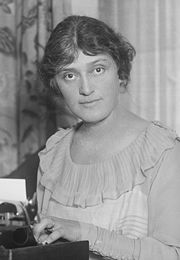
ALMA GLUCK
Alma Gluck, who was born in Romania, was a soprano who was on the roster at the Metropolitan Opera Company. She also had a substantial concert career and was one of the first serious artists to make phonograph records, and that greatly contributed to her fame. She made more than 170 recordings for Victor between 1911 and 1924, choosing songs from a wide variety of genres. She and her husband made at least 32 recordings together, and he had a long list of recordings of his own. Zimbalist was also a composer and the director of the Curtis Institute of Music in Philadelphia.
Efrem Zimbalist and Alma Gluck were the parents of Efrem Zimbalist Jr. – Stephanie’s father – who is a popular film and television actor whose starring roles included the TV series 77 Sunset Strip and The FBI.

Stephanie Zimbalist justifably has a great deal of pride in this heritage. I found that she enjoys talking about Alma Gluck – who died before Stephanie was born – and is well schooled in her grandmother’s career. Stephanie told me — only half joking, I suppose — that she didn’t pursue a singing career because she didn’t want to weather comparisons with her grandmother. Still, Stephanie Zimbalist has a trained voice and has given some performances. Speaking about her grandmother, she told me, “Daddy said she would have loved me, but I don’t know. She was tough task master on him. She wanted him to be a doctor or an engineer, and he wanted to be a dancer or a gymnast.” But the musical gene apparently didn’t skip a generation with the actor, Stephanie said. “He says he knows very little about music, but he knows an awful lot. He studied orchestration at Curtis, and he’s written a lot of things; he’s written many many pieces of music.”
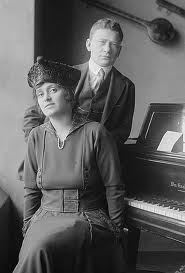
ALMA GLUCK and EFREM ZIMBALIST
Stephanie Zimbalist’s mother, the former Stephanie Spaulding, died in 2007. Stephanie cares for her mom’s pet, an elegant long-hair dachshund named Scampi, who participated in our interview. I asked Stephanie what would be next in her career after her run at George Street, and she said, “Nothing. I don’t have a career. I just have bumps in the road. That’s probably why I’m doing good work these days, if I am doing good work. Nothing’s an agenda. I don’t do anything to see where it will take me. I just do it for the work. On my plate in my life right now is this sweet little thing” — a reference to Scampi, who was on Stephanie’s lap. “And then, my Dad is 92, God bless him, and doing very well, but I spend quite a bit of time with him, just to be there.”
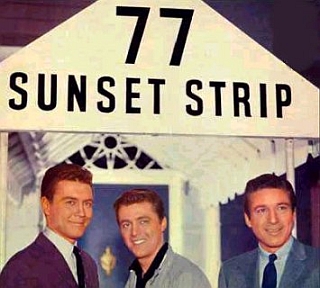
A publicity shot for “77 Sunset Strip”: Roger Smith, left, as private detective Jeff Spencer; Efrem Zimbalist Jr., right, as Spencer’s colleague, “Stu” Miller; and Edd Burns as their protege, Gerald “Kookie” Kookson — the inspiration for the 1959 pop song “Kookie, Kookie, Lend Me Your Comb.”
I’m obsessed
November 6, 2010

KATE SMITH
The popular song “Wrap Your Troubles in Dreams” was written in 1931, and its lyricists, Ted Koehler and Billy Moll, provided a hopeful message that sounded all the more melancholy because of the reality of the times – economic depression. My favorite recording of that song was made by Kate Smith. I like the way she sings two lines — both of them in this verse:
Your castles may tumble / that’s fate, after all / Life’s really funny that way / No use to grumble / Smile as they fall / Weren’t you king for a day?
Kate Smith had a wonderful, musical laugh, which I loved to hear on her radio and television shows. And she laughs that laugh on the word “funny” in that verse without breaking the tempo of the line. I can’t hear her sing that line too often, and I’ve had the recording for about 40 years. Then, at the end of the verse, she does a little glide on the word “day,” starting on the note and then smoothly sliding down the scale. Again, I’m obsessed with that line. I play the song just to hear her treatment of that one word – “day.”
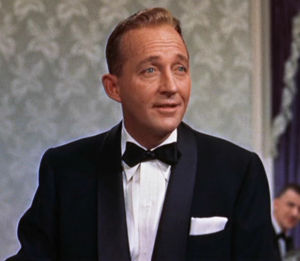
BING CROSBY
In a similar vein, for many years, whenever I learned that a TV station was going to broadcast the movie “High Society,” I would watch it so that I could hear Bing Crosby and Frank Sinatra perform the duet “Well, Did You Evah,” sometimes referred to as “What a Swell Party This Is.” I even figured out about how far into the movie that song occurs, because I didn’t want to watch the whole film, which is a flawed remake of “The Philadelphia Story.”
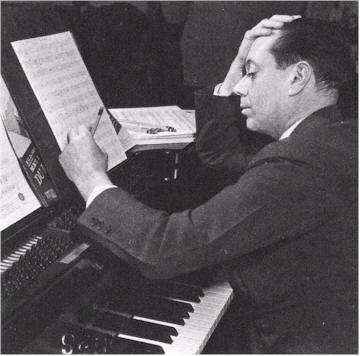
COLE PORTER
The movie has a book by John Patrick and songs by Cole Porter. In “Well, Did You Evah” Crosby and Sinatra simultaneously sing Porter’s lyrics and exchange spoken barbs. At one point, Crosby sings, “Have you heard / about dear Blanche? / Got run down by an avalanche.” Sinatra says, “Nooooo,” and Crosby answers “Don’t you worry. She’s a game girl, you know. Got up and finished fourth.” Sinatra: “This kid’s got guts.” Crosby: “Havin’ a nice time? Grab a line.” At which point, Sinatra resumes singing. Crosby was Mister Smooth, and the way he delivers the line, “Don’t you worry. She’s a game girl, you know . . . ” has captivated me since the first time I heard it about 50 years ago. Fortunately, I now have bookmarked that song from YouTube and I can listen to Crosby say that line as often as I like, which is often, because I’m obsessed.
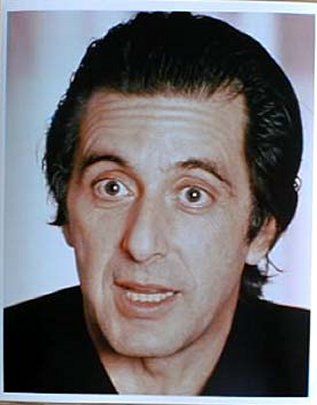
AL PACINO
I don’t experience this kind of fixation only with music. It also occurs with the spoken word — for example, with Al Pacino’s speech in the climax of the movie “Scent of a Woman.” I read a review of that movie in which the critic remarked that Pacino’s dramatic choices were confined to whether to speak loud or louder. It’s fair to say that Pacino often gobbles the scenery, but the most effective line in that speech is one for which he lowers his voice and uses the words like sharp instruments. It is the last sentence of this passage: “As I came in here, I heard those words, ‘cradle of leadership.’ Well, when the bow breaks, the cradle will fall. And it has fallen here; it has fallen. Makers of men; creators of leaders; be careful what kind of leaders you’re producin’ here.” When Pacino says those last words – “Be careful what kind of leaders you’re producin’ here” – he makes them prophetic, ominous. I bookmarked the video of that scene, too – it’s at THIS LINK — and I never tire of hearing him say it. I’m obsessed.

SETH RUDETSKY
I recently learned that this behavior doesn’t constitute a private disorder of mine – and that there is a name for it: deconstruction. The dawn broke when I was at the George Street Playhouse in New Brunswick talking to Seth Rudetsky, who is so versatile that he defies definition. It’s something like comedian-actor-radio host-raconteur-musician-composer. I was talking to him because he is going to appear in the George Street production of the musical play “[title of show].”
Rudetsky hosts a web site which includes a series of videos he calls “Deconstruction.” In these, he plays clips from Broadway musicals — a subject he knows inside-out — and analyzes, in his supercharged manner, the techniques with which a singer such as Florence Henderson, Laurie Beechman, or Kristin Chenoweth handles a song – or a line, or a word, or a syllable. “I’m obsessed!” he often says when he has played a phrase over and over again, mouthing the words along with the singer.
I’m glad to finally know that I’m in good company. Rudetsky’s site is at THIS LINK.
“Why are we here? Where are we going?” — Lew Brown
August 1, 2010
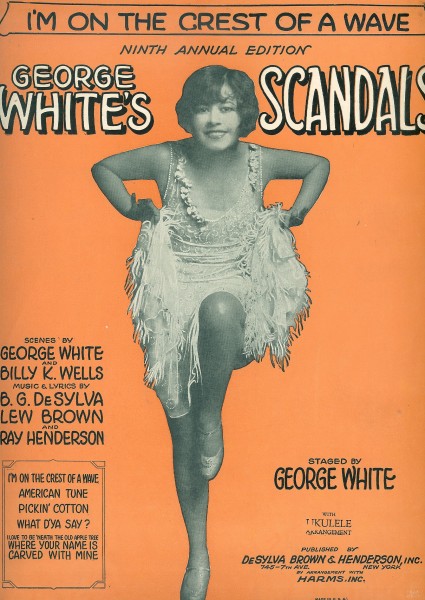 Sometimes we meet people in unexpected ways. For example, I met Lew Brown, who died 52 years ago, while I was struggling to write a sermon yesterday. We homilists are supposed to base our message on the readings of the day, and today’s readings have a consistent theme: Don’t neglect your spiritual well-being while you’re absorbed in accumulating possessions and other forms of material wealth. The first reading is from the Book of Ecclesiastes (“For what profit comes to a man from all the toil and anxiety of heart with which he has labored under the sun?”); St. Paul’s letter to the Christian community in Colossae (“Think of what is above, not of what is on earth”); and the Gospel according to Luke (“Though one may be rich, one’s life does not consist of possessions”).
It’s a message we hear often. In other words: Been there, done that.
 And so I thrashed around for several hours, trying to find a way into this homily. I looked back at hooks I had used the last few times these readings came up in the three-year cycle, but they seemed contrived and heavy-handed — as my writing often seems to me after some time has passed. Then, as we like to say in the church, the Holy Spirit put a song in my head: “Life is just a bowl of cherries / Don’t take it serious / Life’s too delirious / You live, you love, you worry so / but you can’t take your dough / when you go, go, go.”

Lyricist Harold Arlen, left, and Lew Brown visit with Eddie Cantor on the set of "Baby Face."
The lyric was a pop iteration of the central theme of today’s readings and, because the tune is still familiar, I decided to use it. When I set out to find out who wrote the lyrics, I found several web sites that attributed it to George Gershwin who, of course, was not a lyricist. I also found it attributed to Ira Gershwin, who was. That didn’t sound right to me, so I persisted, and I found out that the lyric was written by Lew Brown for the Broadway review “George White’s Scandals of 1931.” (Pay attention, boys and girls. You can’t trust internet sources.)
When the song is performed now, it usually seems to recommend a carefree life, but Brown wrote it at the onset of the Great Depression when it had a different connotation. As is frequently the case with popular lyrics, these at least touch on pretty serious ideas: “The sweet things in life / to you are just loaned / so how can you lose / what you’ve never owned?”

RAY HENDERSON
Like Irving Berlin, Lew Brown was born in the latter 19th century in tsarist Russia, and like Berlin, his family brought him to New York City when he was child. Brown began writing songs when he was still attending Dewitt Clinton High School in the Bronx and by 1912, when he was 19 years old, he had his first hit, “I’m the Lonesomest Gal in Town,” and he had another in 1916, “If You Were the Only Girl in the World (and I Was the Only Boy)”. The scores for both were written by Albert von Tilzner, with whom Brown collaborated on several other tunes. “If You Were the Only Girl in the World” became an American standard, and it would be only one of many for which Brown — either solo or as a collaborator — provided the words. He teamed up for a long time with composer Ray Henderson, and together they wrote the song that prompted this blog and one of my favorites, “The Thrill is Gone,” which was also written for the “George White Scandals.” Other songs he had a hand in were “The Beer Barrel Polka,” “Don’t Sit Under the Apple Tree (With Anyone Else but Me),” “Sonny Boy,” “It All Depends on You,” “The Best Things in Life Are Free,” and “You’re the Cream in My Coffee.”
Lew Brown — who was born Louis Brownstein — died in 1958, never expecting to help a tin-horn deacon preach the gospel. Thanks, Lew . . . for everything.
“I hear you calling me . . . .”
July 23, 2010

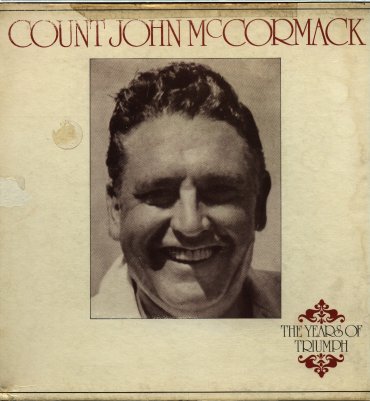
JOHN McCORMACK
National Public Radio is running a series on “50 Great Voices,” and I was pleased to hear the other day that one of my favorite voices has been included — that of the Irish tenor John McCormack. You can follow the unfolding of “the list” by clicking HERE. I would have expected Enrico Caruso to be on the list – and he is – but Caruso has endured as an icon ala Babe Ruth. The name Caruso is known far outside of the circle of opera buffs; his name is a synonym for “singer.” McCormack, on the other hand, is known these days mostly by the musty crowd that lives with one foot in the distant musical past. People like me, for instance.
I developed an interest in McCormack when I was in my early teens. This came as a blow to my mother, because she was already getting auditory indigestion from the olio that poured out of my hi-fi: one minute Bill Haley & His Comets, the next minute Bach’s Mass in B minor, the next minute Florian Zabach’s violin, and the next minute Hank Williams. Mom preferred Zabach.
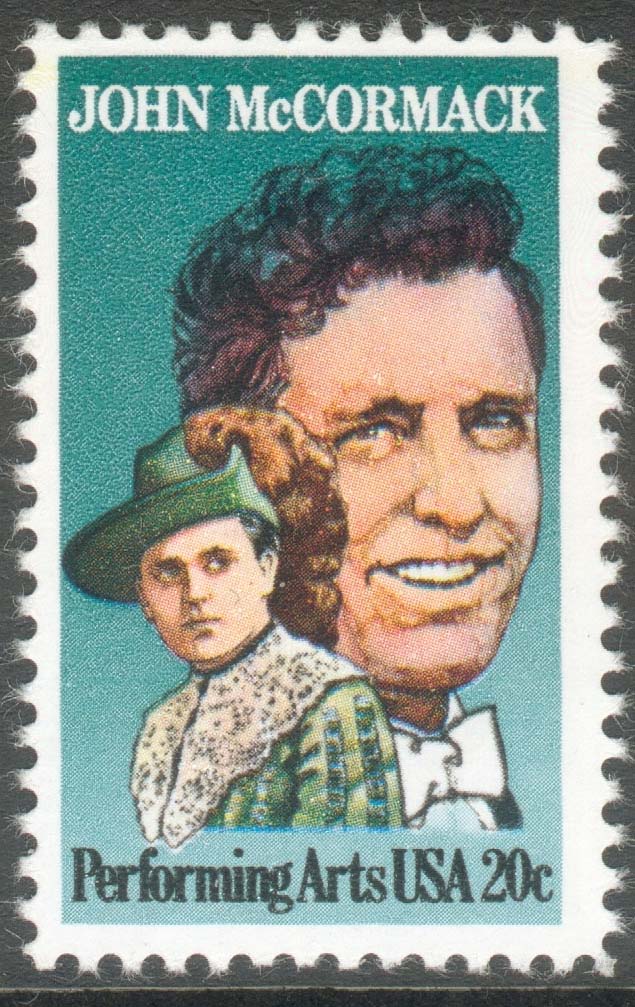
Stamp honoring John McCormack
I stumbled across McCormack after I bought four LPs by the Italian tenor Mario Del Monaco. Listening to those discs launched me into a lifelong fascination with tenors, and I accumulated recordings by dozens of them, ancient and modern. It was inevitable that McCormack would be included, because he was a prolific performer, including many recordings. Connecting with McCormack also opened my ears to Irish music, because, besides his operatic career, he was a mainstay on the concert stage and his repertoire included the songs of his native Ireland. I found these irresistible because the melodies and lyrics are laced with both humor and melancholy. I acquired recordings by other Irish tenors, too, but no one seemed to approach McCormack.
When I became better informed about music, I learned that my instincts hadn’t failed me for a change. McCormack is highly regarded as a singer — unparalleled, in the opinions of some authorities — because of the extraordinary control he had over his breath and his voice. That is well displayed in his recording of his signature song, “I Hear You Calling Me.”
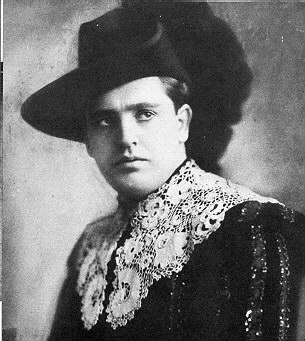
JOHN McCORMACK
Very early in his career, McCormack sang under the name Giovanni Foli, deriving it from the name of his lifelong sweetheart and longtime spouse, Lily Foley. He was wildly popular at the height of his career and he earned, and spent, enormous amounts of money. He was also the soul of charity and was particularly generous with his time and his own funds in supporting the American effort in both world wars. He became an American citizen in 1917, a decision that wasn’t well received back home, and he took his citizenship seriously. He also supported many other causes, including the Catholic Church, and the Church bestowed many honors on him, including the hereditary title of count.
According to an often-repeated story, at a chance meeting between Caruso and McCormack, McCormack asked, “And how is the greatest tenor in the world?” To which Caruso replied, “And when did you become a baritone?”
Some of McCormack’s songs are available at the NPR site and at the web site of the John McCormack Society, which is at THIS LINK.

"His Master's Voice," Francis Barraud, 1898
In a post on May 14, I mentioned a song written in 1920 by Harry Ruby and Bert Kalmar: “So Long, Oolong, (How Long Ya Gonna Be Gone?”) I didn’t mention that I happen to have a recording of that song, sung by Frank Crumit on the Columbia label. Crumit was a popular singer and radio personality who also wrote about 50 songs, including “Buckeye Battle Cry” which is played at Ohio State University football games.

Victrola, the Victor Talking Machine Co.
My recording of the Ruby-Kalmar song is a 78 rpm shellac disk. I could play it on the electric turntable that we use to listen to our 33 rpm LPs, but I don’t. I play it on our 1927 model wind-up Victrola. I have an odd assortment of records stored in the cabinet of that phonograph. Most of them are 10-inch disks, but there are a few of the 12-inch disks. Some of these are recorded on only one side – including a 12-inch Victor record of Giovanni Martinelli singing “Celeste Aida” from the Verdi opera. By the mid 1920s, Crumit was recording for Victor, so the recording I have has to date from before that. The Martinelli recording was made at the Victor studios in Camden on Nov. 25, 1914. I was able to determine that at THIS LINK, which is a complete catalog of Victor recordings. An interesting detail is that the Martinelli recording – one side only – sold for $1.50 and the Crumit record sold for a buck.

45 rpm record
I got on this subject because of a story I read today HERE, on the Boston Globe web site. The nut of this story by Sarah Rodman is as follows:
As consumers buy fewer and fewer CDs, an interesting phenomenon is occurring — artists who appeal to older listeners are showing up surprisingly high on the charts.
The reason: Adults are largely the ones buying CDs these days. Younger people tend to download in general and focus on singles.
The story makes it clear that while this isn’t universally true, it’s a clear trend. It’s also interesting to note that “surprisingly high on the charts” is a relative concept. Rodman points out that a reissue of a Rolling Stones album recently hit the charts in second place on the strength of about 76,000 sales. In the “early 2000s,” the writer explains, a recording had to achieve six figures just to be in the Top 10. The early 2000s are already “the old days.”

SADE
The acts the story cites as appealing to “older listeners” are an eclectic group that includes Sarah McLachlan, Sade, Barbra Streisand, Michael Buble, and Susan Boyle.
There is a lot of discussion about the changes that have taken place in the recording industry. Like some other fields affected by rapidly evolving digital technology, this one presents a variety of challenges to everyone involved. And the challenged include people like me, who have lived through all of the developments in recording except wax cylinders — and who have accumulated evidence of every stage.
Besides the heavy shellac records and the acoustic talking machine, we have boxes of 45 rpm records in the garage — including a duet by Connie Francis and Marvin Rainwater — hundreds of LPs in the living room — dozens of cassette tapes (and several cassette players, including the one in my Beetle), CDs all over the house, and a couple of MP3 players. The only stage we skipped was 8-track.

JASON ALEXANDER
There’s an episode of “Seinfeld” in which George Costanza, having seen “Les Miserables” on Broadway, can’t get the song “Master of the House” out of his head. We’ve all had a similar experience, and it can be annoying. I read a book by the neurologist Dr. Oliver Sacks in which he discusses the possible causes of this phenomenon. Pay attention. I think the next step in sound technology will be a chip implanted in the listener’s head and songs transmitted directly into the brain.
Meanwhile, is there a market for all these jewel cases?
“How long ya’ gonna be gone?” — Ruby and Kalmar
May 14, 2010

Sheet music to "So Long, Oolong"
When Patricia T. O’Conner, author of popular books on English usage, visited the Leonard Lopate show on WNYC this week, the segment was introduced by a vocal of the song “Three Little Words,” which made me think of Harry Ruby. Ruby and his longtime colleague, Bert Kalmar, wrote that song in 1930 for what would now be considered an offensive movie.
The film was “Check and Double Check” — the only movie made by Freeman Gosden and Charles Correll in their blackface roles as Amos Jones and Andrew H. Brown — characters they made famous with their long-running radio series, “Amos ‘n’ Andy.” The song didn’t get small-time treatment in the film; it was performed by Bing Crosby and the Duke Ellington Orchestra.
The song also lent its name to the title of the 1950 film biography of Ruby and Kalman.

HARRY RUBY
Harry Ruby first came to my attention when I was a kid, and he made a guest appearance on the Danny Thomas television show, “Make Room for Daddy.” Ruby sang another song he had written with Kalman, one that — some might say mercifully — is not as well known as “Three Little Words.” The 1920 tune was “So Long, Oolong. How Long Ya’ Gonna be Gone,” which had racist overtones, as did so many Tin Pan Alley songs written in that era.
The song is about a Japanese girl named Ming Toy, whose boyfriend left for what was supposed to be a short spell but turned into a long spell. Hence the chorus: So long, Oolong, how long ya’ gonna be gone?”

BARBRA STREISAND
Ruby and Kalman were prolific, and some of their work was much more sophisticated than the Oolong affair. For example, they wrote “My Honey’s Lovin’ Arms,” which got a signature performance many years later in “The Barbra Streisand Album.” The pair also wrote “Who’s Sorry Now?” “Nevertheless (I’m in Love with You),” “A Kiss to Build a Dream On,” and the Betty Boop theme, “I Wanna be Loved by You,” among others.
As talented and productive as Ruby was as a songwriter, though, what I like best about him is that he always wanted to be a baseball player. He tried, unsuccessfully to make it into the pros, and he never missed a chance in later life to get close to the game. His devotion to the sport is the source of one of the great baseball anecdotes.

LOU GEHRIG
Ruby seized an opportunity to appear in “Elmer the Great,” a sports movie starring the comedian Joe E. Brown, who was also a devotee of baseball. The movie was shot at the old Wrigley Field, a minor league park in Los Angeles. One of the scenes called for an player, to be portrayed by Ruby, to drop a ball hit to him in the outfield. Ruby walked off the set, insisting that he wouldn’t drop a ball on purpose for any amount of money. Later, when Brown and Ruby happened to be in the company of Lou Gehrig, Brown told that story, figuring that Ruby would be embarrassed. Gehrig, with a straight face, said it was the greatest baseball story he had ever heard
 CharlesPaolino's Blog