
During the movie Same Time, Next Year, which was the topic of my last post, Alan Alda’s character sits down at a piano a few times, and one of the songs he plays is “If I Knew You Were Coming, I’d Have Baked a Cake.” I don’t think I’ve heard anyone perform that song in decades, but I do remember when it was a big hit. That was in 1950, and in that era, novelty songs, as they were called, often made it to the charts and sometimes in a big way.
The one Alda played was written by a committee: Al Hoffman, Bob Merrill, and Clem Watts (a pseudonym for bandleader Al Trace). Like many popular songs, it was an expansion of an expression, the title, that already existed in popular culture. The lyric went, in part:
If I knew you were comin’ I’d’ve baked a cake
baked a cake, baked a cake
If I knew you were comin’ I’d’ve baked a cake
Howd-ya do, howd-ya do, howd-ya do
Had you dropped me a letter, I’d a-hired a band
Grandest band in the land
Had you dropped me a letter, I’d a-hired a band
And spread the welcome mat for you
Oh, I don’t know where you came from
’cause I don’t know where you’ve been
But it really doesn’t matter
Grab a chair and fill your platter
And dig, dig, dig right in.

The first and iconic recording of this song was made by Eileen Barton. The tune arrived on the Billboard magazine chart in March 1950 and stayed for 16 weeks, peaking at No. 1. A recording made that same year by Georgia Gibbs was on the Billboard chart for six weeks. The best-known performance of the song, with good reason, was by Ernie in an encounter with the Cookie Monster in 1969 during the first season of Sesame Street. You can see that scene by clicking HERE.
Another of Al Hoffman’s collaborations, this one with Jerry Livingston and Milton Drake, was the nonsense song “Mairzy Doats,” which the trio composed in 1943. The song has been recorded, and has charted, many times. The Merry Macs, a popular harmony group, took it to Number 1 in March 1944. According to Drake, the inspiration for the song was an English verse he heard his young daughter singing: “Cowzy tweet and sowzy tweet and liddle sharksy doisters.” (Cows eat wheat and sows eat wheat and little sharks eat oysters.)
You can hear the Merry Macs’ hit recording by clicking HERE. This song was a particularly good fit for the wack-a-doodle bandleader Spike Jones, and you can hear his recording by clicking HERE.
“Oh, no, it isn’t the trees . . . .”
September 23, 2013

The young JACK BENNY (Benjamin Kubelsky) with his violin.
I was about to watch an episode of the Jack Benny Program recently when I became absorbed in the opening theme. The theme is associated not just with the television series but with Jack Benny himself. The song, “Love in Bloom,” was not written by amateurs. The music was by Ralph Rainger and the lyrics by Leo Robin. Ralph Rainger, a member of the Songwriters Hall of Fame, wrote a lot of music for movies between 1930 and 1942. One of his compositions, “Thanks for the Memory,” written for The Big Broadcast of 1938, won an Academy Award. (I’ll have more to say about that song in a later post.) Leo Robin, who wrote the lyrics to “Love in Bloom,” is also a member of the Hall of Fame. His work included “Thanks for the Memory,” “Beyond the Blue Horizon,” “Prisoner of Love,” and “Blue Hawaii.”
“Love in Bloom” was introduced in 1934 in the film She Loves Me Not. It was sung in a duet by Bing Crosby and Kitty Carlisle.

LEO ROBIN
Crosby, that same year, was the first to record the song, which was nominated for an Academy Award.
Kitty Carlisle — an elegant woman whom, incidentally, I once visited at her Manhattan apartment — liked the song enough that she considered adopting it as her own theme. She scuttled that idea, however, when Benny made the song his signature, frequently playing it, and deliberately butchering it, on his violin.
The song has qualities that don’t come across in most of Benny’s renditions. You can see for yourself as Crosby and Kitty Carlisle sing it in the film. Click HERE.
You can also see a hiliarious routine in which Benny and Liberace play the song on the keyboard and violin on a 1969 episode of Liberace’s TV show. Here Benny lets himself show, for a while at least, that he was more competent on the violin than he cared to admit. Click HERE.
“If it ain’t got that swing”
September 19, 2012
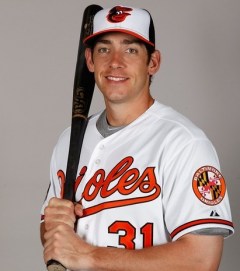
TAYLOR TEAGARDEN
Taylor Teagarden’s major league baseball career hasn’t amounted to much yet. As of yesterday, he had appeared in only 136 games in five seasons. He has shown a flair for the dramatic on a few occasions—last night being a notable example—but he hasn’t yet become the Jack Teagarden of the diamond.
Jack was another story altogether. As soon as I heard of Taylor T., I wondered if he and Jack were related. Naturally a guy would wonder that, what with the unusual last name and the fact that both of these Teagardens were from Texas.
Well, I say “naturally.” It was natural for me, because of a 78 rpm record that belonged to my parents. I loved that record when I was a kid, and I still do. It’s a rendition of a 1941 Johnny Mercer song, “The Waiter, the Porter, and the Upstairs Maid,” sung by Bing Crosby, Mary Martin, and Jack Teagarden. It’s one of those witty, sophisticated lyrics that Mercer wrote best. You can hear and see that trio singing Mercer’s song at this site: http://www.youtube.com/watch?v=_0e1DF4TUYY. Or you can come over Saturday afternoon, and I’ll play it for you on the Victrola. If you don’t know what a Victrola is, you probably already stopped reading.
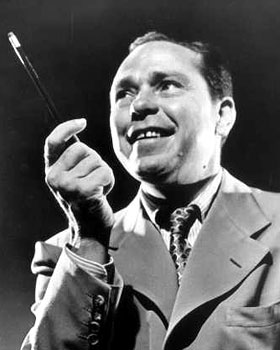
JOHNNY MERCER
Jack Teagarden, who came from a family loaded with musical talent, was in heady company with Crosby and Martin, and he was a very good crooner himself, as well as a composer and bandleader. Among the highlights of his memorable career were his vocal turns with Mercer and Louis Armstrong. But he made his most indelible mark as an innovative jazz and blues trombonist. He is often referred to as “the father of jazz trombone.” You can learn a lot about this important figure in American cultural history at www.jackteagarden.info.
Although it’s a lot easier than it was in the pre-digital age to answer such questions as, “Is Taylor Teagarden related to Jack?”, I have had trouble finding out. Until I wrote this post, I had found only one reference, buried in an non-authoritative web site, reporting that the catcher thinks he might be the great great nephew of the musical genius. But my friend Brian VanderBeek, a sports writer with the Modesto Bee, responded to this post by reporting that he had met Taylor Teagarden in 2007 when Taylor was playing for Bakersfield in the California League and Taylor, on that occasion, confirmed that Jack Teagarden was his dad’s great uncle.
Taylor is with the Orioles now, and his season got a late start due to a back injury. It remains to be seen if he will leave in baseball a footprint like the one Jack Teagarden left in music, but Taylor has already taken advantage of baseball’s unique capacity for providing even the most obscure player with opportunities for heroics.
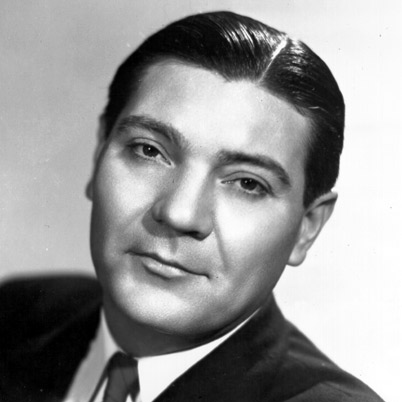
JACK TEAGARDEN
He came up with the Texas Rangers in 2008, and his first major league hit was a sixth-inning home run off Scott Baker of the Minnesota Twins. Baker had not given up a hit up to that point. And Teagarden’s homer produced the only run in what turned out to be a 1-0 game. When he came off the disabled list for the Orioles on July 14 of this year, he hit a two-run homer that broke up a 6-6, 13-inning tie with the Tigers.
Last night, Taylor got to play Mr. Clutch again as he pinch hit a single in the top of the 18th inning, driving in the winning run as the Orioles beat the Seattle Mariners and pulled into a virtual tie with the Yankees for first place in the American League East. No matter how the rest of his career goes, Taylor T. can always say with another lyricist, Ira Gershwin, “They can’t take that away from me.”
.
“You’ll go down in history!”
December 24, 2011
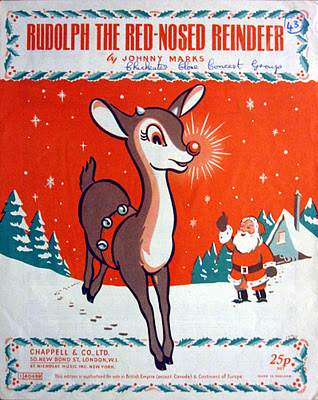 There’s a radio station in these parts that started the week after Thanksgiving to play nothing but Christmas music. And that has been pretty much restricted to non-religious Christmas music, which sharply limits the available tracks, even with generic winter tunes like “Let it Snow” thrown in.

JOHNNY MARKS
We usually stick to the public radio classical music station, but once in while, when that station delves into music we find grating, we have switched to the commercial station, but the steady diet of what seems like a dozen songs can be nauseating. Earlier today, within less than 30 minutes, that station played yet again “Rudolph, the Red-Nosed Reindeer” by Gene Autry, “Rockin’ Around the Christmas Tree” by Brenda Lee, and “Have a Holly Jolly Christmas” by Burl Ives. It occurred to me as I reached for the remote that all of those songs were the work of Johnny Marks. That’s no small thing when one considers that relatively few pop Christmas songs have become standards.
“Rudolph, the Red-Nosed Reindeer” was actually a collaboration with Marks’s brother-in-law, Robert May, a Phi Beta Kappa graduate of Dartmouth, who worked as a copywriter for Montgomery Ward.

ROBERT MAY
For many years, the retail chain had been giving away Christmas coloring books to children who visited Santa Claus at Montgomery Ward stores, but in the 1930s, turned to creating its own book, which featured the tale of Rudolph, written in verse by Robert May. By 1946, more than six million copies of the book had been distributed. To its credit, Montgomery Ward, which originally owned the copyright to Rudolph because it had been written by an employee as an assignment, turned the rights over to May in 1947. Marks turned May’s poem into lyrics and set it to music. Although other singers turned down the chance, Gene Autry recorded the song for the Christmas season of 1949 and the disc sold more than 2.5 million copies the first year and has sold tens of millions since.
 Incidentally, May’s achievement was remarkable in its own right in that he managed to add a character to the ages-old Santa Claus legend.
Marks, who attended Colgate and Columbia universities, also wrote “I Heard the Bells on Christmas Day,” a musical adaptation of a poem by Henry Wadsworth Longfellow. The song was recorded by several major artists, including Harry Belafonte, Bing Crosby, and Kate Smith.
From what I’ve read, although “Rudolph” made Marks a rich man, he wasn’t crazy about being remembered only for that and a few other Christmas songs. As it happens, Marks also collaborated with Carmen Lombardo and D.L. Hill to write one of my favorite songs, “Address Unknown.” It was a big hit for the Ink Spots. You can hear their recording by clicking HERE.
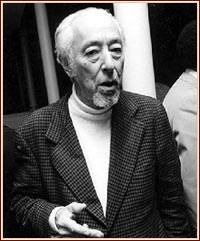
JOHNNY MARKS
I don’t want to leave Johnny Marks without mentioning that he served with the U.S. Army during World War II — specifically, as a captain in the 26th Special Service Company — and he was awarded the Bronze Star and four battle stars.
Serving under General George Patton during the invasion of Normandy, Marks won the Bronze Star for leading 20 men in an attack on a castle and capturing the 100 Germans inside. 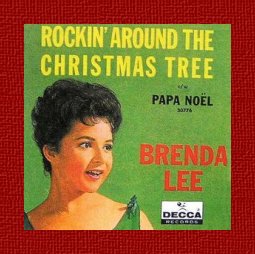
“It’s nobody’s business but the Turks” — Jimmy Kennedy
December 6, 2011

STEPHEN COLBERT
Stephen Colbert, in his recent irreverent commentary on the new English translation of the ritual of the Roman Catholic mass, said something to this effect: “For the record, consubstantial is now Istanbul.” For the benefit of the uninitiated, consubstantial is a technical term in the Nicene Creed that expresses something we Catholics and many other Christians believe about the nature of God. In the translation in use from around 1970 until Nov. 27, the Latin phrase consubstantialem Patri was rendered “of one substance with the Father,” but in the new rendition it reads, “consubstantial with the Father.”
Anyway, that was the occasion for Colbert to make that play on words.

JIMMY KENNEDY
That had the unintended result of reviving in my brain the memory of a song written in 1953, with lyrics by Jimmy Kennedy and music by Nat Simon, namely “Istanbul (Not Constantinople”). I don’t know how historically accurate Kennedy was trying to be, but the song in general refers to the fact that in 1930, the government of the relatively new Republic of Turkey declared Istanbul to be the one and only name of a city that had had many names — sometimes more than one at the same time — over its very long history. Istanbul was not a new name in 1930. Far from it, the name was known in some form since at least the tenth century.
Things like that used to interest song writers, and Kennedy turned out a lyric that, in part, went like this:
Istanbul was Constantinople
Now it’s Istanbul, not Constantinople
Been a long time gone, Constantinople
Now it’s Turkish delight on a moonlit night
Every gal in Constantinople
Lives in Istanbul, not Constantinople
So if you’ve a date in Constantinople
She’ll be waiting in Istanbul
Even old New York was once New Amsterdam
Why they changed it I can’t say
People just liked it better that way
So take me back to Constantinople
No, you can’t go back to Constantinople
Been a long time gone, Constantinople
Why did Constantinople get the works?
That’s nobody’s business but the Turks.
The ‘fifties being what they were, that was a big hit for the Four Lads.It was played on the radio again and again, and it was bored into my subconscious mind, where it rested happily until Colbert summoned it from the tomb.Kennedy, incidentally, was a very talented guy who wrote several standards, including “South of the Border,” “The Isle of Capri,” and “Red Sails in the Sunset.” Nat Simon and Charles Tobias teamed up in 1946 to write “The Old Lamp-Lighter.”
But Kennedy’s best-known work may be the lyrics he wrote in 1939 for “My Prayer,” which had been composed in 1926 by violinist Georges Boulanger. Glenn Miller and the Ink Spots had big hits with that song, but its most popular interation was the 1956 recording by The Platters.
“Istanbul (Not Constantinople)” has been recorded by many performers, including Bing Crosby and Ella Fitzgerald, Caterina Valente, Bette Midler, and They Might Be Giants.
You can hear the Four Lads’ version by clicking HERE.

Books: “What a Wonderful World”
August 13, 2011
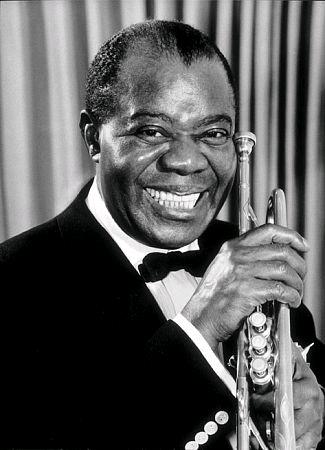
LOUIS ARMSTRONG
Sometime in the early 1960s, I went with a couple of my cousins to hear Louis Armstrong and his band play at Seton Hall University. I can’t remember how I decided to attend that show; there was not a single Armstrong recording among my LPs – which were dominated by operatic arias and country-and-western songs. I knew Armstrong from his television appearances, and I do recall finding him irresistible: not the trumpeter — I didn’t know from trumpets — the whole package. Whenever Armstrong’s image appeared on the black-and-white screen, I would pay attention. He was unique, and he was entertaining.
I was not aware until I read Ricky Riccardi’s recent book, What a Wonderful World, that the quality that attracted me to Louis Armstrong was the very thing that some folks found irritating, disappointing, even traitorous. Jazz purists objected to Armstrong’s departure from his musical roots in his native New Orleans, and many black Americans objected to his on-stage persona, in which they saw the perpetuation of the minstrel end man – a clown whose vocation was amusing white audiences. This was complicated by the fact that although Armstrong was at the height of his international fame in the heyday of the American civil rights movement, he played no visible part in the campaign — this, despite the fact that he and his band had often felt the sting of prejudice.
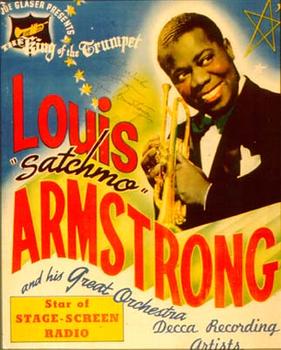
In fact, Armstrong refused for decades to appear in New Orleans as long as local laws prohibited mixed-race bands — perhaps an ironic position for him to take, given the fact that one of the raps on him was that he was willing to play before segregated audiences. His explanation was that he played where his manager booked him, and that he played for whoever wanted to hear him — and they were legion. Armstrong maintained that he contributed as much as anyone else to the progress of black Americans, because he paved the way for others to be received by white audiences.
His bookings are an interesting topic in Riccardi’s book. Armstrong’s manager during the last several decades of his career was Joe Glaser, a Chicago tough guy with a criminal background. There was some kind of bond between the two men — so much so that their arrangement was based on a handshake so that Glaser’s financial obligations to Armstrong were not spelled out. Glaser certainly got rich on the relationship, and Armstrong insisted that he had everything he wanted in life, including his daily regimen of marijuana and an herbal laxative that he treated as kind of a sacrament.
 Riccardi describes in some detail the schedule kept by Armstrong and his band, the All Stars. It’s exhausting just to read about it. It was not unusual for the musicians to perform forty one-nighters in a row without a break — and this went on for decades. Outsiders thought Glaser was taking advantage of Armstrong, wringing out every dime he could before the man dropped dead. Armstrong denied this; Riccardi doesn’t seem to accept it, but even in the material the author provides in this book — such as a letter in which Armstrong complains to Glaser about being treated “like a baby” — there’s a strong insinuation that the critics were right. Armstrong himself insisted that he was doing what he wanted to do, but he also complained from time to time about exhaustion, and he lost more than one player from the All Stars because the grind was just too much.
 Riccardi, who is a student of music and an authority on Armstrong, defends Armstrong’s repertoire; the subtitle of the book is The Magic of Louis Armstrong’s Later Years. Among the criticisms of Armstrong was that he played almost the same song set night after night, to which Armstrong replied that he played what the paying audience expected him to play. As for the indictment of Armstrong’ s wide grin and rolling eyes, it never occurred to me that those mannerisms were supposed to be a stereotype of a black man — if it had occurred to me, I would have been offended and would not have been at that show at Seton Hall. To me, Armstrong was just being himself. Still, his position on race, as Riccardi presents it in this book, was ambiguous at most. At times he would lose his temper and rant about the way black Americans were treated, but he was also capable of making a statement in which he adopted a shaky rationale based on a distinction between “lazy” black people and industrious ones like him. In the event, Armstrong had almost no black audience when he was recording his enormous pop hits, “Hello, Dolly” and “What a Wonderful World” and whether that was due to his play list or to his attitude toward his race remains a matter of conjecture.
You can watch and listen to Armstrong sing and play “Mack the Knife” by clicking HERE.
“I hear you calling me . . . .”
July 23, 2010

JOHN McCORMACK
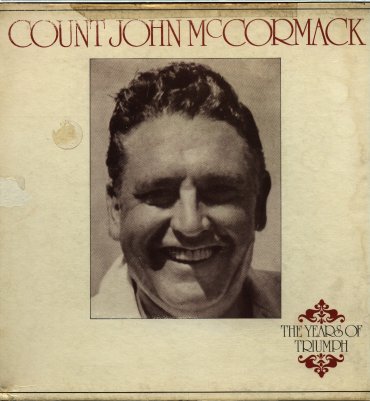
National Public Radio is running a series on “50 Great Voices,” and I was pleased to hear the other day that one of my favorite voices has been included — that of the Irish tenor John McCormack. You can follow the unfolding of “the list” by clicking HERE. I would have expected Enrico Caruso to be on the list – and he is – but Caruso has endured as an icon ala Babe Ruth. The name Caruso is known far outside of the circle of opera buffs; his name is a synonym for “singer.” McCormack, on the other hand, is known these days mostly by the musty crowd that lives with one foot in the distant musical past. People like me, for instance.
I developed an interest in McCormack when I was in my early teens. This came as a blow to my mother, because she was already getting auditory indigestion from the olio that poured out of my hi-fi: one minute Bill Haley & His Comets, the next minute Bach’s Mass in B minor, the next minute Florian Zabach’s violin, and the next minute Hank Williams. Mom preferred Zabach.
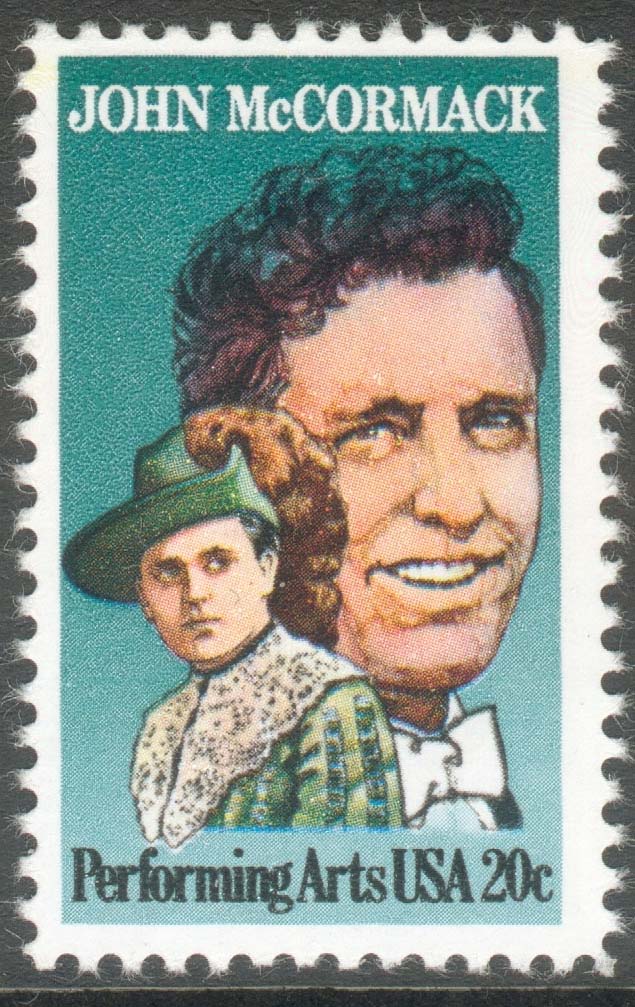
Stamp honoring John McCormack
I stumbled across McCormack after I bought four LPs by the Italian tenor Mario Del Monaco. Listening to those discs launched me into a lifelong fascination with tenors, and I accumulated recordings by dozens of them, ancient and modern. It was inevitable that McCormack would be included, because he was a prolific performer, including many recordings. Connecting with McCormack also opened my ears to Irish music, because, besides his operatic career, he was a mainstay on the concert stage and his repertoire included the songs of his native Ireland. I found these irresistible because the melodies and lyrics are laced with both humor and melancholy. I acquired recordings by other Irish tenors, too, but no one seemed to approach McCormack.
When I became better informed about music, I learned that my instincts hadn’t failed me for a change. McCormack is highly regarded as a singer — unparalleled, in the opinions of some authorities — because of the extraordinary control he had over his breath and his voice. That is well displayed in his recording of his signature song, “I Hear You Calling Me.”
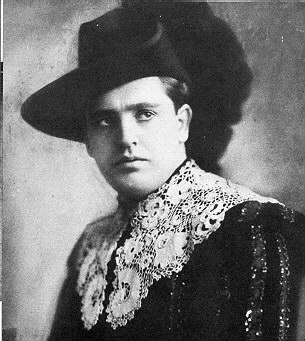
JOHN McCORMACK
Very early in his career, McCormack sang under the name Giovanni Foli, deriving it from the name of his lifelong sweetheart and longtime spouse, Lily Foley. He was wildly popular at the height of his career and he earned, and spent, enormous amounts of money. He was also the soul of charity and was particularly generous with his time and his own funds in supporting the American effort in both world wars. He became an American citizen in 1917, a decision that wasn’t well received back home, and he took his citizenship seriously. He also supported many other causes, including the Catholic Church, and the Church bestowed many honors on him, including the hereditary title of count.
According to an often-repeated story, at a chance meeting between Caruso and McCormack, McCormack asked, “And how is the greatest tenor in the world?” To which Caruso replied, “And when did you become a baritone?”
Some of McCormack’s songs are available at the NPR site and at the web site of the John McCormack Society, which is at THIS LINK.

GRAHAM PARKER
You’ve got to love Graham Parker. Well, I do, anyway. He was on “Soundcheck” on WNYC today, talking about his new album and about his on-line project, “Sunglass(es): The Graham Parker Show.” The combination of music and wit is irresistible. “Well, irresistible to me,” anyway.
According to Parker, the album was prompted by his two fruitless forays into writing TV themes. Both songs that he wrote and recorded and submitted to TV producers who were soliciting themes were rejected. His idea of revenge, or maybe only justice, was to write an album’s worth of themes to non-existent shows. The album notes consist of descriptions of each of these shows.

GRAHAM PARKER
The clip from the album that was played on “Sound Check” was from the theme for a show about an agoraphobic guy whose well-to-do parents put him up in an apartment in a busy downtown area. Since the guy never goes outside, he sees and understands the world only from the vantage point of his apartment window. In the lyric, he wonders out loud where all these people are going, what they’re carrying with them, and why, as Graham sort of put it, “they would be scared off by a forecast of occasional showers.” The album, “Imaginary Television,” is aptly named; it’s the product of a fertile imagination.

GRAHAM PARKER
Like a lot of people in music, Parker is tuned into the radical changes that have affected the recording industry, and he, too, is trying to make his mark in the new media. So the imagination that never sleeps, at times with the help of his 14-year-old son, produced “Sunglass(es).” Has it caught on? Parker says it hasn’t gone viral — that it’s more on the order of “bacterial.” So far, he has posted only Episode 1, which is available at THIS LINK. Like Parker himself, it’s a stitch, and we do get to hear him sing.
In the interview with “Soundcheck” host John Schaefer, incidentally, Parker made some interesting comments about the career of Johnny Nash — the unlikely reggae artist from Texas. You can hear the interview at THIS LINK.
“The dreams that we cherish so often might perish” — Einar Swan
January 30, 2010
 I was listening to Jonathan Schwartz on WNYC a week ago today, and he played a recording by Frank Sinatra of one of my favorite songs from the 1930s — “When Your Lover Has Gone.” Schwartz is such an aficionado of recorded popular songs that he often dwells on minor points about such things as the arrangement or the instrumentation or even — as he did in one case that day — on the matter of which cut on a vinyl disk a song might have occupied.
I was surprised, then, that he didn’t discuss the fact that Sinatra didn’t sing my preferred introduction to Einar Swan’s song — which, by the way, was written in 1931 and featured in the film “Blonde Crazy” with James Cagney and Joan Blondell.

JONATHAN SCHWARTZ
On my favorite recording of that song, for instance — the one from Kate Smith’s concert at Carnegie Hall — Kate Smith sings this intro: “From ages to ages, the poets and sages, of love — wond’rous love — always sing ….” But Sinatra’s recording began with the second verse: “What good is the scheming, the planning, the dreaming, that come with each new love affair ….”
Swan, who died at 37, had only one hit song, but it did it right that one time. “When Your Lover Has Gone” has always been a favorite of vocalists and instrumentalists and it has been covered by Billie Holliday, Sarah Vaughan, Louis Armstrong, and Ethel Waters, among others. It turns out that most artists prefer the introduction that Sinatra chose, and they drop the first verse altogether. I would try to make an argument for my preference, but considering the talent arrayed against me, what would be the point?

Einar Aaron Swan in a photo, circa 1927, published in the Worcester (Mass.) Telegram
There is an interesting article about “When Your Lover Has Gone” with some samples of recording of the song at JazzStandards.com. Follow THIS LINK.
There is also an extensive article about Swan at JazzHistoryDatabase.com, and you can reach it at THIS LINK.
“. . . brothers, sisters all ….” — Pete Seeger
November 23, 2009

HAIFA WEHBE
As there isn’t enough turmoil in the land of my ancestors — well, some of them, anyway — a popular Lebanese singer has stirred the stew by including a derogatory reference to Nubian people in the lyric of a children’s song. I won’t go into what the lyric says, but it’s described in a story in the English-language newspaper in Beirut, and that story is right HERE.
Reading that story in the Daily Star sent me on a search for the Nubians, with whom I was not familiar. I found out that the term describes more than two million black people who are concentrated in southern Egypt and northern Sudan. They are one of our links to antiquity, because they have preserved culture and tradition that dates from the beginning of civilization.

Photo of Nubian girl from Billy Gamb'ela's blog on wordpress.com
Stumbling across the reference to these people and the information available about them reminded me of an experience we once had while flying to California. On the plane with us were a group of people in rural dress who had coal-black skin and who spoke to each other in a language we were sure we had never heard. When we surmised that one white man was with that party, we asked him about them, and he told us they were aboriginal artists from Australia who were on a world tour with an exhibition of their work. That encounter made us so conscious of how diverse the world is and how little we know about the many kinds of people who compose what we call humanity.
So, too, now with the Nubians. The Daily Star quoted a fellow named Motez Isaaq, who represents the Committee for Nubian Issues: “We are one of the oldest civilizations on Earth. Instead, our image is constantly perpetuated as the uneducated doorman or waiter.” Isaaq gave Wahbe the benefit of the doubt by saying her lyric was offensive even though she may not have intended it to be. And he added, according to the Star’s paraphrase, “that stereotypes of minorities are so entrenched that referring to them in popular culture media is frequently done unconsciously.” How sad and how discouraging, particularly since Wahbe, whether consciously or not, addressed her bias to children.

A Nubian child from Billy Gamb'ela's blog on wordpress.com
 CharlesPaolino's Blog