Book Review: “Top of the Order”
May 21, 2010

KIRBY PUCKETT
The only time I have carried on a conversation with a naked man, the man was Kirby Puckett. I met him in the Twins’ locker room after a game at Yankee Stadium, and although I had no real business there, and although he had no idea who I was, and although he had just finished playing nine innings and hadn’t showered yet, Puckett couldn’t have been friendlier. The conversation confirmed Puckett’s reputation as Mr. Nice Guy, which is a good reputation to go along with one of the outstanding baseball careers of the 20th century.
Unfortunately, Puckett’s image and Puckett himself eventually came to grief. He was accused and acquitted of sexually assaulting a woman at a Minneapolis restaurant, and he was described in a column by Frank Deford as someone very different from his teddy bear image. He also developed glaucoma and suffered a stroke and died when he was only 45.
Things like that happen to a lot of people, but they take on Shakespearean proportions when they happen to the kinds of heroes and flops that baseball creates in a way that other team sports seldom do. That’s because baseball, unlike other team sports, pauses so often to focus attention on an individual player at an individual moment in time. This is why baseball has contributed so much to literature and film.
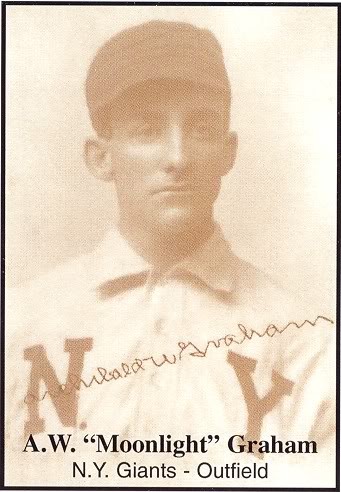
"MOONLIGHT" GRAHAM

JIM BOUTON
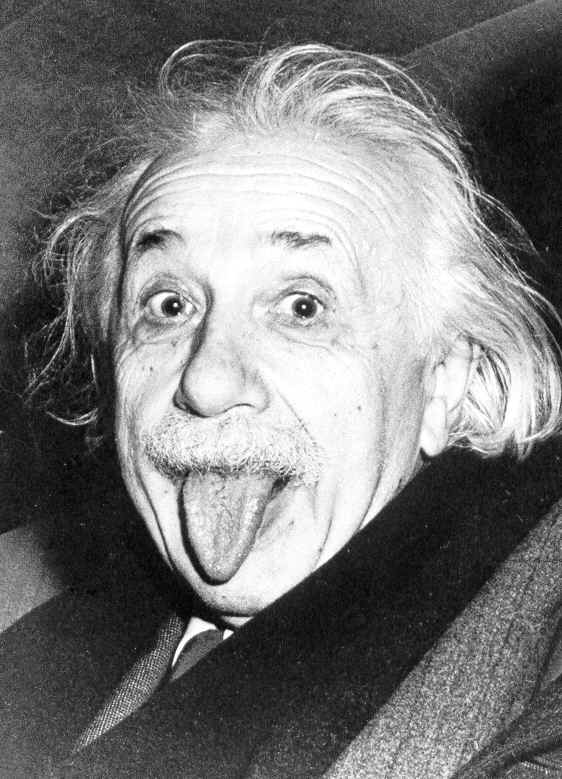
Em cee squared
May 17, 2010

A blackboard with formulas written by Albert Einstein, preserved in the Museum of the History of Science at the University of Oxford.
 Several decades ago, I began to make a point of reading several books each year on subjects about which I knew little or nothing — including subjects that I found repulsive. Among those subjects have been mathematics and physics, both of which bedeviled me when I had to study them in high school and college. As I have mentioned here before, at least with respect to mathematics, I have derived a great deal of satisfaction from pondering these subjects when examinations and grades are not at issue, and I have found that those who claim that there is beauty and wonder in these fields are telling the truth
 That background explains why I grabbed the opportunity to review a popular biography entitled “Einstein: The Life of a Genius” by Walter Isaacson. This is a coffee table book that contains a limited amount of text in proportion to the number pages and illustrates its points with many photographs and also with facsimiles of several letters and documents. Among these are Einstein’s letter to Franklin D. Roosevelt in which the scientist advised the president to call together a group of experts to study the possibility of developing an atom bomb — something Nazi Germany was known to be doing at the time. As it happened, Einstein — a pacifist whose work in physics helped pave the way to such weapons — was considered too great a security risk to work on the project himself, what with him being a native of Germany, a socialist, and a Jew.
 Isaacson records that one of Einstein’s early physics instructors described him as “an extremely clever boy,” but added, “You have one great fault: You’ll never let yourself be told anything.” It wasn’t meant as compliment, but still, this tendency as much as anything else led to Einstein’s achievements in theoretical physics. Einstein — like Isaac Newton before him — would not accept anything as settled just because it was handed on to him by authoritative sources. He wondered and questioned and “experimented” with physical phenomena such as light and motion by forming images in his mind, and he changed the world.
Einstein is a curiosity in a way, because he was one of the most widely known celebrities of his time and his name is part of our language more than 50 years after his death, and yet most of us have little or no idea what he was up to. That doesn’t matter. He deserves his place in our culture if for no other reason than his persistence in questioning even his own conclusions.
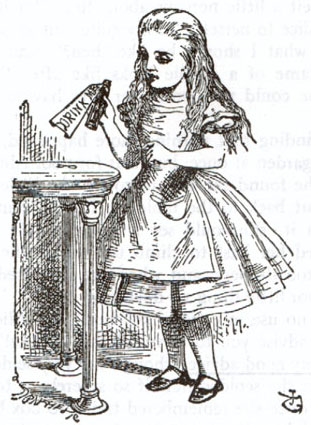
Sir John Tenniel's drawing of Alice
It’s one of the paradoxes of both history and human nature that the man who wrote some of the most enduring literature for children has been accused of pedophilia. I refer to Lewis Carroll — that is, the Rev. Mr. Charles Dodgson — author of “Alice’s Adventures in Wonderland” and “Through the Looking Glass and What Alice Found There.” The notion that Carroll had improper relations with under-aged girls evolved from his real relationships with females in general and young girls in particular — neither of which was entirely consistent with the norms of Victorian England — and his career as an amateur photographer, which included photographing naked young girls.
This characterization of Carroll has been debunked in the past, but it persists in the popular imagination, probably because the popular imagination would find a pedophile more interesting than the person Carroll seems to have been in reality. The issue is examined again in a new book by journalist Jenny Woolf, “The Mystery of Lewis Carroll.”
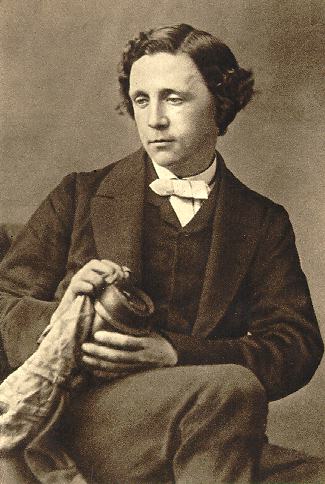
Lewis Carroll and his camera, 1863, in a portrait by Swedish photographer Oscar Rejlander
Based on her research of primary and secondary sources — and a certain amount of logic and common sense — Woolf comes to the conclusion not only that Carroll was not a pedophile, but that the most prominent features of his life and his mind militate against such a thing — that, in fact, he had a horror of abuse of women and children that was consistent with his horror of sin in general.
Woolf emphasizes a point about this issue that is useful to remember when we are reflecting on any historical figure. She points out that those who have charged Carroll with every crime from adultery to murder — one author even wrote that Carroll and a confrere were jointly Jack the Ripper — have often tried to interpret his behavior and his work without taking full account of the Victorian context in which he lived. The most telling evidence she presents, in fact, is that neither the children whom Carroll photographed nor their parents thought of the sittings as anything but proper, and that some of those children grew to adulthood and even old age with only the highest regard and affection for Carroll.
This is not to say that Carroll’s life was without its complications, including sexual ones. One important aspect of his life was odd even for that time, and it has to have figured prominently in some of the behavior that contributed to rumors about him then and since. Carroll took a position as a mathematics instructor at Christ Church, one of the colleges at Oxford. The school continued a medieval discipline in which a man accepting that position must receive holy orders as an Anglican deacon and remain celibate until he was ordained a priest, at which point he would take a parish, marry and begin a family.
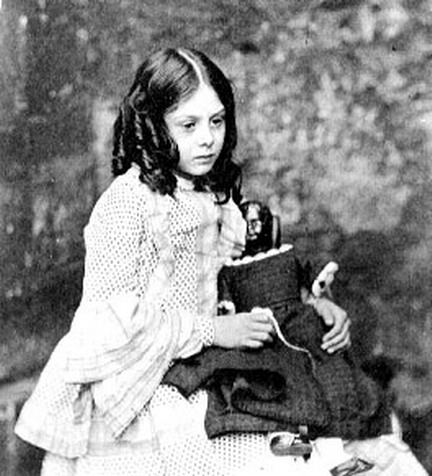
Lorina Liddell, in a portrait by Lewis Carroll. Lorina was an older sister of Alice Liddell, the namesake for the title character in Carroll's most famous works.
Although it was expected of him by everyone beginning with his father, a priest himself, Carroll postponed and eventually opted out of priestly ordination, which meant that — unless he gave up his position, which he could not afford to do — he opted out of married life and, therefore, sexual relations. At the same time, while he outwardly kept up the grim image of a Victorian college don, he maintained a lively social network, more often than not conducted in the company of women. He loved women, and he didn’t disguise that, and they were charmed by him. On one hand, these relationships — including private tet-a-tets in Carroll’s rooms, were not usual in Victorian England. On the other hand, Woolf explains, there is no evidence at all that any of them crossed the lines that everyone in that time and place knew to be unmovable.
Still, Woolf shows convincingly that Carroll at a certain point in his life began to grieve over some unstated offense that he perceived he had committed, and this guilt ran head-on into the strict sense of morality that he measured himself by throughout his life. It was this crisis, Woolf thinks, that at least in part inspired Carroll’s cultivation of friendships with young children, and especially young girls, who — in Victorian society — were regarded as the antithesis of sexual. In these relationships, Woolf argues, Carroll could have beauty and affection without the complicating ingredient of sexual attraction. And, of course, he could indulge in his lifelong fascination with word games and fanciful stories and children’s playthings.

Alice Liddell, for a time one of Carroll's child friends and the namesake for his most famous literary character. Carroll's portrait of her as a beggar girl has been used by some of his critics as evidence of peversion.
One of Woolf’s frustrations — and she is hardly alone in this — is that Carroll and his family seldom talked about his private life, not an unusual scruple for the time, and significant documentation of his life, including some of his diaries, were either redacted by his survivors or simply vanished.
Woolf does write about the possibility, or the likelihood, that the much-discussed rift between Carroll and the family of Alice Liddell — at whose request he committed the original “Alice” story to writing — may have had to do with his attention, not to Alice but to her attractive older sister Lorina. Marriage in those days often had little to do with romance, and the Liddell family may have had bigger plans for Lorina than a liaison with a math lecturer, and a mediocre one at that.
The Boston Globe’s review of Jenny Woolf’s book, which treats many aspects of Carroll’s life and work, is at THIS LINK.
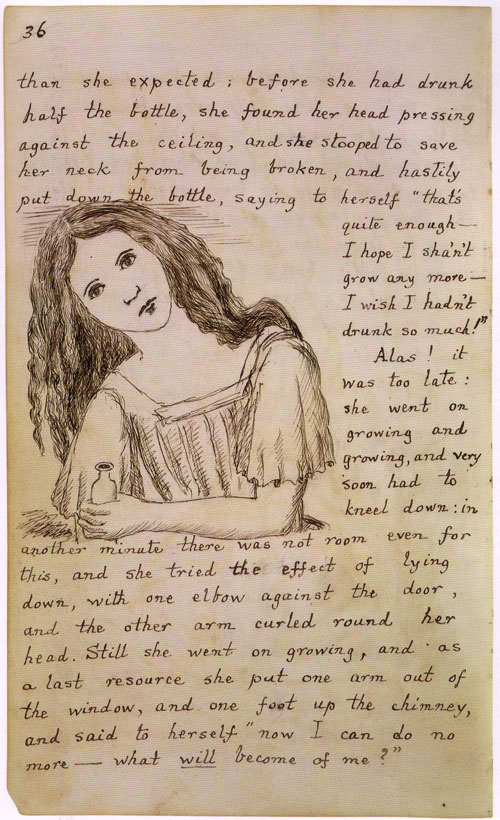
A page from "Alice's Adventures in Wonderland" with Carroll's own sketch of the title character.
Book Review: “Newton and the Counterfeiter”
February 19, 2010

ISAAC NEWTON
I was working in the faculty room yesterday when one of the instructors asked the open air, “Does anyone know anything about Newtonian physics?” I told him his question was coincidental, because I had just finished reading a book about Isaac Newton, the 17th century physicist, mathematician, and natural philosopher.
I think I correctly answered my colleague’s question, which had to do with Newton’s Second Law of Motion: “A change in motion is proportional to the motive force impressed and takes place along the straight line in which that force is impressed.” But while the book I just read explained the achievements for which Newton is still regarded as one of the greatest of geniuses, its purpose is to recount the work of his later life, when he was warden of the Royal Mint — and particularly the relentless detective work with which he brought to justice Britain’s most brazen counterfeiter.

Statue of Isaac Newton - and the apple - at the Oxford Museum of Natural History
Newton did his signature scientific work at Trinity College in Cambridge, but he lobbied friends for many years to get him a political appointment in London. It finally came in the form of position at the mint, which made the silver coins that were Britain’s only hard currency at the time. When Newton arrived at his office in the Tower of London, the kingdom’s economy was on the verge of collapse, partly because of expensive military operations undertaken by William of Orange and partly because the royal currency was, in a word, disappearing. An old issue of coins was being degraded by so-called “clippers” who shaved bits of silver from the money to be melted down and sold. Meanwhile British silver was leaving the country altogether because it was worth more in exchange for gold in other countries than it was in exchange for commodities in England. The result was a bull market for counterfeiters, including the audacious and dangerous William Chaloner.
Newton’s predecessors as warden of the mint had not taken the job seriously except as a source of income, and that was expected of Newton, too. But he applied to the mint the same combination of energy and curiosity that had fueled his discoveries in fields like gravity and the behavior of light and his development of the mathematical system known as the calculus.

Isaac Newton's image on a one-pound note
First, Newton took control of a program already underway when he arrived – the recall and replacement of all British coins then in circulation. This project was limping along when Newton took over, and he put the means in place to accelerate it and get the job done in a fraction of the projected time. Then he turned his attention to the counterfeiters, employing a network of spies and informers and counter-agents and double crossers to gather information and pounce on “coiners” – eventually including Chaloner, whose career as a counterfeiter had had its ups and downs.
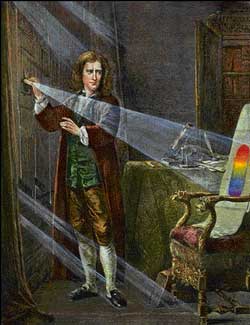
Isaac Newton investigates the refraction of light.
Like most such scoundrels, Chaloner made his share of mistakes, and one of them was to publicly claim that the heart of the nation’s counterfeiting problem was in the mint itself, and imply that Newton’s incompetence was partly to blame. Don’t knock the Rock. Newton went after Chaloner with a vengeance, spending hundreds of hours personally interrogating people who could help build a case against the fraud. Chaloner had been in and out of prison several times and had dodged the noose that was reserved for counterfeiters, whom British law regarded as traitors. In Newton, he had met his match and – ultimately – his maker.
“Newton and the Counterfeiter,” both informative and entertaining, was written by Thomas Levenson, who is a professor of science writing at MIT.
A topic that Levenson discusses throughout this book – in fact, it’s an important thread that runs through all of Newton’s activities – is Newton’s search for contact with God. In fact, Levenson reports that religious matters became the preoccupation of Newton’s life when he had put most scientific inquiry behind him. I discussed that aspect of the book in a column in the Catholic Spirit, and it’s available at THIS LINK.
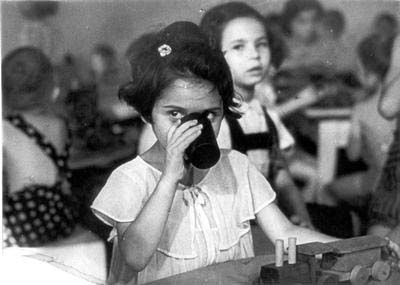
Children at Theresienstadt. Yad Vashem Archives.
It’s been a good reading season squeezed in between semesters. The pace will slow down when classes resume next week, though I just started a fascinating book about Isaac Newton’s little-known career as the scourge of counterfeiters. Of that, more later.
I just finished “The Girls of Room 28” by Hannelore Brenner, which describes the lives of children who were incarcerated at the Jewish ghetto in Theresienstadt, Czechoslovakia, between 1941 and 1944. An estimated 13,000 children passed through there; 25 survived. Some died of disease or other consequences of neglect. Most died in the concentration camps further east. Brenner presents first-hand accounts from some of the survivors as well as material from diaries and other such documents. She also records how the Nazis bamboozled the International Red Cross into thinking that Theresienstadt was a model community for Jews, founded on the benevolent nature of Adolf Hitler. There is a lot of information and photographs about the ghetto on the YAD VASHEM web site.

Abraham Lincoln reading to his son Tad.
I can’t read too many books about Abraham Lincoln, and I was delighted with “Lincoln, Life-Size,” a volume that includes digitized reproductions of all 114 known photographs of Lincoln, most of them portraits. The book was assembled by three descendants of Frederick Meserve, one of the best-known collectors of Lincoln images. The authors used high technology to calculate the size of Lincoln’s head. The head was cropped from each of several dozen photographs and reproduced on the facing page in life size. The result is fascinating and, at times, unsettling. The authors also accompany each photograph with texts drawn from a variety of sources, some putting the photo in context, others illuminating some aspect of Lincoln’s public or private life.

GERTRUDE EDERLE
“America’s Girl” is a biography of Gertrude Ederle, a young woman from New York City who, in 1926, not only became the first woman to swim the English Channel, but far surpassed the previous record — set, obviously, by a man. Ederle did not lead an exciting life in the long term, but in the weeks and months after her achievement, she was a celebrity of proportions that have only rarely been exceeded — even in our own age of instant notoriety. More important, really, is that her accomplishment had a significance that transcended her personal fortunes. Ederle confounded the widely accepted assumption that women were not capable of feats like the one she performed. Her crossing helped to accelerate brewing changes in how women were regarded and what they were permitted to do in a society in which only men were allowed to vote until only five years before. The book was written by Tim Dahlberg with Mary Ederle Ward – the swimmer’s niece – and Brenda Green.

Yogi Berra jumps into Don Larsen's arms after the last out of the perfect game.
“Perfect” by Lew Paper, is based on Don Larsen’s perfect game in the 1956 World Series between the New York Yankees and the Brooklyn Dodgers. Paper examines the well-worn but still fascinating fact that this feat – achieved only once since the World Series was inaugurated in 1903 – was carried out by a mediocre pitcher whose name would long have been forgotten if it hadn’t been for that day. But Paper makes his book good winter reading for baseball fanatics by devoting each of his 18 chapters to one the half-innings in that game, and focusing each chapter on one of the players who participated. In one instance only, he profiles two players – Jackie Robinson and Gil McDouglald – in a single chapter. In each case, Paper recounts the personal history that brought the player – Mickey Mantle, Enos Slaughter, Gil Hodges, Pee Wee Reese – to that historic moment in sports. Not the least of these figures is Dale Mitchell of the Dodgers who was pinch hitting for starting pitcher Sal Maglie in the top of the ninth when he took the called strike that sealed Larsen’s place in history. Mitchell, who had one of the best batting eyes of his era, thought the pitch was high. So, according to Paper, did most of the Yankees on the field. But, as one baseball wag observed, when the umpire calls strike three on you, even God can’t get you off.

Authorities estimated that a third of the population of New York City - about two million people - turned out for this ticker-tape parade for Gertrude Ederle. It remains the largest such event to honor an individual athlete. (© Underwood & Underwood/CORBIS)
“It was contagious … seventy pages.” — Jimmy Durante
October 15, 2009

THE FORMER MEYER BROTHERS
Every time I leave Paterson after teaching my classes, I pass the ornate building that once housed Meyer Brothers Department Store. Before the malls sucked the life out of downtown districts, Meyer Brothers was the place to shop in North Jersey. The big attraction for me when my mother shopped there was the book store, which was located on an elegant little mezzanine at the head of a grand staircase. Mom could take her time elsewhere, because once she dropped me off in the book store, she knew where she’d find me no matter how much time had elapsed. The keepers of the shop must have a patient bunch, because I used it as if it were a library. We went there fairly often, and I returned to the same books again and again, hoping they wouldn’t be sold out before I had read them through.

Browsing at Meyer Brothers provided my first opportunities to buy books, which had not been part of the routine in our house. Both of my parents read a lot, but they read periodicals. I read the newspapers and magazines, too, but once I got the feel and smell of books into my system, I slipped into a lifelong addiction. Mom accommodated me when I started buying the “Peanuts” anthologies that began to appear in the very early 1950s, and humorous little “history” books by Richard Armour.
When chains like Borders and Barnes & Noble started making it fashionable to hang out in the stacks it seemed as if book browsing had become a post-modern institution, but now the trend toward buying and reading books on line threatens to make that experience a thing of the past — like Meyer Brothers, with its boarded-up windows and its for-rent signs.
Carolyn Kellogg, who blogs about books for the LA Times wrote about the trend this week. Her blog is at this link:
http://latimesblogs.latimes.com/jacketcopy/2009/10/in-praise-of-browsing.html
“It all depends.” — George Ade
August 19, 2009
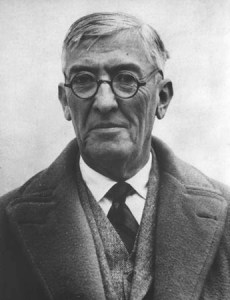
GEORGE ADE
I don’t know when it began. It seems to me that I have always been an obsessive reader. I had to have been fairly young when my mother started complaining that she couldn’t leave a milk container or a box of cereal on the table without my reading every bit of text.
I have considered that the tendency is inborn. My grandfather’s father and both of my parents were pretty much always reading something — mostly periodicals. So maybe I was always a reader, although I believe my romance with books in particular began with a mysterious incident that occurred on one summer Sunday. We came home from our lake house and found that someone had left on our front step a cardboard box loaded with old books. We never learned where it came from. I was the only person interested, so I rooted through the box and found several things of interest, including “Breaking Into Society” by George Ade. I had never heard of Ade, but I read some of the short stories — which Ade called “fables in slang” — and I became a fan. I became a fan not only of George Ade, but of books in general, and I became a regular client at the Paterson Public Library, which was no mean trick since it was nowhere near our house.
I also started buying cheap paperbacks at a local store, because that was easier than going to the library. I had odd taste for a kid, which helps to account for my stunted social life in those days. I bought and read a book about the Borgia popes, “The Nazarene” by Sholem Asch, “The Hunchback of Notre Dame” by Victor Hugo, and a collection of papal encyclicals edited by Anne Freemantle. I got stuck on “Mitt Brennender Sorge (With great anxiety)” by Pope Pius XI — in English, of course — and I read it over and over again.

FRANK NORRIS
I favored non-fiction until my senior year of college when I took a course in the American novel simply because I couldn’t fit anything else into my schedule. On the first day of class, the professor provided us with a syllabus that indicated that we would be reading 21 novels in 15 weeks. I thought about dropping the course, but that would have meant walking all the way over to the registrar’s office, so I read the novels instead — works including “McTeague” by Frank Norris, “The Crisis” by Winston Churchill (the American one), “Winesburg, Ohio” by Sherwood Anderson, and “Miss Ravenel’s Conversion from Secession to Loyalty” by John William DeForest. That course inspired me to read many more American novels that I might have otherwise neglected.
While I was still in college, I worked for a company that provided billing and shipping services to a number of book publishers, including Charles Scribners Sons. One of the managers was always slipping me books from the warehouse, and I spent about two years in the company of F. Scott Fitzerald and Ernest Hemingway.
Once I was out in the working world, a colleague mentioned Charles Dickens’ “Bleak House” to me. At the time, I had read only “A Tale of Two Cities,” which had been assigned to us in high school.

CHARLES DICKENS
I didn’t have to much confidence in this particular colleague, because she claimed to be a descendant of John Wilkes Booth, who had no descendants. But when I admitted to her that I had never read “Bleak House,” she brought me a paperback copy of it. I read it and then read it again. Then I read every one of Dickens’ novels — all of which I have read at least twice — and all the stories and articles of his that I could find.
My mind is wandering; why am I writing about this?
Oh, I remember.
David L. Ulin has a column in the Los Angeles Times in which he laments that he finds it increasingly difficult to read. Our culture has evolved, he says, into an environment that miltates against the state of silence that is necessary to read — to really read — a book.
“These days,” he writes, “… after spending hours reading e-mails and fielding phone calls in the office, tracking stories across countless websites, I find it difficult to quiet down. I pick up a book and read a paragraph; then my mind wanders and I check my e-mail, drift onto the Internet, pace the house before returning to the page. Or I want to do these things but don’t. I force myself to remain still, to follow whatever I’m reading until the inevitable moment I give myself over to the flow.”
So far, I haven’t had that problem. Time can be an impediment to reading, but not the lure of other media. I fact, I have read far more books since I was laid off in December than in any equivalent period since I left graduate school. Still, Ulin’s observations probably will resonate with many folks. You can read his column at this link:
http://www.latimes.com/features/books/la-ca-reading9-2009aug09,0,1920172.story?track=rss
What’s that? You’ve never read George Ade? And you call yourself an American? Check him out here:
 CharlesPaolino's Blog