“. . . . and welcome to Yankee Stadium.” – Bob Sheppard
July 12, 2010

BOB SHEPPARD
I spent a Yankee game in 1972 sitting next to Bob Sheppard in the booth from which he announced the players and sent other pertinent information rolling through the stadium like summer waves rippling along a shore. He was, as many have been saying in the wake of his death, a gentleman. He began his career at Yankee Stadium in 1951 – the same year that my father took me there for the first of many times. That means something to me, because Bob, with his courtly manners, his precise diction, and his John Barrymore tone, fit right into the atmosphere in the stadium at that time. As it turned out, he worked long enough to be the last vestige of the mood of those days, when many men came to the ballpark in suits and ties and many women in objects of finery from that now nearly extinct artisan — the milliner.
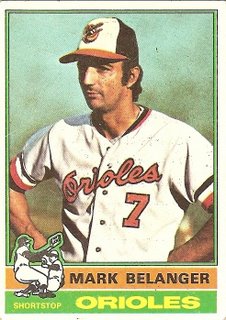
MARK BELANGER
Bob, who taught speech at the university level, had a great respect for words, including proper names, and he didn’t understand people who didn’t share that feeling. He told me that when Mark Belanger of the Baltimore Orioles made his first appearance at Yankee Stadium – probably in 1965 – Bob approached him and asked whether the name was pronounced Bel-ANN-zher, BEL-un-zher, or Bel-un-ZHAY. Belanger, who was to become one of the great defensive shortstops in American League history, said that some people pronounced the name one way, some another. Bob persisted, asking how Belanger wanted it pronounced, and was scandalized when the young man didn’t seem to care. Belanger himself pronounced it Bel-ANN-zher, so that’s the pronunciation Bob used.

BOB SHEPPARD
Bob was known for several traits, including his religious devotion and his dependability. He told me, though, about an incident in which the Yankees had scheduled a 5 p.m. start for a twi-night double-header to make up for a rainout. Bob had forgotten to put the change in his date book. The phone rang at his Long Island home, and the caller — a member of the Yankee staff — asked what Bob was doing. “I’m just putting a steak on the grill for dinner,” Bob said. “That’s nice,” said the caller. “We’re in the second inning.”
There has been a lot published today about how various baseball personalities regarded Sheppard. My favorites were from Oscar Gamble, who used to refer to Bob as “the man upstairs” and from Reggie Jackson, who said that when Bob said “44,” he made it into a bigger number. You can read Bob’s obituary by clicking HERE.

HERM DOSCHER
One of the wonderful things about baseball is that it provides players with so many ways to be remembered — and many of those ways have little or nothing to do with success on the field.
Herm Doscher was an example. So was his son, Jack. In fact, together they constitute one example, because they were the first father and son combination to play the major leagues. Herm played third base for five different teams in the National Association and the National League from 1872 to 1882 – a spotty career for which there don’t seem to be a lot of statistics – and he was later a major league umpire. He was reputed to be hard-nosed in that role. He once ejected Rochester Broncos outfielder Sandy Griffin for arguing a call and, when Griffin wouldn’t leave the field, Doschler forfeited the game to the St. Louis Browns — who were leading 10-3 in the eighth inning anyway.
Jack Doscher (actually John Henry Doscher Jr.) was a pitcher from 1903 to 1908 with three teams including the Brooklyn Superbas, appearing in only 27 games. Doscher died in 1971 at the age of 90 and was at one point recognized as the oldest surviving player for the Brooklyn Dodgers, successors to the Superbas.
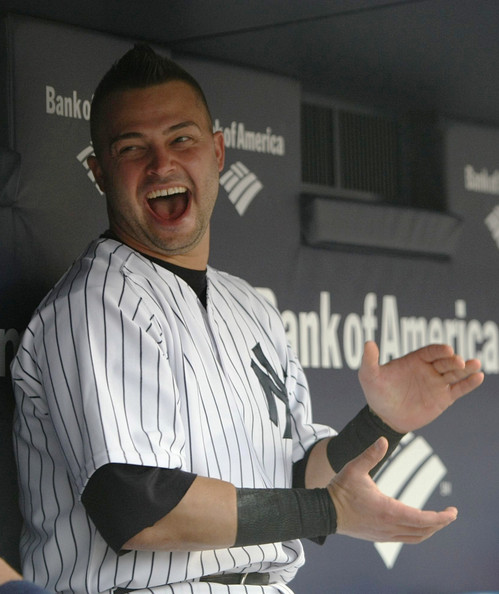
NICK SWISHER
The Doschers come to mind today because Major League Baseball announced this evening that Yankees outfielder Nick Swisher had been elected to the All Star Team. Whatever one thinks of the wacky manner in which those players are chosen these days, Swisher last season and this has made a good case for himself on the field. This is the first time Nick Swisher has been named to the All Star team, and it puts him in an exclusive baseball group — fathers and sons who have made the team. Swisher’s dad, Steve – a National League catcher for 10 years in the ’70s and ’80s – was on the 1976 team when he was with the Cubs, although he didn’t get to play. One of Steve Swisher’s colleagues on that ’76 team was Ken Griffey Sr., whose son also became an All Star — many times.
Altogether, 195 men who have played in the majors had sons who followed. A handful had two sons make it to the bigs. Three men — Sammy Hairston, Ray Boone, and Gus Bell — sent sons and grandsons to the majors. The Hairstons hold the record for multigenerational families with five major league players, although the Delahanty family had five of the same generation.

STEVE SWISHER
The Swishers are the tenth family to have a father and at least one son on the All Star team. (There have been three such families in the World Series.)
I was introduced to baseball by my father, who had managed a semi-pro team and knew a lot about the game. I would like to have been a better baseball player for his sake, but that gene went missing. Dad never expressed any disappointment about my weak performance; he wasn’t cut out that way. We made up for it with the many hours we spent together watching the Yankees in the Bronx and on TV or listening to them on the radio in our grocery store. We did other things together, but baseball provided the strongest bond. Dad’s been gone for more than 30 years, but I still watch baseball with him in mind. Meanwhile, it’s fun to speculate about the satisfaction Steve Swisher must be deriving from Nick’s success in general and from this benchmark in particular.
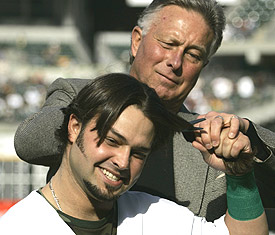
Steve Swisher cuts Nick Swisher's hair in 2007 on the field at the Oakland Coliseum. Nick Swisher had let his hair grow for 10 month so that he could donate it to a program that assists cancer patients.
Books: “The Codes of Baseball”
June 1, 2010

MICKEY MANTLE

WILLIE MAYS
WHITEY FORD

DENNY McLAIN

JIM PRICE
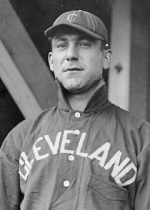
NAPOLEON LAJOIE

TY COBB
 On April 19, I wrote about a 22-inning baseball game in 1962 in which the Yankees beat the Tigers, 9-7, thanks to the only home run of Jack Reed’s career. I mentioned in that post that Tigers outfielder Rocky Colavito went seven-for-ten in that game. That attracted a response from Gloria, who is a member of a group that is campaigning for the Veterans Committee to elect Colavito to the National Baseball Hall of Fame this year.
It’s well known by now that the Hall of Fame is not the Hall of Justice. I have commented here, for example, on the fact that Pete Rose — an obnoxious SOB, but one of the best hitters of all time — is ineligible because he gambled on baseball, but Adrian “Cap” Anson stares smugly from his plaque despite his critical role in keeping two or three generations of black players out of the major leagues. So if Rocky Colavito hasn’t been elected, there is no reason to be surprised.
I have a good perspective on this question, because I saw Colavito play at Yankee Stadium many times. I was fortunate enough to have a father who was devoted to both baseball and the Yankees, and at one point in the 1950s and 1960s, we attended an average of three games a week when the Yankees were home. We saw Colavito through most of his career.

BOBBY LOWE
Colavito’s stats as a hitter and as a fielder speak for themselves. They are readily available on the Internet, so I won’t recite them all here. I will mention that in 116 years, only 15 men have hit four home runs in one game; Colavito was one of them. That in itself doesn’t qualify him for the Hall of Fame, but in the context of the career he had at the plate, it can’t be ignored. The feat was first accomplished by Bobby Lowe of the Boston Beaneaters in 1894. Lowe was playing in the dead-ball era, but he was also playing in Boston’s Congress Street Park, which had a short left-field line. All four of his homers were hit to left. The only other player in the 19th century to hit four home runs in one game was Ed Delahanty of the Phillies, who did it in 1896. Records are incomplete, but it is known that at least two of Delahanty’s homers that day were inside the park.
 Another thing that distinguishes Colavito’s share of this record is that he is one of only six men in major league history to hit four home runs in consecutive at-bats in a single game. The others were Lowe, Lou Gehrig, Mike Schmidt, Mike Cameron, and Carlos Delgado. As rare an accomplishment as that is, it was typical of Colavito in the sense that he always brought excitement to the game; he put derrières in the seats, as it were, and it’s hard to calculate the value of that. It’s unusual for the fans at a baseball stadium to jump to their feet because of an outfielder’s throw, but Colavito’s arm was a high-caliber gun, and I was often among those who bolted out of our seats when he uncorked one toward the infield.
Rocky Colavito belongs in the Hall of Fame. If you want to read more about Colavito or sign a petition to the Veterans Committee, you can do both at THIS SITE.

Rocky Colavito, right, with pitching great Herb Score in 2006, when they and five others were inducted into the Cleveland Indians Hall of Fame.
“How long ya’ gonna be gone?” — Ruby and Kalmar
May 14, 2010

Sheet music to "So Long, Oolong"
When Patricia T. O’Conner, author of popular books on English usage, visited the Leonard Lopate show on WNYC this week, the segment was introduced by a vocal of the song “Three Little Words,” which made me think of Harry Ruby. Ruby and his longtime colleague, Bert Kalmar, wrote that song in 1930 for what would now be considered an offensive movie.
The film was “Check and Double Check” — the only movie made by Freeman Gosden and Charles Correll in their blackface roles as Amos Jones and Andrew H. Brown — characters they made famous with their long-running radio series, “Amos ‘n’ Andy.” The song didn’t get small-time treatment in the film; it was performed by Bing Crosby and the Duke Ellington Orchestra.
The song also lent its name to the title of the 1950 film biography of Ruby and Kalman.

HARRY RUBY
Harry Ruby first came to my attention when I was a kid, and he made a guest appearance on the Danny Thomas television show, “Make Room for Daddy.” Ruby sang another song he had written with Kalman, one that — some might say mercifully — is not as well known as “Three Little Words.” The 1920 tune was “So Long, Oolong. How Long Ya’ Gonna be Gone,” which had racist overtones, as did so many Tin Pan Alley songs written in that era.
The song is about a Japanese girl named Ming Toy, whose boyfriend left for what was supposed to be a short spell but turned into a long spell. Hence the chorus: So long, Oolong, how long ya’ gonna be gone?”

BARBRA STREISAND
Ruby and Kalman were prolific, and some of their work was much more sophisticated than the Oolong affair. For example, they wrote “My Honey’s Lovin’ Arms,” which got a signature performance many years later in “The Barbra Streisand Album.” The pair also wrote “Who’s Sorry Now?” “Nevertheless (I’m in Love with You),” “A Kiss to Build a Dream On,” and the Betty Boop theme, “I Wanna be Loved by You,” among others.
As talented and productive as Ruby was as a songwriter, though, what I like best about him is that he always wanted to be a baseball player. He tried, unsuccessfully to make it into the pros, and he never missed a chance in later life to get close to the game. His devotion to the sport is the source of one of the great baseball anecdotes.

LOU GEHRIG
Ruby seized an opportunity to appear in “Elmer the Great,” a sports movie starring the comedian Joe E. Brown, who was also a devotee of baseball. The movie was shot at the old Wrigley Field, a minor league park in Los Angeles. One of the scenes called for an player, to be portrayed by Ruby, to drop a ball hit to him in the outfield. Ruby walked off the set, insisting that he wouldn’t drop a ball on purpose for any amount of money. Later, when Brown and Ruby happened to be in the company of Lou Gehrig, Brown told that story, figuring that Ruby would be embarrassed. Gehrig, with a straight face, said it was the greatest baseball story he had ever heard
“… till it’s over”
April 19, 2010
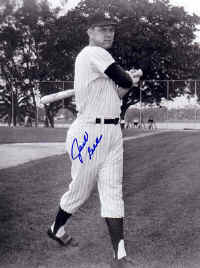
JACK REED
The 20-inning game the Mets won on Saturday got me to thinking about a 22-inning game between the Yankees and the Tigers in June 1962. I was watching that game at home, but I left, drove about 10 miles to visit a friend for several hours, and then drove home and found my brother watching the Yankees and the Tigers. That was long before VCRs and the YES Network’s “encores,” and I was dumbfounded when Tony told me it was the same game I had been watching before I left. It ended exactly seven hours after it had started. The Yankees won, 9-7.
As if the game wasn’t enough of a curiosity in itself, the way it ended was one of those delightful surprises that baseball is so good at providing. For a few years back then, the Yankees carried on their roster an outfielder named Jack Reed, whose job was to play center field in the very late innings so that Mickey Mantle, near the end of his career, could rest his battered and diseased legs.

CLETIS BOYER
Nothing more was expected of Reed, and usually nothing more was forthcoming. But the young man from Silver City, Mississippi, picked the top of the 22nd inning in that game to hit the only home run of his career, providing the Yankees with the runs they needed to win. Reed, incidentally, may not have spent much time in major league baseball, but he is one of a handful of players who can boast of appearing in both the World Series and a college bowl game – three games with the Yankees in the 1961 fall classic, and the 1953 Sugar Bowl with Ole Miss.
Yankee third baseman Cletis Boyer had hit a three-run homer in the first inning off Tigers starter Frank Lary, who was usually hard on the Yankees.

ROCKY COLAVITO
And while Rocky Colavito probably would have said that he’d rather the Tigers had won, even if he had gone hitless — ballplayers always say things like that — he had one of the biggest days of his career, collecting seven hits in ten times at bat. Meanwhile, the Tigers pitchers held the Yankees scoreless for 19 consecutive innings in that game — two shutouts, end to end.
Another note: Yogi Berra, who was 37 years old, caught the complete game.
Who wouldn’t love a guy named “Vinegar Bend”?
March 3, 2010

JIM BUNNING
I suppose Jim Bunning is used to being taken off the mound. As good a pitcher as he was, he still got the hook from time to time, so the maneuver tonight to put an end to his filibuster so the Senate could pass a bill extending unemployment benefits and other programs should have felt familiar.
If Republican leaders have found Bunning hard to handle, they will get some sympathy from Gene Mauch, who managed — some say mismanaged — Bunning when he was playing for the Phillies and Mauch was his manager. Mauch, who is a partaker in Glory at present, was an early practitioner of calling pitches from the bench — that is, giving signs to the catcher as to what pitch to call for.

GENE MAUCH
Bunning would irritate Mauch by shaking off pitches repeatedly when he knew the signs were coming from the manager. Mauch, who is deservedly well respected as a manager, has come in for some criticism of the way he used Bunning and Chris Short during the 1964 National League pennant race. The Phillies that year performed the flop heard ’round the world. They had a 6 1/2 game lead on September 21, but they lost 10 games in a row to finish tied for second place while the Cardinals won the pennant. Mauch, some say, overdid his reliance on Bunning and Short, who were worn out by that time in the season. I think he started Bunning three times in one week.

WILMER MIZELL
It’s a shame that Bunning, whose baseball career was outstanding, chose to make himself a laughing stock in Congress. He might have emulated Wilmer “Vinegar Bend” Mizell, who pitched in the majors for nine years and ended up with a winning record and a respectable lifetime earned run average. He was no Jim Bunning on the mound, and he was no Jim Bunning in Congress. A conservative Republican like Bunning, he was one of the most popular men in the House of Representatives, where he represented a North Carolina district from 1968 to 1974, when he was swept away in the voters’ reaction the scandals of the Nixon Administration. He later served in a number of appointed federal offices.

MARIE OSMOND
The news that Marie Osmond’s son, Michael Blosil, has “committed suicide,” is unsettling, as such stories always are. What I find particularly sad about a person dying in that way is the loneliness that seems to be a necessary part of the context. I don’t even like the term “committed suicide,” because it evokes the notion that the person involved was ipso facto guilty of wrongdoing, whereas he or she was most likely making a solitary decision to end the torment of fear or confusion or sadness, or perhaps an indefinable feeling that made life unbearable.
I am shaken whenever I hear of someone taking his or her own life, and I had plenty of opportunities to be shaken in that way in more than 40 years of newspaper reporting. My mind almost involuntarily imagines the path that led that person from the potential with which most of us are born to the mental illness or physical ailment or poor choices or bad luck or combination of factors that made only death seem reasonable.

BILL BIXBY and BRENDA BENET
I went through that exercise when I heard of the death of the actress Brenda Benet in 1982. About a decade before, I had interviewed Brenda and her husband at the time, Bill Bixby. I was struck by how animated they were and especially how charged up they were about their lives together. They both talked at once, and he paced back and forth so vigorously that a couple of times he paced right out of the room and into the hallway. They had struck a balance, they told me, between the intimacy of their marriage and the independence of their separate careers, and they were almost defiant in proclaiming it — so much so, that I began my account of the meeting by writing, “You don’t interview Bill Bixby and Brenda Benet so much as you defend yourself.”
They had a child in 1974 and were divorced in 1980, and the child – a boy – fell suddenly ill and died in 1981. Brenda ended her own life in 1982. How alone she must have felt with her grief.
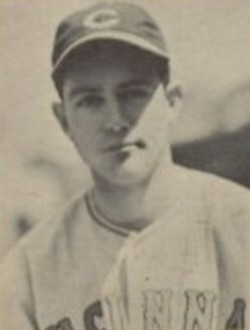
WILLARD HERSHBERGER
News of suicide also reminds me of Willard Hershberger, who died by his own hand — when he was 30 years old — two years and a month before I was born. I know of him because he belongs to a class of men who never die to memory — major league baseball players.
Hershberger, whose home town had the comforting name of Lemon Cove, California, had a distinction that he shared with only a few dozen others; he played for the 1937 Newark Bears. The Bears — who had no connection to the present team of that name — were a Yankees farm club and are reputed in baseball lore to have been the greatest minor league team ever. Their record that year was 109-43, and they finished 25 1/2 games ahead of Montreal. The lineup included Joe Gordon, Babe Dahlgren, George McQuinn, and Charlie “King Kong” Keller.

Willard Hershberger
It must have been an exciting experience for Hershberger, a catcher, who appeared in 96 games that season and batted .325 on a team that collectively batted .299 for the season. He was already 27 years old when he made his major league debut with the Cincinnati Reds in 1938. He was the backup to Hall of Fame catcher Ernie Lombardi. During the 1940 season — with the Reds in contention for the National League pennant — Hershberger was standing in for Lombardi when the team lost games on July 31 and August 2. Hershberger picked up a buzz among the players that they would not have lost if Lombardi had been in the lineup. Hershberger was distraught, and he expressed himself to manager Bill McKechnie.

BILL McKECHNIE
Hershberger evidently told McKechnie that he felt responsible for the losses, mentioned that his father had taken his own life about a ten years before, and intimated that he might make the same decision. This was a private conversation, but accounts say that the manager thought he had calmed the young man. But Hershberger didn’t appear before the next day’s game, and he was found dead in his hotel room.
He was a member of a team, but in the end he felt that failure was his alone. Linda Loman could have been speaking of Hershberger when she said of her husband: “Attention, attention must be paid to such a person,” and I’m sure McKechnie second-guessed himself every day after Hershberger died. But I have had the experience of trying to help such a person and found, in the end, that the loneliness can be intractable, insistent, and that’s the most frustrating and the saddest thing about it.

CHAN HO PARK
The news that Chan Ho Park has signed to pitch for the Yankees got me to thinking about men from other countries who have played in the Bigs. Players from the Spanish-speaking Americas and from the Caribbean have been around the majors for a long time, but the signing of Park shows that there are still frontiers to be crossed: He is the first big-league player to have been born in South Korea — or in any Korea, for that matter.
The first player from outside the United States was probably Andy Leonard, who was a native of County Cavin, Ireland. Leonard broke in in 1876 as a second baseman and left fielder with the Boston Red Caps and appeared with that team until 1878. In 1880 he played shortstop and third base with the original Cincinnati Red Stockings.

ANDY LEONARD
Although Leonard was born on the Auld Sod, he was raised in Newark, N.J., and got some of his early playing experience with a club in Irvington. In ’76, when he broke into the majors, five other players from Ireland appeared with major league teams, along with five from England and one from Germany, which means that England and Ireland had more representatives in the big leagues than all but four states of the Union — New York, Pennsylvania, Massachusetts, and New Jersey.
Other than the United States, the Dominican Republic has contributed the most players to the Major Leagues — 494 through the 2009 season. Venezuela is second with 246 and Canada is third with 225. Puerto Rico, which is part of the United States, has chipped in with 228.

RENO BERTOIA
Considering all the Italian-Americans who have played Major League baseball — not the least of whom were the three DiMaggio brothers — it’s curious to find that there have been only six players who were born in Italy. The first of these was Lou Polli, who was born in Baveno, which is up there in the Piedmont region. Polli pitched a few innings of relief for the St. Louis Browns in 1932 and didn’t appear again until 1944 — a war year in which a lot of guys who otherwise wouldn’t have been in baseball got a crack at it while the regulars were Over There. In ’44, Polli pitched almost 36 innings for the Giants.
The most successful Italian-born player was Reno Bertoia, who might as well have been a Canadian inasmuch as his family moved there when Reno was a year old. He was born in St. Vito al Tagliamento in the comune of Udine, which is near the border of Slovenia. He played in the big leagues from 1953 to 1962, the first six and last two of those years with the Tigers. He was an infielder — a second and third baseman — and he had a lifetime batting average of .244 over 612 games. After he retired from baseball, he was a Catholic-school teacher for 30 years in Windsor.
The Baseball Almanac has a lot of stats about foreign-born baseball players at THIS LINK.
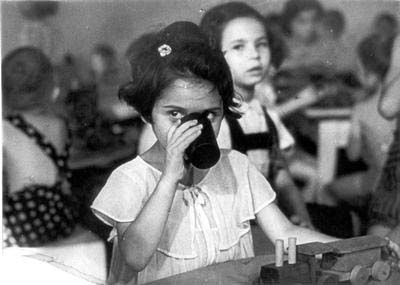
Children at Theresienstadt. Yad Vashem Archives.
It’s been a good reading season squeezed in between semesters. The pace will slow down when classes resume next week, though I just started a fascinating book about Isaac Newton’s little-known career as the scourge of counterfeiters. Of that, more later.
I just finished “The Girls of Room 28” by Hannelore Brenner, which describes the lives of children who were incarcerated at the Jewish ghetto in Theresienstadt, Czechoslovakia, between 1941 and 1944. An estimated 13,000 children passed through there; 25 survived. Some died of disease or other consequences of neglect. Most died in the concentration camps further east. Brenner presents first-hand accounts from some of the survivors as well as material from diaries and other such documents. She also records how the Nazis bamboozled the International Red Cross into thinking that Theresienstadt was a model community for Jews, founded on the benevolent nature of Adolf Hitler. There is a lot of information and photographs about the ghetto on the YAD VASHEM web site.

Abraham Lincoln reading to his son Tad.
I can’t read too many books about Abraham Lincoln, and I was delighted with “Lincoln, Life-Size,” a volume that includes digitized reproductions of all 114 known photographs of Lincoln, most of them portraits. The book was assembled by three descendants of Frederick Meserve, one of the best-known collectors of Lincoln images. The authors used high technology to calculate the size of Lincoln’s head. The head was cropped from each of several dozen photographs and reproduced on the facing page in life size. The result is fascinating and, at times, unsettling. The authors also accompany each photograph with texts drawn from a variety of sources, some putting the photo in context, others illuminating some aspect of Lincoln’s public or private life.

GERTRUDE EDERLE
“America’s Girl” is a biography of Gertrude Ederle, a young woman from New York City who, in 1926, not only became the first woman to swim the English Channel, but far surpassed the previous record — set, obviously, by a man. Ederle did not lead an exciting life in the long term, but in the weeks and months after her achievement, she was a celebrity of proportions that have only rarely been exceeded — even in our own age of instant notoriety. More important, really, is that her accomplishment had a significance that transcended her personal fortunes. Ederle confounded the widely accepted assumption that women were not capable of feats like the one she performed. Her crossing helped to accelerate brewing changes in how women were regarded and what they were permitted to do in a society in which only men were allowed to vote until only five years before. The book was written by Tim Dahlberg with Mary Ederle Ward – the swimmer’s niece – and Brenda Green.

Yogi Berra jumps into Don Larsen's arms after the last out of the perfect game.
“Perfect” by Lew Paper, is based on Don Larsen’s perfect game in the 1956 World Series between the New York Yankees and the Brooklyn Dodgers. Paper examines the well-worn but still fascinating fact that this feat – achieved only once since the World Series was inaugurated in 1903 – was carried out by a mediocre pitcher whose name would long have been forgotten if it hadn’t been for that day. But Paper makes his book good winter reading for baseball fanatics by devoting each of his 18 chapters to one the half-innings in that game, and focusing each chapter on one of the players who participated. In one instance only, he profiles two players – Jackie Robinson and Gil McDouglald – in a single chapter. In each case, Paper recounts the personal history that brought the player – Mickey Mantle, Enos Slaughter, Gil Hodges, Pee Wee Reese – to that historic moment in sports. Not the least of these figures is Dale Mitchell of the Dodgers who was pinch hitting for starting pitcher Sal Maglie in the top of the ninth when he took the called strike that sealed Larsen’s place in history. Mitchell, who had one of the best batting eyes of his era, thought the pitch was high. So, according to Paper, did most of the Yankees on the field. But, as one baseball wag observed, when the umpire calls strike three on you, even God can’t get you off.

Authorities estimated that a third of the population of New York City - about two million people - turned out for this ticker-tape parade for Gertrude Ederle. It remains the largest such event to honor an individual athlete. (© Underwood & Underwood/CORBIS)
 CharlesPaolino's Blog