“Frankly, my dear ….”
April 15, 2009
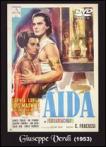 At the age of 66, I saw my first 3-D movie – “Monsters vs. Aliens” – and it was a hoot. The occasion was that our granddaughters are spending a couple of days with us, and on a rainy day a movie seemed like a good way to get out of the house. Um, to go sit in the dark at the Regal Cinema, but that’s still not sitting at home. That may be the first time I took the girls to a movie, though Pat may have taken them before. I don’t have a lot of experience with that; my grandparents weren’t movie goers. Well, it didn’t seem that way, but one Saturday when I was about 12 or 13 years old, my grandfather was very animated about a movie he had seen the night before – the film version of Giuseppe Verdi’s “Aida.” This film featured Sophia Loren as the Ethiopian princess, which was ironic considering the historic relationship between Italy and Ethiopia. My grandfather was on the phone all day calling his friends, urging them to go to Paterson to see this film. I wasn’t used to Grandpa going to movies or listening to opera, so this attracted my attention. I overheard him tell Tony Pombo, the vegetable peddler, that he was going to see “Aida” again, so I asked him if I could go along. I wound up taking two of my friends, and we were all impressed by something that before that night was completely foreign to our experience. (No, I don’t mean Loren.) That movie launched me into a lifelong love affair with opera. That was the only time my grandfather and I did anything like that together. Our relationship was a little remote for that. But I always give him credit for the fact that I have seen and listened to so much of Verdi and Puccini and Rossini and Bizet over the last 50 years.
 Grandma, incidentally, didn’t see “Aida,” because she swore off movies after she saw “Gone With the Wind.” This was the stuff of family legend: She was scandalized by the language with which Clark Gable addressed Viven Leigh in the famous finale. Apparently Grandma didn’t see why she should pay good money to listen to such talk when she was perfectly capable of staying home and swearing like a drunken sailor anytime she pleased. She also had a parakeet that she taught to utter profanities with an Italian accent, so she could hear the blue talk without contributing anything on her own, and without buying a ticket. People were so much more self-sufficient in her generation.
“The horn went ‘beep beep beep!’ “
April 14, 2009

Corvair
The New York Times reports today on a study by the Insurance Institute for Highway Safety showing that drivers who opt for minicars increase the chance of injury in a collision. To reinforce and quantify what we already knew through common sense, the institute conducted tests in which mincars collided with mid-sized cars while both cars were traveling at 40 mph. The laws of physics being the stubborn things they are, the midsized cars sustained much less damage.
This information will have as much impact on me as the known hazards of tobacco have on inveterate smokers. When Pat and I got married, she had a 1962 Corvair that looked a lot like the ’63 model in the photo above and I had a ’61 Volkwagen Beetle. We drove a lot of full-size and mid-size cars after that, but I always preferred the smaller models, and the more manual gears the car has, the better I like it. You can’t beat the small car in almost any situation except street racing, and I got that out of my system a long time ago. Now, we have a Chrysler that I drive only when I have to and a 1999 blue Beetle with 165,000 miles that I would marry if I were a single man.
The Times reported some questions raised about the institute’s study – for instance, that the collisions were head-on, which is relatively unusual. The institute had two recommendations: reduce speed limits and reduce horsepower. Neither one will fly, and that’s because there are so many self-absorbed, self-important drivers who prove their superiority over the rest of us by behaving irresponsibly while they’re on the road. They live for the weight and power. The vehicles, after all, don’t cause the accidents.
All of which reminds me of The Playmates’ 1958 hit, of which these were the last two stanzas:

THE PLAYMATES
Now we were doing a hundred and ten
This certainly was a race
For a Rambler to pass a Caddy
Would be a big disgrace
The guy musta wanted to pass me up
As he kept on tooting his horn (beep beep)
I’ll show him that a Cadillac is not a car to scorn
Beep beep beep beep
His horn went beep beep beep
[Very quickly]
Now we’re going a hundred twenty
As fast as I can go
The Rambler pulled along side of me
As if we were going slow
The fella rolled down his window
And yelled for me to hear
“Hey buddy how do I get this car outa second gear?”
He was nice to mice
April 14, 2009

Bo, a dog
One thing is certain: The president, no matter who he is or what he does, can’t win.
The Christian Science Monitor, for one, was reporting today that the First Man, if that’s the counterpart to the First Lady, is getting flack for accepting Bo, the dog, as a gift from Edward F. Kennedy after promising before the November election that the White House dog would be adopted from a shelter. This chatter is going on at the same time that folks are, on the one hand, giving the president credit for approving the use of lethal force against the pirates holding an American sea captain and, on the other hand, predicting that the same decision will result in escalated violence against Americans and American interests.

Andrew Johnson
With regard to the pet, the 44th president of these United States might have been better off emulating the 17th. Andrew Johnson discovered a family of mice that appeared in the Oval Office each evening. Instead of having them eradicated, he started leaving them bits of food. He got along better with those mice than he did with the Republicans in Congress, who would have lynched him if they thought they could get away with it.
Field hollering
April 12, 2009
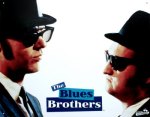
BLUES BROTHERS
The following appeared during the past week in the Vatican newspaper “L’Osservatore Romano.”
By Tania Mann
From cotton fields to city streets, blues music tells the story of a people struggling to survive. Its syncopated rhythms convey a meaning as deep as the raspy voices crooning its melodies. The blues has evolved along with the history of black people in the United States – a journey marked by persecution but also by progress.
Theirs is a story that today opens to a new chapter, being written by a man who calls the city that transformed the face of the blues: “Sweet Home Chicago”. Thus a closer look at the origins of blues music provides insight not only into black history but also into the context from which President Barack Obama, who lived in the Windy City before his move to the White House, entered the international scene.
It was in Chicago that blues music was modernized, where it adapted into a form that could then be easily diffused into popular culture. It would permeate many other musical genres and create the foundation of rock ‘n’ roll, gospel and the British pop made famous by the Beatles. Today, the blues rhythm beats on as the heart of American mainstream music, which in turn plays an influential role in the music world across the globe.
The twelve-bar structure found in the blues today is the same as that which the slaves invented as they worked in the fields, using music to communicate. This system of “field hollering” allowed the slaves to exchange secret information and indicate potential escape routes.
Chicago blues grew from these roots in the Mississippi Delta, where thousands of blacks lived before moving north during the Great Migration, which occurred in two waves between 1913 and 1970. Its heavy backbeats recall the oppression of slavery, while the charged guitar riffs and gravelly voices in the foreground express an insatiable longing for freedom.
In the 1930s, the Great Depression propelled the blues forward by providing not only greater reason for people to lament but also more opportunity to come together to perform and listen to music. From that decade on in the ghettos of Chicago, residents organized “rent parties” to raise money for families with financial difficulties. Thus listening to the blues also became a concrete experience of solidarity.
By this time, blues musicians in Chicago had already begun to create a more urban sound, distinguishing their own style from more rural or classic forms. This new sound reflected, with its quicker tempos, the frenetic pace of working life in an industrial metropolis.
Barack Obama
“It was in these neighbourhoods that I received the best education I ever had”, President Obama said in a speech announcing his presidential bid. With this statement he recalled his work in Chicago from 1985-1988, organizing job training and other programs for the working-class residents of Altgeld Gardens, a public housing project amid shuttered steel mills.
The blues is a lyrical expression of both “the agony of life and the possibility of conquering it through sheer toughness of spirit”, writes Ralph Ellison in Invisible Man (Random House, 1952). This work, set in the newly industrialized Chicago of the 1930s, analyzes the problem of the black man’s identity in U.S. culture.
The people of Chicago are generally known as being “tough”, if only for having to endure the severe weather that results from its position on the edge of Lake Michigan. For this reason the blues, in the tenacity of its sound, personifies the Windy City (even if it was originally named as such in reference to its long-winded politicians, not its notorious weather).
The spirit of a city ever aware of life’s challenges – of a city where people are accustomed to adapting to change – is manifest in the blues. The city and the music have each shaped the other into what they are today.
But the influence of Chicago blues has extended much further than its own streets. This is seen clearly in the career and the heritage left by the man who is said to have defined its sound: Muddy Waters.
His grandmother gave the musician this nickname, after the puddles of the Mississippi River in which he played as a child. Waters transferred to Chicago in 1943, where he received an electric guitar as a gift from his uncle. With this instrument – the volume of which he intensified by using a pick – Muddy Waters revolutionized the city’s musical scene.
In addition to the guitar, the harmonica and bass were also amplified in order to compete with the loud atmosphere of the locales where blues bands played. The first to win this battle against the noise with his harmonica was Little Walter. He did so simply by cupping his hands around the instrument.
Muddy Waters
From then on these methods of amplification and electrification characterized the Chicago blues sound. This new sound was part in thanks to the new possibilities that came with the end of the Great Depression and World War ii. Muddy Waters and the other blues artists in Chicago became a vehicle for the optimism emerging at this time. It was here that the now widespread image of a small stage in a smoky bar, crowded with musicians improvising on the electric guitar, harmonica, piano, bass and drums, was born.
Today, it is not difficult to find evidence of the impact these musicians have had on the music world. It was, for example, Water’s song “Rolling Stone” that both the magazine and the rock group took their names. The same song was very probably an inspiration to Bob Dylan when he wrote “Like a Rolling Stone”. And it was reported in Rolling Stone magazine that among the playlists on President Obama’s iPod are songs by the group of the same name, by Dylan, and also by Howlin’ Wolf, who was known as Waters’ rival.
The list of artists and musical genres influenced by Chicago blues is endless. Among the numerous names of note are Chuck Berry, Elvis, Janis Joplin, Jimi Hendrix and also Eric Clapton, who has carried the inheritance of the blues from the seventies through to the present.Eric Clapton
In the hands of the same “Slowhand”, as Clapton is known, the Chicago blues sound has evolved with the changing music scene while still remaining faithful to its deepest roots. A powerful witness to this is one of his recent albums, “From the Cradle”, composed entirely of songs by traditional blues musicians. Among them is Willie Dixon, one of the greatest musicians to have played with Muddy Waters.
But the electrified blues that was founded in the post-war era is not only a thing of the past. The music continues because the stories it recounts are still being written. Worth noting is that this year’s list of Grammy nominees for blues music included several protagonists of Chicago’s musical revolution. Among those carrying this tradition into the modern day is Buddy Guy – known as Muddy Waters’ successor – who opened his own club in 1989 in the heart of downtown Chicago.
The culture which developed around the blues clubs that have sprouted up around the city over the years is indeed thriving, creating a music scene that draws tourists and natives alike. Today, many of the most popular blues clubs are found in neighbourhoods inhabited predominantly by young white people.
John Mayer
In fact, the evolution of blues music in the city also entailed a diffusion into white culture. For proof of this on a wider scale, one can look to artists such as Clapton, Dylan, and even younger musicians like John Mayer. The latter, an artist who had already gained wide acclaim on the pop scene, surprised everyone with a blues album in 2005, featuring Clapton, Guy and B.B. King as collaborators.
Surely one cannot fail to acknowledge the extent to which the famous Blues Brothers, with their “mission from God”, have served to propagate blues music and culture into the mainstream. Working on the Chicago-based film inspired the “brothers” John Belushi and Dan Aykroyd, never before musicians, to form their own group modelled after that featured in the movie.
While Chicago blues has survived in its purest form through the revolution’s biggest names and their successors, the deep influence it has had on the many genres of today’s chart-topping music is not to be ignored. Just one example is the widespread diffusion and popularity of rhythm and blues (R&B), a term that was originally used for Chicago blues but has extended to encompass much of black music heard today.
It becomes evident from the longevity of Chicago blues – in its original form as in its many variations – that at its heart this music expresses a depth of human emotion which stems from the very essence of human experience.
For Ellison, the blues does not offer a solution to the human condition. It offers instead a strong resolution to overcome suffering: a “yes” to a life marked by grace and irony, and a defiant decision to preserve the human spirit. Its sound is marked by sadness but also by fierce determination, thus reflecting the history of blacks in the States. In a time of global crisis, the President who pens this story’s newest chapters meets a challenge that will undoubtedly demand the same tenacity.


(©L’Osservatore Romano – 8 April 2009)
Netflix Update No. 5: “I Remember Mama”
April 11, 2009
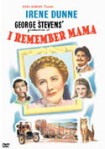 We watched the 1948 movie “I Remember Mama,” a masterpiece directed by George Stevens. I started to watch this on TMC a few weeks ago, but it would have ended at 2 a.m., so I gave up and put it in the Netflix queue. This film was based on Kathryn Forbes’ novel, a fictionalized memoir titled “Mama’s Bank Account.” The novel inspired a play that ran on Broadway for two years. The play led to this rather expensive movie, and the movie led to a successful television series – “Mama” – and an unsuccessful musical play, the last work of Richard Rodgers.
In all cases, the story concerns a Norwegian family living in San Francisco shortly after the turn of the 20th century. The central figure is Martha Hansen, the “Mama” of the title, played in this film by Irene Dunne and in the TV series by Peggy Wood. Irene Dunne was perfect in the role – as was Peggy Wood – and Dunne’s contributions were complemented by the fact that the rest of the casting was just as highly inspired. That included Barbara Bel Geddes as one of the Hansen daughters – Katherine – who narrates the film. Other choices that turned out to be strokes of genius were Rudy Vallee in the poker-faced role of a doctor who performs mastoid surgery on young Dagmar Hansen and Edgar Bergen in the comical role of a funeral director who courts one of Martha Hansen’s sisters.

ELLEN CORBY
That sister, Trina, was played by Ellen Corby, who later played the grandmother on the TV series “The Waltons,” and appeared in nearly 230 movies and TV shows. In this film, she is charming in her earnestness and naievete. A pivotal member of the cast was the prolific Austrian actor Oskar Homolka as Chris Halverson, the blustering uncle of Martha Hansen and her three sisters – but, it turns out, the most complex figure in the film. Dunne, Homolka, Corby, and Bel Geddes were nominated for Oscars for this film, and Nicholas Musuraca won the award for black-and-white cinematography. He certainly deserved that for the evocative images of both turn-of-the-century San Francisco and the intimacy of a work-a-day home.
Everything about this film was carefully done. It deals with the most commonplace of issues, but does it with profound insight. The story is a reflection on the resources of the human spirit, presented in a manner that is both uplifting and convincing.
Who’s that knocking?
April 10, 2009
 One of my literary disappointments was Bram Stoker’s novel “Dracula,” which I thought was one of the clumsiest works of fiction I had ever read. I came to it sort of in mid life. I read more non-fiction than fiction, but when I finally got around to Mary Shelley’s “Frankenstein” I was enthralled, and I naively thought I’d have a similar experience with “Dracula.” It was not to be. The book is awkwardly written with unnatural dialogue and none of the philosophical depth of Shelley’s work. Of course, the idea that Stoker’s work should have any of those qualities originated only in my own mind, so I suppose I was disappointed more by myself than by the writer.
Maybe it was because of that experience that I find myself on the outside looking in at the current fascination with vampires, especially among young people. Obviously, I’m missing something. NPR this week ran a review by John Powers about a Swedish film “Let the Right One In,” that was intriguing. Powers calls it “the best vampire movie in the last 75 years.” It had only limited release but is now available on DVD, which was the occasion for the review. The principal characters in this film are a 12-year-old boy who is alienated from his parents and rejected – even tormented – by his schoolmates, and his new next-door-neighbor, the lonely girl Eli, who has been 12 years old for the past 200 years. Their mutual isolation draws them together into a relationship that apparently succeeds artistically on several levels.
It was a coincidence that I happened to hear that review, because vampires have been on my mind for several weeks, since we heard Michael Smith give a concert in Morristown. One of the songs he performed that night was “Vampire,” and it’s been churning around in my mind ever since:
Your life’s too short and love is gone too soon
Come with me and fly the dark of moon, the dark of moon,
Life’s not life if you must lose it
Death’s not death if you refuse it
Who can blame you
If you choose the vampire
Forever young
Forever young
Forever
As with most of Michael’s songs, this one means far more when you hear him deliver it – plaintive, chilling, moving.
Excuse me. I think I hear someone at the door.
Michael Smith’s lyrics: http://www.artistsofnote.com/michael/lyrics/vampire.shtml
NPR: http://www.npr.org/templates/story/story.php?storyId=102909283&ft=1&f=1008
Diddy and me
April 8, 2009

SEAN COMBS
According to the Miami Herald, Sean Combs called a restaurant in South Beach the other night and ordered linguine and meatballs, salad, and veal parmagiana over cavatelli for 10 people. Me, I would have ordered vermicelli instead of linguine. When we ate in Combs’ restaurant in Chelsea many years ago, none of that stuff was on the menu, but the “food for the soul,” as it was characterized, was enough to make a person forget for a moment any prejudice that nothing is really food if its roots aren’t in Italy or the Middle East. According to the Herald writer, Combs sent an assistant to the restaurant to place the order, but the assistant handed a cell phone to the owner-chef so that Combs could discuss the bill of fare personally. The chef thought the voice was too young to be Sean Combs, but eventually was convinced, and the two had a laugh over it. Combs and I have an arrangement: He sounds younger than he is; I sound older. I don’t order in for 10 people, and he doesn’t have 10 people in for sfiha that he made himself. So far, it has worked out for both of us.
“The pipes, the pipes are calling”
April 8, 2009

DANNY THOMAS
The Los Angeles Times is reporting today that of the 71 scripted pilots that are contending for spots on the broadcast schedules of five TV networks, 33 are half-hour comedies. The television industry evidently thinks we need a good laugh. How many good laughs we’ll actually get remains to be seen. The kind of writing that has characterized shows like “Taxi,” “Seinfeld,” “Frasier,” and “The Bob Newhart Show,” is hard to come by, and many television series are obvious at best and vacuous at worst. I wonder if folks more than 50 years from now will enjoy re-runs of “Surviving Suburbia” the way they do re-runs of “I Love Lucy” and “The Honeymooners.” In fact, I wonder if folks next week will watch an original episode of “Suburbia.” Chuck Barney, writing in the San Jose Mercury News, said it for me: It’s not that this is a horrible show or even the worse sit-com on ABC. “It’s just that it has no real reason for being. It’s a series that looks and feels like hundreds of other sit-coms, with the same kind of tone, the same forced one-liners and the same ridiculously annoying laugh track.”
Why has television comedy declined so much? It might have something to do with the form. A couple of playwrights have told me that they wouldn’t write sit-coms no matter how much it paid, because they refuse to force a story into a shape predetermined by the schedule of commercials. I wonder if it also has to do with the backgrounds of the producers, writers, and actors, many of whom have grown up in television. I was talking with Marlo Thomas last week about her upcoming appearance at the George Street Playhouse, and that naturally evoked some conversation and even more memories of her father. Danny Thomas had a genius for humor, but he also had a chance to refine his technique in nightclubs, on the radio, and in movies before he ever went before a television camera. He understood comedy – understood that it had to have structure, consistency, and an underlying sympathy – all of which were factors in the success of his own show, “Make Room for Daddy,” and in “The Dick Van Dyke Show” and “The Andy Griffith Show,” which he later produced.

MARLO THOMAS
Marlo Thomas – who has her own package of insights when it comes to entertaining people – opens at George Street next week in Arthur Laurents’ new play, “New Year’s Eve.” She told me her father used to say, “Do you know what I would have been if I hadn’t been a comedian? A pain in the ass.” “And I think he really meant that in the deepest sense,” she said. “He would have had no outlet. He would have been a butcher driving everybody crazy trying to make jokes about the lamb chops.” That compulsion to be a storyteller – as opposed to the compulsion to fill a half-hour time slot at the expense of some nearly bankrupt auto manufacturer – may have been more at work in those who created television programming during the medium’s first three decades than it is now.
Stand back – there’s nothing to see here.
April 7, 2009

FARRAH FAWCETT
I probably should know better, but I usually have Fox 5 News on while I’m waiting for the nightly “Seinfeld” rerun, and that’s often the source of agita. Last night, for instance, anchor Dari Alexander began a report on the recent illness of actress Farah Fawcett by saying that Fawcett’s friends “deny that she’s at death’s door.” Think about it. What is that – wishful thinking? The story, when Alexander got around to telling it, was that Fawcett’s doctor reported that the actress had been hospitalized because of a blood clot that was a side effect of recent cancer treatment. In fact, producer Craig Nevius did say yesterday that Fawcett was “not at death’s door,” but Nevius wasn’t quoted in the Fox report. (The Fox web site does have a full AP story – with a tasteful lead – on its web site.) Real journalists know the connotation of a word like “deny.” Fawcett isn’t accused of a crime; she’s sick. It might make her feel better if the turkey buzzards weren’t so gleeful about it.
Netflix Update No. 4
April 6, 2009

JAKE
We watched the 2001 independent film “Lovely and Amazing.” This is my kind of movie: Virtually nothing happens. It’s a character study of a mother (Brenda Blethyn) and her two birth daughters and one adopted daughter (Emily Mortimer, Catherine Keener, and Raven Goodwin). All four have problems with self-esteem. Enough already with the self-esteem crises, yeah? But writer-director Nicole Holocefner plays this just about right, with a delicate balance of comedy and drama. And I love this – she makes it all right to want to smack every one of the principal characters into the real world even as one feels their pain and gets some sense of its origins. Holocefner may have written the part of the mother with Brenda Blethyn in mind. It’s the kind of poor-soul role that Blethyn excels in. Raven Goodwin, who wasn’t even 10 years old when this film was made, gives a very credible performance as a young black girl trying to fit into a white world. Jake Gyllenhaal has a fun role as a teenager who falls for Catherine Keener’s needy character, and Dermot Mulroney, playing a film star, has a unique scene with a naked Emily Mortimer – an actress with no confidence in herself – who insists that he tell her everything that is right and wrong with her appearance. That scene could have been exploitative and crass, but not the way Holocefner and the actors handled it.
 CharlesPaolino's Blog