“I want to die young at a ripe old age.” — Ashley Montagu
September 23, 2009

ARTHUR LAURENTS
I know what I want to be when I grow up — Arthur Laurents. I bumped into Arthur today at the George Street Playhouse where his latest play, “Come Back, Come Back, Wherever You Are,” will have its premiere next month. I was at the playhouse to interview Shirley Knight, who is rehearsing for this production.
I told Arthur I just finished reading his recent book “Mainly on Directing,” and he said, “I’m just starting to write a new book. It’s called ‘The Rest of the Story,’ and the first line is: ‘You have to know who is telling the story.’ ” The title is a reference to the book he published in 2001, “Original Story.” The first line, I’m sure, is a reference to the fact that Arthur Laurents regards himself as a work in progress, a person always evolving, always acquiring new insights, new ways to look at the theater, at life, and especially at love.

GEORGE STREET PLAYHOUSE
The thing is, Arthur is 92 years old. He just directed the Broadway Revival of “West Side Story” — for which he wrote the book — he has had a new play at George Street for at least the last three years in a row, he is writing a new book when the ink isn’t dry on the old one. And he’s 92 years old.
That’s what I want to be when I grow up.
When I’m 92. Still working, still learning, still thinking — as Pablo Casals said in his 90s — that “I’m making progress.”

ARTHUR LAURENTS and the cast of 'WEST SIDE STORY'
Overreaching
September 21, 2009

Gov. DAVID PATERSON
The Obama administration’s meddling in New York state politics is another example of tinkering with the system for expediency’s sake. Michael Bloomberg ignored the preference twice expressed by city voters and managed to get the term limit set aside and Democrats — with some pushing from the White House — are trying to change the law in Massachusetts to allow the governor to appoint a place-keeper for Ted Kennedy’s vacant chair. Now, according to the New York Times, the president’s people are urging the unpopular David Paterson not to run for reelection as governor of New York, apparently on the theory that his presence in the race would be bad for Democratic congressional candidates. How it would be worse than Jon Corzine’s presence on the New Jersey ticket, I am not aware.
There is a process for choosing candidates for governor, and the process belongs to the state parties and the voters, not to the White House. This kind of hubris doesn’t help gain support for national policy initiatives,
“See the Whiffenpoofs assembled . . . .” — Meade Minnigerode
September 19, 2009
 One thing a traveler can’t help noticing in Iceland is the sheep. They are everywhere.
When Chris and I first visited there, we were fascinated, amused, and sometimes frustrated by this phenomenon. Except within the confines of cities and towns, we encountered sheep everywhere we went, usually in groups of two or three, as in the clotch at the left which I photographed last year, on our second visit.
When I say the sheep were everywhere, I mean everywhere. We often were driving in areas where there were no structures much less human beings within eyeshot, but there were sheep. We drove over an area covered with lava — black as far as the eye could see — but there were sheep.

niceland.is
Often the sheep would be standing in the middle of the road. They have an attitude, these sheep. As you approach them in your car, they pretend — by mutual consent — that they don’t notice you. If you sound the horn, they look your way as though to say, “Oh. I’m sorry. Were you talking to me?” Even then — as though to demonstrate who belongs in this countryside and who does not — they hesitate before moving off the pavement. This provides you with small satisfaction because in two or three miles your path will be blocked again. By sheep.
We noticed that these sheep were marked, so it seemed to us strange that they were wandering, literally, all over the country. So we did what any wise traveler does: We asked a waitress, “What’s up with the sheep?”

johnnyjet.com
She explained that the sheep are driven off Icelandic farms in the spring so that they don’t graze in pastures meant for growing and harvesting hay. In September — right now, as a matter of fact — much of the population gets on horseback and rounds up these sheep which, by now, are — well — everywhere. This is done in several waves, and the sheep are identified and either returned to their farms or sent to a slaughterhouse. It’s a case, for the sheep, of who shall live and who shall die.
In the largest roundup, which occurs at Audkúlurétt in the northwest, between 12,000 and 15,000 sheep are corralled.
What’s Icelandic for “Yippie Yi Yo Kiyay”?

THIS YEAR'S ROUNDUP BEGAN IN LATE AUGUST WITH ABOUT 2,000 SHEEP NEAR LAKE MYVATN IN NORTHEAST ICELAND
“It’s been a quiet week ….”
September 18, 2009

GARRISON KEILLOR
See, my problem is that I want to be Garrison Keillor. I don’t mean that I want to live in Minnesota, but that I want to have a live radio show and I want to be able to tell stories the way he does.
I had a taste of live radio when I was in college. Over the course of four years and another couple of years after I got out of grad school, I did shows on the Seton Hall University radio station, which had an audience extending at least six blocks in all directions. To me, it was a mystical experience, sitting alone at night in a little studio, talking to a mike as though it were a living thing and hoping that somewhere out there in the dark someone, anyone, was more absorbed in my prattle than the engineer dozing in the glow of the transmitter lights on the other side of the double window. Wondering when the call would come, the husky female voice with its streaks of seduction and madness: “Play ‘Misty’ for me.”

GARRISON KEILLOR
But I digress. The only person I can recall who could tell stories as well as Keillor was Jean Shepherd. I listen to Keillor’s monologues over and over, trying to divine the particular quality that makes his tales so compelling. But, of course, I can do no such thing; the stories are as good as they are because they come from him. So my only option is to be him. That doesn’t seem like so much to ask for if I can’t be Clint Eastwood, sitting in that lonely studio, waiting for the call I know will come and the sultry, slightly dangerous voice I know I will hear ….
Sorry. Lost my head. Well, Garrison Keillor and I do have a couple of things in common. He recently suffered what has been described as a minor stroke — that’s not what we have in common — but he quickly recovered and went back to work, apparently intending to concede nothing to his advancing years. He and I are both 67.

GARRISON KEILLOR
Keillor told an Associated Press reporter that some of his friends have been encouraging him to retire.
“People are always ready to give you advice about what you should do,” Keillor told the AP writer, “and you should take it easy and so on. But taking it easy makes me restless and unhappy. “I’m not a collector of things. I don’t have hobbies … so work is what I do.”
He and I are of one mind on that point. When I was involuntarily a man of leisure, I could feel the seams coming apart. Now that I’m overbooked again, I feel like a man of 60.
The AP writer, incidentally, no doubt wanting to assure readers that the stroke had no lasting effect on Keillor, delicately slipped in to the copy the observation that Keillor’s speech showed no sign of slurring. And who says there’s no real journalism anymore?
The AP story, from the web site of the San Francisco Chronicle, is at this link:
“Did the pipes play ‘The Flowers of the Forest’?” — Eric Bogle
September 17, 2009

PETER, MARY, and PAUL
Behind the stage at the Walpack Inn was a white mobile home, and sitting at the kitchen table, smoking, was a legend — to everyone but herself. I had taken Mary Travers at her word. She had said, “If you come to the concert, come around afterward and see us.” So when the music was over we and the kids trooped around to where she had said she’d be. I wondered as I raised my hand to knock whether she had meant that invitation literally. I hesitated long enough for Paul Stookey to open the door on his way out. He didn’t ask who we were or what we wanted. He held the door open for us and cheerfully said, “Go on in.” And we went in and sat with Mary in the blue haze at the kitchen table as if we belonged there.

MARY TRAVERS
I had the good luck to talk to Mary in person and on the telephone about a half dozen times. She was an important singer — an important public personality — and she and her partners had a right to be proud of their achievements as musicians and as citizens. Mary may have been proud but, in my experience, she had no ego. Her ability to speak so eloquently to the problems of the most humble of people no doubt could be traced to the fact that she did not see herself as anyone’s better.
I heard someone recently commenting that Mary “can’t sing anymore” — a reference to the dark and husky voice that evolved from years of use and abuse. I have to wonder if someone making that observation ever understood what Mary was singing for. Her voice always had a natural melancholy — listen to her recording of “The Green Fields of France” — and that quality became more pronounced with age. Maybe it was an unconscious expression of a growing realization that time was running out on dreams of social and political justice.
There has been a lot of high-blown rhetoric in response to the recent deaths of major national figures. Nothing could be less appropriate this time.
“… names will never hurt me.”
September 16, 2009

Rep. JOE WILSON
Well, the least that can be said of Joe Wilson is that he didn’t know what he would be unleashing when he pulled the cork out of that bottle — the bottle being his indiscreet mouth.
Not only has he been accused of racism for his heckling of President Obama from the floor of the House of Representatives, but he has been branded as a symbol of a latent racism far bigger than he. As though Congress weren’t already in a state of self-paralyzing partisanship, it was divided even more deeply by the vote to reprimand Wilson. Meanwhile the latter-day No-Nothings have adopted him as their hero. Can a Wilson-Palen ticket be far behind?
The mind races back to the first quarter of the 19th century — well, mine does, at least.

WILLIAM H. CRAWFORD
William H. Crawford of Georgia, the secretary of the treasury, is at the White House demanding to know what President James Monroe intends to do about a list of political appointments Crawford has recommended.
“That,” Monroe — perhaps injudiciously — tells Crawford, “is none of your damned business.” To which provocation Crawford responds by lunging at Monroe with a cane, calling him “you infernal scoundrel.” Monroe goes to the fireplace and grabs a poker to defend himself, and the secretary of the treasury is forcibly removed from the executive mansion, apologizing on the way out.
“You lie!” “You infernal scoundrel.”
At least Crawford had some style.
Netflix Update No. 18: “Nothing in Common”
September 14, 2009

TOM HANKS
We watched “Nothing in Common,” a 1986 film directed by Garry Marshall, starring Tom Hanks, Jackie Gleason, Eva Marie Saint, Sela Ward, Bess Armstrong, and Hector Elizondo.
Hanks plays David Basner, who is on a rapid rise in the advertising industry; he has money, friends, women. What he doesn’t have is any sense of self, thanks to a dysfunctional upbringing by parents — Eva Marie Saint as Lorraine Basner and Gleason, in his last role, as Max– whose marriage limped along for more than 30 years without a raison d’etre, and now, at a critical moment in David’s career, has collapsed. Both parents bring the issue to David, who has kept his distance since he left home and has never developed a relationship with either of them.
Bess Armstrong plays a high school friend and one-time flame to whom David often turns for understanding or simple emotional release. Sela Ward plays Cheryl Ann Wayne, a hard-nosed but seductive agency executive with whom David becomes entangled, in more ways than one, as he tries to land a major airline account. Elizondo is David’s boss, and Barry Corbin is the head of the airline and Wayne’s father.

JACKIE GLEASON
All of these actors turn in strong performances. Hanks gets a chance to show his full range, from borderline nuts to pensive and insecure. Gleason, conceding a year before his death that he is an old and infirm man, uses just enough of the Charlie Bratton bombast and the Poor Soul pathos to make Max a complicated and interesting character. Gleason avoids what to him was always a temptation to chew the scenery. When he had it under control, Gleason had an intuition for drama, and he puts it to work here, particularly in brief passages in which he doesn’t speak. Eva Marie Saint, who I think is among the most unappreciated of actresses, is very moving as the broken-hearted wife and mother.

EVA MARIE SAINT
This movie takes on some difficult, almost embarrassing themes — the reasons for the failure of this marriage and the impact of a bad marriage on the child it generated — and it deals with them realistically, not looking for easy answers.
Marshall managed to achieve a delicate balance between comedy and drama that in some ways is almost tragedy. This film hasn’t got a lot of attention, but it should.
“. . . better to burn than fade away …” — Neil Young
September 13, 2009

KURT COBAIN
Old Man Trouble can’t stay away from Kurt Cobain’s door. The huzzerai over the plaque honoring him in his hometown in Washington seems to have died down, but now there is a problem with how his image is used in the video game Guitar Hero 5.
Courtney Love, who was married to Cobain at the time of his death in 1994, gave Activision, the publisher of the game, permission to use Cobain’s image, but she says she did not know or agree that the avatar could be activated so as to sing other writers’ songs. Krist Novoselic and Dave Grohl, Cobain’s Nirvana-mates, are also annoyed. Love says there will be legal action against Activision if the game isn’t altered so as to restrict the use of Cobain’s image to songs associated with him.

SHIRLEY BOOTH
There have been similar blowups in the past, including one involving the great stage and screen actress Shirley Booth, who played the housemaid Hazel from 1961 to 1966 in a TV series based on Ted Key’s cartoon character by the same name. After the show left the air, in 1971, Key gave Colgate-Palmolive permission to use the Hazel image in a commercial for a detergent called Burst.
The sponsor or its ad agency hired an actress named Ruth Holden to provide the voice in the commercial, but the voice sounded exactly like Shirley Booth’s voice, as I recall myself. Anyone who was familiar with Booth and saw that commercial would have assumed the voice was hers.
Shirley Booth thought so, too. She sued the sponsor and its ad agency in federal court, but the court didn’t agree with her complaint.
For now, you can see the Kurt Cobain avatar and read a Christian Science Monitor blog about Courtney Love’s objections, both at this link:
“Trust me — like it says on the money” — line written by Larry Gelbart for George Burns in “Oh, God”
September 12, 2009

LARRY GELBART
While we were distracted by other matters, Larry Gelbart slipped away. I didn’t know Gelbart; I wish I had.
He had an ear for language, for how real people talk, and he combined that with a unique wit to produce some of the most memorable dialogue ever heard on the stage or screen. There is no better example than “M*A*S*H.” That show may have gotten bit too aware of itself but the writing when Gelbart was still working it was some of the best television has ever offered. Fortunately, that show is still being rerun, and when I watch it I marvel at how it never ages, never loses its edge.
Alan Alda and Larry Gelbart were a perfect match, and I think that’s because Alda has a classic sense of comedy – not the what-can-I-get-away-with drivel that passes too often for comedy today but the literate, witty kind of comedy one associates with S.J. Perelman and George S. Kaufman.

ALAN ALDA
Alda — particularly in the role of “Hawkeye” Pierce — has often been compared to Groucho Marx; in fact, he has been accused of aping Groucho Marx. But Marx was never the comic actor Alda is and, in that sense, any similarity in their delivery is more a compliment to Groucho than it is to Alda. I think that perception had to do with Gelbart, who brought that wise-ass attitude we saw in Groucho Marx to a much higher plain in Alan Alda.
The loss of someone as singularly talented as Gelbart is bad enough in itself, but it also is a reminder of how the quality of writing for television in particular has declined over the decades. Gelbart wrote for the “Duffy’s Tavern” radio series, for Bob Hope, and for Red Buttons, and he was a member of the legendary stable of writers on Sid Caesar’s television show. Most writers today don’t have that kind of background, but that’s what Gelbart brought to “M*A*S*H” and “Tootsie” and “Oh, God,” and “Sly Fox” and “A Funny Thing Happened on the Way to the Forum.”
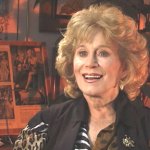
GRETCHEN WYLER
Back when I was still considered employable, I wrote a column taking note of the death of Gretchen Wyler, whom I did know and admired very much both as an actress and as a human being. We had seen Gretchen in “Sly Fox” when the cast included Vincent Gardenia and Jack Gilford, and I mentioned that in the column. I don’t know how Larry Gelbart found out about it, but he sent me two e-mail messages thanking me for remembering Gretchen and expressing his own respect and affection for her. The fact that Gelbart, when there was nothing in it for him, took the trouble to respond to a relatively obscure writer spoke to his loyalty as a friend and colleague.
Larry Gelbart was 81. A detailed obituary is at this link:
http://www.latimes.com/news/obituaries/la-me-larry-gelbart12-2009sep12,0,2812430.story?page=1
“Have you no shame, sir?” — Joseph Nye Welch
September 11, 2009

JOHN KERRY
We all know — Don’t we? — what the Democrats in Congress would be saying if it were Republicans who were trying to change a term-limit law to assure passage of legislation. And they’d be right. The campaign in Massachusetts to legislate a Democrat into the Senate by giving the governor the power to appoint a replacement for Edward M. Kennedy is unseemly, a terrible example of governance.
I am in the camp that believes that health-care reform is long overdue and that it should be passed while the Obama administration and the Democratic majorities in Congress — such as they are — are in place. But I can’t stomach the desperate measure now in the works in Boston, an act of expediency that should embarrass everyone involved — including Sen. John Kerry, who is promoting it.

MICHAEL BLOOMBERG
This measure is of the same stripe and odor as the action taken last year by the New York City Council to alter the law that would have prevented Mayor Michael Bloomberg from running for a third four-year term. Bloomberg, who asked for the change, signed the bill himself with nary a blush.
Although it’s none of my business, I don’t object to Bloomberg serving as mayor another four years or, for that matter, another eight years. But the law should be changed based on some intrinsic principle, not based on the near-term needs and desires of a politician or a political party.

MITT ROMNEY
As for Massachusetts, the hypocrisy of what is under way there is astounding. The executive power to make an appointment to a vacant Senate seat was rescinded five years ago by the Democratic majority in the legislature in order to prevent Republican Gov. Mitt Romney from filling the seat if John Kerry had been elected president.
It should go without saying that self-interest is the worst motive for changing the law. The grim implication of these shenanigans is that Congress is unable to function except as a partisan cock-pit and that there is not enough political leadership or political will in the legislature or the executive department to overcome the extremism and bullheadedness. A fine nation we have become if we can reform a broken health system only by sleight-of-hand.
 CharlesPaolino's Blog