Books: “Southern League”
July 9, 2013
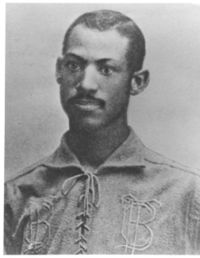
FLEETWOOD WALKER
When Jackie Robinson’s place in baseball history is discussed, there often is a slight error in the way it is expressed. Robinson, who famously joined the Brooklyn Dodgers in 1947 to become the only black player in professional baseball, was not the first black player in the majors. That doesn’t diminish Robinson’s achievement in the least, but the fact is that the first black player in the major leagues, so far as we know, was Moses Fleetwood Walker, a catcher, who appeared with the Toledo Blue Stockings of the American Association in 1889. The second black player in the majors, so far as we know, was his brother, Weldy Wilberforce Walker, a practitioner of several diamond positions, who also played a few games for Toledo that year.
It was in that same year that the baseball owners decided that they would no longer include black players on their rosters, and it would be 58 years before another black player — Robinson — would appear in the bigs. But it would be 72 years, in 1961, before Major League Baseball, which wasn’t fully integrated until the Red Sox capitulated in 1959, ordered the minor leagues to start signing black players.
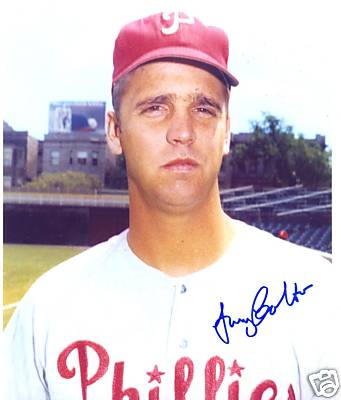
LARRY COLTON
That’s the background for Southern League, an absorbing book by former major leaguer Larry Colton that reports on the 1964 season of the Birmingham Barons, the first integrated pro sports team to play in Alabama. The team had been disbanded by its owner, millionaire businessman Albert Belcher, under pressure from segregationists, but Belcher was convinced that the team could be a financial success. His confidence was bolstered by the fact that Alabama native Charlie Finley, wackadoodle owner of the Kansas City Athletics, agreed to make his team the major-league parent of the Barons.
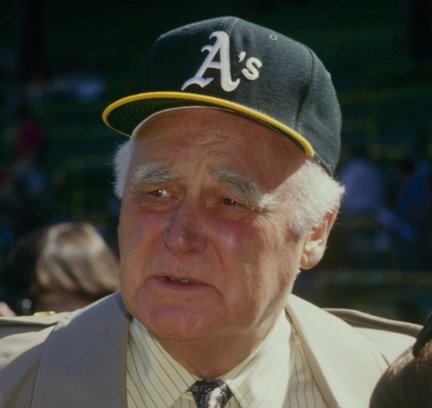
CHARLIE FINLEY
Neither Belcher nor Finley was a civil rights activist, but both were realists. They picked a tough environment in which to practice their pragmatism: Alabama, led by Gov. George Wallace, was digging in its heels against the federal government’s campaign to integrate schools and put an end to racial discrimination in general.
As Colton reports, Finley made a couple of commitments to the Barons. First, he said he would see to it that the Barons got the players it needed to win the Southern League pennant. That was an odd thing for an owner to promise, because the owner’s interest in a minor league franchises usually has to do only with developing players for the major-league team. Second, Finley and Belcher jointly promised the team that they would take all of the players and their significant others to Hawaii if the Barons won the title.

BLUE MOON ODOM
The Barons started their season with five minority players on the roster, including future major league standout pitcher Blue Moon Odom and future big league journeyman Bert Campaneris, a refugee from Cuba. The black players had to put up with vocal abuse from fans and discrimination in public accommodations such as hotels and restaurants.
Still, while Belcher experienced a few tense moments, the season, although it fell just short of fulfilling everyone’s dreams, went off without a serious incident, so that the Barons, who didn’t see themselves as trailblazers, still demonstrated to Birmingham how an integrated enterprise could actually work in the city.
Colton tells this story largely by telling the stories of the ordinary men who made up the Barons roster and the ordinary circumstances of their lives: their often hardscrabble origins, their family lives, their loves, their ailments. Prominently included is the story of Heywood Sullivan, a former major league catcher and future Red Sox exec and owner, for whom the ’64 Barons were the first assignment as a manager, an assignment he handled with wisdom, skill, compassion, and common sense.
King of the Hill, in a manner of speaking
July 6, 2013

MARIANO RIVERA
The Times, perhaps because it realizes that the window of opportunity is rapidly closing, published a story on June 30, in which Joshua Prager makes the case that by “just about every metric, simple or complex, (Mariano) Rivera is the greatest relief pitcher ever.”
I love Mariano Rivera, and baseball metrics, as much as the next fellow, but I have a problem with words like “ever” in comparisons like this one.
In the recent Times account, the marquee statistic among those used to make this case is the so-called WHIP, which is the average of walks plus hits per innings pitched. When the story was written, Rivera’s average was 1.0035, meaning that in the 1086 innings that Rivera has pitched in his career as of this moment, he has allowed about one hit or walk per inning. A WHIP average approaching this has been rare over the history of baseball. That statistic wasn’t kept until relatively recently, but it has been calculated retroactively and, as The Times points out, Rivera’s average is the third lowest among pitchers who have thrown 1000 or more innings.
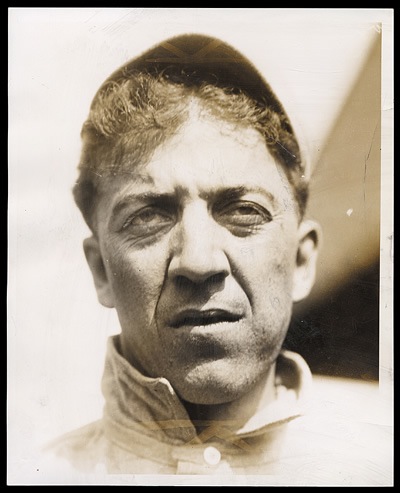
ADDIE JOSS
The lowest WHIP average, 0.9678, belongs to Addie Joss, who pitched for the American League Cleveland franchise from 1902 to 1910 and also was a very popular sports writer in Toledo and Cleveland. Joss pitched a one-hitter in his major league debut, pitched the second perfect game in major league history, and pitched another no-hitter. He was ill throughout most of his career and died at 32 after contracting malaria. Because he pitched only nine seasons, he was not eligible for election to the National Baseball Hall of Fame, but he was admitted under a special rule.
Second place on the WHIP list, with an average of 0.9996, is Ed Walsh, who pitched from 1904 to 1917, virtually all of it with the Chicago White Sox. He also holds the record for lowest career earned-run average: 1.82. His finest individual season came in 1908 when he went 40–15 with 269 strikeouts, 6 saves and a 1.42 ERA.
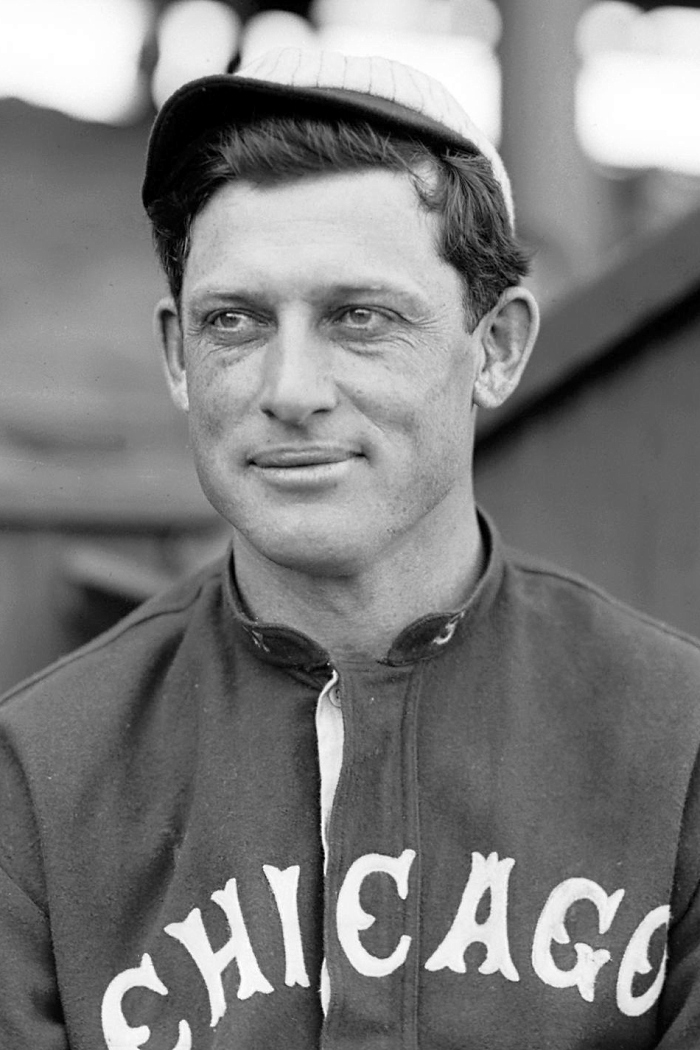
ED WALSH
Inasmuch as The Times called attention to these two players, I will cite their records in order to make my own point. As The Times story mentions, most of Rivera’s relief appearances consist of one inning. Addie Joss and Ed Walsh were starters, not relievers. But the relief specialist as we now know him — the middle reliever, the set-up man, the closer — didn’t exist in that era or for many decades afterward. Ed Rommel’s 17-inning relief appearance in 1932 was an anomaly, to be sure, but relievers for most of baseball history could not count on pitching one inning per appearance.
In compiling his WHIP average, Joss appeared in 286 games and pitched 2327 innings, an average of 8.14 innings per game. Walsh appeared in 430 games and pitched 2964 innings, an average of 6.89 innings per game. To cite a later example, Hoyt Wilhelm, who pitched mostly relief for many teams from 1952 to 1972, appeared in 1070 games and pitched 2254 innings, an average of 2.10 innings per game.
At this writing, Rivera had appeared in 1086 games and pitched only 1251 innings, an average of 1.15 innings per game. His performance has been astounding. It is unheard of for a pitcher to achieve his level of success, to be virtually unhittable, while throwing only one pitch. But pitching one inning per game is a modern, one might say post-modern, phenomenon in baseball. It’s pointless to speculate about how Rivera would have fared if he had been a starter or a long reliever or the jack-of-all-trades that was common in the earlier history of the game. We can certainly appreciate him for the unique player he has been, but “the greatest relief pitcher ever” — EVER? In a game like baseball, that has been played by so many men and that has evolved over so many years, that kind of statement is impossible to defend.
“When it’s twilight on the trail”
June 19, 2013

SLIM WHITMAN
I’ll wager that not many folks remember this lyric, but I’ll also wager that my son and daughters do:
Maggie dear won’t go out alone
Seems that she must have a chaperone
When we go out, no matter where we’re bound
There’s always someone around
She brings her father, her mother,
her sister and her brother
Oh, I never see Maggie alone
She brings her uncles, her cousins,
she’s got ’em by the dozens
I never see Maggie alone . . . .
That tune, with words by Harry Tilsley, was one of the songs I used to sing with or to my kids during our many car trips.
 I learned that song from an album by Slim Whitman, who died today at the age of 90. I still have that album and others by Whitman among the hundreds of vinyl LPs we retain and occasionally play. I obtained those Whitman albums in the 1950s, when I was caught up with what then constituted country-and-western music. The collection also includes Webb Pierce, Kitty Wells, Faron Young, Ferlin Husky, Little Jimmy Dickens, Hank Snow, Bob Gibson, Hank Williams, Elton Britt, Wilf Carter (Luke the Drifter), and Tex Ritter.
I was listening to doo-wop at the same time, and I already was immersed in opera and other classical music, but that brand of country appealed to me. My friend Michael P. Moran and I even had a country music show for a few years on the radio station at Seton Hall University.
Whitman had a significant following that was partly due to his romantic style. While many country singers liked to dwell on the futility of life (“There Stands the Glass”), Whitman favored love songs and romanticism in general. His voice was also more likely to appeal to an audience beyond the usual country crowd; he was a genuine crooner. And he was a wonderful yodeler — he and Elton Britt were my favorites in that regard.
I lost interest in country music as it became more and more the highly-produced form that defines it now. But I still go back to the vinyl from time to time to hear it done right. Speaking of that, listen to Slim Whitman at THIS LINK.
Books: “The Art of Controversy”
June 18, 2013

NAST’S SANTA CLAUS
It’s one of the ironies of 19th century history that the same man who gave us the roly-poly image of Santa Claus that warms our hearts every year was also one of the most damaging political cartoonists of his era. But that’s the way it was with Thomas Nast, one of the artists Victor N. Navasky discusses in The Art of Controversy, a meditation on the art and implications of the caricature.
Nast famously set his sights on Tammany Hall, as the Democratic Party machine in New York City was known, and particularly on William M. “Boss” Tweed, a businessman and politician who dominated the affairs of the city largely through his control of patronage in the form of both contracts and jobs.
As Navasky relates, Nast’s work in Harper’s Weekly during the 1871 election campaign is credited with purging city government of the Tammany gang. Tweed and others in his circle were subsequently charged with enormous thefts of public funds and sentenced to prison. Tweed tried to flee, but a Spanish customs official arrested him after recognizing him from Nast’s caricatures.

VICTOR S. NAVASKY
Tweed was no stranger to criticism, but he famously remarked about Nast’s assaults on him: “Stop them damn pictures! I don’t care a straw for your newspaper articles. My constituents can’t read. But they can’t help seeing them damn pictures!”
The story of Nast and Tweed illustrates many of the points made by Navasky, who is the former editor and publisher of The Nation and a former editor at The New York Times Magazine. One of those points is the power of caricature, which is a form of cartooning that emphasizes or exaggerates distinctive physical characteristics of the subject: Richard Nixon’s ski nose and widow’s peak, for example, or Lyndon Johnson’s ears.
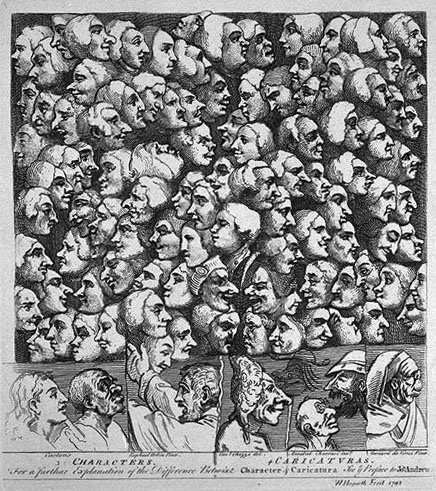
“Characters and Caricatures” by William Hogarth
This is neither a technical analysis nor a history, although Navasky reaches back a few centuries in discussing the origins of caricature, noting that Leonardo da Vinci may have originated the form in the 16th century and William Hogarth was one of those who had perfected it in the 18th. This book is more a matter of Navasky thinking through the subject of political cartoons and not necessarily answering all of his own questions about the topic.
The author writes a lot about what makes caricature so effective. How effective? He points out one case in which an artist’s work landed him on Adolf Hitler’s “death list” and another case in which a cartoonist for Arab daily newspapers in Europe and the Near East was assassinated. In a far different vein, he devotes a chapter to the Nazi periodical Die Stürmer, which conducted a relentless campaign to ridicule and demean Jews, with caricature as a principal method. The editor, Julius Streicher, was hanged after the Nuremberg trials, and the cover cartoonist, Philipp Rupprecht, was sentenced to six years in prison, a sentence Navasky thinks was too light.
This potency raises in Navasky’s mind the question of whether political cartooning should enjoy exactly the free-speech protection that the written word has in the United States. He isn’t arguing that it shouldn’t, but he explores significant ways in which the two forms of expression are not identical — including the lasting (and frequently negative) impression a caricature makes and the fact that one can answer words with words (as in a letter to the editor), but can hardly make an effective response to a cartoon.
Navasky writes about editorial decisions (to publish or not to publish) such as the “Danish Muhammads” and a case of his own in which practically his whole staff opposed his choice to print a cartoon that portrayed Henry Kissinger “screwing the world.” This is a provocative book from Alfred A. Knopf about the use of caricature at various times in history and in various parts of the world. I screened editorial cartoons for my newspapers for the better part of four decades, but Navasky’s musings have given me new insights and raised questions that I had never considered.
Books: “The Girls of Atomic City”
May 30, 2013
 Franklin Roosevelt was good at many things. For one, he could keep a secret. Of course, he was in on the Manhattan Project, which developed the atomic bomb, but he kept what he knew sub sigillo. The urgency of the project was based on the concern that Nazi Germany would build such a weapon first and was known to be trying very hard to find out what kind of research and development was going on in the United States.
So Roosevelt kept his counsel — in fact, he kept it to a fault. Although he was aware of his own fragile health, he never said a word to Harry S Truman, his vice president. Truman found out about the project only after Roosevelt’s sudden death in 1945.
If nothing else, Roosevelt’s secrecy set an example for the subjects of Denise Kiernan’s enlightening and witty book, The Girls of Atomic City. These were the young women who were among tens of thousands of Americans recruited to work at the Clinton Engineering Works outside of Knoxville, Tennessee, one of several sites that housed the operations that led to the bomb that would be deployed against Japan.
 CEW consisted of four plants — one of which was the largest building in the world — that were built on a massive tract of land the government more or less appropriated, muscling out the farmers and others for whom the area had been both home and livelihood. Along with the plants, the government and its contractors built a sort of town, Oak Ridge, to serve as the residential community for CEW workers, both civilian and military. Some of the employees also lived outside the plant and commuted.
CEW had one goal: to enrich uranium to the point that it could be used as the fuel for the atomic bomb being developed by scientists at other sites in the country, most notably Los Alamos, New Mexico. None of the tens of thousands of men and women who worked at the plant knew what was taking place there, except that it was a project designed to win the war. They didn’t know they were refining uranium; they never heard uranium mentioned. Each person was directed to perform the task to which he or she was best suited, but was not told the purpose of the task. Some folks spent their days or nights monitoring gauges and recording the readings; some folks inspected pipes for leaks; some did mathematical calculations; some repeated chemical experiments — the same ones over and over again. Some worked at jobs not directly related to the core purpose of CEW — secretaries, nurses, shopkeepers, custodians.
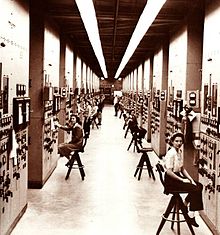
Everyone was told, repeatedly and forcefully, not to ask questions about what took place at CEW and not to discuss with each other or anyone else any aspect of work at the plant. Employees knew that they were being watched all the time by official personnel and by fellow workers who had been recruited as internal spies. And employees who noticed that someone suddenly vanished from a work site knew that person had probably been overheard speaking out of line and had been jettisoned from the complex with a stern warning to keep quiet.
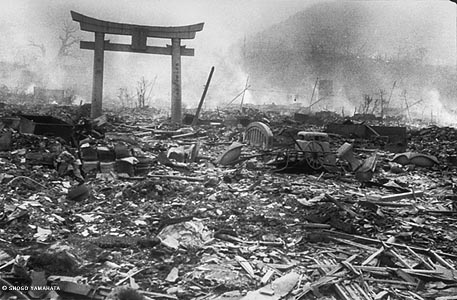
It was only after the bomb had been deployed against Hiroshima in August 1945, causing unprecedented casualties and property damage, that the workers learned the truth about CEW and about what they had unwittingly made possible. As Denise Kiernan skillfully reports, there was a mixed reaction, a combination of relief, elation, remorse, and foreboding. People were glad that the war would finally end, but many were deeply shaken by the carnage in Japan and worried about what new force had been unleashed in the world.
 As the title suggests, Kiernan is especially interested in the young women, including several specific ones, who left home, in some cases along with their families, to work at CEW. Some sought better pay, some sought any kind of work, some were motivated by a yen for adventure. At Oak Ridge, they found what in many ways was a spartan existence, a town without sidewalks but with plenty of ankle-deep mud. Many also found friendship and even romance and, if they were black, the same Jim Crow restrictions on their lives that they had experienced back home. While she tells the story of Oak Ridge and CEW, Kiernan simultaneously traces the development from theory to experiment to technology of nuclear fission, the principal that led to the bomb, and she calls particular attention to female scientists who played significant if under-appreciated roles in that process.

Last year I reviewed a book about Erik Jan Hanussen, a mentalist and con man who first flourished and then crashed and burned in Berlin during the Nazi era — an Austrian Jew posing as a Danish aristocrat. Hanussen struck me as one of the most bizarre characters in the drama of that time, but he has to make room in the pantheon for a puny Jewish teenager who is the subject of Jonathan Kirsch’s arresting book, The Short Strange Life of Herschel Grynszpan.
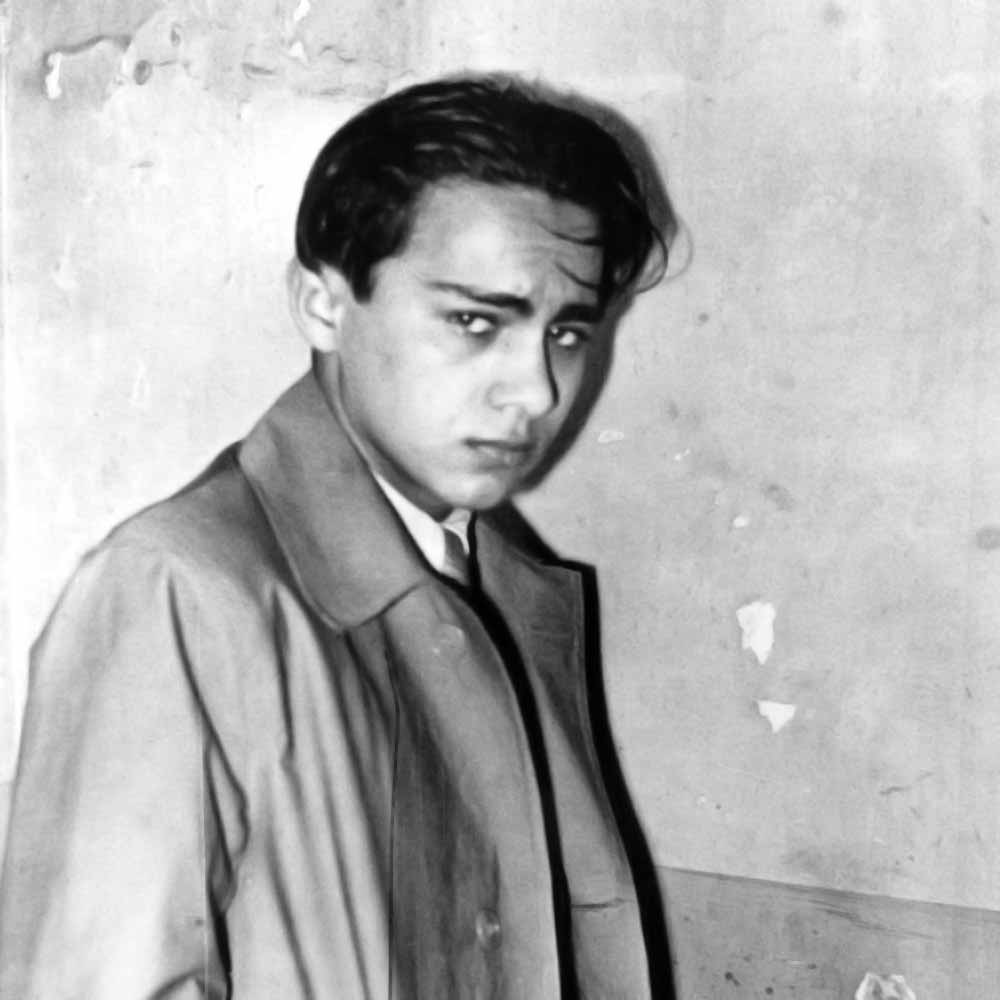 Herschel was living with his Polish parents in Hamburg, Germany, when the Nazis came to power. During the run-up to the Holocaust, when Adolf Hitler’s scheme was to make life so unbearable for Jews that they would leave the Third Reich by their own volition, Herschel’s parents became concerned about his wellbeing. Their solution was to send him west when he was 15 years old, and he wound up living with his uncle and aunt in Paris.
During his sojourn, Herschel’s parents and siblings were among about 12,000 Polish Jews who were abruptly taken from their homes by the Nazis and deposited on the Polish side of the border with Germany. From the refugee camp there, Herschel’s sister wrote to him, describing the harsh conditions.
After an argument with his uncle over the question of helping the Grynszpans financially, Herschel bolted from the apartment and, on the following day, bought a revolver, entered the German embassy on a pretext, and shot a young diplomatic aide, who died from the wounds.
 When he was taken into custody by French authorities, Herschel, who saw himself as some kind of avenging angel, immediately and then repeatedly told them that he had shot the man, Ernst Vom Rath, in response to the treatment of Polish Jews and, in particular, of his own family.
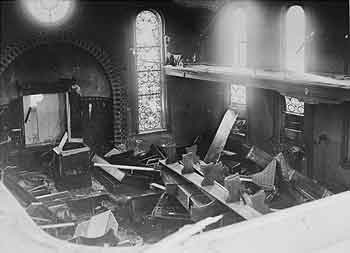
The Nazis reacted to the murder with the carefully staged mob rampage that destroyed Jewish businesses and synagogues and terrorized Jewish people throughout Germany and Austria on the night of November 9 and 10, 1938 — the so-called Kristallnacht.
Meanwhile, Hitler and his partners in paranoia had a different take on the crime. They saw it as the work of the “international Jewish conspiracy” that actually existed only in their nightmares. Hitler sent representatives to both observe, manipulate, and exploit the proceedings against Herschel.
Before the case was played out, however, Germany invaded France, and after Herschel, with the connivance of the French, dodged the grasp of the Nazis in a chain of events that sounds like a Marx Brothers scene, he fell into German control.
 Hitler, employing a brand of logic of which only he was capable, decided to stage a show trial so that the international community would conclude from this solitary crime that Jews everywhere were plotting to take control of Germany if not the whole world.
Kirsch describes the elaborate investigations and other preparations the Nazis made for this spectacle, inquiring into the most remote details of Herschel’s background.
But Hitler didn’t know whom he was up against. The hundred-pound dropout pulled the rug out from under the Nazi propaganda machinery by telling interrogators that he and Vom Rath had actually been involved in a homosexual relationship that went sour. It was a idea that had been suggested to him by one of his lawyers while he was still in French custody. The Nazis were stymied. Given Hitler’s horror of homosexuality, they couldn’t let the show trial go ahead and take a chance that Herschel’s claim would become public. On the other hand, they also couldn’t simply do away with Herschel after making such a big deal about how the case would be tried in public. The trial was postponed — indefinitely, as it turned out.
In a way, that’s where this story ends. No one knows what became of Herschel Grynszpan, although the debate goes on about whether he was a megalomaniac lone ranger or an overlooked hero of the Jewish resistence.
It’s a wonderful yarn, and Kirsch tells it like a novelist, exploring the psyche of an oddball teenager who played a quirky role in the biggest historic epoch of the twentieth century.
Books: “The Slaves’ Gamble”
May 9, 2013

GEORGE ROBERTS
Perhaps I just wasn’t paying attention, but my impression is that the War of 1812 didn’t get much air time when I was in elementary and high school. Where American history was concerned, as I recall, it was all about the Revolution and the Civil War. It took me a while to catch up; it was relatively recently that I caught on that the War of 1812 was, in effect, a continuation of the Revolution.
Among the things I didn’t know about the war was that black men, free and slave, fought on both the American and British sides and also on behalf of the Spanish authorities who were futilely trying to hang onto the Florida territories. Gene Allen Smith, a history professor at Texas Christian University, covers that in detail in his book The Slaves’ Gamble: Choosing Sides in the War of 1812.
An important aspect of this story is that the British, strapped for resources because their government was fighting what turned out to be the decisive war with Napoleon Bonaparte in Europe, encouraged American slaves to bolt from their masters and either emigrate to a British possession — notably Nova Scotia — or enlist in military service. Either way, the British promised the slaves their freedom.

Drum used by black drummer Jordan B. Noble at the Battle of New Orleans.
Besides filling their ranks, the British saw this strategy as a means of undermining the Southern economy. The number of slaves who took advantage of the opportunity was slight compared to the million-plus who were in bondage at that time, but the fact that the British were welcoming slaves sent shock waves through the South, where white people always feared a slave rebellion.
Although this is a story about a war fought on many fronts over three years, Smith puts a human face on it by providing anecotes about particular black men who played a part in the epoch.
One example was George Roberts, a free Marylander who served during the war on numerous American privateers — private vessels that harassed and even seized British shipping on the U.S. government’s behalf. Another was Jordan B. Noble, who was born a mixed-race slave in 1800 and joined the 7th U.S. Regiment as a drummer in 1813. He served in the Battle of New Orleans and later took part in the Mexican, Seminole, and Civil wars.

ANDREW JACKSON
A sad if not surprising episode in this history concerned Andrew Jackson, who recruited slaves to help in protecting New Orleans from a British attack. Jackson promised to free the slaves in return for their service, but, Smith writes, never intended to do so. Jackson, according to the author, “committed them to his cause rather than permitting them to assist the British, and this tied them to the United States.”
Allen explains that, once the war was over, the impact of the British strategy had the unintended effect of strengthening the plantation system in the South and opening new territory — namely, what had been the Spanish Floridas—to slavery. In general, the competence and bravery black soldiers and sailors contributed to the American cause during the War of 1812 was not adequately rewarded. On the contrary, some of the worst experiences for black people in the United States were yet to come.
Book: “Grand Central”
April 19, 2013
 Yes, I’ve been around long enough to remember when televisions were not yet a consumer item and radio was the principle source of home entertainment. One of the programs my mother listened to was Grand Central Station, a popular show that ran from 1937 to 1954. This wasn’t a soap opera like Our Gal Sunday, The Romance of Helen Trent, or The Edge of Night, which mom also listened to.
Grand Central Station was a series of disconnected stories — drama, romance, comedy — all of which, of course, played out at least in part in the railroad station of the title. The announcer who introduced each show described Grand Central as “the crossroads of a million private lives, a gigantic stage on which are played a thousand dramas daily.”
But, as Sam Roberts points out in his book, Grand Central, there was no such thing as Grand Central Station when that show was on the air. By then, the original structure, which was called by that name for a time, had been displaced by Grand Central Terminal, the one that now stands at East 42nd Street and Park Avenue.

The difference is that trains originate and end at a terminal; they don’t pass through. When the first rail facility was built in that location in 1871, it was known as Grand Central Depot. That place wasn’t up to the job to begin with, and after a clumsy expansion project at the turn of the 20th century, it was known for a couple of years as Grand Central Station. But a fatal train accident in 1902 prompted railroad officials to tear down the station and start over again, and the result was the monumental terminal that is now the centerpiece of midtown Manhattan. The complex took ten years to build; it occupies 17 acres.
By the 1970s, both midtown and the terminal had substantially deteriorated, Grand Central reduced to a sanctuary for homeless New Yorkers and a pest hole for commuters to get in and out of as quickly as possible. The terminal wasn’t paying for itself, and there was talk of demolition. Enter some folks with a little more vision — including, not insignificantly, Jacqueline Onassis — and Grand Central was in for restoration instead.

This book, which was published to coincide with the 100th anniversary of Grand Central Terminal, is an elegant volume loaded with photographs to embellish Roberts’ witty and vivid writing. Through the story of Grand Central, we learn about the evolution of rail travel in and out of, and within, the New York metropolis, and about the development of midtown — development, and re-development, for which Roberts writes, Grand Central has been the principal catalyst. It’s also a story of people: robber barons, politicians, engineers, and presidents, but most importantly it’s about the millions and millions of people who have passed through the terminal in haste, in sorrow, in joy, in confusion, and in fear. New York likes to call Times Square “the crossroads of the world,” but in a more literal sense, that title might belong to Grand Central.
You can hear an episode of Grand Central Station at this link.
Netflix Update No. 78: “The Magic of Belle Isle”
April 14, 2013

MORGAN FREEMAN
Sometimes it’s better to accept the plot of a movie and move on. The Magic of Belle Isle is a case in point.
This feel-good film, released in 2012, was written by Guy Thomas and directed by Rob Reiner. The story concerns Monte Wildhorn (Morgan Freeman), who was once a successful author of novels about a cowboy named Jubal McLaws. Disappointments in his life have dried up his creativity, and he is spending a summer at a borrowed house in fictional Belle Isle (actually Greenwood Lake, N.Y.), where he plans to drink and be disagreeable.
Partly due to his Victorian manners, he grudgingly develops relationships with people in the neighborhood, including Charlotte O’Neil (Virginia Madsen) the attractive divorcee next door, and her three daughters.

VIRGINIA MADSEN
Monte especially becomes engaged with Charlotte’s middle daughter, Finnegan (Emma Fuhrmann), for whom the concept of imagination is elusive. There is also an undisguised chemistry between Monte and Charlotte — an improbable couple by reason of their widely different ages.
In a side plot not wholly irrelevant to the main story, the O’Neil children are going through the pain of separation from their father — an issue that creates a great deal of tension between Charlotte and her oldest girl, Willow (Madeline Carroll).
There is also a sidebar concerning Monte’s positive influence on a mentally or emotionally challenged young man (Ash Christian) who likes to hop around town like a bunny.
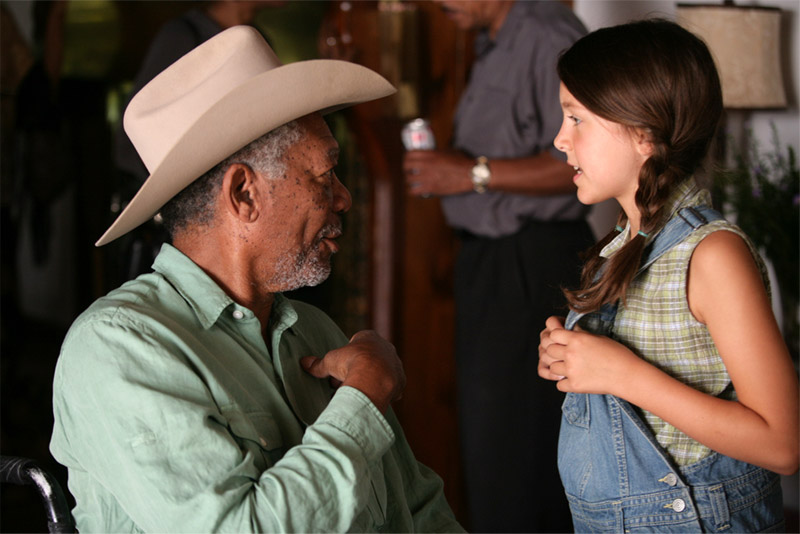
MORGAN FREEMAN and EMMA FUHRMANN
If one wonders too hard about how Monte, who has no use of his left arm and leg, can manage to do all the things that go along with living alone, or how he can drink as much as he does and sober up enough to be a good neighbor … well, if wonders too hard about a lot of things in this story, one may miss the benefits of good acting by a talented cast, a visually pleasing presentation, and a little optimism about human nature.
Books: “Helga’s Diary”
April 1, 2013

The Nazis’ cynical message at the Terezin concentration camp: “Work will make you free”
The dimensions of the Holocaust are brought home by the fact that the stories of individual victims are still emerging 67 years after the end of World War II. One example is Helga’s Diary: A Young Girl’s Account of Life in a Concentration Camp. The author is Helga Weiss, whose family were prisoners at Terezin, a concentration camp in what was then Czechoslovakia. Helga never heard of her father, Otto, or a boyfriend she met in camp, after they were dispatched from Terezin on one of the Nazi “transport” trains, but she and her mother, Irena, survived, despite being sent to the Auschwitz death camp at one point shortly before Germany was defeated.

Helga kept the diary during the years at Terezin (1941-1944), beginning when she was 11 years old. When she knew that she and her mother had been selected for one of the dreaded transports, she gave the diary and drawings and paintings she had done to her uncle, who was assigned to work in the finance office at Terezin. He hid the materials by bricking them up in a wall, and he recovered them after the war. When Helga and Irena had returned to their native Prague, Helga recorded, writing in the present tense, her recollections of their experiences after they left Terezin.
Some of the illustrations Helga did during her ordeal are included in this book. She became a professional artist after the war.
Terezin was a unique enterprise for the Nazis. It was not a camp as such but a Czech town purloined for use as a ghetto. The Nazis incarcerated a lot of writers and musicians there because Terezin was used as a showplace to hoodwink international authorities such as the Red Cross into thinking that Jewish culture was thriving in the Third Reich. My longtime colleague in newspaper journalism, Mirko Tuma, was one of the young Czech intellectuals who were sent to Terezin.
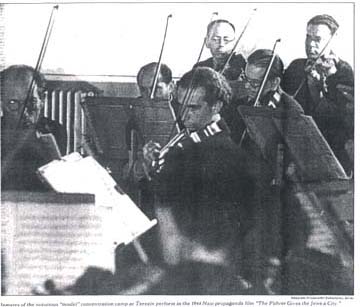
An orchestra of prisoners gives one of the concerts that on the one hand were encouraged by the Nazis and on the other hand helped the victims maintain their sanity.
Mirko told me that reciting poetry, writing and performing plays, and performing musical works helped the prisoners at Terezin maintain their sanity.
But although the Nazis went to a lot of trouble to create a faux town with shops and other amenities — including a school with neither teachers nor students — as a veneer for outside visitors, Helga vividly describes the hunger, thirst, illness, cold, heat, vermin, and human brutality that characterized life in the camp and at the other stops on her odyssey.
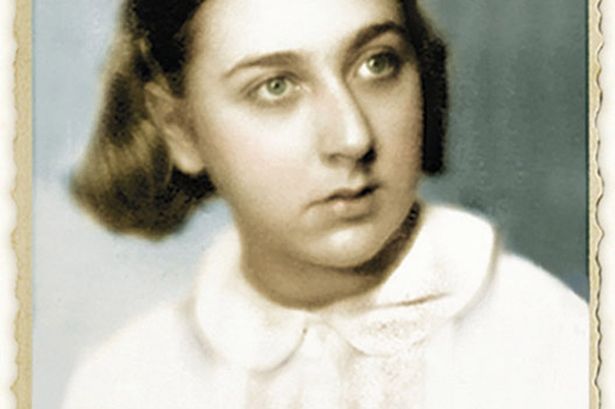
She also describes the fear, the uncertainty, the desperation that daily beset the prisoners. They worried constantly about being included in the frequent transports that carried people to God knows what fate.
And Helga, of course writes about the longing for the life that was abruptly taken away from her, of the simple comforts of her home and of Prague itself.
We learn in this diary, which has been translated from the original Czech text, that a young girl had to learn not only to survive but to connive and barter in the camp. She became adept at grabbing scraps of food, even though she knew the possible consequences. Indeed, she saw a boy beaten for taking a single cucumber peel.
We also learn that although she despaired at times, Helga had a strong spirit that wouldn’t let her capitulate to the Nazis.
“(T)here’s no reason for crying,” she writes. “Maybe because we’re imprisoned, because we can’t go to the cinema, the theater, or even on walks like other children? Quite the opposite. That’s exactly why we have to be cheerful. No one ever died for lack of a cinema or theater. You can live in overcrowded hostels . . . on bunks with fleas and bedbugs. It’s rather worse without food, but even a bit of hunger can be tolerated. … only you mustn’t take everything so seriously and start sobbing. They want to destroy us, that’s obvious, but we won’t give in. . . .”
 CharlesPaolino's Blog