If you love her, leave her in peace.
May 12, 2009

Farrah Fawcett
People who devour the details of celebrities’ personal lives should read the interview with Farrah Fawcett published in the Los Angeles Times on Monday. The interview – the only one the actress has given in more than two years – was conducted in August and was published in advance of a television program regarding Fawcett’s struggle for privacy, to be broadcast this weekend.
Fawcett was able to prove that an employee of UCLA Medical Center had illegally gained access to Fawcett’s medical records and had sold the information to the National Enquirer. That employee eventually resigned and has since died of cancer – the same disease for which Fawcett was being treated at UCLA.
The reporting of Fawcett’s illness has been revolting – and not only in the Enquirer. I have complained before about the nearly gleeful manner in which some television news anchors spit out the “headlines” on the latest developments in the woman’s illness – which appears to be terminal.
The L.A. Times story included an explanation from Brandy Navarre – identified as vice president of a “paparazzi agency” – for the compulsion to hound a woman who may be dying.
“Particularly when it’s something sexy or scandalous,” Navarre told the paper, “or on the negative side, something kind of tragic and sad, for whatever reason, the public is interested in those types of stories.”
The public is interested, see? And that’s what made it profitable for a hospital employee to commit a federal crime and for a so-called newspaper to induce her with cash to do what the editors clearly knew was a crime. Navarre attributed the interest in the case to “the public’s love of this woman.”
If the public loves this woman, why doesn’t the public – and the media that serve the public – respect the privacy they would expect for themselves under such circumstances and leave Farrah Fawcett alone.
… and what’s more, they believe it.
May 5, 2009

CARRIE PREJEAN
The blather that is issuing from the controversy over Carrie Prejean and her view of same-sex marriage might set a record even in this blather-soaked age. I have paid only passing attention to this story until today – most of my attention has taken the form of amusement over the talking heads discussing it with straight faces as though it were really important – but today I came across the report in the San Diego News that photos of Prejean modelling in a state of near nakedness have started showing up on the Internet, and that some of her critics are saying those photos cast doubt on her claim to be a Christian. Given the wide application and interpretation of the word “Christian,” that in itself is a example of the silliness that has infected this incident.
This is a bit of what the San Diego paper reported:
Alicia Jacobs, a judge at the April 19 Miss USA pageant during which Prejean made her highly publicized statement opposing same-sex marriage, said the pictures go beyond what the Miss California pageant says are appropriate.
“I can assure you they were quite inappropriate, and certainly not photos befitting a beauty queen,” Jacobs, a reporter for NBC’sLas Vegas affiliate, told NBC News.

ALICIA JACOBS
Alicia is in a position to make such judgments about what is or is not appropriate, because she herself is a former “beauty queen” who has graduated to her present status as one of those jewels of 21st century journalism, an “entertainment reporter.” According to her home station, KVBC:
Alicia’s revealing one-on-one interviews with A-listers read more like comfortable chats between friends. Celebrities have come to trust her journalistic integrity, & viewers have come to expect Alicia’s easygoing way, to showcase the “real” side of their favorite celebrities.
That’s a reassuring thing in these troubled times when life can get so hard to understand.
Farrago of this kind is being circulated because of Prejean’s answer when she was asked her opinion of same-gender marriage, and her answer sounded like it could have come from the governor of Alaska:
“I think it’s great that Americans are able to choose one or the other. We live in a land where you can choose same-sex marriage or opposite marriage,” Prejean said. “And you know what? I think in my country, in my family, I think that I believe that a marriage should be between a man and a woman. No offense to anybody out there, but that’s how I was raised.”
Huh? What’d she say? She’s glad Americans have the choice, but she doesn’t want them to?

PEREZ HILTON
Perez Hilton – another wonder of celebrity journalism – asked the question of Prejean in the first place and then turned on her, complaining – according to the San Diego paper – that Miss USA is supposed to unite Americans, not divide them. What century does he live in? The very fact that an anachronistic beauty contest was the launching pad for a debate that trivializes a subject that deeply affects the personal lives of millions of men and women is in itself a sad commentary on the state of public discourse in this country.
While you weren’t looking, Perez, Bert Parks died.
“Bother!”
April 29, 2009
 The death of character actor Peter Dennis calls to mind the seemingly inexhaustible appeal of A.A. Milne’s “Winnie-the-Pooh” books. Although, I often wonder how many people know Milne’s characters – which have been thoroughly exploited – without knowing them in their original context. Peter Dennis used to tour with a one-man show that consisted of him reading from the Pooh books and other works by Milne. He maintained – and the large crowds he drew seemed to confirm – that Milne’s stories weren’t just for children. That’s certainly true. Superimposed on the tales themselves is a kind of harmonic of humor and philosophy that only adults are likely to perceive. The same is true of Kenneth Graham’s “The Wind in the Willows.” It is so much true of Lewis Carroll’s “Alice” books that there probably is more for adults in their pages than there is for children.

PETER DENNIS
Or, at least, there would be more for adults if adults are still reading these books. It’s prophetic that in the last scene of the second Pooh book, Christopher Robin tells Pooh that they can’t continue their previous relationship because “they won’t let you” – the “they” being humorless grownups. There is a similar passage in another of Graham’s books, “Dream Days,” in which a family of children go out in the dead of night and bury in the yard some toys that the adults – the narrator calls them Olympians – have packed away because the children, in the view of grownups, have outgrown them. “As we turned to go,” the narrator says, “the man in the moon, tangled in elm-boughs, caught my eye for a moment, and I thought that never had he looked so friendly. He was going to see after them, it was evident; for he was always there, more or less, and so it was no trouble to him at all, and he would tell them how things were still going, up here, and throw in a story or two of his own whenever they seemed a trifle dull. It made the going away rather easier, to know one had left somebody behind on the spot; a goodfellow, too, cheery, comforting, with a fund of anecdote; a man in whom one had every confidence.”
“Yoo hoo! Mrs. Goldberg ….”
April 25, 2009

GERTRUDE BERG
We were happy last night to find that the web site http://www.archive.org has several episodes of the television series “The Goldbergs,” a program far superior to most half-hour shows today, with allowances for the technical advances that have taken place since the ’50s. This is a warm show, humorous without being silly, with a solid dramatic basis. The show starred Gertrude Berg, who also owned it and wrote it and insisted on such things as everday situations and no laugh track. The Goldberg family consisted of Molly Goldberg; her husband, Jake, who was in the wholesale garment business; her uncle, David Romaine; and her children, Rosalie and Sammy – to whom Molly always referred as “my Rosalie” and “Samalie.” The family first appeared in a long-lived radio series and also was portrayed in a Broadway play written by Berg and in a film. The episode we watched last night was the final season in what was not a continuous run. In this 1955 show, the family had just moved to the suburbs from The Bronx – mirroring what was actually going on with a lot of urban Jewish families at the time – and Molly was having a hard time adjusting to an unfamiliar neighborhood. The dialogue in this show is priceless; Berg had a good ear for how people talk. Molly and David, in particular, use a peculiar verbal shorthand one doesn’t hear often. For instance, when Molly wants to say, “Give me a minute to write that down,” she says, “Pardon me while I jot.” We’re grateful for whoever preserved these shows.

GERTRUDE BERG and PHILIP LOEB
There was a shadow over “The Goldbergs.” Philip Loeb, who was cast as Jake when the television series was on CBS, was fingered as a Communist by Lee J. Cobb and Elia Kazan in their testimony in 1950 before the House Un-American Activities Committee. Berg was pressured to fire Loeb, and she refused, so CBS dropped the show. Loeb resigned and accepted a monetary settlement, but he committed suicide in 1955. Eight months after CBS dropped it, NBC picked the show up with another actor in the role.

KAREEM SALAMA
The Daily Star in Beirut published this story today about Kareem Salama, whom the writer describes as America’s first Muslim country-and-western singer-songwriter. It’s funny: Just yesterday a family member was telling me of his disagreement with his sons – they’re 17 and 18 – over whether there is any difference between “country music” and “country and western music.” The boys’ opinion is that “western” is not part of the genre. The dad cites Tex Ritter and Gene Autry, among others, as evidence of the contrary. My own opinion is that the genre can no longer be defined – if it ever could be. It has evolved from the front porch to the honky tonk to the high-tech audio/video recording studio, and there are more and more people in the industry who have less and less of the kind of life experience that generated the form in the first place. That’s to be expected. And now we have Salama, who may be the first but probably won’t be the last Muslim to put on the broad-brimmed hat. As the story indicates, although he was born and reared in Oklahoma and now lives in Texas, he brings to his music a perspective and a range of interests that never would have occurred to those who dreamed of an “Old Rugged Cross” or warned that “There’s No Excuse if You Don’t Know the Savior.”
It’s a brave new world.
Special to The Daily Star
BEIRUT: If you’re tired of arguing with your pals about whether culture-clash between down-home America and the Muslim Middle East is inevitable, you need look no further than Kareem Salama. The 31-year-old Salama is known as America’s first Muslim country-and-western singer-songwriter. Born in Ponca City, Oklahoma to Egyptian immigrant parents, he goes horseback riding and enjoys his mother’s southern cooking. He’s performed in Italy and Germany, typically with a guitar accompanist and black cowboy boots. He even sings in a southern twang.
Salama’s music reflects many influences – pop, rock and folk as well as country-and-western. Then there’s the inspiration he takes from the Koran. “I enjoy listening to the Koran recited with a beautiful voice,” he said in an email interview, “or listening to songs praise God or the Prophet Mohammad or praising something good in general.”
He says the work of 17th-century English poet John Donne’s has been “a favorite of mine when I was a teenager and it still is. In order to memorize them, and other western poems, I made them into songs with a melody. This is common in Arabic poetry because it is written and then sung using ‘maqamat.’ I memorized some Arabic poetry the same way.
“Sayidna Ali wrote a line of poetry that says, ‘If it were that wealth were brought by intellect then all the rich people would be wealthy.’ Wealth and fame, these things are difficult to explain.”
Salama describes his music is a hybrid of an American-Arab experience. His latest self-marketed debut albums include 2006’s “Generous Peace” and “This Life of Mine,” from 2007. During Israel’s summer 2006 bombing campaign against Lebanon, Salama released a special single dedicated to the crisis, “Prayers at Night.”
Salama’s parents moved to the US in the late 1960s, where they pursued a university education at various universities, including MIT. Salama himself holds a B.Sc. in chemical engineering and earned a law degree in 2007.
The singer-songwriter depicts a near-idyllic American childhood. “I spent it doing stuff outside like playing baseball with friends or sitting on the porch at night drinking Kool Aid,” he reminisced. “Maybe we’d even sneak out and throw toilet paper at the neighbor’s house.”
Though he hasn’t been in Egypt for some time, he said he finds American rural life not unlike what he found while visiting his parents’ home. “The country style here resembles the ‘Shaabiyyah’ element in Egypt,” he said. “I grew up in the country and my music has a more traditional style to it.”
The songwriting process he describes will be familiar to young pop musicians around the world. “Sometimes I have a thought or idea about a song,” he says. “I sit with my guitar. I start singing it with a melody or rhythm underneath it. Then a line or idea comes to me about something and it flows out of me in tandem always with the melody. Then I write a rhythm.”
Afterward, he sits with his producer, who works the melody and the chord progression around the song with a piano interlude here, or a riff there.
Salama says he writes his own lyrics, mostly about chivalry, love, home and family values. Yes, he knows Umm Khoultoum and likes her music. “I don’t demonize or idolize any particular time or era,” he says, “because there’s something good in all times. You get more modern progression sound in the remixes today, but there’s still enough of the old, because people still appreciate it.”
Though he doesn’t sing about Arabic cultural heritage, Salama believes he still weaves its spirit into his music. He says his lyrics are inspired by readings from Al-Ghazali, John Makdisi and “Maqamaat al-Hareeri” as much as good old Southern race/slavery narratives – “Uncle Tom’s Cabin” for instance. “There is an enjoyment of the old and the new,” he said. “That’s why I think country music is the most lucrative market in the USA.”
Salama continues to live in Texas where he pursues his musical career. He still prefers shawarma over falafel, loves to go horseback riding and believes line dance resembles Arabic dabkeh. A polymath, he’s finishing a book on political fiction.
Though he’s faced challenges as the son of immigrants, Salama depicts himself as an American nationalist. “As far as my relationship with my American-ness, yeah I love my home,” he said. “I’d still visit other places but I love this place. I had a good childhood and I’ve always been happy where I was born. I can relate to it. As for the racist element, I think of it like this: it’s like having a family with a history in abuse; at the end of the day they’re still your family.
“I don’t neglect the Egyptian part of me or that of my parents,” he continues. “But you get some people here who have a bad experience and they wake up one day and say; ‘I’m only Egyptian or I’m only Lebanese.’ That’s fine but in my opinion, I say I’m sorry you’re not just one thing.”
For more information on Salama’s performances and music, visit www.kareemsalama.com

Copyright (c) 2009 The Daily Star
Posting my blog at http://www.autoinventions.com has added plenty of hits, although I can’t understand the pattern at all. One movie review blog I wrote has been getting more hits than anything else, but I can’t see why.
“Your looks are laughable, unphotographable …”
April 17, 2009

MARIE DRESSLER
It’s interesting to listen to the vocabulary in media reports about the cruelty directed at Scottish villager Susan Boyle by the judges and audience on a British television show. Piers Morgan, one of the judges on the program, acknowledged after Boyle’s unexpected performance, that while “everyone was laughing at you” before the song, “nobody’s laughing now.” Morgan hadn’t laughed, but the camera caught his wince when Boyle first appeared on stage. Amanda Holden, another judge, was not shown overtly reacting to Boyle, but when Boyle had finished singing and the pandemonium in the studio had died down, Holden offered what seemed like a sincere communal apology for the “cynicism” that had greeted Boyle.
In the Los Angeles Times today, writers Josh Collins and Janice Stobart report on the Boyle phenomenon, which has set records for YouTube hits. It was a balanced story over all, but I wonder about their lead: “Less than a week ago, she was just another 47-year-old Scottish virgin.” The disingenuous Boyle had revealed that detail to producers, and the media has gleefully latched onto that term – “Scottish virgin” – as though to demonstrate that, despite her talent, it’s still okay to ridicule this woman, to constantly call attention with an oh-so-wry wit to what may be a painful part of her most private life. In the second paragraph of the story – the one-two punch being an effective offense – the writers describe Boyle as “a stocky, beetle-browed woman who would not ordinarily rate a second glance on the street.” (Emphasis mine.) Boyle is stocky and beetle-browed, but I would describe her appearance as unexceptional; I don’t know who licensed the Times writers to judge who does or does not “rate a second glance,” but I’m sure they enjoyed exercising the privilege. Presumably, they don’t understand the implication that if Boyle couldn’t sing, she wouldn’t “rate” anyone’s notice. If that’s the standard, I, for one, am in trouble.
The writers quoted Tanya Brown’s commentary in the Guardian: “Why are we so shocked when ‘ugly’ women can do things, rather than sitting at home weeping and wishing they were somebody else? Men are allowed to be ugly and talented.” The quotation marks, I suppose, were Brown’s way of softening the expression, but I wouldn’t have used the term, with or without the quotes, to describe Susan Boyle. Most people’s faces are interesting – nice, in some unique way. This is something I notice when I’m holding the Communion cup at Mass. I’ve been doing that for many years; I haven’t seen an ugly face yet.
The writers also referred to Marie Dressler, a film and vaudeville actress who, very late in life, became such a major movie star that she was the first woman to appear on the cover of Time. “I’m too homely for a prima donna,” she once said, “and too ugly for a soubrette” – “soubrette” being a coquettish sort of stock character in the theater and the opera. That was Dressler’s self-assessment, but be sure that once she re-emerged from obscurity and poverty in the 1930s, she was the only one calling Marie Dressler ugly. As for Susan Boyle, what’s wrong with that smile?


SUSAN BOYLE
The sensation caused by Susan Boyle’s appearance on a British talent show should be embarrassing to more than those judges and that audience who initially dismissed her based on her appearance alone. They didn’t dismiss her because her appearance was somehow exceptional; if they had met her at a backyard party in her village they might not have given her appearance a second thought. Rather, they either assumed from the outset that a person that ordinary, a person of that age, could have nothing to offer in the way of talent, or they assumed that no matter what she had to offer in the way of talent, it couldn’t be enough if she looked like that. The judges and the audience weren’t alone in making such assumptions. They live in a larger world in which uncounted people of enormous talent go unnoticed while mediocrities like Britney Spears make headlines regardless of their lack of artistic gifts.

KATE SMITH
The Susan Boyle phenomenon calls to mind the experience of Kate Smith, one of my favorite singers of standards. Early in her career, she had to put up with ridicule, especially “fat girl” jokes, but in the end the public couldn’t ignore her musical prowess. Based on the only thing I’ve heard Boyle sing, she reminds me of Kate Smith in that the power and clarity of her voice are enhanced by her ability to deliver the song. Kate Smith was a favorite among lyricists for that reason, which explains why she introduced more than 650 hit songs during her radio and recording career.
My guess is that we didn’t learn anything – at least, not permanently – from the Susan Boyle incident, but it will be justification enough for her if she flourishes in a mid-life career. I, for one, would love to hear more.
“Frankly, my dear ….”
April 15, 2009
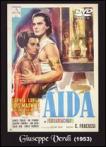 At the age of 66, I saw my first 3-D movie – “Monsters vs. Aliens” – and it was a hoot. The occasion was that our granddaughters are spending a couple of days with us, and on a rainy day a movie seemed like a good way to get out of the house. Um, to go sit in the dark at the Regal Cinema, but that’s still not sitting at home. That may be the first time I took the girls to a movie, though Pat may have taken them before. I don’t have a lot of experience with that; my grandparents weren’t movie goers. Well, it didn’t seem that way, but one Saturday when I was about 12 or 13 years old, my grandfather was very animated about a movie he had seen the night before – the film version of Giuseppe Verdi’s “Aida.” This film featured Sophia Loren as the Ethiopian princess, which was ironic considering the historic relationship between Italy and Ethiopia. My grandfather was on the phone all day calling his friends, urging them to go to Paterson to see this film. I wasn’t used to Grandpa going to movies or listening to opera, so this attracted my attention. I overheard him tell Tony Pombo, the vegetable peddler, that he was going to see “Aida” again, so I asked him if I could go along. I wound up taking two of my friends, and we were all impressed by something that before that night was completely foreign to our experience. (No, I don’t mean Loren.) That movie launched me into a lifelong love affair with opera. That was the only time my grandfather and I did anything like that together. Our relationship was a little remote for that. But I always give him credit for the fact that I have seen and listened to so much of Verdi and Puccini and Rossini and Bizet over the last 50 years.
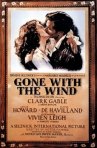 Grandma, incidentally, didn’t see “Aida,” because she swore off movies after she saw “Gone With the Wind.” This was the stuff of family legend: She was scandalized by the language with which Clark Gable addressed Viven Leigh in the famous finale. Apparently Grandma didn’t see why she should pay good money to listen to such talk when she was perfectly capable of staying home and swearing like a drunken sailor anytime she pleased. She also had a parakeet that she taught to utter profanities with an Italian accent, so she could hear the blue talk without contributing anything on her own, and without buying a ticket. People were so much more self-sufficient in her generation.
“The horn went ‘beep beep beep!’ “
April 14, 2009

Corvair
The New York Times reports today on a study by the Insurance Institute for Highway Safety showing that drivers who opt for minicars increase the chance of injury in a collision. To reinforce and quantify what we already knew through common sense, the institute conducted tests in which mincars collided with mid-sized cars while both cars were traveling at 40 mph. The laws of physics being the stubborn things they are, the midsized cars sustained much less damage.
This information will have as much impact on me as the known hazards of tobacco have on inveterate smokers. When Pat and I got married, she had a 1962 Corvair that looked a lot like the ’63 model in the photo above and I had a ’61 Volkwagen Beetle. We drove a lot of full-size and mid-size cars after that, but I always preferred the smaller models, and the more manual gears the car has, the better I like it. You can’t beat the small car in almost any situation except street racing, and I got that out of my system a long time ago. Now, we have a Chrysler that I drive only when I have to and a 1999 blue Beetle with 165,000 miles that I would marry if I were a single man.
The Times reported some questions raised about the institute’s study – for instance, that the collisions were head-on, which is relatively unusual. The institute had two recommendations: reduce speed limits and reduce horsepower. Neither one will fly, and that’s because there are so many self-absorbed, self-important drivers who prove their superiority over the rest of us by behaving irresponsibly while they’re on the road. They live for the weight and power. The vehicles, after all, don’t cause the accidents.
All of which reminds me of The Playmates’ 1958 hit, of which these were the last two stanzas:

THE PLAYMATES
Now we were doing a hundred and ten
This certainly was a race
For a Rambler to pass a Caddy
Would be a big disgrace
The guy musta wanted to pass me up
As he kept on tooting his horn (beep beep)
I’ll show him that a Cadillac is not a car to scorn
Beep beep beep beep
His horn went beep beep beep
[Very quickly]
Now we’re going a hundred twenty
As fast as I can go
The Rambler pulled along side of me
As if we were going slow
The fella rolled down his window
And yelled for me to hear
“Hey buddy how do I get this car outa second gear?”
Field hollering
April 12, 2009
BLUES BROTHERS
The following appeared during the past week in the Vatican newspaper “L’Osservatore Romano.”
By Tania Mann
From cotton fields to city streets, blues music tells the story of a people struggling to survive. Its syncopated rhythms convey a meaning as deep as the raspy voices crooning its melodies. The blues has evolved along with the history of black people in the United States – a journey marked by persecution but also by progress.
Theirs is a story that today opens to a new chapter, being written by a man who calls the city that transformed the face of the blues: “Sweet Home Chicago”. Thus a closer look at the origins of blues music provides insight not only into black history but also into the context from which President Barack Obama, who lived in the Windy City before his move to the White House, entered the international scene.
It was in Chicago that blues music was modernized, where it adapted into a form that could then be easily diffused into popular culture. It would permeate many other musical genres and create the foundation of rock ‘n’ roll, gospel and the British pop made famous by the Beatles. Today, the blues rhythm beats on as the heart of American mainstream music, which in turn plays an influential role in the music world across the globe.
The twelve-bar structure found in the blues today is the same as that which the slaves invented as they worked in the fields, using music to communicate. This system of “field hollering” allowed the slaves to exchange secret information and indicate potential escape routes.
Chicago blues grew from these roots in the Mississippi Delta, where thousands of blacks lived before moving north during the Great Migration, which occurred in two waves between 1913 and 1970. Its heavy backbeats recall the oppression of slavery, while the charged guitar riffs and gravelly voices in the foreground express an insatiable longing for freedom.
In the 1930s, the Great Depression propelled the blues forward by providing not only greater reason for people to lament but also more opportunity to come together to perform and listen to music. From that decade on in the ghettos of Chicago, residents organized “rent parties” to raise money for families with financial difficulties. Thus listening to the blues also became a concrete experience of solidarity.
By this time, blues musicians in Chicago had already begun to create a more urban sound, distinguishing their own style from more rural or classic forms. This new sound reflected, with its quicker tempos, the frenetic pace of working life in an industrial metropolis.
Barack Obama
“It was in these neighbourhoods that I received the best education I ever had”, President Obama said in a speech announcing his presidential bid. With this statement he recalled his work in Chicago from 1985-1988, organizing job training and other programs for the working-class residents of Altgeld Gardens, a public housing project amid shuttered steel mills.
The blues is a lyrical expression of both “the agony of life and the possibility of conquering it through sheer toughness of spirit”, writes Ralph Ellison in Invisible Man (Random House, 1952). This work, set in the newly industrialized Chicago of the 1930s, analyzes the problem of the black man’s identity in U.S. culture.
The people of Chicago are generally known as being “tough”, if only for having to endure the severe weather that results from its position on the edge of Lake Michigan. For this reason the blues, in the tenacity of its sound, personifies the Windy City (even if it was originally named as such in reference to its long-winded politicians, not its notorious weather).
The spirit of a city ever aware of life’s challenges – of a city where people are accustomed to adapting to change – is manifest in the blues. The city and the music have each shaped the other into what they are today.
But the influence of Chicago blues has extended much further than its own streets. This is seen clearly in the career and the heritage left by the man who is said to have defined its sound: Muddy Waters.
His grandmother gave the musician this nickname, after the puddles of the Mississippi River in which he played as a child. Waters transferred to Chicago in 1943, where he received an electric guitar as a gift from his uncle. With this instrument – the volume of which he intensified by using a pick – Muddy Waters revolutionized the city’s musical scene.
In addition to the guitar, the harmonica and bass were also amplified in order to compete with the loud atmosphere of the locales where blues bands played. The first to win this battle against the noise with his harmonica was Little Walter. He did so simply by cupping his hands around the instrument.
Muddy Waters
From then on these methods of amplification and electrification characterized the Chicago blues sound. This new sound was part in thanks to the new possibilities that came with the end of the Great Depression and World War ii. Muddy Waters and the other blues artists in Chicago became a vehicle for the optimism emerging at this time. It was here that the now widespread image of a small stage in a smoky bar, crowded with musicians improvising on the electric guitar, harmonica, piano, bass and drums, was born.
Today, it is not difficult to find evidence of the impact these musicians have had on the music world. It was, for example, Water’s song “Rolling Stone” that both the magazine and the rock group took their names. The same song was very probably an inspiration to Bob Dylan when he wrote “Like a Rolling Stone”. And it was reported in Rolling Stone magazine that among the playlists on President Obama’s iPod are songs by the group of the same name, by Dylan, and also by Howlin’ Wolf, who was known as Waters’ rival.
The list of artists and musical genres influenced by Chicago blues is endless. Among the numerous names of note are Chuck Berry, Elvis, Janis Joplin, Jimi Hendrix and also Eric Clapton, who has carried the inheritance of the blues from the seventies through to the present.Eric Clapton
In the hands of the same “Slowhand”, as Clapton is known, the Chicago blues sound has evolved with the changing music scene while still remaining faithful to its deepest roots. A powerful witness to this is one of his recent albums, “From the Cradle”, composed entirely of songs by traditional blues musicians. Among them is Willie Dixon, one of the greatest musicians to have played with Muddy Waters.
But the electrified blues that was founded in the post-war era is not only a thing of the past. The music continues because the stories it recounts are still being written. Worth noting is that this year’s list of Grammy nominees for blues music included several protagonists of Chicago’s musical revolution. Among those carrying this tradition into the modern day is Buddy Guy – known as Muddy Waters’ successor – who opened his own club in 1989 in the heart of downtown Chicago.
The culture which developed around the blues clubs that have sprouted up around the city over the years is indeed thriving, creating a music scene that draws tourists and natives alike. Today, many of the most popular blues clubs are found in neighbourhoods inhabited predominantly by young white people.
John Mayer
In fact, the evolution of blues music in the city also entailed a diffusion into white culture. For proof of this on a wider scale, one can look to artists such as Clapton, Dylan, and even younger musicians like John Mayer. The latter, an artist who had already gained wide acclaim on the pop scene, surprised everyone with a blues album in 2005, featuring Clapton, Guy and B.B. King as collaborators.
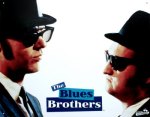
Surely one cannot fail to acknowledge the extent to which the famous Blues Brothers, with their “mission from God”, have served to propagate blues music and culture into the mainstream. Working on the Chicago-based film inspired the “brothers” John Belushi and Dan Aykroyd, never before musicians, to form their own group modelled after that featured in the movie.
While Chicago blues has survived in its purest form through the revolution’s biggest names and their successors, the deep influence it has had on the many genres of today’s chart-topping music is not to be ignored. Just one example is the widespread diffusion and popularity of rhythm and blues (R&B), a term that was originally used for Chicago blues but has extended to encompass much of black music heard today.
It becomes evident from the longevity of Chicago blues – in its original form as in its many variations – that at its heart this music expresses a depth of human emotion which stems from the very essence of human experience.
For Ellison, the blues does not offer a solution to the human condition. It offers instead a strong resolution to overcome suffering: a “yes” to a life marked by grace and irony, and a defiant decision to preserve the human spirit. Its sound is marked by sadness but also by fierce determination, thus reflecting the history of blacks in the States. In a time of global crisis, the President who pens this story’s newest chapters meets a challenge that will undoubtedly demand the same tenacity.


(©L’Osservatore Romano – 8 April 2009)
 CharlesPaolino's Blog