The final frontier … again.
May 7, 2009

WILLIAM SHATNER
Judging from the reviews, I might see the new “Star Trek” film after having forsaken the Enterprise when the first television series ended. I don’t know why that happened, because the first series was must-see in our house. We wouldn’t schedule any activities away from home on “Star Trek” night.
Back in those days, I was driving by a theater here in Jersey and saw that William Shatner was going to appear there in “Period of Adjustment.” It seemed like an odd idea to me at first, but I learned later that Shatner had played stage comedy early in his career. Also, I realized after I had thought about it, his character on “Star Trek” often had comic overtones. I took the opportunity to interview Shatner for a preview of “Period of Adjustment.” It wasn’t a very satisfying experience. He answered as many questions as possible with single syllables. He was very good in the play.

WILLIAM SHATNER
Shatner appeared at the same theater a year or so later, and I interviewed him again. That time, he talked almost compulsively – in fact, at one point he came up for air and asked, “How the hell are you going to write this?” Several years later, I interviewed him yet again – by phone – for an advance on an appearance he was making at a local college. I mentioned to him that I he and I had spoken twice before, and he asked, “Have you learned anything since then?”
Some people don’t like Shatner’s acting – several have told me they find his syncopated speech contrived and annoying. I don’t agree; I like his acting, including that peculiarity in his speech.

WILLIAM SHATNER
I find his appearance a little unsettling. He looks like he’s full of cortisone.
One of my favorite examples of Shatner’s work is “The Andersonville Trial,” a 1970 television movie directed by George C. Scott, based on Saul Levitt’s play of about a decade before. Shatner played Gen. N.P Chipman, who was judge advocate of the military court that tried Capt. Henry Wirz, who had been commandant of a prison camp for Confederate prisoners. Shatner was a perfect fit for the courtroom drama, whose cast included Richard Basehart, Buddy Ebsen, Jack Cassidy and Martin Sheen.
It’s available from Netflix and I wrote a review of it for this blog. The review is at THIS LINK.
Netflix Update No. 7: “The Notebook”
May 4, 2009

RACHEL McADAMS
We watched “The Notebook,” a 2004 film based on a Nicholas Sparks novel. The film stars Rachel McAdams, Ryan Gosling, James Garner and Gena Rowlands, and is directed by Rowlands’ son, Nick Cassavetes. The premise is that an elderly man (Garner) living in a nursing home regularly reads to a fellow resident (Rowlands) from a romantic story handwritten in a notebook. Flashbacks that make up the bulk of the movie tell the same story, a romance that began in 1940 in Seabrook, South Carolina, between teenagers Noah Calhoun (Gosling) and Allie Hamilton (McAdams). It becomes clear almost immediately that Garner and Rowlands are the older manifestations of Noah and Allie, and that the older Allie – suffering from dementia – is absorbed in the story but seldom remembers who she and Noah are or that this is the story of their own relationship.

RYAN GOSLING
This movie is well cast, well performed, and beautifully filmed and directed. Gosling and McAdams could not be more appealing as the quirky lumber yard worker and the vibrant young socialite. Garner and Rowlands are credible and moving as the aged couple. The only reservation I had was that I couldn’t connect Noah as played by Gosling with Noah as played by Garner. The two men are so dissimilar that it is difficult to make that leap and accept them as the same person. I thought it was particularly ill-advised at a certain point in the film to flash a montage of black-and-white photos of the young Jim Garner, who was nothing at all like Ryan Gosling. Still, the movie as a whole is absorbing and entertaining and avoids the mawkishness into which such a story could easily descend.
Netflix Update No. 6: “The Grass Harp”
April 27, 2009

PIPER LAURIE
This is your life?
April 26, 2009

FANNY BRICE
Last night, after watching a two-year-old Barbra Streisand concert on CBS, we switched to American Movie Classics to catch most of “Funny Girl,” the 1968 film starring Streisand and Omar Sharif. This is still an entertaining film in its way, but it seems interminable. Like it or not, it’s a shame that this film is responsible for the impressions most people today have of Fanny Brice and “Nicky” Arnstein, because the story line might as well be about two other people entirely. The characterization of Fanny Brice – her upbringing, her personality, her love life, her relationship with Florenz Ziegfeld – none of it is true.

JULIUS "NICKY" ARNSTEIN
What’s even farther afield is the portrayal of “Nicky” Arnstein, who is presented in the film as a handsome, cultured, lovable rascal whose pride wouldn’t allow him to accept his wife’s financial help when his gambling luck ran out. In actual fact, Arnstein was a louse who shamelessly sponged off Brice for years. Brice – who had two other marriages – lived with Arnstein for six or seven years before they married, and he took full advantage of her resources and her status. He did time in Sing Sing before they married – this is not mentioned in the film – and he did 13 months in Leavenworth during their marriage after he was caught trying to transport stolen securities into Washington, D.C. Brice spent a lot of her money trying to defend him from the federal charge, and then he dropped her cold when he got out of stir. Why someone with Fanny Brice’s talent wanted to associate in any way with Arnstein I am not aware.
Apparently there were at least two reasons why the movie – and the Broadway show that inspired it – departed so far from the facts of Brice’s life. One was that the writers were trying to create good entertainment, not a documentary. The other was that Arnstein was still alive when this material was written and was known to be prepared to litigate anything derogatory said about him.
“Frankly, my dear ….”
April 15, 2009
 At the age of 66, I saw my first 3-D movie – “Monsters vs. Aliens” – and it was a hoot. The occasion was that our granddaughters are spending a couple of days with us, and on a rainy day a movie seemed like a good way to get out of the house. Um, to go sit in the dark at the Regal Cinema, but that’s still not sitting at home. That may be the first time I took the girls to a movie, though Pat may have taken them before. I don’t have a lot of experience with that; my grandparents weren’t movie goers. Well, it didn’t seem that way, but one Saturday when I was about 12 or 13 years old, my grandfather was very animated about a movie he had seen the night before – the film version of Giuseppe Verdi’s “Aida.” This film featured Sophia Loren as the Ethiopian princess, which was ironic considering the historic relationship between Italy and Ethiopia. My grandfather was on the phone all day calling his friends, urging them to go to Paterson to see this film. I wasn’t used to Grandpa going to movies or listening to opera, so this attracted my attention. I overheard him tell Tony Pombo, the vegetable peddler, that he was going to see “Aida” again, so I asked him if I could go along. I wound up taking two of my friends, and we were all impressed by something that before that night was completely foreign to our experience. (No, I don’t mean Loren.) That movie launched me into a lifelong love affair with opera. That was the only time my grandfather and I did anything like that together. Our relationship was a little remote for that. But I always give him credit for the fact that I have seen and listened to so much of Verdi and Puccini and Rossini and Bizet over the last 50 years.
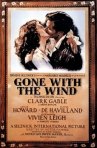 Grandma, incidentally, didn’t see “Aida,” because she swore off movies after she saw “Gone With the Wind.” This was the stuff of family legend: She was scandalized by the language with which Clark Gable addressed Viven Leigh in the famous finale. Apparently Grandma didn’t see why she should pay good money to listen to such talk when she was perfectly capable of staying home and swearing like a drunken sailor anytime she pleased. She also had a parakeet that she taught to utter profanities with an Italian accent, so she could hear the blue talk without contributing anything on her own, and without buying a ticket. People were so much more self-sufficient in her generation.
Netflix Update No. 5: “I Remember Mama”
April 11, 2009
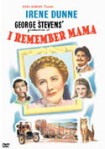 We watched the 1948 movie “I Remember Mama,” a masterpiece directed by George Stevens. I started to watch this on TMC a few weeks ago, but it would have ended at 2 a.m., so I gave up and put it in the Netflix queue. This film was based on Kathryn Forbes’ novel, a fictionalized memoir titled “Mama’s Bank Account.” The novel inspired a play that ran on Broadway for two years. The play led to this rather expensive movie, and the movie led to a successful television series – “Mama” – and an unsuccessful musical play, the last work of Richard Rodgers.
In all cases, the story concerns a Norwegian family living in San Francisco shortly after the turn of the 20th century. The central figure is Martha Hansen, the “Mama” of the title, played in this film by Irene Dunne and in the TV series by Peggy Wood. Irene Dunne was perfect in the role – as was Peggy Wood – and Dunne’s contributions were complemented by the fact that the rest of the casting was just as highly inspired. That included Barbara Bel Geddes as one of the Hansen daughters – Katherine – who narrates the film. Other choices that turned out to be strokes of genius were Rudy Vallee in the poker-faced role of a doctor who performs mastoid surgery on young Dagmar Hansen and Edgar Bergen in the comical role of a funeral director who courts one of Martha Hansen’s sisters.
ELLEN CORBY
That sister, Trina, was played by Ellen Corby, who later played the grandmother on the TV series “The Waltons,” and appeared in nearly 230 movies and TV shows. In this film, she is charming in her earnestness and naievete. A pivotal member of the cast was the prolific Austrian actor Oskar Homolka as Chris Halverson, the blustering uncle of Martha Hansen and her three sisters – but, it turns out, the most complex figure in the film. Dunne, Homolka, Corby, and Bel Geddes were nominated for Oscars for this film, and Nicholas Musuraca won the award for black-and-white cinematography. He certainly deserved that for the evocative images of both turn-of-the-century San Francisco and the intimacy of a work-a-day home.
Everything about this film was carefully done. It deals with the most commonplace of issues, but does it with profound insight. The story is a reflection on the resources of the human spirit, presented in a manner that is both uplifting and convincing.
Who’s that knocking?
April 10, 2009
 One of my literary disappointments was Bram Stoker’s novel “Dracula,” which I thought was one of the clumsiest works of fiction I had ever read. I came to it sort of in mid life. I read more non-fiction than fiction, but when I finally got around to Mary Shelley’s “Frankenstein” I was enthralled, and I naively thought I’d have a similar experience with “Dracula.” It was not to be. The book is awkwardly written with unnatural dialogue and none of the philosophical depth of Shelley’s work. Of course, the idea that Stoker’s work should have any of those qualities originated only in my own mind, so I suppose I was disappointed more by myself than by the writer.
Maybe it was because of that experience that I find myself on the outside looking in at the current fascination with vampires, especially among young people. Obviously, I’m missing something. NPR this week ran a review by John Powers about a Swedish film “Let the Right One In,” that was intriguing. Powers calls it “the best vampire movie in the last 75 years.” It had only limited release but is now available on DVD, which was the occasion for the review. The principal characters in this film are a 12-year-old boy who is alienated from his parents and rejected – even tormented – by his schoolmates, and his new next-door-neighbor, the lonely girl Eli, who has been 12 years old for the past 200 years. Their mutual isolation draws them together into a relationship that apparently succeeds artistically on several levels.
It was a coincidence that I happened to hear that review, because vampires have been on my mind for several weeks, since we heard Michael Smith give a concert in Morristown. One of the songs he performed that night was “Vampire,” and it’s been churning around in my mind ever since:
Your life’s too short and love is gone too soon
Come with me and fly the dark of moon, the dark of moon,
Life’s not life if you must lose it
Death’s not death if you refuse it
Who can blame you
If you choose the vampire
Forever young
Forever young
Forever
As with most of Michael’s songs, this one means far more when you hear him deliver it – plaintive, chilling, moving.
Excuse me. I think I hear someone at the door.
Michael Smith’s lyrics: http://www.artistsofnote.com/michael/lyrics/vampire.shtml
NPR: http://www.npr.org/templates/story/story.php?storyId=102909283&ft=1&f=1008
Netflix Update No. 4
April 6, 2009

JAKE
We watched the 2001 independent film “Lovely and Amazing.” This is my kind of movie: Virtually nothing happens. It’s a character study of a mother (Brenda Blethyn) and her two birth daughters and one adopted daughter (Emily Mortimer, Catherine Keener, and Raven Goodwin). All four have problems with self-esteem. Enough already with the self-esteem crises, yeah? But writer-director Nicole Holocefner plays this just about right, with a delicate balance of comedy and drama. And I love this – she makes it all right to want to smack every one of the principal characters into the real world even as one feels their pain and gets some sense of its origins. Holocefner may have written the part of the mother with Brenda Blethyn in mind. It’s the kind of poor-soul role that Blethyn excels in. Raven Goodwin, who wasn’t even 10 years old when this film was made, gives a very credible performance as a young black girl trying to fit into a white world. Jake Gyllenhaal has a fun role as a teenager who falls for Catherine Keener’s needy character, and Dermot Mulroney, playing a film star, has a unique scene with a naked Emily Mortimer – an actress with no confidence in herself – who insists that he tell her everything that is right and wrong with her appearance. That scene could have been exploitative and crass, but not the way Holocefner and the actors handled it.
Netflix update No. 3: “Next Stop Wonderland”
April 4, 2009

HOPE DAVIS
Last night we watched “Next Stop Wonderland,” a 1998 film about a young woman, played by Hope Davis, whose erratic, activist boyfriend, played by Philip Seymour Hoffman, leaves her once again – for good, this time, he says. While she’s getting used to life alone, her mother (Holland Taylor), who has issues of her own, places a personals ad for her daughter without asking permission. In the background is a young man (Alan Gelfant) who works as a plumber for his compulsive gambler of a father but volunteers his time at a Boston aquarium and is studying to become a marine biologist.
This movie is reminiscent of a 1983 TV flick, “Your Place or Mine,” that starred Bonnie Franklin and Robert Klein – who coincidentally plays a role in “Next Stop Wonderland.” In that movie as in this one the couple who are meant to be together don’t meet until the last few minutes.
“Next Stop Wonderland” is worth seeing. It is a careful study of character – and character flaws – and philosophical without being heavy-handed, amusing without being exploitative or patronizing. Brad Anderson’s quirky direction puts an element of the unexpected into every scene, and his use of Boston locations gives the whole film a rich visual context. Faces apparently are an important part of storytelling for Anderson, and I’m a sucker for that perspective. The casting – including the secondary parts – served the story well. It’s hard to look away from either Hope Davis or Alan Gelfant. All the performances are credible and witty.
It’s interesting that the posed promotional shot for this film has Davis sitting on top of a railroad car wearing a very short dress with a very low neckline. Her character in the movie is nothing at all like that. Apparently the ad department thought the potential audience was too stupid to be attracted to the movie on its own merits.
Sic transit whatyacallit.
March 27, 2009

WILLIE AAMES
I got to wondering the other day about whatever happened to Dick Van Patten. The occasion for me to wonder was a TCM broadcast of the 1948 movie “I Remember Mama,” which was inspired by a novel and in turn inspired a Broadway play and a television series. Which brings us to Dick Van Patten, who played Nels Hansen in the TV show. The “Mama” properties have to do with a Norwegian family living in San Francisco in the early 20th century. It’s wholesome stuff. Van Patten became a more prominent figure when he starred as the patriarch in the later TV series “Eight is Enough,” another wholesome show.
I didn’t finish watching “I Remember Mama,” because it would have kept me up until 2 a.m., so I put it in my Netflix queue. Before I got around to checking up on Van Patten, I read today that Willie Aames, who played one of Van Patten’s kids on “Eight is Enough” was selling his personal belongings in Kansas this week in order to pay off his debts. Aames also appeared in the series “Charles in Charge,” but apparently couldn’t hang onto the money he made. His drug habit probably didn’t help.

WILLIE AAMES
Life didn’t imitate art for the Bradfords – Van Patten’s TV family. Adam Rich, who played the youngest kid, has a string of arrests to his credit, including multiple substance abuse charges and break-and-entry. And Lani O’Grady, who played the eldest daughter on “Eight” died of a drug overdose, according to the Los Angeles County coroner. At one point in his life, Aames was ordained to ministry, a fact that prompted readers of the Dallas Morning News web site to quarrel on line today about why God hadn’t stepped in to lift Aames out of insolvency. Apparently these readers are unacquainted with concepts such as free will and personal responsibility.

DICK VAN PATTEN
Oh, I did check on Dick Van Patten. He’s doing fine, thank you, and still has that wholesome aura. He’s 80 years old now and has been happily married to Josephine Acerno since 1954. They have three sons, all of them actors, none of whom have been busted for drugs. Most of the Van Pattens are very good tennis players. Not pool, tennis. Dick Van Patten completely recovered from a diabetic stroke he suffered in 2006, and, as though to reinforce his wholesome image, founded a company that makes “Natural Balance Pet Foods.’
As George Ade said, “It all depends.”
 CharlesPaolino's Blog