Books: “Civil War Wives”
July 6, 2010
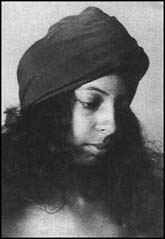
ANGELINA GRIMKE
When we learn about history, we learn mostly about men. This is something on the question of time. The curriculum in grade school and high school – and even in college for those who aren’t history majors – skims the surface. With respect to many epochs, that means leaving women out of the story, precisely because women were precluded from participating in what went on on the surface. Oh, we got an occasional glimpse of the other half of the population: Cleopatra, Catherine the Great, Queen Victoria, Betsy Ross, Harriet Beecher Stowe, Madame Curie, but the story overall was badly skewed.
This phenomenon is addressed in “Civil War Wives” by Carol Berkin, a book published last year. I read this book because I got it as a Father’s Day gift from one of my daughters — all of whom, by the way, are special women in their own rights, and that has a lot to do with their mother.
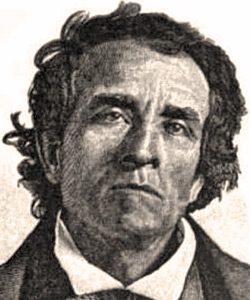
THEODORE WELD
Carol Berkin writes about three women who lived through the Civil War period and were directly affected by the war itself and the events and conditions surrounding it. These women were Angelina Grimke Weld, an abolitionist and feminist; Varina Howell Davis, who was married to Confederate President Jefferson Davis; and Julia Dent Grant, who was married to Ulysses S. Grant, Civil War general and postwar president.
I had some knowledge of Varina Davis and Julia Grant before I read this book, but I had not heard of Angelina Grimke Weld, who was an independent thinker from childhood. She was the daughter of a slave-holding plantation owner and judge in South Carolina, but she never accepted the precepts by which her parents lived — including human slavery, self-indulgence, and the notion that women should be happily subordinate to men.
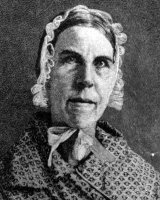
SARAH GRIMKE
Berkin recounts the process through which Angelina and her sister Sarah moved north and engaged in a prolific campaign against slavery and for women’s rights. Angelina Grimke in the 1830s was arguing for full citizenship for women — up to and including election to the presidency of the United States. (How impatient it must make her, wherever she reposes, to know that the nation still hasn’t chosen a female president.) She was making that argument at a time in which her public appearances, usually with Sarah, were regarded by many people as inappropriate for a woman – particularly when the sisters spoke to audiences of mixed gender and even of mixed race. Angelina married the abolitionist Theodore Weld, and Berkin reports that abolitionist organizations leaned on the husband — who bent a little — to discourage his wife from distracting from the antislavery message by arguing for women’s rights.
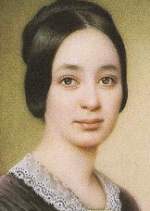
VARINA DAVIS
When Varina Davis first became engaged to Jefferson Davis, she was 17 years old and he was about twice her age. He had been married many years before, but his first wife died shortly after the wedding, and he may never have fully recovered from that loss. Varina Davis was loyal to her husband while they and their larger family were buffeted by illness, death, financial crises, infidelity, and the many shocks associated with the Civil War. However, theirs was hardly an ideal marriage. Varina was also the daughter of a southern slaveholder, but she was an independent thinker and her thoughts were not always in concert with those of her family or her husband. Jefferson Davis did not admire this trait in his wife, and he admonished her throughout their lives together about her penchant for expressing herself on public matters.

VARINA HOWELL DAVIS circa 1890
For Varina Davis, one of the most painful episodes of a life full of painful episodes must have been the imprisonment of her husband for two years at Fort Monroe in Phoebus, Virginia. She tirelessly but fruitlessly campaigned to get President Andrew Johnson to intercede on Jefferson Davis’s behalf. She persisted, however, and eventually succeeded not only in getting improved conditions for the prisoner but in getting permission to move into an apartment at the prison herself so that she could visit him regularly.
After the death of Jefferson Davis, Varina shocked southern society by moving north and associating with folks who were anathema in the former Confederacy. One of them was Julia Dent Grant, whose husband had taken compassion on Varina and intervened for the imprisoned Jefferson Davis. Varina also took up a career as a newspaper journalist for Joseph Pulitzer’s New York World.
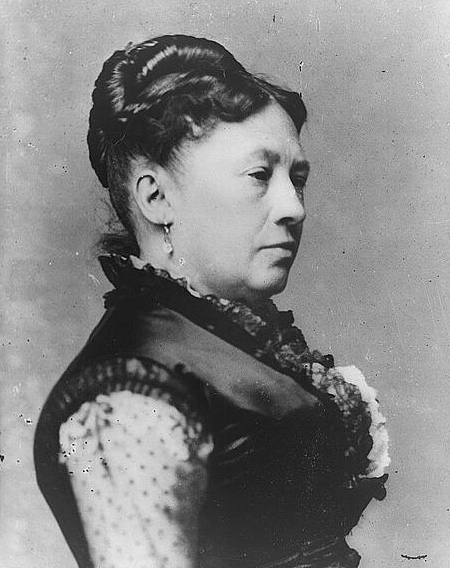
JULIA GRANT
Julia Grant was like the other two subjects of this book in that she was also the daughter of a slave-holding planter, but she was quite a different personality. She was a homely girl – and had a crossed eye to boot, but she was never allowed to think of herself as anything but a princess, thanks to a doting father. She was raised in leisure, and she celebrated that fact for the rest of her life. She did exhibit independence with respect to one, critical, point in her life. She persisted in her determination to marry Ulysses S. Grant over the objections of parents who didn’t think the soldier could provide the kind of life Julia wanted and deserved. Ulysses did leave the military after the marriage, but he was not cut out to be a businessman, and he failed repeatedly. His return to arms, of course, led to his greatest successes in life — all of them on the battlefield — and also led to his election to two terms as president, terms that were ridden with scandal, thanks to Grant’s friends and even, in one instance, his brother-in-law.
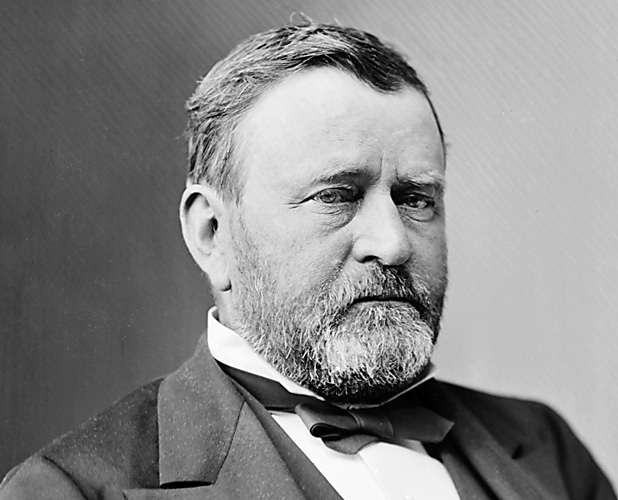
ULYSSES S. GRANT
Julia Grant was spoiled, but she was not petulant, and she weathered the changes in her life brought on by marriage to both an unsuccessful businessman and to a soldier. She reveled in her role as First Lady, and got generally good reviews for her performance as the social leader of the capital. She was not well informed about public affairs, and her occasional attempts to remedy that were not encouraged by her husband, who liked to think of her more as a loving spouse than as a helpmate. One thing was certain, as Berkin emphasizes: Julia and her “Uly” were in love — as much so on the day he died of throat cancer as on the day they were engaged.
Julia Grant, as a widow, was at West Point when she learned that Varina Davis was staying nearby. Julia went to Varina’s room and introduced herself, and the two became friends. It was a suitable gesture for Julia to make, both because Varina had never forgotten the general’s help for her imprisoned husband and because Grant — once the scourge of the South — had left instructions that his casket be carried to its tomb by equal numbers of Union and Confederate generals.
Books: “Lincoln and McClellan”
June 27, 2010
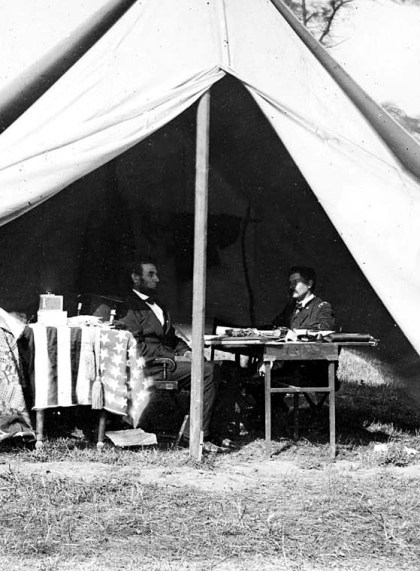
- Abraham Lincoln meets with Maj. Gen. George McClellan in October 1862, following the Battle of Antietam

The recent decision by President Obama to remove Gen. Stanley McChrystal from his command in Afghanistan in favor of Gen. David Petraeus prompted a lot of people to reflect on the analogous event involving President Truman and Gen. Douglas McArthur. My mind reached back further, however, because I happened to be reading Lincoln and McClellan, a recent book by John C. Waugh about another president and general whose relationship came to grief.

GEORGE McCLELLAN
Maj. Gen. George B. McClellan is remembered today mostly for his reticence on the battlefield and for the effect that had on Abraham Lincoln. Lincoln finally removed the general from command of the Army of the Potomac after the carnage at Antietam. It’s hard to say that there was a winner or loser in that awful battle, but Lincoln’s frustration was that McClellan let Robert E. Lee and his army slip away without pursuit — this after McClellan had repeatedly resisted Lincoln’s urgings to attack or pursue the enemy.
In a way, McClellan, like so many of his contemporaries, was one more victim of the Civil War. He was a charismatic and erudite man who was well trained at West Point — but not as a fighter. McClellan had served in the Mexican War and had left the army for a lucrative executive position with a railroad, but he returned to arms when secession made war inevitable.
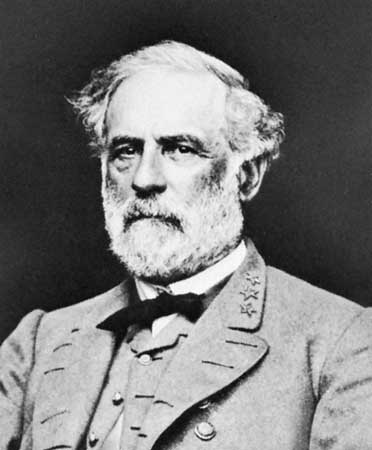
ROBERT E. LEE
Lincoln called on McClellan after the disaster of First Bull Run, and McClellan used his considerable skill to, in effect, create the Army of the Potomac and mold it into a formidable fighting force. His personal qualities endeared him to the troops, and that sentiment spilled over to the Northern public. McClellan was lionized as a new Napoleon. He believed his own publicity, but he fell short of its promise. Among his errors were that he was never quite satisfied with the readiness of his army and that he wildly overestimated the size of his enemy with the result that he ended up being embarrassed by much smaller forces than his own.
Although McClellan ran for president in 1864 and in later life served as governor of New Jersey and campaigned for Democratic presidential candidates Winfield Scott and Grover Cleveland, he hated politics and despised politicians.

ABRAHAM LINCOLN
He resented any interference in military affairs by civilian authorities, and that put him on a collision course with Lincoln who, for better or for worse, had his own ideas about strategy and let the general know about them. There were bitter exchanges between McClellan and both Lincoln and Secretary of War Edwin Stanton, who was something of a troublemaker in his own right.
This condition was complicated by the fact that McClellan came from an elite Philadelphia family and regarded people with humbler pedigrees as his social and intellectual inferiors — and that included, one might say especially, Abraham Lincoln. In letters to his wife, Ellen Marcy McClellan, the general dismissed Lincoln as “an idiot” and “a gorilla.” This was consistent with a pattern in McClellan’s life in which he usually regarded his superiors as incompetent.

GEORGE McCLELLAN circa 1880
Like many or maybe most northerners, McClellan was not concerned about the institution of slavery or about the slaves themselves, and he insisted that they were not a factor in the war. He maintained that the war should be conducted with the least possible impact of southern institutions and property – and he pointedly included slavery and slaves in that philosophy. As as result, he was scandalized when Lincoln issued the Emancipation Proclamation, and the fact that Lincoln insisted that the proclamation was a war measure didn’t mitigate McClellan’s disgust.
McClellan has often been brushed off as an almost comical figure who dithered while Lincoln fumed, but passing easy judgment on the men and women who lived through and participated in the war and the events surrounding it is a disservice to them. That’s why I appreciate books like this one, in which John Waugh presents a balanced view of the life and career of a complicated man caught up in a complicated epoch.
Books: “Leonardo’s Legacy”
June 8, 2010

Self portrait
By coincidence, I have read biographical works over the past several months about Isaac Newton, Albert Einstein, and Leonardo Da Vinci. In all three cases, the authors emphasized that these men were motivated by insatiable curiosities to question established “knowledge” and see beneath and beyond it.
The most recent of these books is “Leonardo’s Legacy” by European science writer Stefan Klein.
Although, Dan Brown aside, the mention of Leonardo may evoke in most people’s minds images of paintings and sculptures, Klein covers the broad range of Leonardo’s interests, from human anatomy to hydrodynamics.
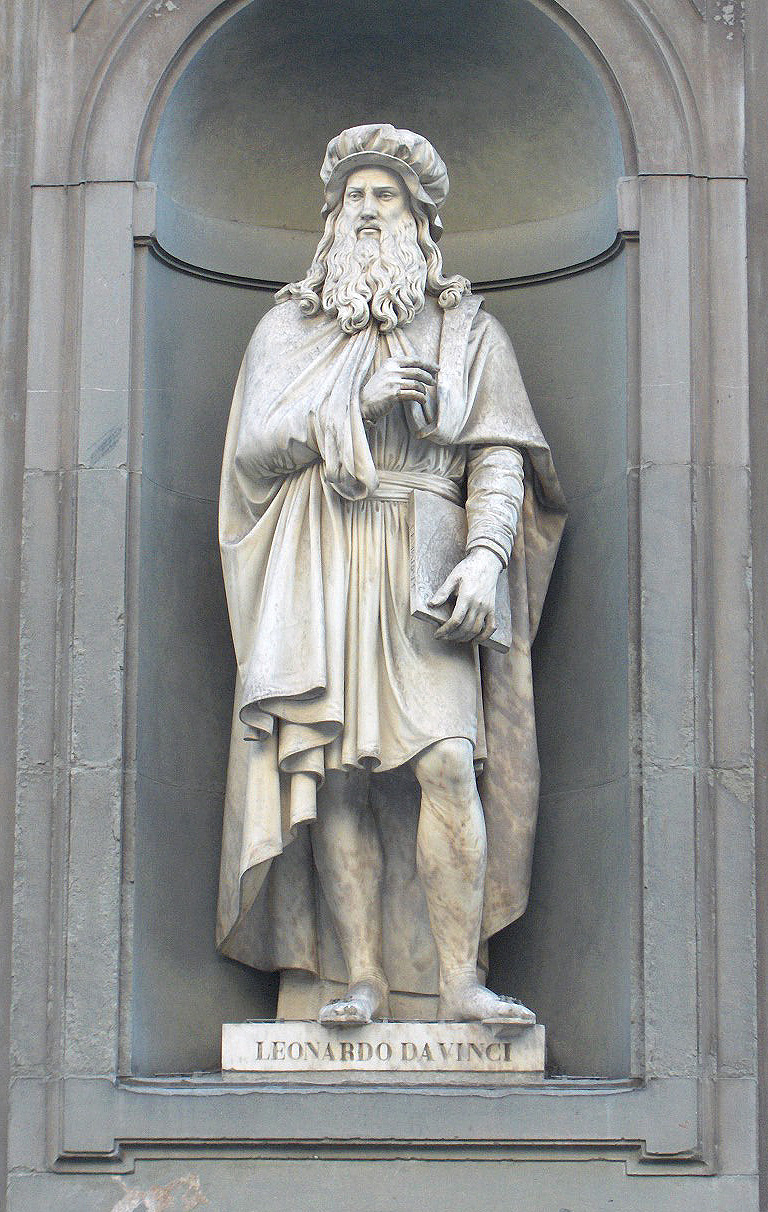
Statue of Leonardo, Uffizi, Florence
Klein doesn’t neglect the arts. In fact, I found his discussion of the Mona Lisa enlightening. I am a duffer when it comes to art, and I have never thought seriously about that painting – which appears in so many contexts that it has become a cliche. But Klein’s explanation, for instance, of Leonardo’s use of chiaroscuro to create a lifelike image helped me to look at the portrait with a new perspective. The same is true of the author’s explanation of the painter’s use of light and of the landscape that appears in the background.
Klein also pointed out that Leonardo, who had made careful studies of the muscles and nerves that control facial expressions, created the woman in the “Mona Lisa” with an asymmetrical face in which the emotions expressed on each side are not identical. Here, Leonardo seemed to be anticipating what is now understood about the left and right hemispheres of the brain controlling the right and left sides of the body, respectively. It was one of many examples of how Leonardo applied what he learned in one field to his work in another.

Portrait by Swedish artist Evald Hansen
Leonardo associated with some interesting Renaissance characters, including the philosopher Nicolo Machiavelli and the warlord Cesare Borgia. Leonardo hired himself out to men like Borgia in order to make a living, and he earned his keep by providing entertainment and by designing practical devices, including weapons. Klein makes a point of the apparent contradiction between Leonardo’s abhorrence of war and avowed respect for life and his willingness to imagine and at least design on paper the most horrible mechanisms for maiming and killing human beings.
On the other hand, Leonardo’s employment by Borgia was the occasion for creating an astounding map of the Central Italian city of Imola. By Klein’s reckoning, Leonardo and an assistant paced off very street and building in the city, using instruments that Leonardo had invented for that purpose. Leonardo then prepared a realistic view of Imola that appeared as if it were viewed from overhead – an unheard-of concept at that time.

Flying machine design
Among Leonardo’s fixations was the behavior of water, and he spent incalculable hours pursuing it – simply by observing water in nature and also by sketching it alone and including it in his paintings. He studied surface tension and the manner in which water moved through wider and narrower channels. He put to use the knowledge he gained when he designed a lock for a canal in Milan and, in a more remote way, when he studied the manner in which blood flows through the vessels of the body. Klein suggests that Leonardo may have actually built a model of a heart to reach his conclusions about the movement of blood in the cardiac ventricles – something that wasn’t scientifically observed until hundreds of years later.

Anatomical drawings
Leonardo was also determined to provide man with the freedom of flight, but Klein explains that this enterprise was doomed to failure because of Leonardo’s incorrect assumption that birds could fly because they flapped their wings. Although Leonardo understood the concept of gliding, he did not deduce that birds kept themselves afloat because of the difference in the speed and pressure of air passing above and below their wings. Given the era in which he was working, however, Leonardo’s conceptual achievements in this area are still remarkable. In fact, Klein describes an experiment in which modern hobbyists built a machine based on one of Leonardo’s designs, but provided it with a rigid wing, and the device was able to fly.
A great deal of Leonardo’s insight – literally and figuratively – came from his work in dissecting cadavers, something that he found repugnant but pursued for the sake of knowledge. Study of anatomy was not unusual among artists at that time, but Leonardo’s desire to understand the component parts of any organism – natural or artificial – took his studies far beyond those of his contemporaries. His study of the body of a centenarian with whom he had been acquainted led him to the conclusion that the man had died because hardened and constricted vessels had retarded the flow of blood, a finding that foreshadowed diagnoses of arteriosclerosis. So thorough were Leonardo’s examinations of the human body that Klein says some of the artist’s anatomical drawings could have been made in the 21st century.
The author argues that Leonardo’s expansive work was possible because the manner in which he lived gave him a great deal of freedom to observe and ponder and sketch and tinker. Klein speculates that minds like Leonardo’s still exist but wonders if they can thrive under our highly structured educational systems.
In any event, this very readable book challenges us all by reminding us of the capacity of the human mind, even ours.

Leonardo's "overhead" map of Imola. The roof of each individual house was painted in water colors.
Books: “Paris Under Water”
June 4, 2010
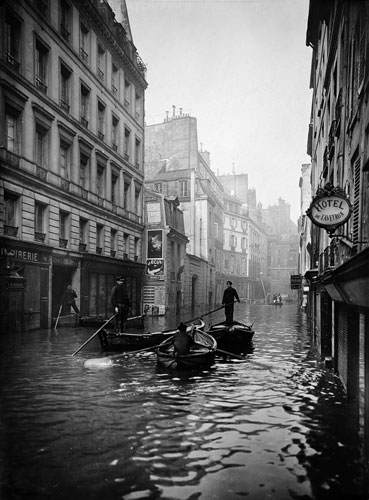
RUE-DE-SEINE
I don’t know what the writer of the Book of Genesis had in mind when he composed that ninth verse, but he provided an image that comes to my mind whenever I hear that the Passaic River has gone over its banks and once again swamped the homes of people who persist in living in its path.
And God said, “Let the water under the sky be gathered in one place, and let dry ground appear.” And it was so.
In other words, it took a command from God to get water to relinquish its superiority over earth, and the way I see it, water has never fully obeyed.
One example of the element asserting itself — just because it can — is described in “Paris Under Water” by Jeffery M. Jackson, an account of a flood in January 1910 that wrecked a large part of the city and some of its suburbs.

Marker indicates where the Seine crested, 20 feet above normal, on January 28, 1910.
Jackson, who is a history professor, explains that there was a complex of causes for this disaster. These included an unusually high amount of precipitation between June of 1909 and January of 1910 and relatively mild temperatures in western Europe that winter. In addition, Jackson writes, excessive deforestation upstream of Paris may have contributed to the deluge.
He also explains that late in the 19th century Paris had remade itself into a modern city, complete with an electric subway – the Metropolitan – and greatly expanded sewerage facilities. These very improvements, Jackson says, helped to create the calamity in 1910, because water pouring out of the river and bubbling up from the saturated ground had multiple conduits to carry it where it otherwise might not have gone — and certainly not so swiftly.

One citizen carries another through the flood water.
The flood brought with it all the problems of property loss, unemployment, and contamination that usually accompany such events, and the looting and profiteering as well.
Still, one of the most interesting and uplifting aspects of this book is Jackson’s account of how individuals and institutions rose to the challenge and helped the city and each other survive the flood.
Also engrossing is the author’s chronicle of the activities of Prefect of Police Louis Lepine, whose title described only a part of his responsibility, which included public health. Lepine, who had introduced scientific police techniques to Paris, was a dynamo during the flood, seldom resting as he personally oversaw the management of the city’s response to the crisis.
More recent events, such as our own Hurricane Katrina, have a way of dulling or even snuffing out our collective memory of natural disasters. This one, which in Jackson’s estimation has some lessons for our own time, is worth recalling.

One of the many postcards produced and sold during and after the disaster shows a scene that was repeated in many places in Paris -- citizens gingerly making their way over wooden walkways that were hastily constructed as the city fought back against the flood.
Books: “The Codes of Baseball”
June 1, 2010

MICKEY MANTLE

WILLIE MAYS
WHITEY FORD

DENNY McLAIN

JIM PRICE
NAPOLEON LAJOIE

TY COBB
Books: “FDR’S Funeral Train”
May 29, 2010
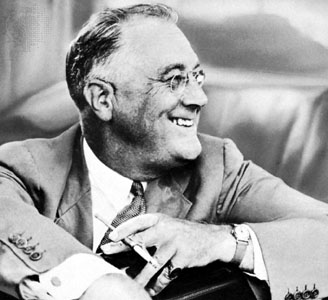
FRANKLIN ROOSEVELT
When I was growing up, I couldn’t wait for Andy the Mailman to bring the monthly magazines my mother subscribed to — especially Better Homes & Gardens, Woman’s Day, Good Housekeeping, Family Circle, and McCall’s.
Mostly, I liked the one-panel cartoons, and I looked forward to reading the humor column on the last page of BH&G, which appeared under the byline of Burton Hillis, which I learned only a couple of years ago was a pen name for Bill Vaughan.

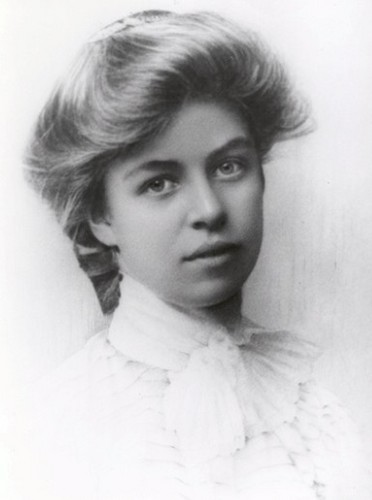
ELEANOR ROOSEVELT
My favorite feature, though, appeared in McCall’s. It was Eleanor Roosevelt’s Q&A column, “If You Ask Me.” She started writing that column in 1949 and continued until she died in 1961. I don’t know how old I was when I started reading it. I was only seven years old in 1949, so it might not have been then, but I must have been pretty young, because I can still recall my mother asking me why a boy my age wanted to read that column. I don’t know what answer I gave, but I remember being fascinated with Eleanor Roosevelt long before I fully understood who she was.
As I grew older, of course, I came to appreciate her character and the many contributions she made to American life.
My mind is on Mrs. Roosevelt just now because I recently reviewed Robert Klara’s interesting book, “FDR’s Funeral Train,” which is a chronicle of the transport of Franklin Roosevelt’s body from Warm Springs, Ga., where he died in April 1945, first to Washington, D.C., for a service in the East Room of the White House and then to Hyde Park, N.Y., for a funeral and burial at the Roosevelt home.
Klara provides a lot of details about the logistics of this enterprise — everything from the preparation of the president’s body and the selection of a 700-pound copper casket to the history and features of the engines and cars that made up the trains.
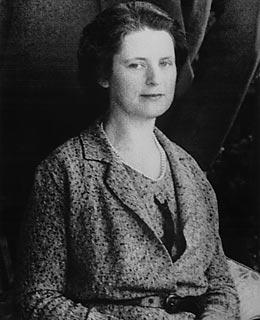
LUCY MERCER RUTHERFERD
Woven into this account, however, are the human stories — including the culmination of Franklin Roosevelt’s long liaison with Lucy Mercer Rutherferd. Mrs. Rutherferd had been Eleanor Roosevelt’s social secretary when FDR — with the presidency far in the future — began his affair with her. Eleanor Roosevelt discovered this relationship in 1918 and ultimately agreed to an arrangement in which she and FDR would remain married but would live separately, as it were, and he would not see Mrs. Rutherferd. The second part of that bargain didn’t last very long, and he continued to see Mrs. Rutherferd literally until the day he died. In fact, she was present when Roosevelt suffered the cerebral hemorrhage that caused his death.
Taken by surprise by her husband’s death, Eleanor Roosevelt traveled to Warm Springs and was, to all outward appearances, the picture of composure and dignity as she planned and participated in the rituals that led to the grave.
ELEANOR ROOSEVELT
During this sad trip, however, Mrs. Roosevelt not only confirmed what she had suspected — that FDR had continued to see Mrs. Rutherferd and that Lucy had been at Warm Springs when he died — but also that the visits between the two had been arranged with the connivance of various members of the president’s official and personal household — including the Roosevelts’ daughter, Anna.
Klara also relates in this book how the death of FDR affected Harry Truman, who had not been a member of FDR’s inner circle and had not been informed of important matters of state, including the fact that scientists in New Mexico were at that moment developing what they believed would be the most destructive bomb ever produced.

HARRY TRUMAN
However unprepared Truman may have been for his new role, Klara describes him as a man who kept his wits about him and did what had to be done. Roosevelt died in Georgia on a Thursday afternoon, and he was buried in upstate New York on the following Sunday. Truman planned to address a joint session of Congress on Monday, and he spent his time on the train from Washington to Hyde Park and back again working on that speech with his advisers. It was, Klara reports, a hit with Congress and with the public, as Truman promised to pursue Roosevelt’s policies, including FDR’s demand for unconditional surrender by both Germany and Japan. In a few months, Truman, who hadn’t been trusted with the secret of the bomb, would make the lonely decision to use it against Japan in order to put an end to hostilities in the Pacific.
Klara includes some detailed descriptions of the awkward political atmosphere on the trains as one administration was passing out of existence and another was taking control. The author also discusses the controversial security risk taken by organizers and participants in the Hyde Park funeral, as virtually the whole government traveled together on the train while the country was at war. The risk wasn’t far fetched; Klara notes that among the passengers — despite the high level of security — was a government operative who was a spy for the KGB.

A woman weeps over the death of Franklin Roosevelt. The president's widow said she never realized until she watched the crowds along the funeral train's route the dimensions of the public's devotion to FDR. / Life magazine photo
Book Review: “Top of the Order”
May 21, 2010

KIRBY PUCKETT
The only time I have carried on a conversation with a naked man, the man was Kirby Puckett. I met him in the Twins’ locker room after a game at Yankee Stadium, and although I had no real business there, and although he had no idea who I was, and although he had just finished playing nine innings and hadn’t showered yet, Puckett couldn’t have been friendlier. The conversation confirmed Puckett’s reputation as Mr. Nice Guy, which is a good reputation to go along with one of the outstanding baseball careers of the 20th century.
Unfortunately, Puckett’s image and Puckett himself eventually came to grief. He was accused and acquitted of sexually assaulting a woman at a Minneapolis restaurant, and he was described in a column by Frank Deford as someone very different from his teddy bear image. He also developed glaucoma and suffered a stroke and died when he was only 45.
Things like that happen to a lot of people, but they take on Shakespearean proportions when they happen to the kinds of heroes and flops that baseball creates in a way that other team sports seldom do. That’s because baseball, unlike other team sports, pauses so often to focus attention on an individual player at an individual moment in time. This is why baseball has contributed so much to literature and film.
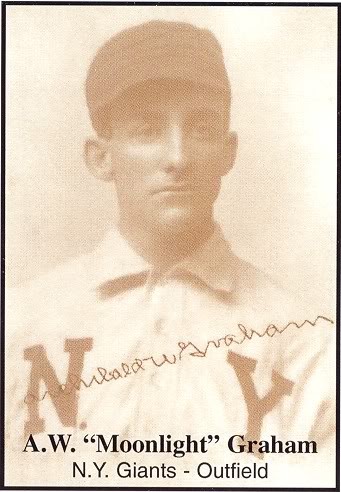
"MOONLIGHT" GRAHAM

JIM BOUTON
Em cee squared
May 17, 2010

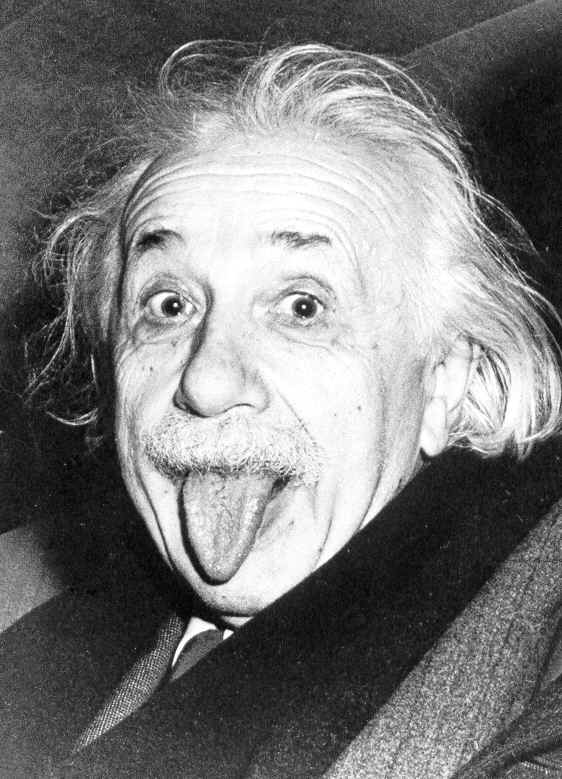
A blackboard with formulas written by Albert Einstein, preserved in the Museum of the History of Science at the University of Oxford.
 Several decades ago, I began to make a point of reading several books each year on subjects about which I knew little or nothing — including subjects that I found repulsive. Among those subjects have been mathematics and physics, both of which bedeviled me when I had to study them in high school and college. As I have mentioned here before, at least with respect to mathematics, I have derived a great deal of satisfaction from pondering these subjects when examinations and grades are not at issue, and I have found that those who claim that there is beauty and wonder in these fields are telling the truth
 That background explains why I grabbed the opportunity to review a popular biography entitled “Einstein: The Life of a Genius” by Walter Isaacson. This is a coffee table book that contains a limited amount of text in proportion to the number pages and illustrates its points with many photographs and also with facsimiles of several letters and documents. Among these are Einstein’s letter to Franklin D. Roosevelt in which the scientist advised the president to call together a group of experts to study the possibility of developing an atom bomb — something Nazi Germany was known to be doing at the time. As it happened, Einstein — a pacifist whose work in physics helped pave the way to such weapons — was considered too great a security risk to work on the project himself, what with him being a native of Germany, a socialist, and a Jew.
 Isaacson records that one of Einstein’s early physics instructors described him as “an extremely clever boy,” but added, “You have one great fault: You’ll never let yourself be told anything.” It wasn’t meant as compliment, but still, this tendency as much as anything else led to Einstein’s achievements in theoretical physics. Einstein — like Isaac Newton before him — would not accept anything as settled just because it was handed on to him by authoritative sources. He wondered and questioned and “experimented” with physical phenomena such as light and motion by forming images in his mind, and he changed the world.
Einstein is a curiosity in a way, because he was one of the most widely known celebrities of his time and his name is part of our language more than 50 years after his death, and yet most of us have little or no idea what he was up to. That doesn’t matter. He deserves his place in our culture if for no other reason than his persistence in questioning even his own conclusions.

FRANK MORGAN
To hear Josh Olson tell it, he’s courting all kinds of trouble by writing a script for a proposed follow-up to MGM’s classic film, “The Wizard of Oz.” According to the Los Angeles Times interview with Olson, who wrote the 2005 film “A History of Violence” — don’t tell me he’s not versatile — he expects some pushback from purist fans of the original. Actually, what he said was the following: “You want to write something that takes people back to the fondness they had for the original. I’m aware of the fact that there are a couple million people who will come to your house and burn it down if you don’t get it right” — which would, after all, be one more chapter in the history of violence.

JUDY GARLAND and TOTO
However, the script Olson submitted to Warner Brothers is not intended as a re-make of the Judy Garland film, which is why I used the term “follow-up” earlier. The proposed new film, to be called simply “Oz,” would deal with a granddaughter of Dorothy Gale who visits the Other Side. This really would be in keeping with the history of the story introduced in 1900 in the form of a children’s book (“The Wonderful Wizard of Oz”) by L. Frank Baum. The book and a play adapted from it a couple of years later were very successful, and Baum — apparently nobody’s fool — wrote a total of 14 Oz books. Those books, plus 19 written by Ruth Plumly Thompson, two written by Frank Kramer, one written by Rachel Cosgrove, and a final one written in 1963 by Eloise Jarvis McGraw and Lauren Lynn McGraw, are considered the “canon” of Oz literature. Obviously, in the aggregate they wander far from the premises of the original story.

The title page from the original "Oz" book.
Literary critics with a lot of time on their hands have tried over the years to read political messages and other serious subtexts into Baum’s work, but Baum himself insisted that he had intended only to write stories for the entertainment of children. Oz, in other words, was not like Wonderland.
Olson’s premonition of an angry mob — tongue in cheek, of course — put me to mind of the furious gang that gathered outside the Binney & Smith plant in Easton, Pa., about a decade ago to protest the retirement of certain colors in the Crayola spectrum.
Change can be a buster.
The LA Times blog is at THIS LINK.

Dorothy meets the Cowardly Lion in W.W. Denslow's illustration of "The Wonderful Wizard of Oz."
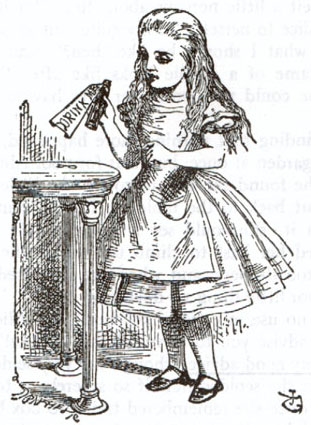
Sir John Tenniel's drawing of Alice
It’s one of the paradoxes of both history and human nature that the man who wrote some of the most enduring literature for children has been accused of pedophilia. I refer to Lewis Carroll — that is, the Rev. Mr. Charles Dodgson — author of “Alice’s Adventures in Wonderland” and “Through the Looking Glass and What Alice Found There.” The notion that Carroll had improper relations with under-aged girls evolved from his real relationships with females in general and young girls in particular — neither of which was entirely consistent with the norms of Victorian England — and his career as an amateur photographer, which included photographing naked young girls.
This characterization of Carroll has been debunked in the past, but it persists in the popular imagination, probably because the popular imagination would find a pedophile more interesting than the person Carroll seems to have been in reality. The issue is examined again in a new book by journalist Jenny Woolf, “The Mystery of Lewis Carroll.”
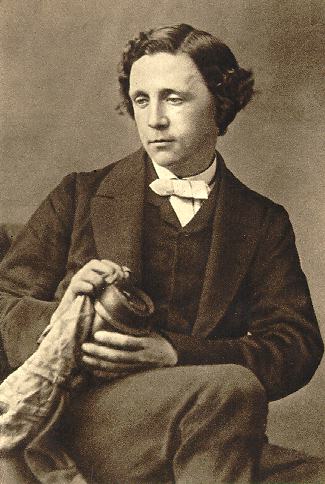
Lewis Carroll and his camera, 1863, in a portrait by Swedish photographer Oscar Rejlander
Based on her research of primary and secondary sources — and a certain amount of logic and common sense — Woolf comes to the conclusion not only that Carroll was not a pedophile, but that the most prominent features of his life and his mind militate against such a thing — that, in fact, he had a horror of abuse of women and children that was consistent with his horror of sin in general.
Woolf emphasizes a point about this issue that is useful to remember when we are reflecting on any historical figure. She points out that those who have charged Carroll with every crime from adultery to murder — one author even wrote that Carroll and a confrere were jointly Jack the Ripper — have often tried to interpret his behavior and his work without taking full account of the Victorian context in which he lived. The most telling evidence she presents, in fact, is that neither the children whom Carroll photographed nor their parents thought of the sittings as anything but proper, and that some of those children grew to adulthood and even old age with only the highest regard and affection for Carroll.
This is not to say that Carroll’s life was without its complications, including sexual ones. One important aspect of his life was odd even for that time, and it has to have figured prominently in some of the behavior that contributed to rumors about him then and since. Carroll took a position as a mathematics instructor at Christ Church, one of the colleges at Oxford. The school continued a medieval discipline in which a man accepting that position must receive holy orders as an Anglican deacon and remain celibate until he was ordained a priest, at which point he would take a parish, marry and begin a family.
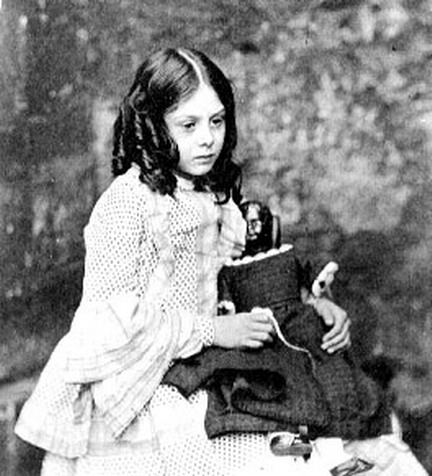
Lorina Liddell, in a portrait by Lewis Carroll. Lorina was an older sister of Alice Liddell, the namesake for the title character in Carroll's most famous works.
Although it was expected of him by everyone beginning with his father, a priest himself, Carroll postponed and eventually opted out of priestly ordination, which meant that — unless he gave up his position, which he could not afford to do — he opted out of married life and, therefore, sexual relations. At the same time, while he outwardly kept up the grim image of a Victorian college don, he maintained a lively social network, more often than not conducted in the company of women. He loved women, and he didn’t disguise that, and they were charmed by him. On one hand, these relationships — including private tet-a-tets in Carroll’s rooms, were not usual in Victorian England. On the other hand, Woolf explains, there is no evidence at all that any of them crossed the lines that everyone in that time and place knew to be unmovable.
Still, Woolf shows convincingly that Carroll at a certain point in his life began to grieve over some unstated offense that he perceived he had committed, and this guilt ran head-on into the strict sense of morality that he measured himself by throughout his life. It was this crisis, Woolf thinks, that at least in part inspired Carroll’s cultivation of friendships with young children, and especially young girls, who — in Victorian society — were regarded as the antithesis of sexual. In these relationships, Woolf argues, Carroll could have beauty and affection without the complicating ingredient of sexual attraction. And, of course, he could indulge in his lifelong fascination with word games and fanciful stories and children’s playthings.

Alice Liddell, for a time one of Carroll's child friends and the namesake for his most famous literary character. Carroll's portrait of her as a beggar girl has been used by some of his critics as evidence of peversion.
One of Woolf’s frustrations — and she is hardly alone in this — is that Carroll and his family seldom talked about his private life, not an unusual scruple for the time, and significant documentation of his life, including some of his diaries, were either redacted by his survivors or simply vanished.
Woolf does write about the possibility, or the likelihood, that the much-discussed rift between Carroll and the family of Alice Liddell — at whose request he committed the original “Alice” story to writing — may have had to do with his attention, not to Alice but to her attractive older sister Lorina. Marriage in those days often had little to do with romance, and the Liddell family may have had bigger plans for Lorina than a liaison with a math lecturer, and a mediocre one at that.
The Boston Globe’s review of Jenny Woolf’s book, which treats many aspects of Carroll’s life and work, is at THIS LINK.
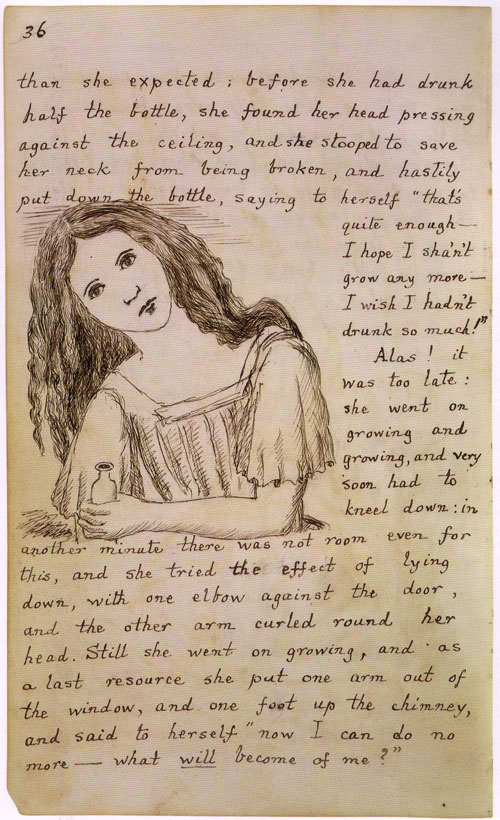
A page from "Alice's Adventures in Wonderland" with Carroll's own sketch of the title character.
 CharlesPaolino's Blog