They are not gone; they are away.
March 21, 2009
 Today I am making sfiha, a meat pie of Middle Eastern origin. I don’t know what a regulation sfiha consists of. I have seen many recipes in our cookbooks and on line. No two of them are the same, and none of them are like the ones I make. I learned to make sfiha from my mother, and she learned it from her mother. If my mother and grandmother made it this way, this way must be legitimate, I figure. Even if that weren’t true, I wouldn’t change anything. I make them this way partly because we like them this way, but also because it is a means of perpetuating the palpable presence in this world of my Lebanese grandmother – whom I did not know – and my mother. Perhaps it’s part of a larger neurosis, but I am very conscious of things like that. In order to make sfiha – the way I make it and they made it – I have to cut a whole bunch of celery into thin slices. Before I do, I remove the leaves. My mother said the leaves have a taste – not unpleasant but a little bitter – that the stalks do not have, and that taste has no place in sfiha. Not the way we make it. It’s just as well, because my Italian grandmother taught me to save celery leaves and eat them with olive oil and a little salt. A simple thing, but a great delicacy. I eat celery leaves that way because I like them, but also because the taste of them makes my grandmother’s influence on me and her care for me alive again in a material way. For the same reason, I eat cold, sliced, boiled potatoes with olive oil and a little salt. Grandma taught me that. There’s nothing quite like it because, as she told me, the neutral taste of the potatoes is a perfect medium for the subtle tastes – plural – in virgin olive oil. For a similar reason, I prepare hard-boiled eggs by mashing them with a fork until they are the consistency of powder, and then eat them – lightly salted – with a spoon. I learned that from my Lebanese grandfather, who sits with me whenever I have hard-boiled eggs. And I learned from my Italian grandfather to baste a grilling steak with a mixture of vinegar and olive oil. He stands there a step or two behind me while the aroma of the drops hitting the flame take me back to summer afternoons long gone and a man never forgotten.
“You talkin’ to me?”
March 20, 2009

President Obama was on Jay Leno’s show last night, and showed again how comfortable he is in his clothes. He could have changed seats with Leno, and the show would have been none the worse for it. But Obama has an annoying speech mannerism that I first noticed during the campaign and that showed up three or four times last night. When he is asked a question, he frequently takes a breath and begins the answer with,”Look ….” The inflection suggests impatience if not condescension. Cokie Roberts has the same mannerism with the same inflection. Maybe some coach can help Obama get rid of it. Of course, the context for this observation is that Obama is president of the United States, Roberts is an NPR political analyst, and I’m an unemployed journalist and, oh, such a critic.
“Hello, I must be going.”
March 20, 2009

BARACK OBAMA
The television networks are getting impatient with President Obama’s requests for prime time. He’s holding a press conference on Tuesday, and that will mean – among other things – that “American Idol” will have to shift to a Wednesday-Thursday schedule. More than that, the networks will again lose top-dollar revenue that they can never recoup. Doesn’t the economic recovery program apply to them, they ask. I had a fleeting thought that the problem could be solved simply by moving Obama’s prime-time appearances off the major networks; that would separate the men from the boys, as it were, when Neilsen reported how the president did when he was up against Adam Lambert. I’d like to cast the networks as villains in this, but I can see their point even if I don’t think their revenues are more important than a public well informed on what the president is thinking in the present circumstances. I don’t have to balance their books. What concerns me more is that Obama is already overexposed, and the public may get weary of him and stop listening in the same way that it stopped paying attention to the color-coded terrorism alerts from the previous administration. As it is, expectations were unreasonably high when he took office, and the weeks since then have disabused most people from thinking they’ll see postive results overnight or in a week or a month or a year. His live TV appearances – especially following on an administration that avoided such exposure – may still be raising expectations, but that is likely to wear off. I read somewhere today that Obama is considering a series of much shorter appearances – something along the lines of Franklin Roosevelt’s radio addresses.
That reminds me of the movie “Room Service” and a scene in which Groucho Marx is trying to convince a playwright to go home to Oswego, appealing to the young man to picture his mother waiting by the fireside. “We don’t have a fireside,” the playwright says. “No fireside?” says Groucho. “How do you listen to the president’s speeches?”
“Papa played the dobro this-a-way”
March 18, 2009

ADAM LAMBERT
This morning, I came across an account in the Los Angeles Times of last night’s “American Idol” broadcast. I missed it. How careless of me to have accepted an invitation to a dinner party on “Idol” night. Well, truth be told, I wouldn’t have watched it anyway. In fact, I have never seen more than a minute or two of an “Idol” broadcast, and that only two or three times when someone else was watching it. This has as much to do with my not watching television very much as it has to do with any objection to that show in particular. But what caught my attention in this article was the reference to the contestants’ “reverence for the most traditional of American genres – country music.” What did the writer mean by “country music”? How did country music – whatever the writer meant by it – become more “traditional” than folk music – whatever I mean by that? And, Miss Turner, what’s “reverence” got to do with it?
I presume the writer had a straight face when he or she wrote that several contestants delivered “solid but respectful versions of country standards by Garth Brooks, Dolly Parton, and Carrie Underwood.” That’s Carrie Underwood – the “American Idol” graduate who was salutatorian of her high school class in Oklahoma. And the writer soberly added that Adam Lambert’s “psychedelic, sitar-backed” rendition of “Ring of Fire” was – according to an audience member visiting from Missouri – “disrespectful to country music.”
If we owe some sort of “respect” to country music, is it to be found in the over-produced material that Dolly Parton has been disgorging for the past few decades? To me that’s as “country” as Jackie Wilson’s “Alone at Last” was classical. “Country” has the smell of stale beer about it. “Country” is what we used to find in the 1960s at the old Coral Bar in East Paterson when Elton Britt, a singer with gold hanging on his wall, would drive himself up from Maryland to perform for a few dozen patrons who would recognize his voice even if their vision was blurred. “Country” is what we found back then at open-ended shows at the old Mosque Theater in Newark, where headline acts sometimes had to be nudged off the stage to make room for Little Jimmy Dickens or Ray Price or Webb Pierce, who were waiting in the wings. If a singer appeared in a torquoise outfit covered with rhinestones, the clothes just emphasized the common nature of the man or woman inside. “Country” was real, and if there was anything to respect in it, it was the unfiltered, unapologizing reality. But then, “reality” has taken on a different meaning in our time.
“The swiftness of wind, the depth of the sea ….”
March 17, 2009
 One thing we can learn from St. Patrick is not to dismiss the ideas of other people as though they had no value. Patrick converted people from old Celtic religions to Christianity, but he seems to have realized the merit in those traditions. The prayer attributed to him and recorded after his lifetime in the Book of Armagh exhibits something easily overlooked about so-called pagan faiths – that they recognized perhaps more clearly than monotheistic religious communities sometimes do the immanence of the divinity in everything that exists. That came across to us in Iceland a couple of years ago when we accidentally came across a group of people welcoming the summer solstice with an ancient ritual that addressed the gods present in nature. My generation of Catholics was taught at an early age, from the old Baltimore Catechism, that God is “the Supreme Being who made all things and keeps them in existence.” In our eagerness to imagine God in a form we can understand – which often means turning him into a human image and, therefore, not God at all” – perhaps we miss the chance to understand what that means: “and keeps them in existence.” Patrick’s prayer implies that he did not miss that chance:
“I bind to myself today the power of heaven, the light of the sun, the brightness of the moon, the splendor of fire, the flashing of lightning, the swiftness of wind, the depth of the sea, the stability of earth, the compactness of rocks.”
Matthew 7:1
March 16, 2009

ARCHBISHOP FISICHELLA
A difference of opinion within the Catholic Church over a case of rape in Brazil calls attention to the destructive role that legalism and rhetoric can play in situations that are difficult enough on their own. This dialogue involves a nine-year-old girl who was raped – her stepfather is accused – and who underwent the abortion of twin fetuses after doctors determined that giving birth to the child would seriously endanger the girl’s life. I adhere to the Catholic position on abortion, but I don’t claim to have a pat answer for a girl who finds herself in such a situation, nor for her mother, who had to decide what to do. And the destructive rhetoric that I referred to stems from folks on both sides who think of abortion as a black-and-white issue. I don’t advocate relativism, but things like rape occur in the real world to real people, and that is the context for our discussion of abortion, whether we like it or not. At the same time, the question of the beginning of human life is far from settled, and that, too, must color the discussion.
In this case, Jose Cardoso Sobrinho, the archbishop of Recife, Brazil, publicly announced that the Catholic doctors who had participated in the abortion, and the girl’s mother, had incurred excommunication. Archbishop Sobrinho also said that the accused stepfather had not been excommunicated and offered the absurd, misogynistic rationale that abortion is a more serious sin than rape.
The church’s approach to this case provoked a strong negative reaction, but despite an initial endorsement from the Vatican, the National Conference of Brazilian Bishops said last week that the excommunications were improper, because they did not “take the circumstances into consideration” – a reference to the stress under which the girl’s mother acted and the fact that the doctors involved do not regularly perform abortions.
But Archbishop Rino Fisichella, president of the Pontifical Academy for Life, went further than that. Writing in L’Osservatore Romano, the Vatican newspaper, he upheld Catholic teaching on abortion but criticized the church in Brazil for acting in the first instance as though it were Thomas Becket tossing King Henry out of the fold – without regard to the “arduous” decision that was involved in this case, saying that such situations require “mercy.” Instead, Fisichella said, the girl “above all should have been defended, embraced, treated with sweetness, to make her think that we were all on her side – all of us, without distinction.” As though he were speaking to the girl, Fisichella wrote: “There are others who merit excommunication and our pardon, not those who have allowed you to live and to regain hope and trust.”
I don’t know anyone who has formed an opinion on abortion, one way or the other, out of meanness or callousness, but the emotional outbursts that accompany the public debate can be hurtful and are never helpful. Abortion is a difficult, heart-wrenching matter, complicated by seemingly unsolvable psychological, social, and economic problems. The intransigence and name-calling that often accompany the debate over this issue – to say nothing of the violence that has at times erupted – does not help. Archbishop Fisichella wrote that the inner conflict experienced by the doctors in this case should have been taken into account before they were held up to public oprobrium. I think that’s good advice to apply to any discussion of abortion.
“Roll ’em!”
March 16, 2009
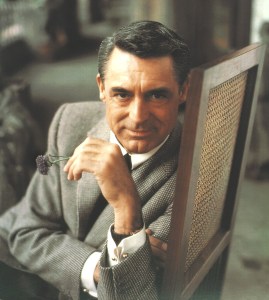
CARY GRANT
I don’t understand why a television channel that exists solely to present movies – and presents each movie with some kind of historical context – does not let the credits run at the end of the film. I am referring to Turner Classic Movies. It’s frustrating. Last night, for example, we watched “Talk of the Town,” a 1942 flick that starred Cary Grant, Ronald Coleman, and Jean Arthur. I was curious about the actor who played Coleman’s black valet, because the character was an elegant figure who exhibited a deep intellect and spoke with an almost Victorian propriety. No credits. I found out on IMDB that the actor was Rex Ingram, who was born on a riverboat in Mississippi and around 1916 became the first black man to earn a Phi Beta Kappa key at Northwestern University. Ingram – not to be confused with the white director of the same name – appeared in nearly 50 properties – most of them movies.

REX INGRAM
Anyone who goes to a movie with me knows enough not to get up before the screen goes dark for good, and I know I’m not the only one who likes to see the names of the best boy and the caterer and – especially important – the music credits. Frequently, too, there is a lot of care taken in choosing the music that plays over the credits. I would never turn off “Dominick and Eugene,” for instance, without watching the credits roll over “Goin’ Down to Rio.” But the least I expect is to read the names of the actors in case I want to find out more about them. But that’s me – never satisfied,
Say it ain’t so!
March 15, 2009
 There was a near miss at Totonno’s pizza joint on Coney Island. A fire – apparently originating in the coal used to fire the oven – has shut the place down, but word is that it will reopen. This place has been in the same location and operated by the same family since 1924. It’s the only pizza place in the States that can make that claim. The family has a few more locations, but this is the original. We went there last year, just before Memorial Day. It’s a kick. You can’t park around there when the beach is busy – as it was that day – and when you finally do arrive, you have to wait outside until someone tells you to come in. It’s that small; it can accommodate only a few people at a time. The interior looks as it should. In other words, nothing has changed there since the first Coolidge administration. The pizza is out of this world, and I don’t say that about most pizza. It’s at least as important that this place has lasted all this time, that it’s a tourist attraction but also a mainstay of its neighborhood. A story like Totonno’s can be told more and more rarely in this country. Having grown up frequenting such institutions – Doc Pawlek’s drug store, Izzy Kaufman’s appliance store, Old Mr. Birkmeier’s delicatessen, Louie Grossi’s shoe repair shop, and my own grandfather’s grocery store, virtually all of which are long gone – I treasure such spots where I can find still find them. Va bene, Totonno!
Netflix Update No. 2: “Junebug”
March 14, 2009

ALESSANDRO NIVOLA
Last night we watched “Junebug,” a 2005 film with Alessandro Nivola, Embeth Davidtz, Amy Adams, Benjamin McKenzie, and Celia Weston. The story concerns Madeleine (Davidtz), who owns an “outsiders” art gallery in Chicago. She gets wind of a primitive artist in North Carolina and decides to go in person to get him to sign on with her gallery. Her new husband, George Johnsten (Nivola), takes the trip with her in order to introduce her to his family, who live a short distance from the artist. This family – parents, a son, and the son’s pregnant and childish wife – Adams, who got an Oscar nomination for this performance – constitute a delicate balance of no-nothingism, introversion, and frayed nerves. Madeleine, who has not been prepared for this encounter and who understands nothing about this family or its environment, unwittingly becomes a kind of bizarro-world bull in the china shop. This film is an interesting psychological study of each of the major characters and a caution against judging folks based on their behavior alone. The director, Phil Morrison, likes silent landscapes and occasional black screens, as though he’s saying: “Hmmmm, let’s think about this for a minute.” That’s a good recommendation for the film as a whole. It’s the kind of film that requires at least one more person in the room – viewers are likely to discuss it as it evolves – and someone to talk with further later on.
“Cash or charge?”
March 13, 2009
 It’s a good thing we don’t always have to explain our behavior. If we did, I’d have to invoke temporary insanity or on-set senility to account for myself last night. When I left home to drive to Passaic, I thought there was barely enough gas in the Beetle to make the round trip. I pass two gas stations within the first mile and a tenth from home, but I didn’t stop. Before I got to the college – actually, it was during that stop-and-go traffic jam at the junction of Routes 46 and 3 – I already knew there wasn’t enough gas left to make it back to Whitehouse Station. I don’t know how many gas stations I pass on Routes 3 and 46 on the return leg, but I passed by that number, whatever it is. Once I got on Interstate 80 in Wayne, I knew my options would be limited. But I got on. As I headed south on I-287, I passed by chances to buy gas on Route 10 and again in Morristown. Somewhere south of Morristown, the warning light went on on the gas gauge. The needle was nudging the “E” when I saw what I knew was the sign for the Last Resort, an all-night Exxon station that is three miles from the highway. I did a lot of coasting, and gratefully paid $1.99 a gallon – cheap under the circumstances. Did I enjoy myself? Sure – I love white knuckles. Still, I realize that I didn’t measure up to the standard set by Kramer and Rick, the car salesman. Unlike them, I’ll never know how far I could have gone if I hadn’t done the sensible thing, the boring, ordinary thing. Even when Cosmo and Rick had safely reached the dealership – and had not yet plunged on toward The Ultimate – Rick said, “I learned a lot. Things are gonna be different for me now.” For me, I guess, they’ll always be the same.
 CharlesPaolino's Blog