Netflix 12: “Changeling”
June 23, 2009

ANGELINA JOLIE
We watched “Changeling,” a 2008 film produced and directed by Clint Eastwood and starring Angelina Jolie and John Malkovich. This film which, I gather from independent reading, sticks fairly close to the facts, recounts the story of a 1928 kidnapping case in Los Angeles. Walter Collins, a nine year old boy, disappeared from his home and was never seen again. A boy found several months later in DeKalb, Illinois, claimed to be Walter Collins, but Walter’s mother, Christine (played by Jolie), told police the boy was not her son. The LAPD – which at the time was ridden with scandal and under public pressure to solve the Collins case — insisted that the boy was Walter and that the mother was delusional. Eventually, under a prerogative the police had at the time, police Capt. J.J. Jones (played by Jeffrey Donovan) had the woman committed to the psychiatric wing of a Los Angeles Hospital. A seemingly unrelated immigration case led police to Gordon Norcott (played by Jason Butler Harner), a murderous Canadian whose arrest figured in the somewhat incomplete resolution of the complicated case.

JASON BUTLER HARNER
This film is two hours and 22 minutes long — and that’s after two scenes were cut from the final version. It is arresting, however, even for that long — and that’s due at least in part to the awareness that the bizarre events being portrayed on the screen actually occurred.
Angelina Jolie was nominated for a “best actress” Oscar for this role, but there were equally powerful performances by Harner and Donovan. Harner appears on the screen for the first time in an inocuous situation — his car has overheated — and he has no known connection to the story, but he plays that scene in such a way that it’s immediately apparent that there is something very wrong with him. The more we see of him, the more he makes our skin crawl.

JEFFREY DONOVAN
Jeffrey Donovan is effective as the bullheaded and myopic police captain. His behavior so defies simple logic that he would have fit in well at the trial of the Knave of Hearts. Donovan’s unyielding demeanor makes the character the personification of self-justifying bureaucracy. Malkovich presents a study of the Rev. Gustav Briegleb, a Presbyterian minister who campaigned against political corruption and other things he regarded as immoral, and who provided Christine Collins with support that turned out to be critical to her own well being. Briegleb is portrayed here as a radio preacher, but he was not a broadcaster in real life. He was also known to publicly express his anti-Semitism. However, this film sets out to tell the story of Christine Collins, not of Gustav Briegleb, and other sources suggest that Malkovich correctly plays the minister as tough and single-minded.
There are some upsetting albeit not overly graphic scenes involving murder and an execution, but these things are worth facing in a film that reminds us of how much damage can be inflicted on individual lives by corrupted public institutions.

JOHN MALKOVICH
Netflix Update No. 11: “Dear Frankie”
June 10, 2009

EMILY MORTIMER
We watched “Dear Frankie,” a 2004 movie shot in Scotland, directed by Shona Auerbach. The story concerns Lizzie Morrison, played by Emily Mortimer, a single mother who has spent years avoiding her husband, Davy, who physically abused her and their son, Frankie (Jack McElhone). As the film opens, mother and son — accompanied by Lizzie’s mother, Nell (Mary Riggans), have moved again to a seaport town in Scotland.
To shield Frankie from the hard facts of his past, Lizzie has maintained the fiction that the boy’s father is a merchant seaman who travels the world aboard HMS Accra. She regularly writes letters to Frankie over his father’s name — often including exotic postage stamps — and Frankie writes back in letters that Lizzie retrieves when they are returned to the post office.

JACK McELHONE
Frankie is deaf and rarely speaks — though he can — but he is exceptionally bright and excels at reading lips. One of his schoolmates discovers in a newspaper shipping news item that the Accra, which Frankie thinks is headed for the Cape of Good Hope, is actually to dock in that Scottish town in a few days. This information spurs Lizzie to search for a man who can pose as Davy for a few days. Through one of her few friends in town, she hires a man whom she requires to have “no past, no present, no future,” and he appears — with no name as well — in the form of Gerard Butler. He presents a grim figure, but it appears from the beginning of his relationship with the Morrison family that their bizarre situation piques first his curiosity and then his interest.

GERARD BUTLER
As Lizzie and the nameless imposter carry on the charade with Frankie, Nell discovers that Davy or someone on his behalf has been searching for Lizzie and is close at hand.
This story, which was written by Andrea Gibb, could easily have disintegrated into absurdity, but no such thing happens. Offbeat as they are, the issues in this film are family issues, and they are presented in terms of the private pain and fear and disappointment that are not strange to many people. These characters and their situation have about them the smell of reality, and Auerbach firmly grounds them with every aspect of her direction, but particularly with her use of real time — pauses, stillness, silence that some directors might be afraid to employ. There is, perhaps famously by now, a scene in which Lizzie and the imposter stare at each other for what seems like minutes, though it seems that long only because it is longer than many directors would dare to abandon motion and sound. In lesser movies, their mutual stare might have led to a cheap and easy consequence, but not here.
One caveat. As annoying as subtitles can be, we left them on, because some of the actors’ pronunciation makes the dialogue difficult to follow.
Netflix Update No. 8: “Holiday”
May 11, 2009

KATHERINE HEPBURN
We watched “Holiday,” a wonderful 1938 film directed by George Cukor, based on a play by Philip Barry. This was the second film based on that play; the first one appeared in 1930. Both were Oscar nominees.
The cast of this version included Katherine Hepburn, Cary Grant, Lew Ayres, Jean Dixon and Edward Everett Horton. In the guise of a romantic comedy, this is an attack on conformity, greed, materialism, and hypocrisy.
The premise is that a young and rising businessman, Johnny Case (Grant) falls in love with Julia Seton (played by a rather wooden Doris Nolan), the daughter of millionaire banker Edward Seton. Johnny and Julia plan to ask Edward Seton to give his blessing to their engagement, but Edward immediately tries to take control of everything from the timing of the engagement and marriage to the future of Johnny’s career. Johnny hasn’t told Julia, let alone Edward, that his own plan is to leave business and do nothing but travel for a few years while he sorts out the real purpose of earning money. He is encouraged in this mode of thinking by close friends, Nick and Susan Potter, played with biting humor by Horton and Dixon. When Johnny is introduced into the Seton household, he meets Julia’s brother Ned – played by the talented Lew Ayres – an alcoholic young man had been browbeaten by his father to give up childish ideas like composing music and attend to the family business.

LEW AYRES
Johnny also meets, and makes an immediate connection with, Julia’s sister Linda (Hepburn) who describes herself as the “black sheep” of the Seton family and makes no secret of her disdain for its values and social circle. In the museum-like Seton home, the only place Ned and Linda are comfortable is a “play room” outfitted by their late mother, a room to which Johnny and the Potters also eventually retreat – an effective reference to their rebellion against the established order “downstairs” and to the immaturity imputed to them by the stiff-necked patriarch and his pandering, two-faced satellites.
Eventually, Johnny has to decide on what terms – if at all – he is prepared to pursue his courtship of Julia and his potential career in the Seton empire.

CARY GRANT
This is a well written and well acted film (with the exception of Nolan). Its humor and sarcasm has stood the test of time. One has to get past the idea that Johnny Case would have been attracted to Julia Seton in the first place and that it would have taken as long as it did for their values to collide head-on. Over all, though, “Holiday” is an entertaining and uplifting experience.
Netflix Update No. 7: “The Notebook”
May 4, 2009

RACHEL McADAMS
We watched “The Notebook,” a 2004 film based on a Nicholas Sparks novel. The film stars Rachel McAdams, Ryan Gosling, James Garner and Gena Rowlands, and is directed by Rowlands’ son, Nick Cassavetes. The premise is that an elderly man (Garner) living in a nursing home regularly reads to a fellow resident (Rowlands) from a romantic story handwritten in a notebook. Flashbacks that make up the bulk of the movie tell the same story, a romance that began in 1940 in Seabrook, South Carolina, between teenagers Noah Calhoun (Gosling) and Allie Hamilton (McAdams). It becomes clear almost immediately that Garner and Rowlands are the older manifestations of Noah and Allie, and that the older Allie – suffering from dementia – is absorbed in the story but seldom remembers who she and Noah are or that this is the story of their own relationship.

RYAN GOSLING
This movie is well cast, well performed, and beautifully filmed and directed. Gosling and McAdams could not be more appealing as the quirky lumber yard worker and the vibrant young socialite. Garner and Rowlands are credible and moving as the aged couple. The only reservation I had was that I couldn’t connect Noah as played by Gosling with Noah as played by Garner. The two men are so dissimilar that it is difficult to make that leap and accept them as the same person. I thought it was particularly ill-advised at a certain point in the film to flash a montage of black-and-white photos of the young Jim Garner, who was nothing at all like Ryan Gosling. Still, the movie as a whole is absorbing and entertaining and avoids the mawkishness into which such a story could easily descend.
Netflix Update No. 6: “The Grass Harp”
April 27, 2009

PIPER LAURIE
Netflix Update No. 5: “I Remember Mama”
April 11, 2009
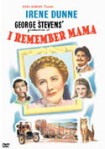 We watched the 1948 movie “I Remember Mama,” a masterpiece directed by George Stevens. I started to watch this on TMC a few weeks ago, but it would have ended at 2 a.m., so I gave up and put it in the Netflix queue. This film was based on Kathryn Forbes’ novel, a fictionalized memoir titled “Mama’s Bank Account.” The novel inspired a play that ran on Broadway for two years. The play led to this rather expensive movie, and the movie led to a successful television series – “Mama” – and an unsuccessful musical play, the last work of Richard Rodgers.
In all cases, the story concerns a Norwegian family living in San Francisco shortly after the turn of the 20th century. The central figure is Martha Hansen, the “Mama” of the title, played in this film by Irene Dunne and in the TV series by Peggy Wood. Irene Dunne was perfect in the role – as was Peggy Wood – and Dunne’s contributions were complemented by the fact that the rest of the casting was just as highly inspired. That included Barbara Bel Geddes as one of the Hansen daughters – Katherine – who narrates the film. Other choices that turned out to be strokes of genius were Rudy Vallee in the poker-faced role of a doctor who performs mastoid surgery on young Dagmar Hansen and Edgar Bergen in the comical role of a funeral director who courts one of Martha Hansen’s sisters.
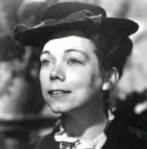
ELLEN CORBY
That sister, Trina, was played by Ellen Corby, who later played the grandmother on the TV series “The Waltons,” and appeared in nearly 230 movies and TV shows. In this film, she is charming in her earnestness and naievete. A pivotal member of the cast was the prolific Austrian actor Oskar Homolka as Chris Halverson, the blustering uncle of Martha Hansen and her three sisters – but, it turns out, the most complex figure in the film. Dunne, Homolka, Corby, and Bel Geddes were nominated for Oscars for this film, and Nicholas Musuraca won the award for black-and-white cinematography. He certainly deserved that for the evocative images of both turn-of-the-century San Francisco and the intimacy of a work-a-day home.
Everything about this film was carefully done. It deals with the most commonplace of issues, but does it with profound insight. The story is a reflection on the resources of the human spirit, presented in a manner that is both uplifting and convincing.
Netflix Update No. 4
April 6, 2009

JAKE
We watched the 2001 independent film “Lovely and Amazing.” This is my kind of movie: Virtually nothing happens. It’s a character study of a mother (Brenda Blethyn) and her two birth daughters and one adopted daughter (Emily Mortimer, Catherine Keener, and Raven Goodwin). All four have problems with self-esteem. Enough already with the self-esteem crises, yeah? But writer-director Nicole Holocefner plays this just about right, with a delicate balance of comedy and drama. And I love this – she makes it all right to want to smack every one of the principal characters into the real world even as one feels their pain and gets some sense of its origins. Holocefner may have written the part of the mother with Brenda Blethyn in mind. It’s the kind of poor-soul role that Blethyn excels in. Raven Goodwin, who wasn’t even 10 years old when this film was made, gives a very credible performance as a young black girl trying to fit into a white world. Jake Gyllenhaal has a fun role as a teenager who falls for Catherine Keener’s needy character, and Dermot Mulroney, playing a film star, has a unique scene with a naked Emily Mortimer – an actress with no confidence in herself – who insists that he tell her everything that is right and wrong with her appearance. That scene could have been exploitative and crass, but not the way Holocefner and the actors handled it.
Netflix update No. 3: “Next Stop Wonderland”
April 4, 2009

HOPE DAVIS
Last night we watched “Next Stop Wonderland,” a 1998 film about a young woman, played by Hope Davis, whose erratic, activist boyfriend, played by Philip Seymour Hoffman, leaves her once again – for good, this time, he says. While she’s getting used to life alone, her mother (Holland Taylor), who has issues of her own, places a personals ad for her daughter without asking permission. In the background is a young man (Alan Gelfant) who works as a plumber for his compulsive gambler of a father but volunteers his time at a Boston aquarium and is studying to become a marine biologist.
This movie is reminiscent of a 1983 TV flick, “Your Place or Mine,” that starred Bonnie Franklin and Robert Klein – who coincidentally plays a role in “Next Stop Wonderland.” In that movie as in this one the couple who are meant to be together don’t meet until the last few minutes.
“Next Stop Wonderland” is worth seeing. It is a careful study of character – and character flaws – and philosophical without being heavy-handed, amusing without being exploitative or patronizing. Brad Anderson’s quirky direction puts an element of the unexpected into every scene, and his use of Boston locations gives the whole film a rich visual context. Faces apparently are an important part of storytelling for Anderson, and I’m a sucker for that perspective. The casting – including the secondary parts – served the story well. It’s hard to look away from either Hope Davis or Alan Gelfant. All the performances are credible and witty.
It’s interesting that the posed promotional shot for this film has Davis sitting on top of a railroad car wearing a very short dress with a very low neckline. Her character in the movie is nothing at all like that. Apparently the ad department thought the potential audience was too stupid to be attracted to the movie on its own merits.
“Roll ’em!”
March 16, 2009

CARY GRANT
I don’t understand why a television channel that exists solely to present movies – and presents each movie with some kind of historical context – does not let the credits run at the end of the film. I am referring to Turner Classic Movies. It’s frustrating. Last night, for example, we watched “Talk of the Town,” a 1942 flick that starred Cary Grant, Ronald Coleman, and Jean Arthur. I was curious about the actor who played Coleman’s black valet, because the character was an elegant figure who exhibited a deep intellect and spoke with an almost Victorian propriety. No credits. I found out on IMDB that the actor was Rex Ingram, who was born on a riverboat in Mississippi and around 1916 became the first black man to earn a Phi Beta Kappa key at Northwestern University. Ingram – not to be confused with the white director of the same name – appeared in nearly 50 properties – most of them movies.

REX INGRAM
Anyone who goes to a movie with me knows enough not to get up before the screen goes dark for good, and I know I’m not the only one who likes to see the names of the best boy and the caterer and – especially important – the music credits. Frequently, too, there is a lot of care taken in choosing the music that plays over the credits. I would never turn off “Dominick and Eugene,” for instance, without watching the credits roll over “Goin’ Down to Rio.” But the least I expect is to read the names of the actors in case I want to find out more about them. But that’s me – never satisfied,
Netflix Update No. 2: “Junebug”
March 14, 2009

ALESSANDRO NIVOLA
Last night we watched “Junebug,” a 2005 film with Alessandro Nivola, Embeth Davidtz, Amy Adams, Benjamin McKenzie, and Celia Weston. The story concerns Madeleine (Davidtz), who owns an “outsiders” art gallery in Chicago. She gets wind of a primitive artist in North Carolina and decides to go in person to get him to sign on with her gallery. Her new husband, George Johnsten (Nivola), takes the trip with her in order to introduce her to his family, who live a short distance from the artist. This family – parents, a son, and the son’s pregnant and childish wife – Adams, who got an Oscar nomination for this performance – constitute a delicate balance of no-nothingism, introversion, and frayed nerves. Madeleine, who has not been prepared for this encounter and who understands nothing about this family or its environment, unwittingly becomes a kind of bizarro-world bull in the china shop. This film is an interesting psychological study of each of the major characters and a caution against judging folks based on their behavior alone. The director, Phil Morrison, likes silent landscapes and occasional black screens, as though he’s saying: “Hmmmm, let’s think about this for a minute.” That’s a good recommendation for the film as a whole. It’s the kind of film that requires at least one more person in the room – viewers are likely to discuss it as it evolves – and someone to talk with further later on.
 CharlesPaolino's Blog