
FRANK MORGAN
To hear Josh Olson tell it, he’s courting all kinds of trouble by writing a script for a proposed follow-up to MGM’s classic film, “The Wizard of Oz.” According to the Los Angeles Times interview with Olson, who wrote the 2005 film “A History of Violence” — don’t tell me he’s not versatile — he expects some pushback from purist fans of the original. Actually, what he said was the following: “You want to write something that takes people back to the fondness they had for the original. I’m aware of the fact that there are a couple million people who will come to your house and burn it down if you don’t get it right” — which would, after all, be one more chapter in the history of violence.

JUDY GARLAND and TOTO
However, the script Olson submitted to Warner Brothers is not intended as a re-make of the Judy Garland film, which is why I used the term “follow-up” earlier. The proposed new film, to be called simply “Oz,” would deal with a granddaughter of Dorothy Gale who visits the Other Side. This really would be in keeping with the history of the story introduced in 1900 in the form of a children’s book (“The Wonderful Wizard of Oz”) by L. Frank Baum. The book and a play adapted from it a couple of years later were very successful, and Baum — apparently nobody’s fool — wrote a total of 14 Oz books. Those books, plus 19 written by Ruth Plumly Thompson, two written by Frank Kramer, one written by Rachel Cosgrove, and a final one written in 1963 by Eloise Jarvis McGraw and Lauren Lynn McGraw, are considered the “canon” of Oz literature. Obviously, in the aggregate they wander far from the premises of the original story.

The title page from the original "Oz" book.
Literary critics with a lot of time on their hands have tried over the years to read political messages and other serious subtexts into Baum’s work, but Baum himself insisted that he had intended only to write stories for the entertainment of children. Oz, in other words, was not like Wonderland.
Olson’s premonition of an angry mob — tongue in cheek, of course — put me to mind of the furious gang that gathered outside the Binney & Smith plant in Easton, Pa., about a decade ago to protest the retirement of certain colors in the Crayola spectrum.
Change can be a buster.
The LA Times blog is at THIS LINK.

Dorothy meets the Cowardly Lion in W.W. Denslow's illustration of "The Wonderful Wizard of Oz."
“Poor, poor little Alice!” — G.K. Chesterton
February 27, 2010

MIA WASIKOWSKA
So Tim Burton’s “Alice in Wonderland” opened in London, and Chris Tookey of the Daily Mail says it’s long on visuals and short on story. Tookey’s take — get it? — is that Linda Wooverton diluted the project with her attempt to write a sequel to Lewis Carroll’s “Alice” books instead of re-telling the original stories — or, at least, one of them. So everybody — including Mia Wasikowska as Alice, Johnny Depp as the Mad Hatter, and Anne Hathaway as the White Queen — looks great, but has nowhere to go.
“The story becomes a very different beast from the ones Lewis Carroll created,” Tookey writes. “It’s a tale of feminist empowerment, with an entrepreneurial, pro-capitalist ending that is unlikely to endear it to readers of the Guardian.” In other words, it’s a 3-D version of the health-care summit.

Sir John Tenniel's drawing of the Jabberwock
According to Tookey’s account, a central issue in this tale is that the Red Queen has enlisted the Jabberwock, the Jubjub Bird and the Bandersnatch as enforcers in her reign of terror. In Carroll’s dream within a novel, of course, these were characters in a poem, not “real” creatures. Alice reads about them in a looking-glass book, which means a book in which the print is backwards so that one has to hold it up to a mirror in order to read it.
This poem, which Carroll meant as a parody of overblown poetry and pointless criticism, has been subject to so much serious study that it’s a shame Carroll didn’t live to see it. G.K. Chesterton remarked on this in 1932: “Poor, poor, little Alice! She has not only been caught and made to do lessons; she has been forced to inflict lessons on others.”
“Jabberwocky,” incidentally, is a particular challenge to translators who want to make “Alice” available to the non-English-speaking world. There’s a French version that begins: Il brilque: les toves lubricilleux / Se gyrent en vrillant dans le guave …. A German translation begins: Es Brillig war. Die schlichte Toven / Wirrten und wimmelten in Waben ….
Chris Tookey’s review of Tim Burton’s film is at THIS LINK.
“Let me tell you about Sandy Dennis: There should be one in every home.” — Walter Kerr
January 11, 2010
Sandy Dennis Foundation
Turner Classic Movies picked an off-peak hour — 6 p.m. yesterday — to show “Sweet November,” a movie we weren’t familiar with, starring Anthony Newley and the unique actress Sandra Dennis. Knowing it was a Sandra Dennis movie, we actually planned dinner so that we’d be done in time to watch — and were we ever glad we did.
This 1968 film tells an offbeat story about a young woman, Sara Dever, who — in a disingenuous way — charms a series of men into moving in with her for a month each. Sara is, by most standards, mad, but she is also irresistible in a way that Sandra Dennis was irresistible. The men who become her temporary lovers — arriving at the stroke of midnight on the first day of the month, leaving at the stroke of midnight on the last — are chance encounters, but in each she perceives some weakness, some flaw, and she helps him overcome it in 28, 30, or 31 days.

ANTHONY NEWLEY
Sara insists on the schedule. No man is to remain even a minute more than his allotment. Some are better than others at living up to this part of the bargain. The system begins to run amok when Sara takes in Charlie Blake, a seemingly unctuous Englishman who inherited a lucrative box-manufacturing company and is trying to expand it in the United States. As Charlie’s month, November, slips away, he is less and less inclined to part company with Sara. He is also increasingly concerned that her insistence on his departure has to do with something more — something darker — than her therapeutic routine.
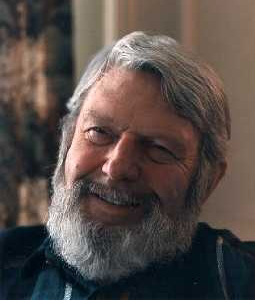
THEODORE BIKEL
The cast of this film includes Theodore Bikel as Alonzo, a vegan sign painter and Sara’s one true confidant.
All the performances are moving, and Sandra Dennis is as good as she ever was on film, blurring the distinction between the actress and the character through inimitable speech and mannerisms and deep emotional insights. I had the good fortune to meet this actress on two occasions, and I found her just as mesmerizing as Sara seems to be in this film — and for many of the same reasons.
“Sweet November” was remade in 2001 with Keanu Reeves and Charlize Theron. I haven’t seen that version, but from what I’ve read, it was a laughing stock. It might have been a bad film altogether, but even if it wasn’t, I doubt that many people who have seen Sandra Dennis play Sara Dever would want to see anyone else in the part.
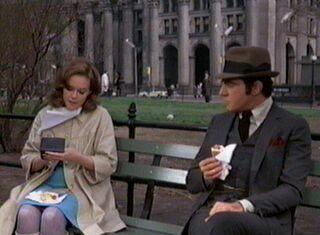
Sandra Dennis and Anthony Newley in "Sweet November"
Netflix Update No. 21: “Millions”
October 19, 2009

ALEX ETEL
We watched “Millions,” a British fantasy from 2004 in which a seven-year-old boy finds a small fortune in English pounds and learns a few things about the good and bad potential in money.
Frank Cottrell Boyce adapted his novel for this screenplay and the film is directed, with a lot of whimsy, by Danny Boyle.
The story revolves around a fictional event, the deadline for Britons to either deposit their pounds in the bank or convert them into euros. A very large amount of the obsolete currency is being shipped by rail to a destination where it will be burned. A ring of thieves conspire to steal the money and toss it off the train bag by bag to be recovered by colleagues who are waiting trackside. One of the bags goes bounding into a cardboard “rocket ship” and brings it crashing down onto young Damian Cunningham (Alex Etel), who constructed it out of cartons and was playing inside.

LEWIS McGIBBON
Damian confides in his older brother Anthony (Lewis McGibbon), and the brothers immediately disagree on how to dispose of the cash before it becomes worthless. Damian, who is obsessed with saints to the point that he regularly meets and converses with them, wants to use the money to help the poor — though he isn’t quite sure what condition qualifies as “poor.” Anthony wants to spend some of the money on creature comforts and invest the rest — in real estate, for instance.
The windfall, and the manner in which the boys handle it, eventually brings their father, Ronnie (James Nesbitt), to grief — as though he didn’t have enough trouble, what with being recently widowed and trying to shepherd his sons on his own. The domestic and financial matters are further complicated when Ronnie meets and connects with, as it were, an attractive woman named Dorothy (Daisy Donovan), who met the boys — and inadvertently discovered their wealth — while conducting a charity drive at their school. In the end, thanks to filthy lucre, all the principals learn something about themselves and about each other.

KATHRYN POGSON
This is a difficult film to categorize, because it mixes some childhood hijinx with some serious themes. I have found some heated debate on movie web sites about whether it is even suitable for children, although the two boys dominate most of the scenes. Among the most ingenious and entertaining passages are Damian’s encounters with saints, including Joseph, Peter, Francis of Assisi, Nicholas, and Clare. These are not necessarily reverent portrayals, although the insight Damian gains from these conversations is usually therapeutic. And, after all, these are not presented as the actual saints but the saints as they exist in the imagination of a seven-year-old boy. Kathryn Pogson as St. Clare (“patron saint of television … it keeps me busy”) and Enzo Cilenti as St. Peter (“I’m on the door”) are especially hilarious.
Approach this with an open mind, and it’s a worthwhile experience.

LEWIS McGIBBON and ALEX ETEL
I learned it in the movies
August 9, 2009

TOM HULCE
The Times of London, on its web site, presents its candidates for the ten most historically inaccurate movies. The bad news is that all but two were made before 1999, which — if one were to take this seriously — would suggest a fearsome and precipitous trend.
The earlier of the two monstrosities that were made before ’99 was “Amadeus,” the 1984 hatchet job on Antonio Salieri in which Tom Hulce played Mozart. The second was “Braveheart,” which I understand is a significantly inaccurate account of the life of a 13th century Scottish hero, Sir William Wallace. I don’t know anything about Wallace, which is to the point: If I had overlooked the fact that Mel Gibson starred in this film and had gone to see it, I might have accepted the account as roughly correct.

ANNE BANCROFT
Why The Times focused its attention mostly on the past decade I am not aware; maybe it reflects the level of confidence the editors have in their audience. Of course, inaccurate historical films have a proud history that extends back to decades before “Amadeus” appeared. Virtually every film based on the Hebrew and Christian scriptures, for example, tries to outdo the original writers — even one of my favorites of that genre, Franco Zefferilli’s “Jesus of Nazareth,” made for television in 1977. Zef famously took pains to place the events of the gospels in their proper historical context, but he couldn’t restrain the tinkering hand. Like all dramatists, he had to portray poor Mary Magdalene, played by Anne Bancroft, as a prostitute — indeed, show her in a scene with one of her clients — even though there is no support for that idea. In Zefferelli’s tale, Barabbas — encouraged by a well-meaning Judas Iscariot — personally invites Jesus to support an armed rebellion against the Roman occupation of Palestine.

VAN HEFLIN
And as long ago as 1942, the year I was born, Van Heflin starred in the mercifully long-forgotten “Tennessee Johnson,” which purported to be a biography of Andrew Johnson, 17th president of these United States and a particular obsession of mine. The film had a pretty good cast, including Ruth Hussey, Lionel Barrymore, and Noah Beery, but the title itself set the tone for the movie as history: Nobody ever called the man “Tennessee Johnson.” The climactic scene in which Johnson goes to the floor of the Senate to defend himself against charges of impeachment was wholly fabricated. In fact, Johnson’s counsel — recalling how he came to be impeached in the first place — would not hear of him appearing at the trial for fear of what he might say. Sort of the Joe Biden of his day, in that respect.
At any rate, decide for yourself on the The Times’ choices, available at this link:
Sui generis
August 5, 2009

GERTRUDE BERG
A few months ago, I wrote in this journal that my wife and I had discovered and watched on line a few episodes of the television series “The Goldbergs.” Those episodes are at http://www.archives.com.
After I wrote that blog, I heard from a publicist who was handling a new documentary film about the owner, writer, and star of “The Goldbergs” — Gertrude Berg — who was one of the most remarkable women of the second half of the 20th century. As a result of that contact, I wrote the following story, part of which has appeared in the Courier-Post of Cherry Hill and has been picked up on other blogs:
When the U.S. Postal Service issues its “Early TV Memories” stamps this summer, don’t look for Gertrude Berg.
The New York City native, who 80 years ago created the domestic situation comedy, and became a media mogul, was not included with the likes of Lucille Ball and Harriet Nelson, who decades later followed her into American homes.
But Berg is being reintroduced to the American public in a documentary film – “Yoo Hoo, Mrs. Goldberg” – written and directed by Aviva Kempner.
The title evokes the phrase associated with Berg during the radio and television runs of the show she created and controlled, most widely known as “The Goldbergs.”
The principal character, Molly Goldberg, and her neighbors in a Bronx apartment building, interacted by leaning out their windows and calling: “Yoo Hoo, Mrs. Goldberg … Yoo Hoo, Mrs. Bloom.”
From her window, Molly – portrayed by Berg – invited listeners and viewers into the Goldberg household to share the lives of her husband, Jake; their children, Sammy and Rosalie; and Molly’s brother, David Romaine.
The show ran on radio from 1929 to 1946 – five days a week for much of that time – and on television from 1949 to 1956. Berg herself wrote every script in longhand.
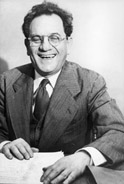
PHILLIP LOEB
There were also a stage play, a movie, a lucrative vaudeville tour, a comic strip, a jigsaw puzzle, a newspaper column, a line of women’s dresses, and a popular cookbook – although Berg couldn’t cook.
Berg’s rise to prominence, Kempner emphasized, occurred “at the time of the greatest domestic anti-Semitism in America, and during the rise of Adolf Hitler in Europe.’’
Berg presented the family as Jewish – adopting a mild Yiddish accent and a unique use of language that became a hallmark of the character:
As Molly shows off a hat, a neighbor asks: “With what dress are you going to wear it?’’
“With mine periwinkle,’’ Molly answers, striking a pose: “Visualize!”
And Berg didn’t shy away from difficult issues affecting Jews.
The documentary points out that in 1933, the year Hitler became dicator of Germany, she had a rabbi conduct a Seder service on the program. And after Kristallnacht in 1938, she wrote an episode in which a stone smashed an apartment window while the Goldbergs were celebrating Passover; Molly calmed the children and urged Jake to continue leading the Seder.
“And yet,’’ Kempner said, “Molly Goldberg was universal. You didn’t have to be Jewish to love her.’’
This urban mother first appeared on radio a month after the stock market crash, and the Goldbergs became so important to the national psyche during the Great Depression, as people maintaining the family circle in spite of want, that Franklin Roosevelt himself acknowledged it.
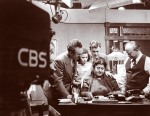
THE CAST OF "THE GOLDBERGS"
Kempner – based in Washington, D.C. – made the documentary through her Ciesla Foundation, whose goal is to “produce films about under-known Jewish heroes.” Kempner – whose work includes a 2000 film about baseball legend Hank Greenberg – said that although the Gertrude Berg film is complete, she is still raising money to pay for it.
The new film includes vintage photos and motion pictures and input from members of Berg’s family, actors, her biographer and others, including U.S. Supreme Court Justice Ruth Bader Ginsburg.
The story they tell has its dark sides.
Berg, born in 1898, did not grow up in the kind of setting she portrayed in her shows.
“She never had a nurturing mother like Molly Goldberg,’’ Kempner said. “She created what she didn’t have.’’
Berg’s own mother sunk into depression after the early death of her son and ended her life in a mental institution. Berg’s father badgered Gertrude into working at resorts he opened in the Catskills and in Florida but never supported her career as an actress and producer.
By contrast, her husband, Lewis Berg, a chemical engineer, typed many scripts from his wife’s handwritten originals.
Especially unsettling in Gertrude Berg’s life was the impact of “Red Channels,” the publication that purported to expose Communists working in radio and film.
One of those identified was Philip Loeb, an actors’ union leader, who played Jake Goldberg on the television series. Berg herself was listed as a “sympathizer.”
CBS and her sponsor pressured Gertrude Berg to fire Loeb. She refused, and her show was cancelled. NBC eventually picked up the show, but Loeb had accepted a cash settlement out of consideration for Berg and the other actors. Blacklisted from radio and film, he committed suicide in 1955.
Berg won an Emmy for her portrayal of Molly Goldberg, and a Tony for her 1959 Broadway performance in “A Majority of One,” and her autobiography was a best seller.
Still, only a small percentage of Americans today know who Gertrude Berg was, Kempner said, “and I want to restore her correct place in our cultural history.’’
The home web site for the film is at http://www.mollygoldbergfilm.org/home.php Information about theaters showing the film is available there.
The Ciesla Foundation web site is at http://www.cieslafoundation.org/
Netflix Update No. 14: “Enchanted April”
July 27, 2009

JOAN PLOWRIGHT
We watched “Enchanted April,” a production that was made for British television in 1991 and was released to American theaters the following year. It was nominated for three Oscars and won two Golden Globe awards.
This is sort of a fantasy about four British women – previously strangers to each other – who rent a castle on the coast of northern Italy for a month-long vacation from lives that have become stifiling — in a different way for each of them. Lottie Wilkins (Josie Lawrence) who instigates the sojourn, is suffocating in her relationship with a husband who appreciates her cooking but shows her no affection and makes her account, in writing, for every penny she spends.

JOSIE LAWRENCE
Rose Arbuthnot (Miranda Richardson) is a devout woman married to a tipsy writer whose books focus on the lives of scandalous women in history and who describes his wife as “a disappointed madonna.”
Mrs. Fisher (Joan Plowright) is an aged socialite who is preoccupied with her circle of notable literary friends, all of whom have been dead for many years.
Caroline Dester (Polly Walker) is a stunning member of the titled elite who is constantly the center of attention, but not the sort of attention that contributes to her emotional wellbeing.

POLLY WALKER
This movie, much of it filmed at the villa that inspired the 1920 novel on which it is based, is visually enchanting. That turns out to be an appropriate quality, because the story — both dramatic and humorous in its way — depends on faith in enchantment. No matter what the four women, and their unexpected guests, may have intended when they traveled to Italy, the results of their month among the lush green hills overlooking the sea transform all of them for good.
The casting is flawless and the performances are engrossing. This film has received a lot of compliments, and they all are richly deserved. I’m not sure a person can watch it once and be satisfied.

JACK SCANLON
We watched “The Boy in the Striped Pajamas,” a 2008 film based on John Boyne’s novel for young adults.
This movie is most effective at portraying people who can rationalize almost any behavior on the grounds that it is their duty to some entity that they perceive as being larger and more important than any individual. One doesn’t have to look too far to find places to apply this model.
The story has to do with an eight-year-old boy, Bruno, played by Asa Butterfield, whose father is a highly placed officer in the German army during World War II. The boy and his teenaged sister admire their father’s stature without thinking about the nature of the regime that gave it to him. As the movie opens, the father, played by David Thewlis, informs his family that he has a new assignment that will force them to leave their opulent house in Berlin and move to “the country.” The “country” home turns out to be a stark mansion located within eyeshot of a concentration camp – a fact the father tries to hide from his children, and particularly Bruno.

ASA BUTTERFIELD
But Bruno, being an eight-year-old boy with fantasies about exploring, is curious about what he thinks is a farm beyond the barbed-wire fence he first sees from the window of his room. Disregarding his mother’s instructions, he wanders through the woods until he reaches the fence, and there he makes friends with one of the inmates, Shmuel. Shmuel, also eight years old, disabuses Bruno of the idea that the camp is a farm, but Shmuel does not understand why he and his family are in the camp or why some of his relatives go off with “work crews” and never return. What Bruno does gradually learn is that he is supposed to hate Jews, but that Shmuel, a Jew, does not seem to him an enemy. One can’t discuss the outcome of their friendship without spoiling the experience of seeing this film for the first time.

DAVID THEWLIS
Appreciating this film requires some suspension of credibility. We are to believe, for example, that Bruno’s mother does not know until she has moved to “the country” and lived there for some time exactly what takes place in the camp her husband oversees – that Jews and presumably others who were distasteful to the Nazis are gassed and their bodies incinerated. We are also to believe that Bruno and Shmuel can carry on a friendship through the camp fence, meeting there daily in broad daylight, even playing checkers, without being discovered.
Despite those issues, this movie delivers its message with a wallop. Thewlis, and Vera Farmiga as the mother, give chilling portrayals of the impact Naziism had on the inner selves of individual men and women. Both boys are also very effective in their roles; Jack Scanlon is a heartbreaker.
Netflix Update No. 8: “Holiday”
May 11, 2009

KATHERINE HEPBURN
We watched “Holiday,” a wonderful 1938 film directed by George Cukor, based on a play by Philip Barry. This was the second film based on that play; the first one appeared in 1930. Both were Oscar nominees.
The cast of this version included Katherine Hepburn, Cary Grant, Lew Ayres, Jean Dixon and Edward Everett Horton. In the guise of a romantic comedy, this is an attack on conformity, greed, materialism, and hypocrisy.
The premise is that a young and rising businessman, Johnny Case (Grant) falls in love with Julia Seton (played by a rather wooden Doris Nolan), the daughter of millionaire banker Edward Seton. Johnny and Julia plan to ask Edward Seton to give his blessing to their engagement, but Edward immediately tries to take control of everything from the timing of the engagement and marriage to the future of Johnny’s career. Johnny hasn’t told Julia, let alone Edward, that his own plan is to leave business and do nothing but travel for a few years while he sorts out the real purpose of earning money. He is encouraged in this mode of thinking by close friends, Nick and Susan Potter, played with biting humor by Horton and Dixon. When Johnny is introduced into the Seton household, he meets Julia’s brother Ned – played by the talented Lew Ayres – an alcoholic young man had been browbeaten by his father to give up childish ideas like composing music and attend to the family business.

LEW AYRES
Johnny also meets, and makes an immediate connection with, Julia’s sister Linda (Hepburn) who describes herself as the “black sheep” of the Seton family and makes no secret of her disdain for its values and social circle. In the museum-like Seton home, the only place Ned and Linda are comfortable is a “play room” outfitted by their late mother, a room to which Johnny and the Potters also eventually retreat – an effective reference to their rebellion against the established order “downstairs” and to the immaturity imputed to them by the stiff-necked patriarch and his pandering, two-faced satellites.
Eventually, Johnny has to decide on what terms – if at all – he is prepared to pursue his courtship of Julia and his potential career in the Seton empire.

CARY GRANT
This is a well written and well acted film (with the exception of Nolan). Its humor and sarcasm has stood the test of time. One has to get past the idea that Johnny Case would have been attracted to Julia Seton in the first place and that it would have taken as long as it did for their values to collide head-on. Over all, though, “Holiday” is an entertaining and uplifting experience.
The final frontier … again.
May 7, 2009

WILLIAM SHATNER
Judging from the reviews, I might see the new “Star Trek” film after having forsaken the Enterprise when the first television series ended. I don’t know why that happened, because the first series was must-see in our house. We wouldn’t schedule any activities away from home on “Star Trek” night.
Back in those days, I was driving by a theater here in Jersey and saw that William Shatner was going to appear there in “Period of Adjustment.” It seemed like an odd idea to me at first, but I learned later that Shatner had played stage comedy early in his career. Also, I realized after I had thought about it, his character on “Star Trek” often had comic overtones. I took the opportunity to interview Shatner for a preview of “Period of Adjustment.” It wasn’t a very satisfying experience. He answered as many questions as possible with single syllables. He was very good in the play.

WILLIAM SHATNER
Shatner appeared at the same theater a year or so later, and I interviewed him again. That time, he talked almost compulsively – in fact, at one point he came up for air and asked, “How the hell are you going to write this?” Several years later, I interviewed him yet again – by phone – for an advance on an appearance he was making at a local college. I mentioned to him that I he and I had spoken twice before, and he asked, “Have you learned anything since then?”
Some people don’t like Shatner’s acting – several have told me they find his syncopated speech contrived and annoying. I don’t agree; I like his acting, including that peculiarity in his speech.

WILLIAM SHATNER
I find his appearance a little unsettling. He looks like he’s full of cortisone.
One of my favorite examples of Shatner’s work is “The Andersonville Trial,” a 1970 television movie directed by George C. Scott, based on Saul Levitt’s play of about a decade before. Shatner played Gen. N.P Chipman, who was judge advocate of the military court that tried Capt. Henry Wirz, who had been commandant of a prison camp for Confederate prisoners. Shatner was a perfect fit for the courtroom drama, whose cast included Richard Basehart, Buddy Ebsen, Jack Cassidy and Martin Sheen.
It’s available from Netflix and I wrote a review of it for this blog. The review is at THIS LINK.
 CharlesPaolino's Blog