“Cooler heads should have prevailed.” — Barack Obama
July 24, 2009
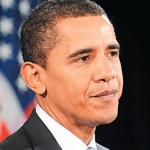
PRESIDENT OBAMA
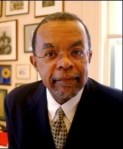
I’ve thought about this for a couple of days, and I can’t help feeling that President Obama, whose discretion I usually admire, should have stayed out of the controversy over the arrest of Henry Louis Gates. Twice listening to his remarks, made at a White House press conference, reinforced that opinion.
The overarching reason why the president should have kept his counsel because, juridically speaking, the matter is none of his business. It interested him because Gates is a friend of his and because there is a racial element to the controversy. But Obama can’t escape the fact that he is president, and the president should not interfere in local civil or criminal matters — friend or no friend, race or no race. The more particular reason why the president should have kept his counsel is that — to put it bluntly — he didn’t know what he was talking about, and he said so. How does he rationalize saying, on the one hand, that he didn’t know all the facts of the case and saying, on the other hand, that the police acted “stupidly”? I was also astounded that at that early stage of the case, the president — who, mark you, said he didn’t have all the facts — used the occasion to make a strong statement (certainly valid on its own merits) against racial profiling, when there had been no finding that racial profiling had played a part in this case. His remarks added heat to what was already an incendiary situation.
HENRY LOUIS GATES
Where our mouth is
July 15, 2009
 President Barack Obama proposes to spend $12 billion on American community colleges over the next 10 years.
I’ve lost count of how much money this administration plans to spend, and while my instincts have been saying “Ahem!” for months, I endorse this idea in concept — as far as it goes. After listening to a discussion of deficit spending the other night on the Charlie Rose show, I’m convinced that I am the last person to ask whether we should turn off the presses at the mint or put them into overdrive. From what I can tell, those are both good ideas, or — to put it another way — no one knows.
Anyway, the administration argues that this money would not add to the deficit, because it would be offset byending subsidies to private student-loan companies and banks. What impact the end of subsidies would have on the borrowing and banking public, I am not aware. Whenever government says that a spending initiative isn’t going to cost anything, I reach back to check for my wallet.
Deficit or not, Obama proposes to allocate this money for construction, on-line education, and competitive grants. As long as money is no object, those are worthy causes. There is also a provision for performance-based scholarships and for resources to help colleges to better plan schedules around students’ work demands.
 I have taught on and off at community colleges for years, and I have been teaching at one since the newspaper industry noticed my obsolesence. Every class I teach introduces me to more men and women who are operating under punishing stress because of their inability to pay tuition and fees, support themselves or their families, and devote the time and energy necessary for a real learning experience. I have had students, sometimes on the verge of tears, tell me that they cannot afford to buy a textbook — and don’t get me started on the price of books and the shell-game of “second editions” — or that they cannot afford to buy a PC or laptop computer to use at home, or even commonly used word-processing software for the ones they have. Frequently, these are the very laid-off or undertrained folks that the President says must be prepared for the future demands of business and industry. If they’re really the point of this program — and as long as we’re going to rob Peter to pay Paul — let’s think first about how that money can fill the basic needs of these eager, talented, strung-out students.
The wide tent is put to the test.
May 16, 2009
GOV. JON HUNTSMAN
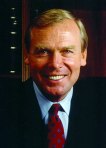
You have to like the implications of President Barack Obama’s choice of Gov. Jon Huntsman of Utah as ambassador to China. Obama ignored what to many is conventional thinking by giving such a plum job to the man who co-directed the McCain-Palin campaign. And while Huntsman described his own high ground by saying he could not refuse the call to service, the fact is that he could have turned down a position that will disrupt his family and preempt what would have been a certain new term as governor. As to the idea that giving Huntsman this appointment was Obama’s way of getting the governor out of the running for the White House in 2012, Huntsman will be only 57 years old in 2016 by which time the Democratic juggernaut, such as it is, should have run out of steam anyway.
More important, Huntsman is by reputation a straightforward, intelligent, sensible man who is well equipped to help further a foreign policy that promises to forsake the bullheaded and arrogant policies of the Cheney-Bush administration — transposition deliberate. Huntsman, from what I have read so far, can strike the balance necessary to deal with a country like China: respecting its history and the culture of its people, exploring the interests it shares with the United States, and keeping up the discussion of American concerns about human rights issues in China.
It will be interesting to see what effect this appointment has on Huntsman’s standing in his party, both because the appointment makes him a part of an administration that the most vocal Republicans profess to loathe and because he is likely to help advance a policy of engagement – in China and elsewhere – that was rejected by the last administration and by the Republican candidates in the last national election.
Put ‘er there, pal.
April 21, 2009

DICK CHENEY
Former Vice President Dick Cheney thinks President Obama has sent the wrong message by traveling to Europe and Latin America and suggesting that the United States is rethinking its recent foreign policies. Cheney said last night that Obama needs to distinguish more clearly between “the good guys and the bad guys,” which I learned to do when I was 10 years old playing cops and robbers with Mike and Joe Pellegrino. That’s how we think when we’re 10.
Cheney is dismissing what we learned from Richard Nixon, that pretending that your adversaries and critics don’t exist (Cheney said the Bush administration’s policy was to “ignore” Hugo Chavez) is seldom productive. Cheney didn’t like that Obama shook hands with Chavez. Nixon shook hands with Zhou Enlai because China’s fall-out with the Soviets created an opportunity for the U.S. with respect to both countries, and, I suppose, because Henry Kissinger’s earlier snub of the Chinese premier had gained the United States nothing. The old “good guy-bad guy” model seldom works. And the idea that Cheney casts himself and his kind as the “good guys” in this world is exactly the kind of hubris that causes more trouble than it solves.
He was nice to mice
April 14, 2009

Bo, a dog
One thing is certain: The president, no matter who he is or what he does, can’t win.
The Christian Science Monitor, for one, was reporting today that the First Man, if that’s the counterpart to the First Lady, is getting flack for accepting Bo, the dog, as a gift from Edward F. Kennedy after promising before the November election that the White House dog would be adopted from a shelter. This chatter is going on at the same time that folks are, on the one hand, giving the president credit for approving the use of lethal force against the pirates holding an American sea captain and, on the other hand, predicting that the same decision will result in escalated violence against Americans and American interests.

Andrew Johnson
With regard to the pet, the 44th president of these United States might have been better off emulating the 17th. Andrew Johnson discovered a family of mice that appeared in the Oval Office each evening. Instead of having them eradicated, he started leaving them bits of food. He got along better with those mice than he did with the Republicans in Congress, who would have lynched him if they thought they could get away with it.
Field hollering
April 12, 2009
BLUES BROTHERS
The following appeared during the past week in the Vatican newspaper “L’Osservatore Romano.”
By Tania Mann
From cotton fields to city streets, blues music tells the story of a people struggling to survive. Its syncopated rhythms convey a meaning as deep as the raspy voices crooning its melodies. The blues has evolved along with the history of black people in the United States – a journey marked by persecution but also by progress.
Theirs is a story that today opens to a new chapter, being written by a man who calls the city that transformed the face of the blues: “Sweet Home Chicago”. Thus a closer look at the origins of blues music provides insight not only into black history but also into the context from which President Barack Obama, who lived in the Windy City before his move to the White House, entered the international scene.
It was in Chicago that blues music was modernized, where it adapted into a form that could then be easily diffused into popular culture. It would permeate many other musical genres and create the foundation of rock ‘n’ roll, gospel and the British pop made famous by the Beatles. Today, the blues rhythm beats on as the heart of American mainstream music, which in turn plays an influential role in the music world across the globe.
The twelve-bar structure found in the blues today is the same as that which the slaves invented as they worked in the fields, using music to communicate. This system of “field hollering” allowed the slaves to exchange secret information and indicate potential escape routes.
Chicago blues grew from these roots in the Mississippi Delta, where thousands of blacks lived before moving north during the Great Migration, which occurred in two waves between 1913 and 1970. Its heavy backbeats recall the oppression of slavery, while the charged guitar riffs and gravelly voices in the foreground express an insatiable longing for freedom.
In the 1930s, the Great Depression propelled the blues forward by providing not only greater reason for people to lament but also more opportunity to come together to perform and listen to music. From that decade on in the ghettos of Chicago, residents organized “rent parties” to raise money for families with financial difficulties. Thus listening to the blues also became a concrete experience of solidarity.
By this time, blues musicians in Chicago had already begun to create a more urban sound, distinguishing their own style from more rural or classic forms. This new sound reflected, with its quicker tempos, the frenetic pace of working life in an industrial metropolis.
Barack Obama
“It was in these neighbourhoods that I received the best education I ever had”, President Obama said in a speech announcing his presidential bid. With this statement he recalled his work in Chicago from 1985-1988, organizing job training and other programs for the working-class residents of Altgeld Gardens, a public housing project amid shuttered steel mills.
The blues is a lyrical expression of both “the agony of life and the possibility of conquering it through sheer toughness of spirit”, writes Ralph Ellison in Invisible Man (Random House, 1952). This work, set in the newly industrialized Chicago of the 1930s, analyzes the problem of the black man’s identity in U.S. culture.
The people of Chicago are generally known as being “tough”, if only for having to endure the severe weather that results from its position on the edge of Lake Michigan. For this reason the blues, in the tenacity of its sound, personifies the Windy City (even if it was originally named as such in reference to its long-winded politicians, not its notorious weather).
The spirit of a city ever aware of life’s challenges – of a city where people are accustomed to adapting to change – is manifest in the blues. The city and the music have each shaped the other into what they are today.
But the influence of Chicago blues has extended much further than its own streets. This is seen clearly in the career and the heritage left by the man who is said to have defined its sound: Muddy Waters.
His grandmother gave the musician this nickname, after the puddles of the Mississippi River in which he played as a child. Waters transferred to Chicago in 1943, where he received an electric guitar as a gift from his uncle. With this instrument – the volume of which he intensified by using a pick – Muddy Waters revolutionized the city’s musical scene.
In addition to the guitar, the harmonica and bass were also amplified in order to compete with the loud atmosphere of the locales where blues bands played. The first to win this battle against the noise with his harmonica was Little Walter. He did so simply by cupping his hands around the instrument.
Muddy Waters
From then on these methods of amplification and electrification characterized the Chicago blues sound. This new sound was part in thanks to the new possibilities that came with the end of the Great Depression and World War ii. Muddy Waters and the other blues artists in Chicago became a vehicle for the optimism emerging at this time. It was here that the now widespread image of a small stage in a smoky bar, crowded with musicians improvising on the electric guitar, harmonica, piano, bass and drums, was born.
Today, it is not difficult to find evidence of the impact these musicians have had on the music world. It was, for example, Water’s song “Rolling Stone” that both the magazine and the rock group took their names. The same song was very probably an inspiration to Bob Dylan when he wrote “Like a Rolling Stone”. And it was reported in Rolling Stone magazine that among the playlists on President Obama’s iPod are songs by the group of the same name, by Dylan, and also by Howlin’ Wolf, who was known as Waters’ rival.
The list of artists and musical genres influenced by Chicago blues is endless. Among the numerous names of note are Chuck Berry, Elvis, Janis Joplin, Jimi Hendrix and also Eric Clapton, who has carried the inheritance of the blues from the seventies through to the present.Eric Clapton
In the hands of the same “Slowhand”, as Clapton is known, the Chicago blues sound has evolved with the changing music scene while still remaining faithful to its deepest roots. A powerful witness to this is one of his recent albums, “From the Cradle”, composed entirely of songs by traditional blues musicians. Among them is Willie Dixon, one of the greatest musicians to have played with Muddy Waters.
But the electrified blues that was founded in the post-war era is not only a thing of the past. The music continues because the stories it recounts are still being written. Worth noting is that this year’s list of Grammy nominees for blues music included several protagonists of Chicago’s musical revolution. Among those carrying this tradition into the modern day is Buddy Guy – known as Muddy Waters’ successor – who opened his own club in 1989 in the heart of downtown Chicago.
The culture which developed around the blues clubs that have sprouted up around the city over the years is indeed thriving, creating a music scene that draws tourists and natives alike. Today, many of the most popular blues clubs are found in neighbourhoods inhabited predominantly by young white people.
John Mayer
In fact, the evolution of blues music in the city also entailed a diffusion into white culture. For proof of this on a wider scale, one can look to artists such as Clapton, Dylan, and even younger musicians like John Mayer. The latter, an artist who had already gained wide acclaim on the pop scene, surprised everyone with a blues album in 2005, featuring Clapton, Guy and B.B. King as collaborators.
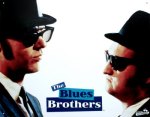
Surely one cannot fail to acknowledge the extent to which the famous Blues Brothers, with their “mission from God”, have served to propagate blues music and culture into the mainstream. Working on the Chicago-based film inspired the “brothers” John Belushi and Dan Aykroyd, never before musicians, to form their own group modelled after that featured in the movie.
While Chicago blues has survived in its purest form through the revolution’s biggest names and their successors, the deep influence it has had on the many genres of today’s chart-topping music is not to be ignored. Just one example is the widespread diffusion and popularity of rhythm and blues (R&B), a term that was originally used for Chicago blues but has extended to encompass much of black music heard today.
It becomes evident from the longevity of Chicago blues – in its original form as in its many variations – that at its heart this music expresses a depth of human emotion which stems from the very essence of human experience.
For Ellison, the blues does not offer a solution to the human condition. It offers instead a strong resolution to overcome suffering: a “yes” to a life marked by grace and irony, and a defiant decision to preserve the human spirit. Its sound is marked by sadness but also by fierce determination, thus reflecting the history of blacks in the States. In a time of global crisis, the President who pens this story’s newest chapters meets a challenge that will undoubtedly demand the same tenacity.


(©L’Osservatore Romano – 8 April 2009)
“God save our gracious queen ….”
April 2, 2009
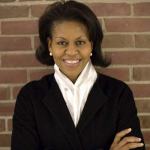
MICHELLE OBAMA
Television newscasters last night were preoccupied with questions about why and how the Obamas touched Queen Elizabeth II. The Obamas gave the queen the two-handed shake, and that – according to people who care about such things – is reserved for those one knows very well, indeed. Also, Michelle Obama put her arm around the queen at one point, and that – so the experts say – is flirting with impropriety (although it was obvious in the clip that was run over and over and over again that the queen also briefly touched Michelle Obama’s back during that encounter). And, of course, there’s the iPod.
This business gets me thinking again about the purpose of monarchy in the 21st century, at least in places where the monarch does not govern. Monarchs who do govern are problematic in themselves, but that’s another issue. I discussed this once with a chemist in Denmark. We were having dinner, and I asked him why he thought a country like his – advanced in most ways – hangs on to the monarchy, in that case, Queen Margrethe II. Denmark has so far removed the monarchy from any real influence in government that members of the royal family do not vote in elections, although they have the right to. The chemist thought about this for a few seconds; he seemed to never have considered the question before and certainly didn’t have a pat answer. Finally he said, “Well, she is Denmark, isn’t she?” which I guess is as good an explanation as any. Of course a flag serves the same purpose, but if you hug a flag, it doesn’t hug back.
Running the ball out of bounds
March 30, 2009
 I came across a web site today in which George W. Bush was referred to as a modern-day Pontius Pilate. It was not intended as a compliment. The site was an elaborate comparison of Pilate’s administration in first-century Judaea and Bush’s administration in 20th century Texas, with the emphasis on the 152 persons who were executed while Bush was governor. The Catholic Church is opposed to the death penalty – as it was opposed to the war in Iraq – but George Bush was invited nonetheless to address the students at Notre Dame University.
Although I voted for Barack Obama, I disagree with his policies on abortion. I have to wonder, however, if those who don’t think Obama should speak at the university also expect Notre Dame to exclude from the discussions going on in its classes and seminars – exclude from the content of any essay, term paper, dissertation – references to the work of any person – scientist, author, dramatist, theologian, philosopher, political figure – whose views differed with those of the church.
Does anyone seriously believe that because Notre Dame invited Obama to speak, the university doesn’t subscribe to the church’s teaching on abortion, or that a single one of those graduates will change his moral views because he hears a speech by the president of the United States?
As for the honorary degree to be conferred on Obama, if the whole man is to be recognized anywhere in our society, one would hope it would be recognized at an institution of higher learning. It’s true, as some have said, that Notre Dame must remain constantly aware of what it is to be a Catholic university, but it also must remain aware of what it is to be a university.
“Better left unsaid.”
March 22, 2009

GOV. SARAH PALIN
The fact that Gov. Sarah Palin found it necessary to comment on President Obama’s careless remark about the Special Olympics shows how far she has to go to be considered a serious candidate for national office. Consider, by contrast, President Bush’s response in Calgary last week when he was asked about Obama’s administration. What Obama needs from me, Bush said, is my silence. I have done work on behalf of handicapped people for several decades, and I blanched when I heard Obama make that comment to Jay Leno. It was a clumsy thing to say – more so for a person who usually chooses his words so carefully – and one always wonders in such cases if the unguarded remark is indicative of the speaker’s point of view. But did that remark reveal that Obama has disregard or even disdain for handicapped people – this man who last month dispatched the vice president to the Special Olympics and who has appointed the first special presidential assistant on disability policy?
The Obama tongue has slipped before. During the campaign, he spoke about putting lipstick on a pig, and partisans of the governor accused him of referring to her. It was clear in the context that he was not speaking of Gov. Palin, but he should have known better than to use that expression during a contest in which there was the rare circumstance of a female candidate for national office. He set himself up.
On the other hand, when Obama, during the debates, had an opportunity to have at Gov. Palin, he wisely took a pass. That’s what she should have done in this case. She already had the stink of opportunism about her, and this further exposes her lack of elegance, of tact, of class. Whatever one thinks of Obama’s politics and policies, he has set the bar high with respect to demeanor. Palin, it seems, can’t reach that bar, even on tiptoes.
“You talkin’ to me?”
March 20, 2009
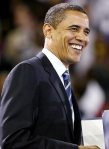
President Obama was on Jay Leno’s show last night, and showed again how comfortable he is in his clothes. He could have changed seats with Leno, and the show would have been none the worse for it. But Obama has an annoying speech mannerism that I first noticed during the campaign and that showed up three or four times last night. When he is asked a question, he frequently takes a breath and begins the answer with,”Look ….” The inflection suggests impatience if not condescension. Cokie Roberts has the same mannerism with the same inflection. Maybe some coach can help Obama get rid of it. Of course, the context for this observation is that Obama is president of the United States, Roberts is an NPR political analyst, and I’m an unemployed journalist and, oh, such a critic.
 CharlesPaolino's Blog