The wide tent is put to the test.
May 16, 2009
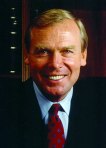
GOV. JON HUNTSMAN
You have to like the implications of President Barack Obama’s choice of Gov. Jon Huntsman of Utah as ambassador to China. Obama ignored what to many is conventional thinking by giving such a plum job to the man who co-directed the McCain-Palin campaign. And while Huntsman described his own high ground by saying he could not refuse the call to service, the fact is that he could have turned down a position that will disrupt his family and preempt what would have been a certain new term as governor. As to the idea that giving Huntsman this appointment was Obama’s way of getting the governor out of the running for the White House in 2012, Huntsman will be only 57 years old in 2016 by which time the Democratic juggernaut, such as it is, should have run out of steam anyway.
More important, Huntsman is by reputation a straightforward, intelligent, sensible man who is well equipped to help further a foreign policy that promises to forsake the bullheaded and arrogant policies of the Cheney-Bush administration — transposition deliberate. Huntsman, from what I have read so far, can strike the balance necessary to deal with a country like China: respecting its history and the culture of its people, exploring the interests it shares with the United States, and keeping up the discussion of American concerns about human rights issues in China.
It will be interesting to see what effect this appointment has on Huntsman’s standing in his party, both because the appointment makes him a part of an administration that the most vocal Republicans profess to loathe and because he is likely to help advance a policy of engagement – in China and elsewhere – that was rejected by the last administration and by the Republican candidates in the last national election.
Doo be doo be do.
May 14, 2009

FRANK SINATRA
It’s a sure sign that the semester is over that I’m spending my time reading Hollywood bloggers. And that’s why I came across Nikki Finke’s report that Universal Studios prefers Johnny Depp to play Frank Sinatra in a Martin Scorsese biopic about the kid from Hoboken. Finke says Scorsese has his eye on Leonardo DiCaprio for the role. Pay attention – this is important stuff!
I don’t know that I’ll be patronizing this movie, because while I like a lot of his films and records, I’ve never been able to summon much interest in Sinatra as a person. If I do see this movie, it will be because I’m curious about the challenge it’s taking on. Sinatra is such a strong and pervasive personality that I wonder if it will be possible to accept DiCaprio or Depp or any other actor. As it is, Finke says the actor – whoever he is – won’t have to sing, because the songs will come from Sinatra’s recordings. No one would buy another voice as Sinatra’s. The question is, will anyone buy another mug as Sinatra’s?
What’s it all about, Sarah?
May 14, 2009

GOV. SARAH PALIN
I’m the guy who told a couple of generations of reporters and journalism students that a good writer can stop any person on the street and write an interesting story about him. So far be it from me to suggest that there isn’t a good story to be told about Gov. Sarah Palin, R-Alaska. As it turns out, Gov. Palin herself – a former journalism student – is going to take on the job herself after signing a book deal with HarperCollins and Zondervan. She anticipates that the project will take about a year which, if she can stick to that schedule, would get it into Borders in time for the 2010 gubernatorial election. I’ve seen some cynical references to that in what the governor refers to as “the anonymous blogosphere,” but why begrudge her that advantage – or the kind of money she can command while people are still interested in her? If Richard Nixon could appear on “Laugh-In,” why shouldn’t Gov. Palin write a memoir? It could be time consuming, especially because the governor says that, despite the collaborator assigned to the book, she wants to write most of it herself.

ULYSSES S. GRANT
News of this enterprise naturally evokes questions about the content. The governor is a relatively young woman who has had a relatively short – and dare we say largely inocuous – public career. Ulysses S. Grant put off his memoirs until he had been the general-in-chief of the victorious Union Army and twice president of these United States. And Dwight Eisenhower saved his written reflections until he had been supreme allied commander in Europe, general of the Army, and twice president. What will the governor write to hold a reader’s attention for two or three hundred pages? She did discuss that in a general way with a newspaper reporter as follows: “I just really look forward to being able to relate to people through this book, those who are anxious to hear stories about people who are facing similar challenges perhaps. That’s balancing work and parenting — in my case work does mean running a state, and family involves a large and fun and colorful ordinary family that really has been thrust into maybe some extraordinary circumstances.” See?
I expect Harper has editors to deal with misplaced “perhapses” and “maybes,” but I hope the book clubs are heavy with folks “anxious to hear stories about people who are facing similar challenges.” Perhaps.
If you love her, leave her in peace.
May 12, 2009

Farrah Fawcett
People who devour the details of celebrities’ personal lives should read the interview with Farrah Fawcett published in the Los Angeles Times on Monday. The interview – the only one the actress has given in more than two years – was conducted in August and was published in advance of a television program regarding Fawcett’s struggle for privacy, to be broadcast this weekend.
Fawcett was able to prove that an employee of UCLA Medical Center had illegally gained access to Fawcett’s medical records and had sold the information to the National Enquirer. That employee eventually resigned and has since died of cancer – the same disease for which Fawcett was being treated at UCLA.
The reporting of Fawcett’s illness has been revolting – and not only in the Enquirer. I have complained before about the nearly gleeful manner in which some television news anchors spit out the “headlines” on the latest developments in the woman’s illness – which appears to be terminal.
The L.A. Times story included an explanation from Brandy Navarre – identified as vice president of a “paparazzi agency” – for the compulsion to hound a woman who may be dying.
“Particularly when it’s something sexy or scandalous,” Navarre told the paper, “or on the negative side, something kind of tragic and sad, for whatever reason, the public is interested in those types of stories.”
The public is interested, see? And that’s what made it profitable for a hospital employee to commit a federal crime and for a so-called newspaper to induce her with cash to do what the editors clearly knew was a crime. Navarre attributed the interest in the case to “the public’s love of this woman.”
If the public loves this woman, why doesn’t the public – and the media that serve the public – respect the privacy they would expect for themselves under such circumstances and leave Farrah Fawcett alone.
Lemme hear that high note!
May 12, 2009

PAUL POTTS
I saw Paul Potts singing on TV last week and heard an announcement that his new CD would be in stores on May 4. I went to Border’s and bought a Potts CD which turned out to be from 2007. I can’t complain about that; I took it off the shelf without examining it very closely. He has a pleasant enough voice that reaches into the upper end of the tenor range seemingly without strain. I think he lacks the firepower demanded by much of the tenor repertoire, but tenors – like cigars and coffee – are a matter of taste.
I, for one, never bought into all the excitement about Pavarotti. Clearly, I’m outnumbered. My taste is affected by the fact that I’m kind of a tenor maven, so I listen to many singers that most people have no reason to know about – obscure figures like Edmond Clement, Francesco Tamagno, Leon Escalais, and Father Sidney McEwan. I think the perennial discussion about “the greatest tenor” is a pointless exercise, because there are no objective criteria on which to base such a judgement. It’s more a question of “favorite” than of “greatest.”

Giovanni Martinelli
For example, I prefer some tenors over some singers whom I know to be technically superior, precisely because I prefer them. Giovanni Martinelli is an example. He was nicknamed the “lion of the opera” because of the way he sometimes roared out his notes. He had his detractors on that account, but he has me as a fan for the same reason. When he was in his 70s he made a recording of “Wintersturme” from “Die Walkure” – but sung in Italian as “Cede il Verno” – and I think it’s the equal of a recording that Lauritz Melchior made at a much younger age.
My favorite tenor altogether is Count John McCormack, a legendary Irish singer whose career included roles with the world’s major opera companies as well concert tours, many recordings, and radio appearances. When McCormack first appeared on the operatic scene, he called himself Giovanni Foli (after his wife, Lily Foley) on the theory that he would fare better if audiences thought he was Italian.
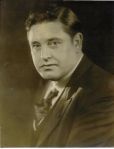
JOHN McCORMACK
It’s part of opera lore that McCormack once greeted Enrico Caruso as “the world’s greatest tenor” to which Caruso replied: “And when did you become a baritone?” I love to listen to McCormack singing Italian and French with that lilting brogue. But I especially like to hear his Irish songs, many of which are so melancholy. I also have a few recordings on which he speaks (one is a funny radio conversation with Bing Crosby), and I find it hard to listen to McCormack without smiling.
Netflix Update No. 8: “Holiday”
May 11, 2009
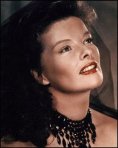
KATHERINE HEPBURN
We watched “Holiday,” a wonderful 1938 film directed by George Cukor, based on a play by Philip Barry. This was the second film based on that play; the first one appeared in 1930. Both were Oscar nominees.
The cast of this version included Katherine Hepburn, Cary Grant, Lew Ayres, Jean Dixon and Edward Everett Horton. In the guise of a romantic comedy, this is an attack on conformity, greed, materialism, and hypocrisy.
The premise is that a young and rising businessman, Johnny Case (Grant) falls in love with Julia Seton (played by a rather wooden Doris Nolan), the daughter of millionaire banker Edward Seton. Johnny and Julia plan to ask Edward Seton to give his blessing to their engagement, but Edward immediately tries to take control of everything from the timing of the engagement and marriage to the future of Johnny’s career. Johnny hasn’t told Julia, let alone Edward, that his own plan is to leave business and do nothing but travel for a few years while he sorts out the real purpose of earning money. He is encouraged in this mode of thinking by close friends, Nick and Susan Potter, played with biting humor by Horton and Dixon. When Johnny is introduced into the Seton household, he meets Julia’s brother Ned – played by the talented Lew Ayres – an alcoholic young man had been browbeaten by his father to give up childish ideas like composing music and attend to the family business.
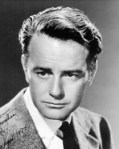
LEW AYRES
Johnny also meets, and makes an immediate connection with, Julia’s sister Linda (Hepburn) who describes herself as the “black sheep” of the Seton family and makes no secret of her disdain for its values and social circle. In the museum-like Seton home, the only place Ned and Linda are comfortable is a “play room” outfitted by their late mother, a room to which Johnny and the Potters also eventually retreat – an effective reference to their rebellion against the established order “downstairs” and to the immaturity imputed to them by the stiff-necked patriarch and his pandering, two-faced satellites.
Eventually, Johnny has to decide on what terms – if at all – he is prepared to pursue his courtship of Julia and his potential career in the Seton empire.

CARY GRANT
This is a well written and well acted film (with the exception of Nolan). Its humor and sarcasm has stood the test of time. One has to get past the idea that Johnny Case would have been attracted to Julia Seton in the first place and that it would have taken as long as it did for their values to collide head-on. Over all, though, “Holiday” is an entertaining and uplifting experience.
Buona fortuna, Nonna Maria!
May 10, 2009

MARIA DONATI
It’s only May, but I’ve already chosen my favorite political candidate of this year. It’s Maria Donati, who is running for a seat on the municipal council in Saludecio, a little town in the Italian province of Rimini. Signora Donati is 102 years old. According to a story in the newspaper “Il Resto del Carlino,” civic leaders in the town at first asked the signora if she was insane when she offered herself as a candidate, but then – by their own account – they pondered the ancient motto “Chi si ferma e perduto” – “Whoever stops is lost” – and changed their minds.
Sgna. Donati – popularly known as “Nonna Maria” – grew up in a large family in the Republic of San Marino. In fact, the elected officials in Saludecio now include many of her relatives. During World War II, the Nazis deported her husband, Poverelli Aurellio, to Germany. Although she was pregnant, and although the region was under air attack, she rode a bicycle to the headquarters of the Wehrmacht to badger authorities there about her spouse’s status. They were reunited after about a year.
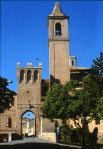
SALUDECIO
The implication of the story in “Il Resto del Carlino” is that Nonna Maria never sits still as it is. She lives with her nephew and keeps busy with cooking and other chores around the house, but otherwise is likely to be off visiting neighbors – and now she will be involved in evening meetings with the other candidates.
Matteo de Angelis, who wrote the story, commented at the end that Nonna Maria’s candidacy shows that “nonostante l’età, tutto è possibile” – in spite of age, all things are possible. Stories like this always remind me of George Abbott, who died in 1995 at the age of 107. At the time, he was in the midst of revising the second act of ”The Pajama Game,” which he had written in 1954.
“Even at my age,” Nonna Maria said, “it is possible to propose many ideas.” And she might have said, especially at her age.
Omerta.
May 8, 2009
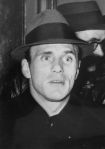
JOE GALLO
I just finished reading Tom Folsom’s book “The Mad Ones,” the story of Joe Gallo and his brothers and satellites, a clumsy Brooklyn crime family that inspired Jimmy Breslin’s novel “The Gang that Couldn’t Shoot Straight.” I feel a little guilty because these dangerous and destructive people are so much fun to read about. And Folsom makes it fun, because he seems to be having such a good time telling this yarn, using a vernacular perfectly suited to the subject. And how can you go wrong with characters like Big Lollypop, Little Lollypop, Johnny Bath Beach, Mondo the Midget and Grandma Nunziato?
Joe and Larry Gallo themselves were worth the price of admission. Larry, anticipating open warfare with the Profaci gang, wiled away the time playing operatic arias on his violin. Joey spent a lifetime – what there was of it – painting, or reading Spinoza, Lenin, Mao, and Nietzsche. Joe Gallo was probably certifiably nuts, but he apparently was also a magnetic personality who sucked in people like Jerry Orbach and David Steinberg. And he didn’t kill Don Rickles for razzing him in a nightclub after being warned not to, so how bad could he have been?
Reading Folsom’s book, one wonders why Breslin had to fictionalize this whacked-out crowd who never made it to the top of organized crime in New York but shed and lost a lot of blood in the effort. The truth is entertaining enough.
The final frontier … again.
May 7, 2009

WILLIAM SHATNER
Judging from the reviews, I might see the new “Star Trek” film after having forsaken the Enterprise when the first television series ended. I don’t know why that happened, because the first series was must-see in our house. We wouldn’t schedule any activities away from home on “Star Trek” night.
Back in those days, I was driving by a theater here in Jersey and saw that William Shatner was going to appear there in “Period of Adjustment.” It seemed like an odd idea to me at first, but I learned later that Shatner had played stage comedy early in his career. Also, I realized after I had thought about it, his character on “Star Trek” often had comic overtones. I took the opportunity to interview Shatner for a preview of “Period of Adjustment.” It wasn’t a very satisfying experience. He answered as many questions as possible with single syllables. He was very good in the play.

WILLIAM SHATNER
Shatner appeared at the same theater a year or so later, and I interviewed him again. That time, he talked almost compulsively – in fact, at one point he came up for air and asked, “How the hell are you going to write this?” Several years later, I interviewed him yet again – by phone – for an advance on an appearance he was making at a local college. I mentioned to him that I he and I had spoken twice before, and he asked, “Have you learned anything since then?”
Some people don’t like Shatner’s acting – several have told me they find his syncopated speech contrived and annoying. I don’t agree; I like his acting, including that peculiarity in his speech.

WILLIAM SHATNER
I find his appearance a little unsettling. He looks like he’s full of cortisone.
One of my favorite examples of Shatner’s work is “The Andersonville Trial,” a 1970 television movie directed by George C. Scott, based on Saul Levitt’s play of about a decade before. Shatner played Gen. N.P Chipman, who was judge advocate of the military court that tried Capt. Henry Wirz, who had been commandant of a prison camp for Confederate prisoners. Shatner was a perfect fit for the courtroom drama, whose cast included Richard Basehart, Buddy Ebsen, Jack Cassidy and Martin Sheen.
It’s available from Netflix and I wrote a review of it for this blog. The review is at THIS LINK.
The chicken or the egg?
May 6, 2009

CHARLES DARWIN
As I was driving to Passaic last night, I was listening to songs by Kate Smith that had been recorded from her radio broadcasts. It occurred to me that she might have been surprised if she had been told that people – well, one person at least – would be listening to those songs 60 years later while cruising along an interstate highway.
I also thought yesterday morning, when the women on The View were talking about evolution, that Charles Darwin might have been surprised – and maybe a little dismayed – to know that 150 years after the publication of “The Origin of Species” people would still be arguing about his ideas.
But we are still arguing. The latest flurry of discourse – the one that got the tongues wagging on The View – was a study from the University of Minnesota that showed the degree to which high school biology teachers influence whether students accept the idea of evolution or question it based on its perceived conflict with the idea of creationism.

THE FORERUNNER
A story on the web site sciencenews.com included this passage: “For example, 72 to 78 percent of students exposed to evolution only agreed that it is scientifically valid while 57 to 59 percent of students who were exposed to creationism agreed that it can be validated.”
In other words, the survey suggests that high school teachers who introduce the religious idea of creationism into a science class may influence a considerable number of students to deny what is constantly being reinforced by studies of the effects environmental factors have on life forms from one generation to the next and over longer spaces of time.
I believe that high school students should be exposed to the full range of ideas that have been held and still are held by large parts of the population – including the idea that existence itself and particular things that have existence are brought into being by a deity, however that may be expressed in various religious and philosophical disciplines. I don’t believe the biology class is the place to teach that. It belongs in the humanities curriculum. To exclude from a student’s education at least the main themes on the subject of creation that are held by Jews, Muslims, Christians, Hindus and others is to send him off to college or into the working world with an incomplete understanding of how most of the people on the planet think.
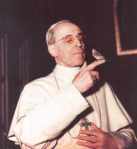
POPE PIUS XII
The discussion on The View didn’t have any intellectual depth, and it seemed to imply that a person must choose between belief in evolution and belief in the idea of a First Cause. That’s partly because the women were using the term “creationism” as though it stood for every shade of thought about a divine or supernatural origin of existence. Students who aren’t taught otherwise but who are exposed to such a simplistic public discourse on the subject might draw that erroneous conclusion.
Pope Pius XII, hardly a progressive, wrote in his 1950 encyclical letter “Humani Generis”:
“The Teaching Authority of the Church does not forbid that, in conformity with the present state of human sciences and sacred theology, research and discussions, on the part of men experiences in both fields, take place with regard to the doctrine of evolution, in as far as it inquires into the origin of the human body as coming from pre-existent and living matter—for the Catholic faith obliges us to hold that souls are immediately created by God.”
More recently, in 1996, Pope John Paul II – taking note of what Pius had written – added this:
“Today, almost half a century after publication of the encyclical, new knowledge has led to the recognition of the theory of evolution as more than a hypothesis. It is indeed remarkable that this theory has been progressively accepted by researchers, following a series of discoveries in various fields of knowledge. The convergence, neither sought nor fabricated, of the results of work that was conducted independently is in itself a significant argument in favor of the theory.”
Many Catholics, I’m afraid, are unaware of this point of view and I know that many of them are creationists as such, rejecting evolution out of hand. They and parents like them, more than the biology teachers, may ultimately be responsible for this outdated argument to go on for at least another generation.
 CharlesPaolino's Blog