Books: “The Giant”
January 16, 2013
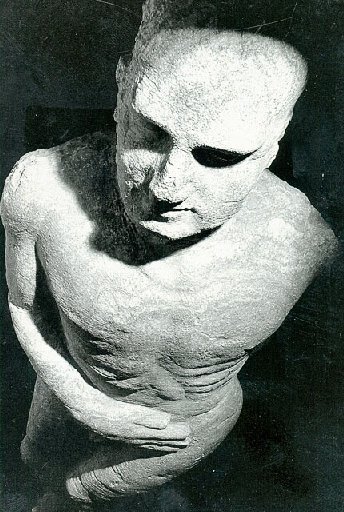 In a book I reviewed here last year, Amy Reading wrote, in effect, that people are easily conned partly because they want to be conned — they want the hoax to be true. No doubt that was at play in 1869 when a gypsum statue was passed off on thousands of people as either the corpse of a centuries-old prodigy or the artifact of a culture that thrived in upstate New York in antiquity. This monstrosity is the subject of Jim Murphy’s new book, The Giant and How He Humbugged America.
This book is one of several Murphy has written for a young-adult audience, but it is entertaining reading for adults of any age. Murphy recounts the incident in which a ten-foot figure of a naked man was unearthed on a farm in Cardiff, N.Y., by workers who ostensibly were digging a well. The “discovery” almost immediately attracted public attention and just as quickly inspired a debate about what the colossal figure was — a body, a primitive work of art, a fake.
The owner of the farm, William “Stub” Newell, quickly set up an exhibition tent on his property and people flocked to see the marvel. Soon there were investors and then more investors and shares in the giant changed hands again and again. It was clear to those with an interest that the potential of this attraction was too big for at tent on a farm, and they took the giant on the road.
Among those who saw the possibilities in the Cardiff giant was the famous showman Phineas T. Barnum, who tried to buy his way in.
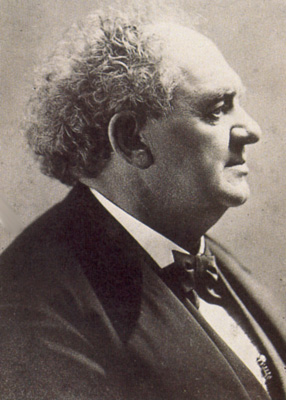
PHINEAS T. BARNUM
When he was unsuccessful, Barnum found a sculptor who could provide him with a duplicate giant, and he and his phony behemoth went into business, competing with the original phony, as it were. The stakeholders in the true fraud, if you get my meaning, took legal action to stop Barnum, but they failed. The giant that really emerged from the pit in Cardiff drew between 35,000 and 40,000 when it was exhibited in Syracuse, but when it went head-to-head with Barnum’s creature in New York City, it ran second best at the box office. Meanwhile, the sculptor who had provided Barnum with his version of the giant turned out at least four more.
The story is full of colorful characters, not the least of whom was con-man George Hull, the “father” of the giant, so to speak.
This all may seem rather silly to us post-modern people, although some of our fellow post-moderns fall for some pretty tall tales, especially those get-rich-without-leaving-your-home schemes.
Murphy points out that as silly as the Cardiff caper was, it really wasn’t funny, when one takes into the account the people who were deceived and made into fools and the people who were cheated out of their hard-earned money while a few others pocketed big profits.

Books: “Hallucinations”
December 30, 2012

Dr. OLIVER SACKS
I have often had the experience, as I am about to fall asleep, of seeing for a fleeting moment the image of a familiar person and hearing that person speak directly to me. Although I am always aware that the image and the voice are not real, they always seem to be real.
Phenomena of that kind are the subject of a chapter — “On the Threshold of Sleep” — in Hallucinations by Dr. Oliver Sacks, the neurologist and author. In this latest of his many books, Dr. Sacks discusses the wide range of circumstances under which some folks (many folks, as it turns out) see things, hear things, even smell things that do not exist in objective reality. These are not sights, sounds, or aromas that the hallucinator voluntarily conjures up in his or her own mind, but rather the products of extraordinary activity in various parts of the brain.
The hallucinations Dr. Sacks writes about may be associated with medical conditions that include epilepsy, narcolepsy, and partial or total blindness, and they may be associated with the use of certain drugs. What they usually are not associated with, Dr. Sacks writes, is mental illness. In fact, many people who experience hallucinations are aware that what appears real to them is, in fact, not real.
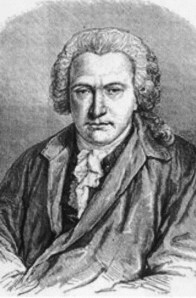
CHARLES BONNET
The condition Sacks explores first, setting a context for the rest of the book, is Charles Bonnet Syndrome, or CBS, which was first identified by an 18th century Swiss naturalist. Persons with CBS have deteriorating or deteriorated eyesight, and they have hallucinations that in a sense fill in the gap of visual sensory input. These hallucinations may be superimposed on the impaired visual field or they may fill in the blind spot of people who have lost sight in half the visual field. Sacks provides this contrast between hallucinations of this kind and dreams:
“Dreamers are wholly enveloped in their dreams, and usually active participants in them, whereas people with CBS retain their normal, critical waking consciousness. CBS hallucinations, even though they are projected into external space, are marked by a lack of interaction; they are always silent and neutral—they rarely convey or evoke any emotion. They are confined to the visual, without sound, smell, or tactile sensation. They are remote, like images on a cinema screen in a theater one has chanced to walk into. The theater is in one’s own mind, and yet the hallucinations seem to have little to do with one in any deeply personal sense.”

waynetownindiana.com
Dr.Sacks has spent his professional lifetime collecting case histories from his own interactions with patients, from his reading, and from correspondents who have shared their experiences with them. In this book as in most of his previous ones, he uses that knowledge to illuminate the growing understanding of the human brain.
Meanwhile, the subject matter of this book reminded me of the poem by Hughes Mearns:
Yesterday, upon the stair,
I met a man who wasn’t there
He wasn’t there again today
I wish, I wish he’d go away…
When I came home last night at three
The man was waiting there for me
But when I looked around the hall
I couldn’t see him there at all!
Go away, go away, don’t you come back any more!
Go away, go away, and please don’t slam the door… (slam!)
Last night I saw upon the stair
A little man who wasn’t there
He wasn’t there again today
Oh, how I wish he’d go away
That poem is called Antigonish because it was inspired by a ghost story in the Nova Scotia city of that name. Mearns, an educator who believed deeply in cultivating the creativity of children, wrote the lines for a play called Psyco-ed while he was a student at Harvard. It was published as a poem in 1922.
“It’s all in the game”
October 28, 2012
 As we left for a long drive the other day, I grabbed a Johnny Mathis CD to play along the way. Among the songs was “All in the Game,” a favorite of mine and a song with a unique history: It’s the only song with a melody written by a man who both served as vice president of the United States and won the Nobel Peace Prize.
The composer was Charles G. Dawes, who served as vice president in the Calvin Coolidge administration — from 1925 to 1929. Dawes is forgotten today, but he was a prominent man in his time. His great-great grandfather was William “Billy” Dawes, who rode with Paul Revere, but somehow escaped Longfellow’s notice. The latter Dawes was a lawyer, banker, politician, and humanitarian. He was an army officer during World War I, and then President Warren G. Harding appointed him the first director of the Bureau of the Budget. In 1923, President Calvin Coolidge appointed him to the Allied Reparations Commission, and Dawes shared in the Nobel Peace Prize for his work on a plan to stabilize the economy of Germany, which had been devastated by the war and its aftermath.

CALVIN COOLIDGE and CHARLES G. DAWES
Dawes was about the fourth choice to run for vice president with Coolidge, who was elected to a full term of his own after finishing the term of Warren Harding, who had died in office. Dawes was clumsy in the position and alienated Coolidge from the first day of the administration. President Herbert Hoover appointed Dawes ambassador to Great Britain, and Dawes served effectively in that post for three years.
In 1911, Dawes, who played the piano and the flute, wrote a composition called “Melody in A Major.” The sheet music was published without Dawes’ knowledge, and it became an popular violin piece; in fact, the great violinist Fritz Kreisler used it to close his recitals.
In 1951, after Dawes had died, songwriter Carl Sigman modified the melody somewhat and wrote the lyrics that made the song a standard in American popular music: “Many a teardrop will fall , but it’s all in the game. …”
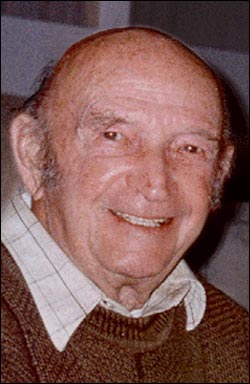
CARL SIGMAN
Sigman, who was a member of the New York Bar and a hero in World War II, compiled quite a track record for writing memorable lyrics. His songs include “Arrivederci, Roma,” “Ebb Tide,” “Shangri-la,” “What Now, My Love,” and the theme from the film Love Story.
“All in the Game” has been recorded by Dinah Shore, Nat King Cole, Louis Armstrong, Andy Williams, Robert Goulet, Johnny Ray, Jackie DeShannon, Cass Elliot, Van Morrison, Neil Sedaka, Merle Haggard, Barry Manilow, and many others.
Tommy Edwards had a major hit with it in 1958, and that recording is ranked No. 38 on Billboard’s Top-100 list. You can hear Tommy Edwards’ recording at THIS LINK.
“If it ain’t got that swing”
September 19, 2012

TAYLOR TEAGARDEN
Taylor Teagarden’s major league baseball career hasn’t amounted to much yet. As of yesterday, he had appeared in only 136 games in five seasons. He has shown a flair for the dramatic on a few occasions—last night being a notable example—but he hasn’t yet become the Jack Teagarden of the diamond.
Jack was another story altogether. As soon as I heard of Taylor T., I wondered if he and Jack were related. Naturally a guy would wonder that, what with the unusual last name and the fact that both of these Teagardens were from Texas.
Well, I say “naturally.” It was natural for me, because of a 78 rpm record that belonged to my parents. I loved that record when I was a kid, and I still do. It’s a rendition of a 1941 Johnny Mercer song, “The Waiter, the Porter, and the Upstairs Maid,” sung by Bing Crosby, Mary Martin, and Jack Teagarden. It’s one of those witty, sophisticated lyrics that Mercer wrote best. You can hear and see that trio singing Mercer’s song at this site: http://www.youtube.com/watch?v=_0e1DF4TUYY. Or you can come over Saturday afternoon, and I’ll play it for you on the Victrola. If you don’t know what a Victrola is, you probably already stopped reading.
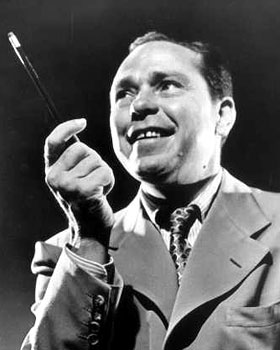
JOHNNY MERCER
Jack Teagarden, who came from a family loaded with musical talent, was in heady company with Crosby and Martin, and he was a very good crooner himself, as well as a composer and bandleader. Among the highlights of his memorable career were his vocal turns with Mercer and Louis Armstrong. But he made his most indelible mark as an innovative jazz and blues trombonist. He is often referred to as “the father of jazz trombone.” You can learn a lot about this important figure in American cultural history at www.jackteagarden.info.
Although it’s a lot easier than it was in the pre-digital age to answer such questions as, “Is Taylor Teagarden related to Jack?”, I have had trouble finding out. Until I wrote this post, I had found only one reference, buried in an non-authoritative web site, reporting that the catcher thinks he might be the great great nephew of the musical genius. But my friend Brian VanderBeek, a sports writer with the Modesto Bee, responded to this post by reporting that he had met Taylor Teagarden in 2007 when Taylor was playing for Bakersfield in the California League and Taylor, on that occasion, confirmed that Jack Teagarden was his dad’s great uncle.
Taylor is with the Orioles now, and his season got a late start due to a back injury. It remains to be seen if he will leave in baseball a footprint like the one Jack Teagarden left in music, but Taylor has already taken advantage of baseball’s unique capacity for providing even the most obscure player with opportunities for heroics.
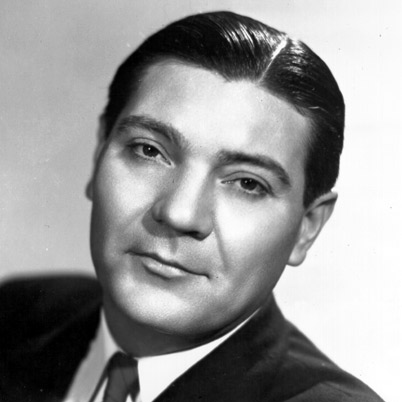
JACK TEAGARDEN
He came up with the Texas Rangers in 2008, and his first major league hit was a sixth-inning home run off Scott Baker of the Minnesota Twins. Baker had not given up a hit up to that point. And Teagarden’s homer produced the only run in what turned out to be a 1-0 game. When he came off the disabled list for the Orioles on July 14 of this year, he hit a two-run homer that broke up a 6-6, 13-inning tie with the Tigers.
Last night, Taylor got to play Mr. Clutch again as he pinch hit a single in the top of the 18th inning, driving in the winning run as the Orioles beat the Seattle Mariners and pulled into a virtual tie with the Yankees for first place in the American League East. No matter how the rest of his career goes, Taylor T. can always say with another lyricist, Ira Gershwin, “They can’t take that away from me.”
.
Books: “The Mark Inside”
July 14, 2012

J. FRANK NORFLEET
I was a neophyte reporter in Perth Amboy when I first heard the term “flim flam.” I came across it on a police report during my daily visit to headquarters, and I was to see it many times during the two and a half years I covered the city. This term can be used to mean more than one thing, but in the parlance of Perth Amboy police in the mid ’60s, it meant a scam that was run on the sidewalk outside a bank. In those days, before there were banks every thousand feet, Perth Amboy was a banking center and therefore a favorite haunt of a certain kind of con artist.
In Perth Amboy, flim flam meant that an older person who had just emerged from one of the banks on Smith Street would be approached by an amiable stranger who appeared to be both excited and confused. The stranger had found a bank envelope stuffed with cash and with no identification. While the stranger explained this to the unwitting target, a third party would “observe” the scene and approach the pair to ask what was up. Eventually, the ring leader would offer to split the money with the dupe — something that wouldn’t make sense if the easy mark wasn’t drunk with the smell of found money. There was a catch: the sucker would have to put up a significant among of money to show “good faith.” Usually, the victim would go back into the bank and withdraw that money, agree to meet the pair later to split up the dough, and you know the rest.
 This gag followed the same pattern every time. The first few times I read flim flam reports, I asked anyone who would listen how a person could fall for such a scheme. Cops who knew more about human nature than I did told me it was about greed, but it was also about trust. That’s the “con” in “con man” — a guy gets away with a stunt like that because he wins the confidence of his prey.
That phenomenon — the ability to con — is the subject of Amy Reading’s sassy, informative, and sometimes provocative book, The Mark Inside. In this book, Reading, who holds a Yale doctorate in American Studies, traces the origins and development of the con game in America, finding its roots in the humbug of showmen such as Phineas T. Barnum and following its evolution into the modern age — an age, she writes, in which the con is no longer the sole province of showmen and criminals but a vital tool in the commerce of everyday life.

AMY READING
Radical changes in American life, Reading deduces, led to this vastly increased reliance on the con. These changes included systems of rapid transportation — notably the railroad, the rise of cities, and finally the emergence of a “managerial class,” very different from the classes that once lived and traded only with what their own hands had produced, a class whose lingua franca was trust, the ability to get others to like them. Some critics have argued that Reading exaggerates the pervasive influence of this development, but the anecdotal evidence of the daily news — and even our own behavior, if we’re honest about it — seems to support her. What is our first concern in any transaction if not that the other party likes and trusts us, whether or not the trust is well placed?
As Reading is describing this aspect of American history, she is also telling the story of J. Frank Norfleet, a successful Texas rancher who in 1919 went to Dallas to conduct a legitimate transaction designed to improve his land holdings. When he arrived in the city, he almost immediately became the target of a gang of swindlers overseen by Joseph Furey, a gang that prowled cities like Dallas on the lookout for people exactly like Norfleet.
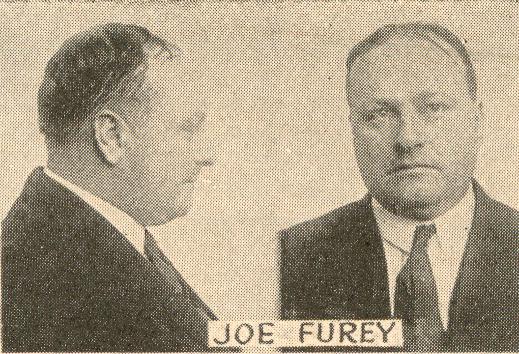
JOSEPH FUREY
Through an ostensibly chance encounter not unlike those on the streets of Perth Amboy, the gang drew Norfleet into a web that eventually involved phony securities investments and wound up costing him what today would be well over a million dollars. The Furey gang had this swindle down to an art form; every person involved knew his part well. What they didn’t count on was the personality of Frank Norfleet. Unlike con-game victims who usually slunk way in shame and fear, Norfleet put his personal affairs aside and went after the six characters who had done him wrong. He spent a fortune, took big chances, chased down leads from state to state, coped with corrupt cops and politicians, and benefited from dumb luck. Eventually, he succeeded utterly, and all six of the gangsters were prosecuted.

LOU BLONGER
When Norfleet traced the last of the six to Denver, he became the target of yet another con game, this one engineered by an organization run by Lou Blonger, who for 25 years was the crime kingpin in the city. Blonger himself ended up being toppled, thanks to the amateur detective, J. Frank Norfleet.
Norfleet, by Reading’s account, quickly warmed to his role as a relentless and fearless sleuth, and he loved to tell the story, even if he exaggerated at times. Reading’s own detective work sorts through fiction and fact, and the fact turns out to be compelling and even astounding on its own terms. After Norfleet had disposed of his quarry, he wrote an autobiography, appeared on vaudeville stages, delivered lectures, and started to produce a silent movie about himself. He became, Reading writes, a con man in his own right, selling J. Frank Norfleet to whoever would buy.

GIANNI Di GREGORIO
There used to be a TV panel show titled Life Begins at 80. That may be true, and I’ll find out in about ten years, but meanwhile Gianni Di Gregorio has gotten a head start.
Di Gregorio is an Italian filmmaker who got people to take him seriously when he was in his late 50s. He did it with a film called Pranzo di Ferragosto, known in English as Mid-August Lunch or Lunch for Ferragosto. “Ferragosto” — from the Latin meaning “feasts of Augustus” — is a mid-summer holiday that has its origins in the Roman Empire.
Di Gregorio, who has said that he had trouble getting financial backing because his 2008 film is about old people, directs and plays the principal character — Gianni. The use of the name is not so much the result of a lack of imagination as it is a result of the autobiographical aspects of the film.

Gianni — the character, not the director — keeps himself supplied with bottles of “nice” wine, and puts them on the tab.
Gianni, the character, is a middle-aged man who lives in Rome with his aged mother in a condominium they cannot afford. Gianni hasn’t paid the maintenance fee in two years, and the condo administrator comes around to say that Gianni and his Mama may be evicted. But the administrator has a problem that Gianni is in a position to solve, and the quid pro quo would be cancellation of some of Gianni’s debts. The administrator wants to take a short vacation, and he would like to leave his own aged mother in Gianni’s care. Gianni is in no position to turn down this offer, and he agrees to accept the woman as a guest.
Almost simultaneously, Gianni’s family doctor arrives for a house call. He, too, it turns out, needs a place to park his Mom — and there’s something in it for Gianni. When the doctor arrives with his mother, he brings along an aunt as well, and suddenly Gianni finds himself the chef and maître d’hôtel for a gaggle of ancient females who don’t always do as they are told.
The story of this odd situation and the events that result from it are told in this film, which DiGregorio directed, in manner so understated that one gets the feeling of observing people going about the minutiae of their everyday lives. Much of the dialogue (in Italian with English subtitles) consists of mumbled sentence fragments. The interchanges among the characters feels so natural that I suspect that much of the story was filmed without a firm script, or perhaps with no script at all.

Gianni presides at dinner with his mother, left, and guests. His mother is played by Valeria De Franciscis, who was 93 when this film was made.
If the cast didn’t depend heavily on a script, that would be appropriate, because several of them were not actors. For example, Valeria De Franciscis, who plays Gianni’s mother, was a family friend who, the director wisely thought, fit the part. De Franciscis was so well suited to the role that she played Di Gregorio’s mother again in his 2011 film, “The Salt of Life.”
Mid-August Lunch was well received when it first appeared and won some prestigious awards. It is highly regarded for the light touch with which it portrays some of the realities of middle and old age. It also reflects the relationship many Italian men have with their doting and possessive mothers. Many a tenor has enthusiastically sung about this phenomenon: “Mama . . . Tu sei la vita, e per la vita non ti lascio mai piu.” And, in fact, Di Gregorio shot much of this film in the apartment in which he lived for many years with his elderly mother.
Di Gregorio is, by reputation, a charming guy, and he certainly communicates that through the character in this film. He got off to a late start as a filmmaker, but I hope we’ll be seeing him and his work a lot more,
Books: “How to Teach Relativity to Your Dog”
June 3, 2012
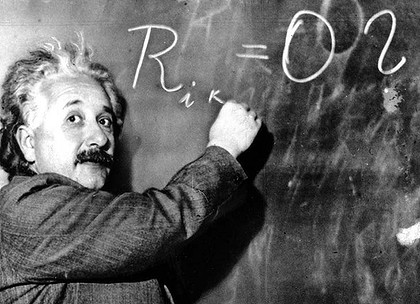
ALBERT EINSTEIN
I still argue with the voice on my GSP. Don’t look at me that way: You do it, too! The voice has a British accent; we call her Petula. And I still argue when I want to stay on I-95 and she tries to send me onto US-1. But I do have a little more respect for her — or, at least, for the device — now that I’ve read Chad Orzel’s book “How to Teach Relativity to Your Dog.”
Orzel, a professor who also wrote “How to Teach Physics to your Dog,” explains in this more recent book that the technology of global positioning systems relies on a principle of the theories of relativity first formulated by Albert Einstein. A principle of the special theory of relativity holds that a clock that is in motion will “tick” increasingly more slowly as the speed of its motion increases. The general theory of relativity, on the other hand, holds that a clock runs faster the higher it is — that is, the greater its altitude in the gravitational field.

The atomic clocks aboard the GPS satellites speed up because of their altitude and slow down because of the speed at which the satellites orbit the earth. At the altitude of those satellites, the clocks are quickened more than they are slowed, but they are still keeping time at a different rate than clocks on the surface of the earth. Each satellite emits a radio signal with the time on its atomic clock. The GPS unit picks up two or three of those signals, calculates the difference between the time on the satellite clock and the time on the surface of the earth, and uses that information to determine the distance to each satellite and, from that, the location of the unit on the ground.
Pretty cool, huh?
Still, I don’t read about physics because I’m interested in the practical applications so much as because I’m interested in the theories and principles. It can be mind-bending stuff, but if given enough concentration and persistence, it can lead to some moments of enlightenment about how the universe works. And studying the theories of relativity, in particular, can be an eye-opening series of reminders that things are not always what they appear to be.
 Orzel’s technique in this book is to explore the special and general theories of relativity, and some other matters, as though he were discussing them with his real-life dog, Emmy. This is the writer’s way of making the material more accessible to people like me, but frankly, it gets tiresome. The dog’s constant references to Orzel as “Dude” and the overworked jokes about Emmy’s appetite, disdain for cats, and fixation with chasing rabbits, grow old pretty quickly. And the premise crumbles as the dog begins to talk about physics as if she were a graduate student at Princeton.
I think anyone who picked up this book thinking that the dialogue with the dog, and the use of dog-world examples, would make physics easier to understand would be disappointed. Orzel’s explanations are clear, but he could have been just as clear without the input from the dog. More important, with or without the dog, a reader won’t get much out of this book without focusing attention on it, frequently stopping to think hard about what Orzel has just written, frequently re-reading paragraphs or whole sections and consulting the glossary at the back of the book.
 Both the special and general theories of relativity depend on the idea that the laws of physics work the same for observers who are in motion and observers who are stationary, even though an event — such as a person dropping a ball from above his head to the floor at his feet on a moving train — will appear differently to the person dropping the ball and a person observing the event while standing still on the station platform.
An interesting thing that comes up again and again in Orzel’s book is the fact that researchers are still discovering implications of these theories that Einstein expounded at the beginning of the 20th century. Already Einstein’s work has led to the understanding that the mass of an object is a measure of its energy and the two properties are connected by the constant e=mc²; that time and space are expressions of the same thing; that gravity bends light; that large objects bend space; that a moving object shrinks in length in the direction in which it is moving — the faster it moves, the more it shrinks.
Orzel’s also discusses black holes, those concentrations of mass so dense that even light can’t escape their gravity; the principles behind nuclear energy — both the relatively weak energy that holds atoms together and the enormous energy that can power cities or destroy them; the discovery that the universe is expanding at a constantly increasing rate; and the likelihood that this expanding universe began as a single point that exploded in what we know call the “big bang.”
The dog? I can take or or leave her. But reading this book — some of it two or three times — was worth the energy (which, by the way, equals mass times the speed of light squared)
Netflix Update No. 59: “The Yellow Handkerchief”
December 16, 2011

WILLIAM HURT
“The biggest disease today,” Mother Teresa is supposed to have said, “is not leprosy or tuberculosis, but rather the feeling of being unwanted.” Mother Teresa may have been referring primarily to the kind of people she ministered to, people who are poor and disfranchised, but the problems she identified can affect people of all kinds. Three people who are suffering from the “disease” of feeling cut off from any human community are the princpal characters in The Yellow Handkerchief , a 2008 film loosely based on a story by Pete Hamill.
These folks are Brett Hanson (William Hurt), who has just been released after a six-year term in prison; Martine (Kristen Stewart), a 15-year-old girl who has wandered away from her inattentive, single father and her friendless life; and Gordy (Eddie Redmayne), a Native American teenager who is on an aimless odyssey. Martine hitches a ride with Gordy after being rejected by a boy who had taken advantage of her, and Brett, who meets the pair chance, joins them on the first leg of his trip back to New Orleans to find his former wife, May (Maria Bello). May, a beautiful but solitary woman bound to the waterways of New Orleans, had married Brett after overcoming what might have been more sensible instincts, and he divorced her as a way of freeing her after the incident that landed him in prison.

EDDIE REDMAYNE
This was an odd trio in that Gordy was attracted to Martine, who regarded him as eccentric and immature, and Brett — although he was protective of the teenagers — considered them only as a means to an end, namely returning to New Orleans to find out if May would accept him after the callous way he had left her. As they continue to travel together, however, the three gain more and more insight into each other’s psyches and problems and find that in their isolation and their desire to be “a part of something” they are more alike than they had imagined.
This film was shot against the background of post-Katrina Louisiana. Besides being visually interesting, the grim landscapes and the devastation provide metaphors for loneliness on the one hand and a longing for rebirth on the other.
In spite of Hurt’s persona, this is a true ensemble piece in which he, Stewart, Redmayne, and Bello give credible and sympathetic performances.

WILLIAM HURT and KRISTEN STEWART
“It’s nobody’s business but the Turks” — Jimmy Kennedy
December 6, 2011

STEPHEN COLBERT
Stephen Colbert, in his recent irreverent commentary on the new English translation of the ritual of the Roman Catholic mass, said something to this effect: “For the record, consubstantial is now Istanbul.” For the benefit of the uninitiated, consubstantial is a technical term in the Nicene Creed that expresses something we Catholics and many other Christians believe about the nature of God. In the translation in use from around 1970 until Nov. 27, the Latin phrase consubstantialem Patri was rendered “of one substance with the Father,” but in the new rendition it reads, “consubstantial with the Father.”
Anyway, that was the occasion for Colbert to make that play on words.

JIMMY KENNEDY
That had the unintended result of reviving in my brain the memory of a song written in 1953, with lyrics by Jimmy Kennedy and music by Nat Simon, namely “Istanbul (Not Constantinople”). I don’t know how historically accurate Kennedy was trying to be, but the song in general refers to the fact that in 1930, the government of the relatively new Republic of Turkey declared Istanbul to be the one and only name of a city that had had many names — sometimes more than one at the same time — over its very long history. Istanbul was not a new name in 1930. Far from it, the name was known in some form since at least the tenth century.
Things like that used to interest song writers, and Kennedy turned out a lyric that, in part, went like this:
Istanbul was Constantinople
Now it’s Istanbul, not Constantinople
Been a long time gone, Constantinople
Now it’s Turkish delight on a moonlit night
Every gal in Constantinople
Lives in Istanbul, not Constantinople
So if you’ve a date in Constantinople
She’ll be waiting in Istanbul
Even old New York was once New Amsterdam
Why they changed it I can’t say
People just liked it better that way
So take me back to Constantinople
No, you can’t go back to Constantinople
Been a long time gone, Constantinople
Why did Constantinople get the works?
That’s nobody’s business but the Turks.
The ‘fifties being what they were, that was a big hit for the Four Lads.It was played on the radio again and again, and it was bored into my subconscious mind, where it rested happily until Colbert summoned it from the tomb.Kennedy, incidentally, was a very talented guy who wrote several standards, including “South of the Border,” “The Isle of Capri,” and “Red Sails in the Sunset.” Nat Simon and Charles Tobias teamed up in 1946 to write “The Old Lamp-Lighter.”
But Kennedy’s best-known work may be the lyrics he wrote in 1939 for “My Prayer,” which had been composed in 1926 by violinist Georges Boulanger. Glenn Miller and the Ink Spots had big hits with that song, but its most popular interation was the 1956 recording by The Platters.
“Istanbul (Not Constantinople)” has been recorded by many performers, including Bing Crosby and Ella Fitzgerald, Caterina Valente, Bette Midler, and They Might Be Giants.
You can hear the Four Lads’ version by clicking HERE.

Netflix Update No. 51: “The Angel Levine”
September 21, 2011
 The Angel Levine is one of the oddest movies we’ve watched, and from what I’ve read on the Internet it strikes people in many different ways. Some abhor and ridicule it and some like it and watch it repeatedly. A cast that includes Harry Belafonte, who produced this 1970 film, Zero Mostel, Ida Kaminska, and Milo O’Shea seems a promise of success, but the reality is more complicated.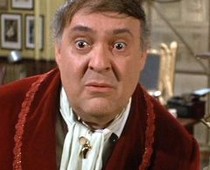
ZERO MOSTEL
Although the pessimistic Mishkin is not easily convinced of Levine’s purported state of existence, the pair slowly develop a relationship in which Mishkin becomes as interested in Levine’s welfare as Levine is interested in his.
The acting in this film — including that of Milo O’Shea in the unlikely role of the irascable Jewish doctor who attends to Fanny — is what one would expect of such reputable performers. The film is a showcase for Belafonte’s magnetism and Mostel’s mastery of the wobegone persona. Some scenes, however, are ponderous, including a long inaudible passage — which we witness from outside a drug store — in which Levine carries out a plot to get Fanny’s prescription without paying for it and a scene in which the Mishkins carry on a conversation in Yiddish, without subtitles.
The film is far from perfect, and yet it is provocative — especially in the way it portrays the dilemma of the Mishkins, who at life’s end are without the means to live in comfort and security.
 CharlesPaolino's Blog