
JACK SCANLON
We watched “The Boy in the Striped Pajamas,” a 2008 film based on John Boyne’s novel for young adults.
This movie is most effective at portraying people who can rationalize almost any behavior on the grounds that it is their duty to some entity that they perceive as being larger and more important than any individual. One doesn’t have to look too far to find places to apply this model.
The story has to do with an eight-year-old boy, Bruno, played by Asa Butterfield, whose father is a highly placed officer in the German army during World War II. The boy and his teenaged sister admire their father’s stature without thinking about the nature of the regime that gave it to him. As the movie opens, the father, played by David Thewlis, informs his family that he has a new assignment that will force them to leave their opulent house in Berlin and move to “the country.” The “country” home turns out to be a stark mansion located within eyeshot of a concentration camp – a fact the father tries to hide from his children, and particularly Bruno.

ASA BUTTERFIELD
But Bruno, being an eight-year-old boy with fantasies about exploring, is curious about what he thinks is a farm beyond the barbed-wire fence he first sees from the window of his room. Disregarding his mother’s instructions, he wanders through the woods until he reaches the fence, and there he makes friends with one of the inmates, Shmuel. Shmuel, also eight years old, disabuses Bruno of the idea that the camp is a farm, but Shmuel does not understand why he and his family are in the camp or why some of his relatives go off with “work crews” and never return. What Bruno does gradually learn is that he is supposed to hate Jews, but that Shmuel, a Jew, does not seem to him an enemy. One can’t discuss the outcome of their friendship without spoiling the experience of seeing this film for the first time.

DAVID THEWLIS
Appreciating this film requires some suspension of credibility. We are to believe, for example, that Bruno’s mother does not know until she has moved to “the country” and lived there for some time exactly what takes place in the camp her husband oversees – that Jews and presumably others who were distasteful to the Nazis are gassed and their bodies incinerated. We are also to believe that Bruno and Shmuel can carry on a friendship through the camp fence, meeting there daily in broad daylight, even playing checkers, without being discovered.
Despite those issues, this movie delivers its message with a wallop. Thewlis, and Vera Farmiga as the mother, give chilling portrayals of the impact Naziism had on the inner selves of individual men and women. Both boys are also very effective in their roles; Jack Scanlon is a heartbreaker.
“And it was always said of him that he knew how to keep Christmas, if any man alive possessed the knowledge.”
May 20, 2009

ALASTAIR SIM
I anticipate with some trepidation the release of the new Disney film version of Charles Dickens’ story, “A Christmas Carol.” This film, due to be released in November, will be a 3-D, high-tech extravaganza in which Jim Carrey plays Ebenezer Scrooge and the spirits of Christmas past, present, and future.
Carrey has said that one of his greatest inspirations for the role of Scrooge was Alastair Sim’s performance in the 1951 British movie “Scrooge,” which was released in the United States as “A Christmas Carol.” Having read all of Dickens’ work, having read all of his novels mulitple times, having read “A Christmas Carol” at least once a year since 1955, I regard the Alastair Sim film to be the best attempt at translating the story to the screen – although I maintain that the story should be read on the page as Dickens intended, and that it can only be diminished when it is tampered with by screen writers and directors.

MERVYN JOHNS and ALASTAIR SIM
What concerns me is that the Disney bunch will trivialize Dickens’ angry attack on materialistic values – a mood not entirely out of place in the world of AIG executives and Bernard Madloff. As it is, one has to search long and hard to find an adult who reads Dickens at all. Skewed versions of his work only serve to distort its meaning and obscure its value. Millions of kids who are exposed to such a presentation will go through life thinking it represents Dickens’ intentions.
I realize that I am an anachronism for suggesting that people read the classics without being required to. It’s too much work for a generation whose reading matter must fit on the screen of a Blackberry and be brief enough to be digested before the light changes to green. I once suggested that a local book club lay off the contemporary novels for a month and read “Oliver Twist” or “Great Expectations,” and the suggestion was brushed off as if it were babble coming from a dark corner in a nursing home.

JIM CARREY as SCROOGE
One of the things that makes me suspicious of the Disney movie is that Carrey will play four roles and – according to the publicity – give each one its distinctive personality. What is the purpose of that? It sounds like little more than a stunt, and the fact that the producers are approaching the film in this way – and the memory of all the wacky imagery that has characterized some of Carrey’s successful roles in the past – don’t seem consistent with the mood of Dickens’ story.
Call me old-fashioned. I am.
A clip from the film can be seen at this link:
http://www.cinematical.com/2009/05/18/first-footage-from-disneys-a-christmas-carol/
If you love her, leave her in peace.
May 12, 2009

Farrah Fawcett
People who devour the details of celebrities’ personal lives should read the interview with Farrah Fawcett published in the Los Angeles Times on Monday. The interview – the only one the actress has given in more than two years – was conducted in August and was published in advance of a television program regarding Fawcett’s struggle for privacy, to be broadcast this weekend.
Fawcett was able to prove that an employee of UCLA Medical Center had illegally gained access to Fawcett’s medical records and had sold the information to the National Enquirer. That employee eventually resigned and has since died of cancer – the same disease for which Fawcett was being treated at UCLA.
The reporting of Fawcett’s illness has been revolting – and not only in the Enquirer. I have complained before about the nearly gleeful manner in which some television news anchors spit out the “headlines” on the latest developments in the woman’s illness – which appears to be terminal.
The L.A. Times story included an explanation from Brandy Navarre – identified as vice president of a “paparazzi agency” – for the compulsion to hound a woman who may be dying.
“Particularly when it’s something sexy or scandalous,” Navarre told the paper, “or on the negative side, something kind of tragic and sad, for whatever reason, the public is interested in those types of stories.”
The public is interested, see? And that’s what made it profitable for a hospital employee to commit a federal crime and for a so-called newspaper to induce her with cash to do what the editors clearly knew was a crime. Navarre attributed the interest in the case to “the public’s love of this woman.”
If the public loves this woman, why doesn’t the public – and the media that serve the public – respect the privacy they would expect for themselves under such circumstances and leave Farrah Fawcett alone.
Buona fortuna, Nonna Maria!
May 10, 2009

MARIA DONATI
It’s only May, but I’ve already chosen my favorite political candidate of this year. It’s Maria Donati, who is running for a seat on the municipal council in Saludecio, a little town in the Italian province of Rimini. Signora Donati is 102 years old. According to a story in the newspaper “Il Resto del Carlino,” civic leaders in the town at first asked the signora if she was insane when she offered herself as a candidate, but then – by their own account – they pondered the ancient motto “Chi si ferma e perduto” – “Whoever stops is lost” – and changed their minds.
Sgna. Donati – popularly known as “Nonna Maria” – grew up in a large family in the Republic of San Marino. In fact, the elected officials in Saludecio now include many of her relatives. During World War II, the Nazis deported her husband, Poverelli Aurellio, to Germany. Although she was pregnant, and although the region was under air attack, she rode a bicycle to the headquarters of the Wehrmacht to badger authorities there about her spouse’s status. They were reunited after about a year.

SALUDECIO
The implication of the story in “Il Resto del Carlino” is that Nonna Maria never sits still as it is. She lives with her nephew and keeps busy with cooking and other chores around the house, but otherwise is likely to be off visiting neighbors – and now she will be involved in evening meetings with the other candidates.
Matteo de Angelis, who wrote the story, commented at the end that Nonna Maria’s candidacy shows that “nonostante l’età, tutto è possibile” – in spite of age, all things are possible. Stories like this always remind me of George Abbott, who died in 1995 at the age of 107. At the time, he was in the midst of revising the second act of ”The Pajama Game,” which he had written in 1954.
“Even at my age,” Nonna Maria said, “it is possible to propose many ideas.” And she might have said, especially at her age.
Alma mater studiorum, you guys
April 23, 2009

BARBRA STREISAND
I learned the other night that Arthur Laurents, who wrote the books for “West Side Story” and “Gypsy,” is a graduate of Erasmus Hall High School in Brooklyn. That’s one more notch in the belt of a school that has been serving students in Brooklyn since 1786. I learned of it while reading the playbill at the George Street Playhouse, where Arthur’s latest work, “New Year’s Eve,” is having its world premiere. Arthur is 91, which may say something about the good old Brooklyn stock.
Erasmus Hall first came to my attention in the 1960s when my childhood friend Joe Cantalupo was enrolled there. He was in the same class as Barbra Streisand, and when she first became a public figure, Joe showed me her picture in the Erasmus Hall yearbook. Streisand’s latest project is a musical program scheduled for Saturday night on CBS.

ERASMUS HALL
Erasmus Hall has an impressive roster of graduates. To name a few: performers Beverly Sills, Susan Hayward, Jeff Chandler, Lainie Kazan, Bernie Kopell, Stephanie Mills, Donny Most, Barbara Stanwyck, Norma Talmadge, Eli Wallach, Shirley Booth and Mae West; playwright Betty Comden; former New Jersey Gov. Jim Florio; Yankees pitcher Waite Hoyt; comedian Marty Ingels; sportswriter Roger Kahn; and authors Bernard Malamud and Mickey Spillane.
Among those who just passed through were singer Neil Diamond, actor Gabe Kaplan, quirky chess champion Bobby Fischer, and Moe Howard, one of the Three Stooges.
Besides the remarkable legacy of this high school, its roster of alumni speaks to the contributions Brooklyn has made to American culture. There’s something palpably inspiring about the place, something you can feel if you get a chance to hang out there or are fortunate enough to live there.
So you think you got troubles?
April 22, 2009

SANDRA DENNIS

LENIN IN REPOSE
Lenin has been wearing the army type jacket for 17 years as his mummified body was resting in the Mausoleum on Red Square . His clothes need to be changed once in three years. Most recent change of Lenin’s suit took place in 2003.
The funding is hardly enough for embalming activities, specialists of Lenin’s Tomb complain. “The state has not been assigning anything since 1992. We live at the expense of the Lenin’s Tomb Fund. Then there is this crisis going on,” an embalmer said.
Lenin’s body is dressed in expensive custom-made suits made of Swiss lustrine – the fabric, which Vladimir Lenin preferred when he was alive. The suit has a modern cut, which is still popular nowadays in men’s fashion. If specialists do not change the suit during the prophylactic works, they steam-clean and press it thoroughly: a slight speck of dirt can ruin the embalming effect.
Lenin’s mummy has been exposed to biochemical treatment this year. It was placed in the bathtub filled with the solution of herbs that produce the embalming effect. “This is a unique technology. It will help the body keep up its shape for some 100 years,” an embalmer said.
Lenin’s Tomb opened its doors for the general public again on April 18. Russia will mark the 139th anniversary of Lenin’s birthday on April 22. A visitor is first shown to the check point in the Tomb, where they will have to leave photo and video cameras, cell phones, large metal items and any types of drinks. Visitors are not allowed to either eat or drink during the viewing. Men are supposed to remove hats. It is not allowed to keep one’s hands in their pockets during the viewing either.
He was nice to mice
April 14, 2009

Bo, a dog
One thing is certain: The president, no matter who he is or what he does, can’t win.
The Christian Science Monitor, for one, was reporting today that the First Man, if that’s the counterpart to the First Lady, is getting flack for accepting Bo, the dog, as a gift from Edward F. Kennedy after promising before the November election that the White House dog would be adopted from a shelter. This chatter is going on at the same time that folks are, on the one hand, giving the president credit for approving the use of lethal force against the pirates holding an American sea captain and, on the other hand, predicting that the same decision will result in escalated violence against Americans and American interests.

Andrew Johnson
With regard to the pet, the 44th president of these United States might have been better off emulating the 17th. Andrew Johnson discovered a family of mice that appeared in the Oval Office each evening. Instead of having them eradicated, he started leaving them bits of food. He got along better with those mice than he did with the Republicans in Congress, who would have lynched him if they thought they could get away with it.
Field hollering
April 12, 2009
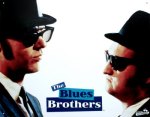
BLUES BROTHERS
The following appeared during the past week in the Vatican newspaper “L’Osservatore Romano.”
By Tania Mann
From cotton fields to city streets, blues music tells the story of a people struggling to survive. Its syncopated rhythms convey a meaning as deep as the raspy voices crooning its melodies. The blues has evolved along with the history of black people in the United States – a journey marked by persecution but also by progress.
Theirs is a story that today opens to a new chapter, being written by a man who calls the city that transformed the face of the blues: “Sweet Home Chicago”. Thus a closer look at the origins of blues music provides insight not only into black history but also into the context from which President Barack Obama, who lived in the Windy City before his move to the White House, entered the international scene.
It was in Chicago that blues music was modernized, where it adapted into a form that could then be easily diffused into popular culture. It would permeate many other musical genres and create the foundation of rock ‘n’ roll, gospel and the British pop made famous by the Beatles. Today, the blues rhythm beats on as the heart of American mainstream music, which in turn plays an influential role in the music world across the globe.
The twelve-bar structure found in the blues today is the same as that which the slaves invented as they worked in the fields, using music to communicate. This system of “field hollering” allowed the slaves to exchange secret information and indicate potential escape routes.
Chicago blues grew from these roots in the Mississippi Delta, where thousands of blacks lived before moving north during the Great Migration, which occurred in two waves between 1913 and 1970. Its heavy backbeats recall the oppression of slavery, while the charged guitar riffs and gravelly voices in the foreground express an insatiable longing for freedom.
In the 1930s, the Great Depression propelled the blues forward by providing not only greater reason for people to lament but also more opportunity to come together to perform and listen to music. From that decade on in the ghettos of Chicago, residents organized “rent parties” to raise money for families with financial difficulties. Thus listening to the blues also became a concrete experience of solidarity.
By this time, blues musicians in Chicago had already begun to create a more urban sound, distinguishing their own style from more rural or classic forms. This new sound reflected, with its quicker tempos, the frenetic pace of working life in an industrial metropolis.
Barack Obama
“It was in these neighbourhoods that I received the best education I ever had”, President Obama said in a speech announcing his presidential bid. With this statement he recalled his work in Chicago from 1985-1988, organizing job training and other programs for the working-class residents of Altgeld Gardens, a public housing project amid shuttered steel mills.
The blues is a lyrical expression of both “the agony of life and the possibility of conquering it through sheer toughness of spirit”, writes Ralph Ellison in Invisible Man (Random House, 1952). This work, set in the newly industrialized Chicago of the 1930s, analyzes the problem of the black man’s identity in U.S. culture.
The people of Chicago are generally known as being “tough”, if only for having to endure the severe weather that results from its position on the edge of Lake Michigan. For this reason the blues, in the tenacity of its sound, personifies the Windy City (even if it was originally named as such in reference to its long-winded politicians, not its notorious weather).
The spirit of a city ever aware of life’s challenges – of a city where people are accustomed to adapting to change – is manifest in the blues. The city and the music have each shaped the other into what they are today.
But the influence of Chicago blues has extended much further than its own streets. This is seen clearly in the career and the heritage left by the man who is said to have defined its sound: Muddy Waters.
His grandmother gave the musician this nickname, after the puddles of the Mississippi River in which he played as a child. Waters transferred to Chicago in 1943, where he received an electric guitar as a gift from his uncle. With this instrument – the volume of which he intensified by using a pick – Muddy Waters revolutionized the city’s musical scene.
In addition to the guitar, the harmonica and bass were also amplified in order to compete with the loud atmosphere of the locales where blues bands played. The first to win this battle against the noise with his harmonica was Little Walter. He did so simply by cupping his hands around the instrument.
Muddy Waters
From then on these methods of amplification and electrification characterized the Chicago blues sound. This new sound was part in thanks to the new possibilities that came with the end of the Great Depression and World War ii. Muddy Waters and the other blues artists in Chicago became a vehicle for the optimism emerging at this time. It was here that the now widespread image of a small stage in a smoky bar, crowded with musicians improvising on the electric guitar, harmonica, piano, bass and drums, was born.
Today, it is not difficult to find evidence of the impact these musicians have had on the music world. It was, for example, Water’s song “Rolling Stone” that both the magazine and the rock group took their names. The same song was very probably an inspiration to Bob Dylan when he wrote “Like a Rolling Stone”. And it was reported in Rolling Stone magazine that among the playlists on President Obama’s iPod are songs by the group of the same name, by Dylan, and also by Howlin’ Wolf, who was known as Waters’ rival.
The list of artists and musical genres influenced by Chicago blues is endless. Among the numerous names of note are Chuck Berry, Elvis, Janis Joplin, Jimi Hendrix and also Eric Clapton, who has carried the inheritance of the blues from the seventies through to the present.Eric Clapton
In the hands of the same “Slowhand”, as Clapton is known, the Chicago blues sound has evolved with the changing music scene while still remaining faithful to its deepest roots. A powerful witness to this is one of his recent albums, “From the Cradle”, composed entirely of songs by traditional blues musicians. Among them is Willie Dixon, one of the greatest musicians to have played with Muddy Waters.
But the electrified blues that was founded in the post-war era is not only a thing of the past. The music continues because the stories it recounts are still being written. Worth noting is that this year’s list of Grammy nominees for blues music included several protagonists of Chicago’s musical revolution. Among those carrying this tradition into the modern day is Buddy Guy – known as Muddy Waters’ successor – who opened his own club in 1989 in the heart of downtown Chicago.
The culture which developed around the blues clubs that have sprouted up around the city over the years is indeed thriving, creating a music scene that draws tourists and natives alike. Today, many of the most popular blues clubs are found in neighbourhoods inhabited predominantly by young white people.
John Mayer
In fact, the evolution of blues music in the city also entailed a diffusion into white culture. For proof of this on a wider scale, one can look to artists such as Clapton, Dylan, and even younger musicians like John Mayer. The latter, an artist who had already gained wide acclaim on the pop scene, surprised everyone with a blues album in 2005, featuring Clapton, Guy and B.B. King as collaborators.
Surely one cannot fail to acknowledge the extent to which the famous Blues Brothers, with their “mission from God”, have served to propagate blues music and culture into the mainstream. Working on the Chicago-based film inspired the “brothers” John Belushi and Dan Aykroyd, never before musicians, to form their own group modelled after that featured in the movie.
While Chicago blues has survived in its purest form through the revolution’s biggest names and their successors, the deep influence it has had on the many genres of today’s chart-topping music is not to be ignored. Just one example is the widespread diffusion and popularity of rhythm and blues (R&B), a term that was originally used for Chicago blues but has extended to encompass much of black music heard today.
It becomes evident from the longevity of Chicago blues – in its original form as in its many variations – that at its heart this music expresses a depth of human emotion which stems from the very essence of human experience.
For Ellison, the blues does not offer a solution to the human condition. It offers instead a strong resolution to overcome suffering: a “yes” to a life marked by grace and irony, and a defiant decision to preserve the human spirit. Its sound is marked by sadness but also by fierce determination, thus reflecting the history of blacks in the States. In a time of global crisis, the President who pens this story’s newest chapters meets a challenge that will undoubtedly demand the same tenacity.


(©L’Osservatore Romano – 8 April 2009)
“The pipes, the pipes are calling”
April 8, 2009

DANNY THOMAS
The Los Angeles Times is reporting today that of the 71 scripted pilots that are contending for spots on the broadcast schedules of five TV networks, 33 are half-hour comedies. The television industry evidently thinks we need a good laugh. How many good laughs we’ll actually get remains to be seen. The kind of writing that has characterized shows like “Taxi,” “Seinfeld,” “Frasier,” and “The Bob Newhart Show,” is hard to come by, and many television series are obvious at best and vacuous at worst. I wonder if folks more than 50 years from now will enjoy re-runs of “Surviving Suburbia” the way they do re-runs of “I Love Lucy” and “The Honeymooners.” In fact, I wonder if folks next week will watch an original episode of “Suburbia.” Chuck Barney, writing in the San Jose Mercury News, said it for me: It’s not that this is a horrible show or even the worse sit-com on ABC. “It’s just that it has no real reason for being. It’s a series that looks and feels like hundreds of other sit-coms, with the same kind of tone, the same forced one-liners and the same ridiculously annoying laugh track.”
Why has television comedy declined so much? It might have something to do with the form. A couple of playwrights have told me that they wouldn’t write sit-coms no matter how much it paid, because they refuse to force a story into a shape predetermined by the schedule of commercials. I wonder if it also has to do with the backgrounds of the producers, writers, and actors, many of whom have grown up in television. I was talking with Marlo Thomas last week about her upcoming appearance at the George Street Playhouse, and that naturally evoked some conversation and even more memories of her father. Danny Thomas had a genius for humor, but he also had a chance to refine his technique in nightclubs, on the radio, and in movies before he ever went before a television camera. He understood comedy – understood that it had to have structure, consistency, and an underlying sympathy – all of which were factors in the success of his own show, “Make Room for Daddy,” and in “The Dick Van Dyke Show” and “The Andy Griffith Show,” which he later produced.

MARLO THOMAS
Marlo Thomas – who has her own package of insights when it comes to entertaining people – opens at George Street next week in Arthur Laurents’ new play, “New Year’s Eve.” She told me her father used to say, “Do you know what I would have been if I hadn’t been a comedian? A pain in the ass.” “And I think he really meant that in the deepest sense,” she said. “He would have had no outlet. He would have been a butcher driving everybody crazy trying to make jokes about the lamb chops.” That compulsion to be a storyteller – as opposed to the compulsion to fill a half-hour time slot at the expense of some nearly bankrupt auto manufacturer – may have been more at work in those who created television programming during the medium’s first three decades than it is now.
“God save our gracious queen ….”
April 2, 2009

MICHELLE OBAMA
Television newscasters last night were preoccupied with questions about why and how the Obamas touched Queen Elizabeth II. The Obamas gave the queen the two-handed shake, and that – according to people who care about such things – is reserved for those one knows very well, indeed. Also, Michelle Obama put her arm around the queen at one point, and that – so the experts say – is flirting with impropriety (although it was obvious in the clip that was run over and over and over again that the queen also briefly touched Michelle Obama’s back during that encounter). And, of course, there’s the iPod.
This business gets me thinking again about the purpose of monarchy in the 21st century, at least in places where the monarch does not govern. Monarchs who do govern are problematic in themselves, but that’s another issue. I discussed this once with a chemist in Denmark. We were having dinner, and I asked him why he thought a country like his – advanced in most ways – hangs on to the monarchy, in that case, Queen Margrethe II. Denmark has so far removed the monarchy from any real influence in government that members of the royal family do not vote in elections, although they have the right to. The chemist thought about this for a few seconds; he seemed to never have considered the question before and certainly didn’t have a pat answer. Finally he said, “Well, she is Denmark, isn’t she?” which I guess is as good an explanation as any. Of course a flag serves the same purpose, but if you hug a flag, it doesn’t hug back.
 CharlesPaolino's Blog