“Papa played the dobro this-a-way”
March 18, 2009

ADAM LAMBERT
This morning, I came across an account in the Los Angeles Times of last night’s “American Idol” broadcast. I missed it. How careless of me to have accepted an invitation to a dinner party on “Idol” night. Well, truth be told, I wouldn’t have watched it anyway. In fact, I have never seen more than a minute or two of an “Idol” broadcast, and that only two or three times when someone else was watching it. This has as much to do with my not watching television very much as it has to do with any objection to that show in particular. But what caught my attention in this article was the reference to the contestants’ “reverence for the most traditional of American genres – country music.” What did the writer mean by “country music”? How did country music – whatever the writer meant by it – become more “traditional” than folk music – whatever I mean by that? And, Miss Turner, what’s “reverence” got to do with it?
I presume the writer had a straight face when he or she wrote that several contestants delivered “solid but respectful versions of country standards by Garth Brooks, Dolly Parton, and Carrie Underwood.” That’s Carrie Underwood – the “American Idol” graduate who was salutatorian of her high school class in Oklahoma. And the writer soberly added that Adam Lambert’s “psychedelic, sitar-backed” rendition of “Ring of Fire” was – according to an audience member visiting from Missouri – “disrespectful to country music.”
If we owe some sort of “respect” to country music, is it to be found in the over-produced material that Dolly Parton has been disgorging for the past few decades? To me that’s as “country” as Jackie Wilson’s “Alone at Last” was classical. “Country” has the smell of stale beer about it. “Country” is what we used to find in the 1960s at the old Coral Bar in East Paterson when Elton Britt, a singer with gold hanging on his wall, would drive himself up from Maryland to perform for a few dozen patrons who would recognize his voice even if their vision was blurred. “Country” is what we found back then at open-ended shows at the old Mosque Theater in Newark, where headline acts sometimes had to be nudged off the stage to make room for Little Jimmy Dickens or Ray Price or Webb Pierce, who were waiting in the wings. If a singer appeared in a torquoise outfit covered with rhinestones, the clothes just emphasized the common nature of the man or woman inside. “Country” was real, and if there was anything to respect in it, it was the unfiltered, unapologizing reality. But then, “reality” has taken on a different meaning in our time.
“Roll ’em!”
March 16, 2009
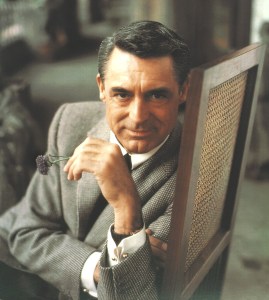
CARY GRANT
I don’t understand why a television channel that exists solely to present movies – and presents each movie with some kind of historical context – does not let the credits run at the end of the film. I am referring to Turner Classic Movies. It’s frustrating. Last night, for example, we watched “Talk of the Town,” a 1942 flick that starred Cary Grant, Ronald Coleman, and Jean Arthur. I was curious about the actor who played Coleman’s black valet, because the character was an elegant figure who exhibited a deep intellect and spoke with an almost Victorian propriety. No credits. I found out on IMDB that the actor was Rex Ingram, who was born on a riverboat in Mississippi and around 1916 became the first black man to earn a Phi Beta Kappa key at Northwestern University. Ingram – not to be confused with the white director of the same name – appeared in nearly 50 properties – most of them movies.

REX INGRAM
Anyone who goes to a movie with me knows enough not to get up before the screen goes dark for good, and I know I’m not the only one who likes to see the names of the best boy and the caterer and – especially important – the music credits. Frequently, too, there is a lot of care taken in choosing the music that plays over the credits. I would never turn off “Dominick and Eugene,” for instance, without watching the credits roll over “Goin’ Down to Rio.” But the least I expect is to read the names of the actors in case I want to find out more about them. But that’s me – never satisfied,
Say it ain’t so!
March 15, 2009
 There was a near miss at Totonno’s pizza joint on Coney Island. A fire – apparently originating in the coal used to fire the oven – has shut the place down, but word is that it will reopen. This place has been in the same location and operated by the same family since 1924. It’s the only pizza place in the States that can make that claim. The family has a few more locations, but this is the original. We went there last year, just before Memorial Day. It’s a kick. You can’t park around there when the beach is busy – as it was that day – and when you finally do arrive, you have to wait outside until someone tells you to come in. It’s that small; it can accommodate only a few people at a time. The interior looks as it should. In other words, nothing has changed there since the first Coolidge administration. The pizza is out of this world, and I don’t say that about most pizza. It’s at least as important that this place has lasted all this time, that it’s a tourist attraction but also a mainstay of its neighborhood. A story like Totonno’s can be told more and more rarely in this country. Having grown up frequenting such institutions – Doc Pawlek’s drug store, Izzy Kaufman’s appliance store, Old Mr. Birkmeier’s delicatessen, Louie Grossi’s shoe repair shop, and my own grandfather’s grocery store, virtually all of which are long gone – I treasure such spots where I can find still find them. Va bene, Totonno!
Netflix Update No. 2: “Junebug”
March 14, 2009

ALESSANDRO NIVOLA
Last night we watched “Junebug,” a 2005 film with Alessandro Nivola, Embeth Davidtz, Amy Adams, Benjamin McKenzie, and Celia Weston. The story concerns Madeleine (Davidtz), who owns an “outsiders” art gallery in Chicago. She gets wind of a primitive artist in North Carolina and decides to go in person to get him to sign on with her gallery. Her new husband, George Johnsten (Nivola), takes the trip with her in order to introduce her to his family, who live a short distance from the artist. This family – parents, a son, and the son’s pregnant and childish wife – Adams, who got an Oscar nomination for this performance – constitute a delicate balance of no-nothingism, introversion, and frayed nerves. Madeleine, who has not been prepared for this encounter and who understands nothing about this family or its environment, unwittingly becomes a kind of bizarro-world bull in the china shop. This film is an interesting psychological study of each of the major characters and a caution against judging folks based on their behavior alone. The director, Phil Morrison, likes silent landscapes and occasional black screens, as though he’s saying: “Hmmmm, let’s think about this for a minute.” That’s a good recommendation for the film as a whole. It’s the kind of film that requires at least one more person in the room – viewers are likely to discuss it as it evolves – and someone to talk with further later on.
Goin’ home.
March 12, 2009

GEORGE CLOONEY
Charles Dickens said that when he finished writing “David Copperfield,” he felt if as someone had died. In a trivial way, I’m starting to feel that way about the approaching end of “ER.” I can’t explain my attachment to this show – especially in the past couple of years which I have spent straining to hear at least every third word uttered by Parmindra Nagra, who could win the Emmy for mumbling – to go along with her Guinness entry for sustained angst. I don’t even like the show enough to ever watch a re-run – on TV, never mind on line. Now that the end is in sight, the producers have been bringing back former characters, including Noah Wiley, who had a contractual obligation to do the encore. If he had known he was going to wind up on dialysis, he might have been more careful with his fountain pen. Julianna Margulies and Maura Tierney are among those expected at the reunion. Anthony Edwards, Abraham Benrubi, and William Macy have already picked up their name tags. Smart money says George Clooney will be nowhere in sight. Meanwhile, my regular television viewing will have been reduced to “Seinfeld” reruns. For the rest, baseball in season and occasional TCM movies and PBS productions – such as that wonderful “American Masters” profile of Jerome Robbins – will have to do. “Gray’s Anatomy” and “Scrubs” are just not up to – or down to – my standards for medical shows. It’s a been a long run from “Medic” through “St. Elsewhere” and “Chicago Hope,” but now, I’m afraid, I’m a permanent outpatient.
The old order passeth
March 11, 2009
 When Dan was fixing the Beetle the other day, he pulled out the radio in order to get a code he needed. Don’t ask. The point is that when he pulled the radio out it fell apart in his hands. Literally – the facing and one of the circuit boards actually crumbled into bits. Dan is getting me another one from the VW dealer, and it’s going to be cheap, because the radio is obsolete in the sense that it plays audio casettes. I couldn’t be happier, because the radio in Pat’s car plays only CDs, and I have scores of audio tapes – store-bought and bootlegged. Life passes us by in such a hurry these days. Audio tapes were an inovation an eyeblink ago, and now they’re obsolete. The same thing applies to that Beta video player/recorder under my desk and all the Beta tapes that are squirreled away in the garage and in the den. I have all the “Taxi” episodes on Beta tapes. Why did I bother, Latka? Who knew that those tapes would so soon go the way of the flour sifter? The Baltimore Sun reported today on a video rental store in town that has been in business for 20 years – imagine! – and still does a brisk VHS business. One of the reasons for its durability is that the store has a very large selection and stocks hard-to-get stuff such as the complete works of the Russian director Sergei Einstein.
Dan is going to put the new radio in tomorrow. Where did I put those Jimmy Durante tapes?
http://www.baltimoresun.com/entertainment/movies/bal-americain0310,0,6848231.story
“Hey, aren’t you ….?”
March 8, 2009
 The man mixing it up with Carl Malden in this photo is George Mathews, whose face was as familiar as the next door neighbor for almost three decades. Mathews appeared in nearly 60 properties – mostly television, including many of the major series. He made himself immortal, in a way, when he played Harvey, the tough guy Ralph Kramden – with a lot of help from Ed Norton – challenges to a fight after a poolroom argument in “The Honeymooners.” I don’t know how much stage experience he had, but in this photo he is appearing with Paul Newman, Malden, Patricia Peardon, and George Grizzard in a 1951 Broadway production of “The Desperate Hours.” We saw George Mathews last night when we watched “Pat and Mike,” one of the seven movies costarring Katherine Hepburn and Spencer Tracy. Mathews, as always, played a heavy – one of a trio of thugs trying to pressure Hepburn, through Tracy, to throw a golf tournament. George Cukor had the three thugs play it for laughs, and Mathews contributed at least his share. He appeared on “Death Valley Days,” “The Phil Silvers Show,” “Alfred Hitchcock Presents,” “Gunsmoke,” and “The Untouchables,” among many other programs, and his movies included “The Man with the Golden Arm.” Mathews, who died in 1984, was the quintessential actor that everyone recognizes but no one can name. On the Internet, at least, it seems impossible to find out anything about the man beyond the dates and places of his birth and death and the list of his television and movie appearances. In death as in life, he is The Unknown.
“Ain’t nobody’s business if I do”
March 8, 2009
 As we were leaving the George Street Playhouse in New Brunswick, Pat and I were discussing whether we would find any video of Bessie Smith on the Internet. A man who had come out before us overheard us and volunteered that there is a clip on YouTube of Bessie Smith singing “St. Louis Blues” in the 1925 film by the same name. Although it seems to have been a critical success, this film is all but lost. The YouTube clip runs a little more than nine minutes, and it gives a sense of the power of Bessie Smith’s performance. Of course, there is a lot of audio available from her recording career.
We were at the George Street Playhouse to see “The Devil’s Music,” a one-act musical show that recounts the life of a woman who was a major star in the 1920s and ’30s but is largely forgotten today. Miche Braden plays the singer and does justice the part. An interesting thing about Bessie Smith is that she led a life of drink and sex and violence that most of us would not condone in the abstract, but it was that very mode of life that fed the blues that she sang. She paid heavily for her recklessness, paid in ways that broke her heart, but somehow she tore out of her sad life a body of work that speaks for many souls who had the blues, too, but neither the voice nor the spirit to make their misery heard and make the rest of us think twice about dismissing them.
http://www.dailymotion.com/video/xrd9c_bessie-smith-st-louis-blues_music
Netflix Update No. 1: “Starting Out in the Evening.”
March 2, 2009
 At the suggestion of a friend who seems to have unerring taste, we watched “Starting Out in the Evening,” a 2007 film with Frank Langella, Lauren Ambrose, and Lili Taylor. This film, based on a book by Brian Norton, concerns Leonard Schiller, a retired professor whose run as a successful novelist is behind him. He keeps up a rigid routine as he works on his fifth novel, but it already has been ten years in the making. His books are out of print, and he is forgotten by everyone except the occasional literary wonk. One of the latter is Heather Wolfe (Ambrose), an Ivy League graduate student who wants to base her master’s thesis on Schiller’s work and who thinks she can simultaneously call him the reading public’s attention. Schiller at first rejects the idea of such a distraction, then cautiously agrees to cooperate with the student, and eventually becomes involved in a uniquely delicate personal relationship with the young woman. The secondary and related plot involves Schiller’s daughter, Ariel (Taylor), who is about to turn 40 and is anxious about her prospects for ever having children. Her decision to renew a relationship with a former boyfriend – for whom Leonard has no respect – is a source of tension between her and her father. Beneath both of these plots is a critical part of Leonard Schiller’s life – the turning point in his marriage – that he had hoped would remain buried in the past.
The complex story which explores issues of personal freedom is very nicely performanced by Langella, Ambrose, Taylor and Adrian Lester as Ariel’s rediscovered lover. Those who wish to can become engrossed in matters of literary criticism – the subject of a lot of the dialogue in this film – but the complex human stories these actors tell were enough to keep us from looking away.
“… and unto dust …”
February 25, 2009
 I always feel a little guilty right about now in the rolling year. No, not because we’re supposed to feel guilty during Lent. Not exactly, anyway. I get a little self conscious about all those Lents in my childhood, the Lents everyone in my house and people of our acquaintance couldn’t wait for. In those days, the emphasis in Lent was on the “giving up,” at least in popular culture. For me, that meant a hiatus in the constant gorging on candy and ice cream and Yoo Hoo as I worked, if you can call it that, in my family’s grocery store. Naturally, I looked forward to resuming that self-destructive behavior, but I wouldn’t have traded all the candy and Yoo Hoo in the world for what was unleashed in my grandmother’s kitchen when this day came.
Like many women of her generation and background, Grandma had a repertoire of Italian meals that she cooked only during Lent. Besides being restricted to the season, they were parsed out on certain days during the five weeks of “penance.” My favorite was the hand-made pizza with wild mushrooms Grandpa had picked up in Ramapo. I even loved the spaghetti with anchovy sauce, though I don’t think I could stomach it now. Of course, whenever she was cooking – and when wasn’t she cooking? – Grandma would call me into her kitchen and slip me whatever preliminary scraps were available – a clear violation of the fast. While some people, including me, still practice some material sacrifices during Lent, the season has a much more positive spin now than it did in the 1940s and ’50s. Presumably, those who endured the trials of those days piled up treasures in heaven, as we used to say. I piled up IOUs.
 CharlesPaolino's Blog