The Toas-Tite: 60 years old and still cookin’
July 31, 2010
 If I had to pick out my half dozen favorite possessions, one would be a 60-year-old, permanently blackened device known as the Toas-Tite. My mother bought it around 1950, she gave it to me when I got married and moved out, and I still use it — as recently as today.
The Toas-Tite consists of two cast-aluminum “clam shells” joined with a hinge and opened and closed with two long handles. In the most basic use of this gadget, one puts a slice of bread on one of the shells – with a little butter on the down side to prevent sticking. Lay on some cheese, maybe a slice of tomato, and then put on the second slice of bread — again with a little butter on the outside. Close the handles and cut away the excess bread. Then grill the contents over whatever heat source is handy, turning the Toas-Tite frequently to avoid burning the bread while the cheese melts. When the Toas-Tite is opened, the result is a sealed round hot sandwich.
 Of course there is no limit to the type of bread or the nature of the filling one can use in a Toas-Tite. I stick to the traditional melted cheese, sometimes adding ham and bacon and — just this afternoon — olive loaf. But I saw a recipe today that involved bleu cheese, figs, and prosciutto, and another that called for bananas and peanut butter. I also saw a variation in which already–prepared crepes were used instead of bread.
 Recently, we introduced another generation to the Toas-Tite — namely, our ten-year-old granddaughter Alexa. She’s hooked.
The patent for the original Toas-Tite was issued in 1949. A later version, which used sheet instead of cast aluminum, was inferior because it was too easy to burn the bread before the filling was melted or thoroughly toasted. Although the Toas-Tite hasn’t been manufactured for many years, it is possible to buy the original model on the Internet.
Except for being blackened by repeated heating, the Toas-Tite I have is just as it was when Mom bought it and probably will last long enough for Alexa to spring it on her own kids. I don’t think it’s simplistic to say that it’s a testament to the manufacturing standards of the past. I like that about it, but what I like most is that it’s a tangible, useable link to my mother, and one that she would have appreciated.
You can find a lot of information about the Toas-Tite, including recipes, at THIS LINK.
Tales our mothers told us
June 20, 2010

Image from purplepoddedpeas.blogspot.com
As we were sitting in traffic in a forest somewhere north of Port Elizabeth, the conversation turned to the dragonfly that was making several vain attempts to land on the black Mustang in front of us. It was 89 degrees, so we wondered if the insect found the metal trunk lid too hot to handle. What with all the trees on both sides of the road, there wasn’t much else to inspire us, so I asked Pat if she had called dragonflies by their alias, darning needles, when she was a kid.

healthyhuman.net
It turned out she had used that term, and that , like me, she had been told by adults supposedly looking after her welfare that a dragonfly left to its own devices would sew her mouth shut. I heard that story from my mother, and I believed it. Of course, I know better now – intellectually, that is – but I still shy away from dragonflies.
I have since learned that dragonflies are good friends of ours in that they eat mosquitoes and flies. I don’t know why adults who perpetuated the lip-sewing myth singled out the dragonfly for opprobrium, especially since those same adults told us kids that we could do hard time for molesting a praying mantis — and precisely because the mantis is a valuable predator.
 Whatever the reason for this vicious canard against the dragonfly, it has a long history, as explained in this excerpt from scienceessayist.com:
In their book A Dazzle of Dragonflies, Forrest Mitchell and James Lasswell explain that the dragonfly-epithet “devil’s darning needle” has its origins in Europe of the Middle Ages. The long and slender shape of the insect’s body, combined with the superstitious belief that it, like the fly, was in league with the darkest of forces, produced a myth durable enough to make the journey with the colonists to the United States. Today in Iowa, the authors write, “devil’s darning needles sew together the fingers or toes of a person who falls asleep…in Kansas, they may sew up the mouths of scolding women, saucy children…and profane men.”
Dragonflies, of course, do no such thing. In fact, creatures belonging to the order Odonata (Latin for “toothed,” a reference to the chewing mandibles dragonflies share with most other insects) and the infraorder Anisoptera (Latin for “unequal wings,” because dragonflies have broader hindwings than forewings) have no sting, let alone needlepoint. They are perfectly harmless to humans, if not to their prey: smaller insects, including ants, bees, and the mosquitoes . . . .

THOMAS AQUINAS
“The truth of our faith becomes a matter of ridicule among the infidels if any Catholic, not gifted with the necessary scientific learning, presents as dogma what scientific scrutiny shows to be false.”
Thus spake the Dominican priest Thomas Aquinas in the 13th century. Aquinas was a master of the syllogism, and his idea of scientific scrutiny was that conclusions had to be based on premises which themselves were either self evident or had been objectively demonstrated. I thought of Aquinas when I wrote a post yesterday about Albert Einstein, who was in the business of putting together premises and conclusions. In a sense, Aquinas and Einstein came at the question of the origins of the universe from opposite directions. Aquinas was a man of faith, but he believed — and sought to demonstrate in his “Summa Theologica” — that a person could arrive at the existence of a First Cause — God — through reason alone.
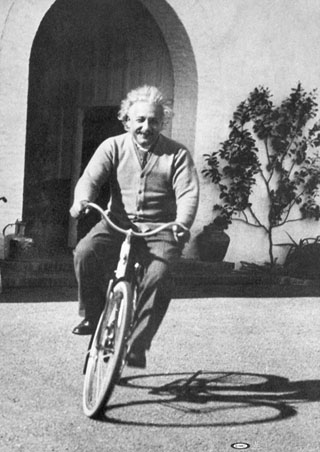
ALBERT EINSTEIN
Einstein didn’t believe in God in the sense that Jews and Christians and Muslims do. In that sense, he didn’t believe in a god at all, no matter how hard religious folks try to hear him saying otherwise. However, Einstein’s lifetime of inquiry into the physical laws that govern the universe did lead him to speculate — forgive me if I don’t express this precisely — that somewhere beyond the seemingly endless questions about the universe must lie some force that governs it.
I recently discussed all this — Aquinas, Einstein, God, the origin of the universe — with, of all people, the actress Sandy Duncan.

SANDY DUNCAN
By “of all people,” I don’t mean to imply that there is anything surprising about Sandy Duncan discussing such things. In fact, I gathered she gives such things quite a bit of thought and has had provocative conversations about them with her two adult sons. I only meant that I would be unlikely to talk to Sandy Duncan at all, except that she was scheduled to appear in a new play that examines the outfall that can occur when science and religion collide head-on. The actress was to play the title role in “Creating Claire” by Joe DiPietro, but she took ill, withdrew from the cast, and was replaced by another talented performer, Barbara Walsh.

JOE DiPIETRO
DiPietro’s play begins previews tomorrow night at the cradle of new theatrical works, the George Street Playhouse in New Brunswick. The title character, Claire Buchanan, is a teacher but now works as a docent at the Museum of Earth and Sky in upstate New York. She leads visitors on the Origins of Life Tour, reciting a script that focuses on the evolution of species. The script is the brainchild of Victoria Halstead, museum director and friend of Claire – in that order, as things work out. Victoria encourages a docent to “personalize” the presentation as long as the glosses are innocuous, but Claire is no automaton, especially when a reference in the script to “random mutation” complicates her attempt to understand a fact of her own life. Claire and her husband, Reggie, have an autistic 16-year-old daughter, Abigail, and Claire has been considering how the process described by Charles Darwin could result in an individual such as Abigail. Eventually, Claire’s contemplation creeps into her talks at the museum as she suggests to visitors that the processes of nature may have been – gasp! – designed. Once that genie is on the loose, there is hell to pay, as it were.

LYNN COHEN
Victoria — to be played by Lynn Cohen — puts her own belief in science and her vision for the museum ahead of friendship when she learns about Claire’s transgression. Reggie – a high school teacher who has considered his bond to Claire a “mixed marriage” only to the extent that he is an atheist and she is an agnostic — is stunned by this change of Claire’s train of thought. Disagreements over Abigail’s status have already revealed strains in the couple’s relationship; Claire’s public speculation about a “designer” pushes those strains to the breaking point.
This play, however, is not a death struggle between science and religion so much as an examination of intellectual openness and honesty. Claire is willing to at least entertain an idea that had been anathema to her but does not insist that others accept that idea. Victoria and Reggie opt to defend their “rightness,” as Duncan called it, regardless of the professional or personal consequences. The implications for contemporary political discourse may be painfully obvious.
Believe in God or not, but in the end it is Claire, and not the more “scientific” Victoria and Reggie, who seems to have heeded Einstein: “Only daring speculation can lead us further, and not accumulation of facts.”
“Only in grammar can you be more than perfect.” — William Safire
November 25, 2009
 I suppose if the president of these United States — and especially His Articulacy — can be criticized for his grammar, anyone is fair game.
And so, Dan Neil, writing in the Los Angeles Times, laces into National Geographic, of all things, for a faux pas of its own. Obama has taken lumps for imprecise use of the first-person singular personal pronoun — though heaven knows he gets enough practice — but with National Geographic the issue is adverbial.
To be specific, Neil points out that the National Geographic Channel has been running a spot announcement designed to reinforce “the brand” with largely vacant language. One gets the impression that Neil could live with the vacuous message if only it didn’t lead up to this tag line: “Live curious!”

Wiley Publishing, Inc.
In other words, friends, enrich your existence by being curious — but you got that the first time. How much of a tempest this is depends on the size of your teapot, but it does call to mind the campaign that those of a certain age will remember: “Winston Tastes Good Like a Cigarette Should.” This slogan was used by Winston from 1954 until 1972, and its longevity had everything in the world to do with its effectiveness. English teachers and grammarians bristled and fumed, perhaps enlightening some who would have been unaware that a phrase in such a comparative construction must be introduced by “as,” not “like.” At the same time, the sticklers succeeded in calling even more attention to the rapidly growing cigarette brand.
At a certain point, Winston responded to the criticism with a new slogan: “What do you want, good grammar or good taste?” Presumably, “none of the above” was not an option.
For Dan Neil’s column, click HERE.

“Don’t you love your brother?” — Groucho Marx
November 15, 2009

BILLY CARTER
Dan and I were talking the other day about a time when you could look under the hood of your car and see the macadam of the street or driveway. That was when cars were mechanical devices, not automatons with minds of their own.
Dan said his dad told him that it was possible with some vehicles to stand in the engine compartment, with your feet on the ground, to pull the plugs or change the air filter. The kid who works in Dan’s garage looked incredulous, so I backed up Dan’s dad, even though I had never seen anyone do that.
I did see a guy named Sonny mount an engine as though it were a race horse so he could clean the carburetor. That happened at Frank DeMore’s garage, where I used to hang out with a lot of guys who probably could have been doing something more productive if their wives or mothers only knew where to find them. The era before cell phones had its advantages.

BILLY CARTER
I was sitting in my ’56 Chevy in the parking lot of that garage when I heard — on the radio — Bill Mazeroski’s home run that beat the Yankees in the 1960 World Series. That was the only Game Seven walk-off home run in World Series history, and I heard it in the parking lot of Frank DeMore’s garage. I was afraid to go home, what with my dad’s theory that the Yankees had proprietary rights to the world championship and all, but probably I wouldn’t have gone home even if the Yankees had won.
Frank’s garage and everything in it — including Frank — was covered with a film of grease. The grease was an animate thing, and it would migrate. When my mother laundered my clothes she used to wonder how a person could get so dirty by being idle, but my mother had never been to Frank’s garage.
JIMMY CARTER
Frank’s garage is gone now, and I regret that whenever I drive through that town. That place accounted for the lack of purpose in the lives of uncounted men and boys, and such things are not lightly lost.
I suppose if I had amounted to something, Congress might have considered appropriating money to convert Frank’s garage into an historic site — possibly one element in a tour that would include Pappy’s hot dog restaurant, the Kozy Korner soda shop, and the Hollywood Diner. Something similar is in the legislative hopper with respect to Billy Carter’s old gas station in Plains, Ga., but, of course, Billy’s sibling was sort of a president of the United States.
Some citizens who insist on looking at the big picture question the wisdom of spending money for such a purpose when the nation is broke. Others say the gas station is an irreplaceable remnant of the early life of James Earl Carter and ought to be preserved so that future generations can understand the president better — and so that tourists will continue to visit Plains once it is no longer possible to run across the Carters themselves. Well, at least they’re honest.

JIMMY and BILLY CARTER
“You’re sugar, you’re spice . . . .” — Bobby Burke
September 24, 2009

MACKENZIE PHILLIPS
About 28 or 29 years ago, I went up to what was then Fair Oaks Hospital to visit Mackenzie Phillips when she and her father, John Phillips, and his wife, Genevieve Waite, had completed a chemical therapy program to wean them off of illegal drugs. She looked healthy; she was upbeat. She was frank about the fact that she had grown up in an environment riddled with narcotics, and she talked in some detail about the condition her dad was in before the two of them checked in at Fair Oaks. I asked her if she knew why someone like her, who knew intellectually and had seen in the the flesh the consequences of drug abuse would take a chance on addiction herself. She said she didn’t know, and I believe her; plenty of people who didn’t spend their time with John Phillips, and who knew where drugs could lead them, are unable to answer the same question.

JOHN PHILLIPS
About 20 years ago, we bumped into Mackenzie at the Fairmount Hotel in San Francisco. The intervening years had included relapse and recovery, and she was at the hotel appearing with “The Mamas and the Papas” which her dad had reconstituted with Mackenzie and Elaine “Spanky” McFarlane singing the parts originally assigned to Michelle Phillips and Mama Cass Elliot. Again, Mackenzie looked terrific and had a positive outlook that wasn’t dimmed any by the new baby she was doting over at the time. We went to see the act and thought it was sufficiently evocative of the original to have a future.
Since then, I have talked to Mackenzie on the telephone a couple of times. Always I seemed to find her with her star a-rising and always I have hoped, for her, that it would last.
I have made a point of hearing as little as possible about the news Mackenzie is making this week. I’m a sap. I choose to hope, and pray, that this episode is something she needs to kick the demons away for good.
It wasn’t her money I was after
September 1, 2009

Archie Comics
I turn my back on a woman for 50 years, and this is what happens. Veronica Lodge has agreed to marry Archie Andrews. I will admit that Archie has aged a lot better than I have, although he’s 10 months older, but I still consider this the height of perfidy.
The news has been out for a long time, but the comic book containing the engagement story arrived on news stands today — or so I’m told. I didn’t have the heart to look.
Meanwhile, the news today that Disney is going to buy Marvel Entertainment — Spider Man, Captain America and all — got me to thinking about the other comics I read, when I wasn’t fawning over Veronica.
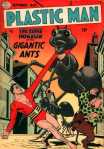 My pantheon was Plastic Man, Blackhawk, the Green Lantern, Superman and Batman. Plastic Man had one of the most complicated personal histories of any comicbook hero. I don’t want to go into it here (I do have to teach the first class of the semester tomorrow morning) but one aspect of it is reminiscent of the Toxic Avenger, now an off-Broadway attraction, thanks to the George Street Playhouse. Toxie, to his intimates, was a nerd who was thrown into a vat of toxic chemical waste that turned him into a superhuman mutant. Plastic Man was an underworld figure who was accidentally sprayed with a chemical that made his body so flexible that he could bend himself into any shape, though he retained the red color and black-and-yellow stripes of his body suit. I remember him, for instance, disguising himself as an icicle, but even as a kid I didn’t understand why his pursuers couldn’t spot an icicle with that color scheme.
I don’t know whether this Disney transaction is good or bad, but I did read an analysis of the financial aspects of the engagement of Archie and Veronica. Roma Luciw, writing in The Globe and Mail, examined whether a couple with such disparate underpinnings — a wealthy she and a middle-class he — should enter into a prenuptial agreement. You can read what the experts think at this link:
Pencil points and Burgers
August 28, 2009
 We once received an invitation to a dinner in Trenton, and the invitation came with a menu. We noticed on the menu the term “pencil points,” but we didn’t know what that meant. We resolved to be scrupulous about what we ate, but the dinner was several months later and by that time we forgot about it. After we had eaten, one of us recalled it and asked our table companion, who lived in that area, what had happened to the “pencil points.” “You ate them,” he said — the pasta. He was referring to penne, which had been the course before the entree. When we said we had never before heard penne referred to as “pencil points,” our companion said, “Well, I guess you’re not Burgers.” Hmmmm? “I guess you don’t come from Chambersburg,” he said. Comes the dawn, as my mother used to say: He was referring to a section of Trenton that at one time had been the “Little Italy” of the city and still maintained some vestiges of that past, including a few good Italian restaurants.

RESTAURANT IN CHAMBERSBURG
Chambersburg, incidentally, was a distinct municipality from 1872 to 1888. It had been a part of Hamilton Township. Janet Evanovich, who is from South River, has used Chambersburg — the Burg, as it were — as the locale for her series of novels and stories about bounty hunter Stephanie Plum.
“Pencil points,” “the Burg,” and “Burgers” are examples of slang in the strict sense. By the strict sense, I mean that these terms originated among and in a way distinguished a certain group of people — the residents of Chambersburg. Slang can evolve within social groups, demographic groups, professional or occupational groups — within pretty much any subset of society.
 Heaven knows we had enough slang in the newspaper business, and I mean slang in the strict sense. During the summer semester I was explaining something to my class and I used the term “graf” — a common expression in publishing industries. I noticed a quizzical look on one student’s face and I asked him what was the matter. He said, “You always use that word – “graf.” What does it mean? This was about half way through the term; the class had sat there in silence up to that point, and I don’t know how many references to “paragraph” they hadn’t understood.
Douglas Quenqua, writing for the New York Times News Service, reports that slang terms of that kind may be passing from the scene. “Keeping up with the latest slang,” Quenqua writes, “is at once easier and harder than ever. The number of slang dictionaries is growing, both online and off, not to mention social networking media that invent and discard words, phrases and memes at the speed of broadband. The life of slang is now shorter than ever, say linguists, and what was once a reliable code for identifying members of an in-group or subculture is losing some of its magic.”

LEON TROTSKY
Quenqua points out that slang dictionaries as such are nothing new, but they used to appear at a pace that was in keeping with the natural evolution of language. Quenqua says dictionaries of slang have been around since the 18th century. I just finished reading a new book by Bernard Patenaude about the Leninist-Bolshevik Leon Trotsky. According to Patenaude, while Trotsky was living in exile in Mexico, he received from a union activist in Minneapolis a dictionary of American slang, designed to help him better understand the Americans who were a part of his security staff. In a letter thanking the donor, Trotsky wrote: “In the part I have already studied, which is devoted to college slang, I had hoped to find some abbreviations for the various sciences, philosophical theories, etc. (B)ut instead I found merely about 25 expressions for an attractive girl ….”
Quenqua’s story, which I read in The State of Columbia, South Carolina, is at this link:

KURT COBAIN
I suppose Kurt Cobain had it both ways — he was who he wanted to be, and he wasted the person he was, if such things can be measured by longevity alone. But it’s a little late to moralize about how his life was spent. Without intending it, although he might have enjoyed it, Cobain is at the center of a tempest in Aberdeen, Wash., his hometown. More specifically, a monument to the musician placed in a public park, and even more specifically, a word on that monument, has the pond stirred up.
The monument in question bears a picture of Cobain and seven quotes from him. “The duty of youth is to challenge corruption,” for instance. One of the quotes begins with the words “Drugs are bad for you ….” — a sentiment that should play well in Aberdeen, if you’ll pardon the stereotype. But the rest of that quote includes a word that shocks the sensibilities of some Aberdeenians, a word one seldom sees engraved on public monuments, the word, if you get my drift.

ROBERT DE NIRO
“I don’t like that word,” said one member of the Aberdeen governing body. “The city pays thousands of dollars a year just to remove it from our parks — painting and sandblasting.”
“The majority of the people who are going to make their way down there, it’s not like that’s the first time they’re ever going to see that word,” said another councilman, who was a founder of the official Kurt Cobain Memorial Committee in a city that appreciates Cobain’s talent and his contributions to music.
Language is so interesting. One word is widely regarded as offensive and another word that means precisely the same thing is fit to be pronounced in a middle-school sex-education class. It’s all in the connotation, isn’t it?
One night about 20 years ago a couple came to spend the evening with us and, on the way, they picked up a video — “Midnight Run.” While we watched, our female guest blushed and apologized profusely for bringing that movie, because she hadn’t expected Robert De Niro’s language which was laced with a word fit for — well, for a Kurt Cobain monument. Meanwhile, we all roared at that movie, which, thanks to De Niro and Charles Grodin, is one of the funniest of its kind ever made.

KURT COBAIN
Years later, I watched that movie on television, and it wasn’t nearly as funny. That was partly because I had already seen it, but it was also partly because De Niro’s language had been dubbed out with language that sounded ridiculous coming from the mouth of such a character. It’s hard to know what to make of that. It’s only a word, after all, and people like De Niro’s character use it so habitually that they aren’t even aware of it. And yet, many of us, like the Aberdeen councilman, don’t like it and don’t want to hear it or see it cut into granite in a public park.
It’s one of those things that makes us human beings so fascinating.
The Los Angeles Times reported on the Aberdeen dispute and how it was resolved. The story is at this link:
http://www.latimes.com/news/nationworld/nation/la-na-hometown-aberdeen16-2009aug16,0,19620.story
Visit our concession stands
August 12, 2009

The Christian Science Monitor has a story about a phenomenon known as “guerrilla drive-in” — referring to a fad in which movie buffs or people out for a good time are setting up ad-hoc outdoor movie sites.
In one sense, the full-blown outdoor movie — the drive-in — had two practical advantages that the indoor theater couldn’t match. One was the opportunity to make out in relative privacy — or so I’m told; the other was the opportunity to take kids to a movie regardless of how they behaved.
There were some disadvantages, including poor sound systems, mosquitos, susceptibility to bad weather, and rowdy patrons. Apparently these outweighed the advantages, because the number of drive-ins in the United States has dwindled from about 5,000 in the 1950s to 383 ( including the Delsea in Vineland, here in New Jersey) according to the Monitor’s story.
My strongest memory of the experience is of taking the kids to a drive-in one steamy summer night and being stuck with the choice of being eaten by the famous Jersey Mosquitos or rolling up the windows and suffocating — unable to see the screen through the fogged-up windshield.
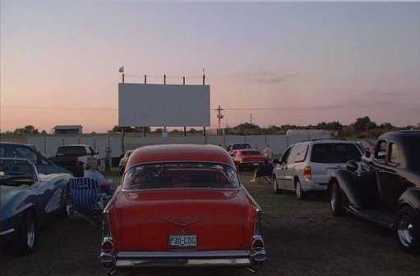 But I also remember going to outdoor movies in a less formal way when I was a student at Penn State. Every Friday night, a screen was erected on one of the campus lawns, and we could sit on the grass and watch several slightly dated films, plus cartoons. That was almost 40 years ago, and I can’t remember whether we paid an admission. What I do remember was that, because we were seeing them outdoors, we enjoyed the movies almost regardless of their quality. I guess it’s the same effect as eating a dirty-water hot dog on a street corner in Manhattan.
The Monitor’s story is at this link:
http://www.csmonitor.com/2009/0810/p17s02-almo.html
You can make your own drive-in movie marquee at this link:

 CharlesPaolino's Blog