
SUSAN BOYLE
The sensation caused by Susan Boyle’s appearance on a British talent show should be embarrassing to more than those judges and that audience who initially dismissed her based on her appearance alone. They didn’t dismiss her because her appearance was somehow exceptional; if they had met her at a backyard party in her village they might not have given her appearance a second thought. Rather, they either assumed from the outset that a person that ordinary, a person of that age, could have nothing to offer in the way of talent, or they assumed that no matter what she had to offer in the way of talent, it couldn’t be enough if she looked like that. The judges and the audience weren’t alone in making such assumptions. They live in a larger world in which uncounted people of enormous talent go unnoticed while mediocrities like Britney Spears make headlines regardless of their lack of artistic gifts.

KATE SMITH
The Susan Boyle phenomenon calls to mind the experience of Kate Smith, one of my favorite singers of standards. Early in her career, she had to put up with ridicule, especially “fat girl” jokes, but in the end the public couldn’t ignore her musical prowess. Based on the only thing I’ve heard Boyle sing, she reminds me of Kate Smith in that the power and clarity of her voice are enhanced by her ability to deliver the song. Kate Smith was a favorite among lyricists for that reason, which explains why she introduced more than 650 hit songs during her radio and recording career.
My guess is that we didn’t learn anything – at least, not permanently – from the Susan Boyle incident, but it will be justification enough for her if she flourishes in a mid-life career. I, for one, would love to hear more.
Field hollering
April 12, 2009
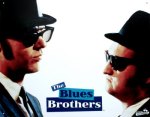
BLUES BROTHERS
The following appeared during the past week in the Vatican newspaper “L’Osservatore Romano.”
By Tania Mann
From cotton fields to city streets, blues music tells the story of a people struggling to survive. Its syncopated rhythms convey a meaning as deep as the raspy voices crooning its melodies. The blues has evolved along with the history of black people in the United States – a journey marked by persecution but also by progress.
Theirs is a story that today opens to a new chapter, being written by a man who calls the city that transformed the face of the blues: “Sweet Home Chicago”. Thus a closer look at the origins of blues music provides insight not only into black history but also into the context from which President Barack Obama, who lived in the Windy City before his move to the White House, entered the international scene.
It was in Chicago that blues music was modernized, where it adapted into a form that could then be easily diffused into popular culture. It would permeate many other musical genres and create the foundation of rock ‘n’ roll, gospel and the British pop made famous by the Beatles. Today, the blues rhythm beats on as the heart of American mainstream music, which in turn plays an influential role in the music world across the globe.
The twelve-bar structure found in the blues today is the same as that which the slaves invented as they worked in the fields, using music to communicate. This system of “field hollering” allowed the slaves to exchange secret information and indicate potential escape routes.
Chicago blues grew from these roots in the Mississippi Delta, where thousands of blacks lived before moving north during the Great Migration, which occurred in two waves between 1913 and 1970. Its heavy backbeats recall the oppression of slavery, while the charged guitar riffs and gravelly voices in the foreground express an insatiable longing for freedom.
In the 1930s, the Great Depression propelled the blues forward by providing not only greater reason for people to lament but also more opportunity to come together to perform and listen to music. From that decade on in the ghettos of Chicago, residents organized “rent parties” to raise money for families with financial difficulties. Thus listening to the blues also became a concrete experience of solidarity.
By this time, blues musicians in Chicago had already begun to create a more urban sound, distinguishing their own style from more rural or classic forms. This new sound reflected, with its quicker tempos, the frenetic pace of working life in an industrial metropolis.
Barack Obama
“It was in these neighbourhoods that I received the best education I ever had”, President Obama said in a speech announcing his presidential bid. With this statement he recalled his work in Chicago from 1985-1988, organizing job training and other programs for the working-class residents of Altgeld Gardens, a public housing project amid shuttered steel mills.
The blues is a lyrical expression of both “the agony of life and the possibility of conquering it through sheer toughness of spirit”, writes Ralph Ellison in Invisible Man (Random House, 1952). This work, set in the newly industrialized Chicago of the 1930s, analyzes the problem of the black man’s identity in U.S. culture.
The people of Chicago are generally known as being “tough”, if only for having to endure the severe weather that results from its position on the edge of Lake Michigan. For this reason the blues, in the tenacity of its sound, personifies the Windy City (even if it was originally named as such in reference to its long-winded politicians, not its notorious weather).
The spirit of a city ever aware of life’s challenges – of a city where people are accustomed to adapting to change – is manifest in the blues. The city and the music have each shaped the other into what they are today.
But the influence of Chicago blues has extended much further than its own streets. This is seen clearly in the career and the heritage left by the man who is said to have defined its sound: Muddy Waters.
His grandmother gave the musician this nickname, after the puddles of the Mississippi River in which he played as a child. Waters transferred to Chicago in 1943, where he received an electric guitar as a gift from his uncle. With this instrument – the volume of which he intensified by using a pick – Muddy Waters revolutionized the city’s musical scene.
In addition to the guitar, the harmonica and bass were also amplified in order to compete with the loud atmosphere of the locales where blues bands played. The first to win this battle against the noise with his harmonica was Little Walter. He did so simply by cupping his hands around the instrument.
Muddy Waters
From then on these methods of amplification and electrification characterized the Chicago blues sound. This new sound was part in thanks to the new possibilities that came with the end of the Great Depression and World War ii. Muddy Waters and the other blues artists in Chicago became a vehicle for the optimism emerging at this time. It was here that the now widespread image of a small stage in a smoky bar, crowded with musicians improvising on the electric guitar, harmonica, piano, bass and drums, was born.
Today, it is not difficult to find evidence of the impact these musicians have had on the music world. It was, for example, Water’s song “Rolling Stone” that both the magazine and the rock group took their names. The same song was very probably an inspiration to Bob Dylan when he wrote “Like a Rolling Stone”. And it was reported in Rolling Stone magazine that among the playlists on President Obama’s iPod are songs by the group of the same name, by Dylan, and also by Howlin’ Wolf, who was known as Waters’ rival.
The list of artists and musical genres influenced by Chicago blues is endless. Among the numerous names of note are Chuck Berry, Elvis, Janis Joplin, Jimi Hendrix and also Eric Clapton, who has carried the inheritance of the blues from the seventies through to the present.Eric Clapton
In the hands of the same “Slowhand”, as Clapton is known, the Chicago blues sound has evolved with the changing music scene while still remaining faithful to its deepest roots. A powerful witness to this is one of his recent albums, “From the Cradle”, composed entirely of songs by traditional blues musicians. Among them is Willie Dixon, one of the greatest musicians to have played with Muddy Waters.
But the electrified blues that was founded in the post-war era is not only a thing of the past. The music continues because the stories it recounts are still being written. Worth noting is that this year’s list of Grammy nominees for blues music included several protagonists of Chicago’s musical revolution. Among those carrying this tradition into the modern day is Buddy Guy – known as Muddy Waters’ successor – who opened his own club in 1989 in the heart of downtown Chicago.
The culture which developed around the blues clubs that have sprouted up around the city over the years is indeed thriving, creating a music scene that draws tourists and natives alike. Today, many of the most popular blues clubs are found in neighbourhoods inhabited predominantly by young white people.
John Mayer
In fact, the evolution of blues music in the city also entailed a diffusion into white culture. For proof of this on a wider scale, one can look to artists such as Clapton, Dylan, and even younger musicians like John Mayer. The latter, an artist who had already gained wide acclaim on the pop scene, surprised everyone with a blues album in 2005, featuring Clapton, Guy and B.B. King as collaborators.
Surely one cannot fail to acknowledge the extent to which the famous Blues Brothers, with their “mission from God”, have served to propagate blues music and culture into the mainstream. Working on the Chicago-based film inspired the “brothers” John Belushi and Dan Aykroyd, never before musicians, to form their own group modelled after that featured in the movie.
While Chicago blues has survived in its purest form through the revolution’s biggest names and their successors, the deep influence it has had on the many genres of today’s chart-topping music is not to be ignored. Just one example is the widespread diffusion and popularity of rhythm and blues (R&B), a term that was originally used for Chicago blues but has extended to encompass much of black music heard today.
It becomes evident from the longevity of Chicago blues – in its original form as in its many variations – that at its heart this music expresses a depth of human emotion which stems from the very essence of human experience.
For Ellison, the blues does not offer a solution to the human condition. It offers instead a strong resolution to overcome suffering: a “yes” to a life marked by grace and irony, and a defiant decision to preserve the human spirit. Its sound is marked by sadness but also by fierce determination, thus reflecting the history of blacks in the States. In a time of global crisis, the President who pens this story’s newest chapters meets a challenge that will undoubtedly demand the same tenacity.


(©L’Osservatore Romano – 8 April 2009)
“Papa played the dobro this-a-way”
March 18, 2009

ADAM LAMBERT
This morning, I came across an account in the Los Angeles Times of last night’s “American Idol” broadcast. I missed it. How careless of me to have accepted an invitation to a dinner party on “Idol” night. Well, truth be told, I wouldn’t have watched it anyway. In fact, I have never seen more than a minute or two of an “Idol” broadcast, and that only two or three times when someone else was watching it. This has as much to do with my not watching television very much as it has to do with any objection to that show in particular. But what caught my attention in this article was the reference to the contestants’ “reverence for the most traditional of American genres – country music.” What did the writer mean by “country music”? How did country music – whatever the writer meant by it – become more “traditional” than folk music – whatever I mean by that? And, Miss Turner, what’s “reverence” got to do with it?
I presume the writer had a straight face when he or she wrote that several contestants delivered “solid but respectful versions of country standards by Garth Brooks, Dolly Parton, and Carrie Underwood.” That’s Carrie Underwood – the “American Idol” graduate who was salutatorian of her high school class in Oklahoma. And the writer soberly added that Adam Lambert’s “psychedelic, sitar-backed” rendition of “Ring of Fire” was – according to an audience member visiting from Missouri – “disrespectful to country music.”
If we owe some sort of “respect” to country music, is it to be found in the over-produced material that Dolly Parton has been disgorging for the past few decades? To me that’s as “country” as Jackie Wilson’s “Alone at Last” was classical. “Country” has the smell of stale beer about it. “Country” is what we used to find in the 1960s at the old Coral Bar in East Paterson when Elton Britt, a singer with gold hanging on his wall, would drive himself up from Maryland to perform for a few dozen patrons who would recognize his voice even if their vision was blurred. “Country” is what we found back then at open-ended shows at the old Mosque Theater in Newark, where headline acts sometimes had to be nudged off the stage to make room for Little Jimmy Dickens or Ray Price or Webb Pierce, who were waiting in the wings. If a singer appeared in a torquoise outfit covered with rhinestones, the clothes just emphasized the common nature of the man or woman inside. “Country” was real, and if there was anything to respect in it, it was the unfiltered, unapologizing reality. But then, “reality” has taken on a different meaning in our time.
The old order passeth
March 11, 2009
 When Dan was fixing the Beetle the other day, he pulled out the radio in order to get a code he needed. Don’t ask. The point is that when he pulled the radio out it fell apart in his hands. Literally – the facing and one of the circuit boards actually crumbled into bits. Dan is getting me another one from the VW dealer, and it’s going to be cheap, because the radio is obsolete in the sense that it plays audio casettes. I couldn’t be happier, because the radio in Pat’s car plays only CDs, and I have scores of audio tapes – store-bought and bootlegged. Life passes us by in such a hurry these days. Audio tapes were an inovation an eyeblink ago, and now they’re obsolete. The same thing applies to that Beta video player/recorder under my desk and all the Beta tapes that are squirreled away in the garage and in the den. I have all the “Taxi” episodes on Beta tapes. Why did I bother, Latka? Who knew that those tapes would so soon go the way of the flour sifter? The Baltimore Sun reported today on a video rental store in town that has been in business for 20 years – imagine! – and still does a brisk VHS business. One of the reasons for its durability is that the store has a very large selection and stocks hard-to-get stuff such as the complete works of the Russian director Sergei Einstein.
Dan is going to put the new radio in tomorrow. Where did I put those Jimmy Durante tapes?
http://www.baltimoresun.com/entertainment/movies/bal-americain0310,0,6848231.story
“Ain’t nobody’s business if I do”
March 8, 2009
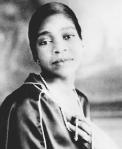 As we were leaving the George Street Playhouse in New Brunswick, Pat and I were discussing whether we would find any video of Bessie Smith on the Internet. A man who had come out before us overheard us and volunteered that there is a clip on YouTube of Bessie Smith singing “St. Louis Blues” in the 1925 film by the same name. Although it seems to have been a critical success, this film is all but lost. The YouTube clip runs a little more than nine minutes, and it gives a sense of the power of Bessie Smith’s performance. Of course, there is a lot of audio available from her recording career.
We were at the George Street Playhouse to see “The Devil’s Music,” a one-act musical show that recounts the life of a woman who was a major star in the 1920s and ’30s but is largely forgotten today. Miche Braden plays the singer and does justice the part. An interesting thing about Bessie Smith is that she led a life of drink and sex and violence that most of us would not condone in the abstract, but it was that very mode of life that fed the blues that she sang. She paid heavily for her recklessness, paid in ways that broke her heart, but somehow she tore out of her sad life a body of work that speaks for many souls who had the blues, too, but neither the voice nor the spirit to make their misery heard and make the rest of us think twice about dismissing them.
http://www.dailymotion.com/video/xrd9c_bessie-smith-st-louis-blues_music
 CharlesPaolino's Blog