
GRAHAM PARKER
You’ve got to love Graham Parker. Well, I do, anyway. He was on “Soundcheck” on WNYC today, talking about his new album and about his on-line project, “Sunglass(es): The Graham Parker Show.” The combination of music and wit is irresistible. “Well, irresistible to me,” anyway.
According to Parker, the album was prompted by his two fruitless forays into writing TV themes. Both songs that he wrote and recorded and submitted to TV producers who were soliciting themes were rejected. His idea of revenge, or maybe only justice, was to write an album’s worth of themes to non-existent shows. The album notes consist of descriptions of each of these shows.

GRAHAM PARKER
The clip from the album that was played on “Sound Check” was from the theme for a show about an agoraphobic guy whose well-to-do parents put him up in an apartment in a busy downtown area. Since the guy never goes outside, he sees and understands the world only from the vantage point of his apartment window. In the lyric, he wonders out loud where all these people are going, what they’re carrying with them, and why, as Graham sort of put it, “they would be scared off by a forecast of occasional showers.” The album, “Imaginary Television,” is aptly named; it’s the product of a fertile imagination.

GRAHAM PARKER
Like a lot of people in music, Parker is tuned into the radical changes that have affected the recording industry, and he, too, is trying to make his mark in the new media. So the imagination that never sleeps, at times with the help of his 14-year-old son, produced “Sunglass(es).” Has it caught on? Parker says it hasn’t gone viral — that it’s more on the order of “bacterial.” So far, he has posted only Episode 1, which is available at THIS LINK. Like Parker himself, it’s a stitch, and we do get to hear him sing.
In the interview with “Soundcheck” host John Schaefer, incidentally, Parker made some interesting comments about the career of Johnny Nash — the unlikely reggae artist from Texas. You can hear the interview at THIS LINK.
“The dreams that we cherish so often might perish” — Einar Swan
January 30, 2010
 I was listening to Jonathan Schwartz on WNYC a week ago today, and he played a recording by Frank Sinatra of one of my favorite songs from the 1930s — “When Your Lover Has Gone.” Schwartz is such an aficionado of recorded popular songs that he often dwells on minor points about such things as the arrangement or the instrumentation or even — as he did in one case that day — on the matter of which cut on a vinyl disk a song might have occupied.
I was surprised, then, that he didn’t discuss the fact that Sinatra didn’t sing my preferred introduction to Einar Swan’s song — which, by the way, was written in 1931 and featured in the film “Blonde Crazy” with James Cagney and Joan Blondell.

JONATHAN SCHWARTZ
On my favorite recording of that song, for instance — the one from Kate Smith’s concert at Carnegie Hall — Kate Smith sings this intro: “From ages to ages, the poets and sages, of love — wond’rous love — always sing ….” But Sinatra’s recording began with the second verse: “What good is the scheming, the planning, the dreaming, that come with each new love affair ….”
Swan, who died at 37, had only one hit song, but it did it right that one time. “When Your Lover Has Gone” has always been a favorite of vocalists and instrumentalists and it has been covered by Billie Holliday, Sarah Vaughan, Louis Armstrong, and Ethel Waters, among others. It turns out that most artists prefer the introduction that Sinatra chose, and they drop the first verse altogether. I would try to make an argument for my preference, but considering the talent arrayed against me, what would be the point?

Einar Aaron Swan in a photo, circa 1927, published in the Worcester (Mass.) Telegram
There is an interesting article about “When Your Lover Has Gone” with some samples of recording of the song at JazzStandards.com. Follow THIS LINK.
There is also an extensive article about Swan at JazzHistoryDatabase.com, and you can reach it at THIS LINK.
“. . . and in a manger cold and dark, Mary’s little boy was born” — Jester Hairston
December 15, 2009
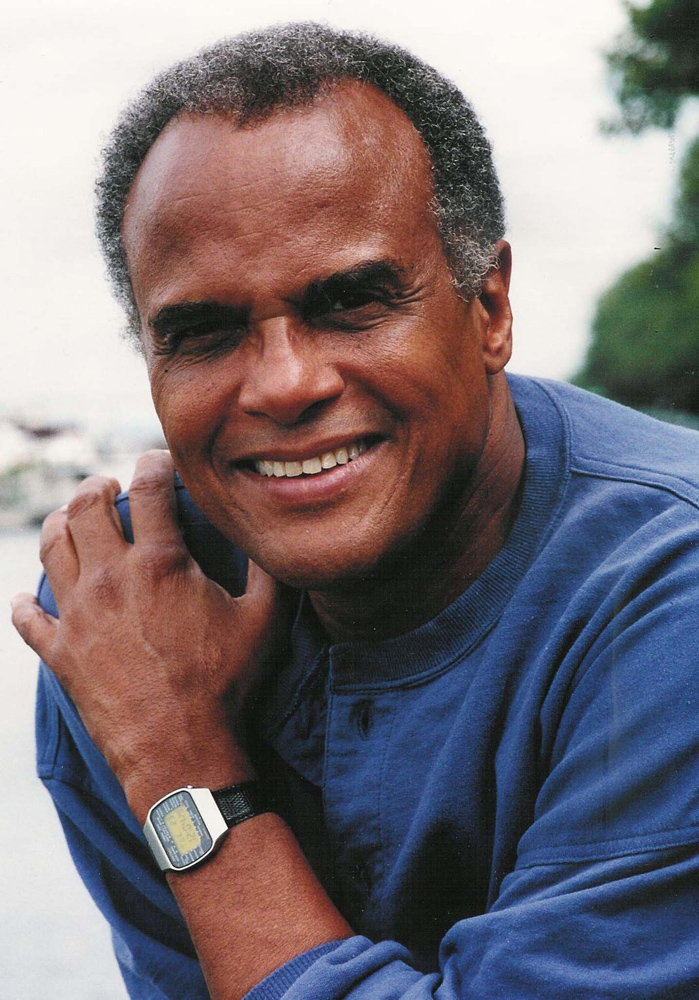
HARRY BELAFONTE
One of the songs we listen to every year while we’re decorating our Christmas tree is “Mary’s Boy Child,” sung by Harry Belafonte, who first recorded it for an album in 1956. When it was reissued as a single, it reached No. 1 on the charts in Britain the following year. It was the first song to sell a million copies in England. Mahalia Jackson also recorded it in 1956. It has been covered by dozens of other artists ranging from the Maori soprano Kiri Te Kanawa to the disco group Boney M, which took it back to No. 1 in the UK in 1978.
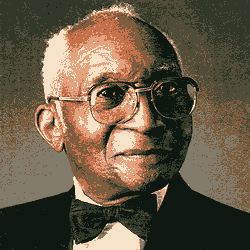
JESTER HAIRSTON
It isn’t widely known, but this song was written by Jester Hairston — an unusually talented and versatile figure in American music and entertainment. Hairston (1901-2000) was a composer, songwriter, arranger, choral conductor, and actor. The grandson of slaves, he was born in North Carolina but lived from an early age outside of Pittsburgh. He graduated with honors from Tufts University and studied music at the Julliard School. His lifelong passion was for choral singing, and he conducted ensembles on Broadway and all over the world. In 1985, when such events were rare, he took the Jester Hairston Chorale, a multi-ethnic group, to sing in China.
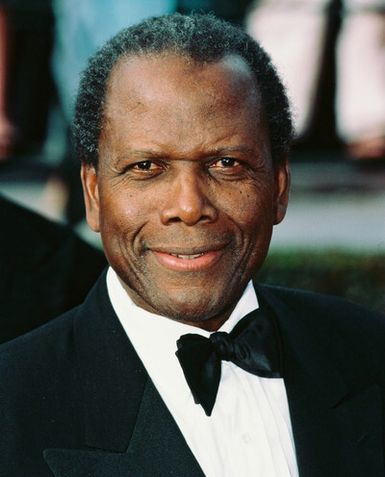
SIDNEY POITIER
Hairston did a lot of musical work for films. His most familiar work is probably the song “Amen” from the 1973 movie “Lilies of the Field” in which Sidney Poitier plays a young handyman who gets bamboozled into doing a lot of heavy labor for an order of German nuns in Arizona. Poitier won an Oscar for that performance, the first best-actor award to a black man. Poitier didn’t do any singing in that film, however. He lip-synched “Amen”; the voice was Jester Hairston’s.
Hairston had a lot of small roles in films — some of them demeaning, some without credit. He also appeared in the radio and television versions of “Amos ‘n Andy” — notably as Henry Van Porter, a high-end member of the Mystic Knights of the Sea lodge, which was the epicenter of much the action on the television series in particular. He also played Leroy, the brother-in-law of George “Kingfish” Stevens. More recent television audiences might remember Hairston for his role as Rollie Forbes in the series “Amen” that ran from 1986 to 1991.
You can hear Belafonte’s version of “Mary’s Little Boy” by clicking HERE. You can watch an amusing video HERE of Jester Hairston conducting a large choir in Odense in 1981 as they learn to sing the Christmas song in Danish.
There are interesting biographical notes about Jester Hairston HERE and HERE.

Jester Hairston, as Henry Van Porter, is front and center in this "Amos 'n Andy" publicity shot with -- clockwise from left -- Nick Stewart, Alvin Childress, Johnny Lee, Tim Moore, Spencer Williams Jr. and Ernestine Wade.
Of men and music
December 2, 2009

PAU GASOL
So Pau Gasol likes opera, and he doesn’t care who knows it. The Lakers star was invited the first time by his boss — and what can you say? But Gasol was hooked, as a lot of people are, and his acquaintance with fellow Spaniard Placido Domingo has added a personal dimension. The LA Times story about Gasol and Domingo is at THIS link.
I was telling someone the other night about Eleanor Gehrig’s account of how her husband — Lou Gehrig — became an opera buff. She wrote in one of her biographies of Gehrig that she convinced him to go with her on condition that it be kept a secret. In the 1930s, Gehrig had good reason to fear that he would be heckled mercilessly if the other players found out that he had been to the Met.
Eleanor picked the tragic Tristan und Isolde and gave Lou a thorough prepping beforehand. During the performance, she glanced over at him and found him totally absorbed, then with tears in his eyes, and finally “an emotional wreck.”

LOU GEHRIG
What Eleanor hadn’t anticipated was that her husband, who had spoken German before he spoke English, was listening to the opera in the original language — not filtered by a half-baked translation such as we are usually subjected to.
Gehrig didn’t only became a frequent visitor at the Met, Eleanor wrote, but she would often come home and find him lying on the floor of their apartment listening to an opera on the radio while he followed along in the libretto.
“I discovered that this was no automaton, no unfeeling giant,” Eleanor wrote. “A sensitive and even soft man who wept while I read him Anna Karenina ….”
I’m guessing the Babe never knew.
And all that jazz
November 28, 2009

PAUL ANKA
One of my Facebook friends — and a former newspaper colleague — remarked today that she likes to start sentences with “and” and “but,” an indulgence we share. In fact, I make a point of telling my students that while they shouldn’t use a coordinating conjunction to begin a sentence while they are in the stifling atmosphere of academia, they should have at it once they’re writing on their own.
This got me to thinking about song lyrics that begin with “and,” only because four popped into my head immediately.
The first was “My Way,” which begins: “And now the end is near, and I must face the final curtain.” Paul Anka wrote that lyric, and according to him, it was inspired by Frank Sinatra’s announcement that he was going to quit show business.

FRANK SINATRA
The melody was written by Claude Francois and Jacques Revaux for a French song. “Comme d’habitude,” which means something like “As is my habit.” Anka’s lyrics, I understand, have no relationship to the originals but were meant to go along with Sinatra’s mood at the time.
There have been notable covers of the song by Elvis Presley, Sid Vicious, and Dorothy Squires.
Another lyric in this category was written by Johnny Mercer for a popular version of “The Song of the Indian Guest” from the opera “Sadko” by Nikolai Rimsky-Korsakov. I mentioned this here recently in connection with Mercer’s centennial. Mercer’s version is known as “Song of India,” and it begins: “And still the snowy Himalayas rise in ancient majesty before our eyes ….”

MARIO LANZA
Mario Lanza made a fine recording of that song, and Lanza also made a wonderful recording of “They’ll Never Believe Me,” which was written by Herbert Reynolds and Jerome Kern to help rescue an imported British musical, “The Girl From Utah,” in 1914. The refrain, which usually begins the song, starts: “And when I tell them how beautiful you are, they’ll never believe me ….”
The last song that occurred to me was “And I love her so,” which was written by Don McLean but is most widely associated with Perry Como.
And like that.
“. . . brothers, sisters all ….” — Pete Seeger
November 23, 2009

HAIFA WEHBE
As there isn’t enough turmoil in the land of my ancestors — well, some of them, anyway — a popular Lebanese singer has stirred the stew by including a derogatory reference to Nubian people in the lyric of a children’s song. I won’t go into what the lyric says, but it’s described in a story in the English-language newspaper in Beirut, and that story is right HERE.
Reading that story in the Daily Star sent me on a search for the Nubians, with whom I was not familiar. I found out that the term describes more than two million black people who are concentrated in southern Egypt and northern Sudan. They are one of our links to antiquity, because they have preserved culture and tradition that dates from the beginning of civilization.

Photo of Nubian girl from Billy Gamb'ela's blog on wordpress.com
Stumbling across the reference to these people and the information available about them reminded me of an experience we once had while flying to California. On the plane with us were a group of people in rural dress who had coal-black skin and who spoke to each other in a language we were sure we had never heard. When we surmised that one white man was with that party, we asked him about them, and he told us they were aboriginal artists from Australia who were on a world tour with an exhibition of their work. That encounter made us so conscious of how diverse the world is and how little we know about the many kinds of people who compose what we call humanity.
So, too, now with the Nubians. The Daily Star quoted a fellow named Motez Isaaq, who represents the Committee for Nubian Issues: “We are one of the oldest civilizations on Earth. Instead, our image is constantly perpetuated as the uneducated doorman or waiter.” Isaaq gave Wahbe the benefit of the doubt by saying her lyric was offensive even though she may not have intended it to be. And he added, according to the Star’s paraphrase, “that stereotypes of minorities are so entrenched that referring to them in popular culture media is frequently done unconsciously.” How sad and how discouraging, particularly since Wahbe, whether consciously or not, addressed her bias to children.

A Nubian child from Billy Gamb'ela's blog on wordpress.com
“. . . or am I breathing music into every word?” — Johnny Mercer
November 20, 2009

Capitol Records
Yesterday was the centennial of Johnny Mercer, and I was too busy to take much notice of it. But it was on my mind, because Mercer is one of my favorite lyricists. I wrote here a couple of months ago about one of his lesser-known songs, “The Waiter, the Porter and the Upstairs Maid,” which is sophisticated and funny.
But Mercer was a poet. When his songs get stuck in my head, I don’t mind. It’s hard for me to talk about favorites, because I’m crazy about so many of his songs — such as “The Angels Sing,” which he wrote in 1939:
We meet, and the angels sing.
The angels sing the sweetest song I ever heard.
You speak, and the angels sing.
Or am I breathing music into every word?
Suddenly, the setting is strange.
I can see water and Moonlight beaming.
Silver waves that break on some undiscovered shore
Suddenly, I see it all change.
Long winter nights with the candles gleaming.
Through it all your face that I adore.
You smile, and the angels sing.
And though it’s just a gentle murmur at the start.
We kiss, and the angels sing.
And leave their music ringing in my heart.

JOHNNY MERCER
I first heard that lyric when I was in my teens, and I was fascinated by the quality of Mercer’s writing.
I’m especially fond of the lyric he wrote to a classic melody, “Song of India.” I have an old RCA Victor Red Seal recording of that sung by Mario Lanza. It’s one of those cases in which I’d rather not hear anyone else sing it, so I hope the vinyl lasts as long as I do — which is becoming less of a challenge every day.
And still the snowy Himalayas rise / In ancient majesty before our eyes / Beyond the plains, above the pines / While through the ever, never changing land / As silently as any native band / That moves at night, the Ganges Shines / Then I hear the song that only India can sing / Softer than the plumage on a black raven’s wing / High upon a minaret I stand and gazed upon an old enchanted land/ There’s the Maharajah’s caravan, Unfolding like a painted fan / How small the little race of Man! / See them all parade across the ages / Armies, Kings and slaves from hist’ry’s pages / Played on one of nature’s vastest stages. / The turbaned Sikhs and fakirs line the streets / While holy men in shadowed calm retreats / Pray through the night and watch the stars. / A lonely plane flies off to meet the dawn / While down below the busy life goes on / And women crowd the old bazaars. /All are in the song that only India can sing. / India, the jewel of the East.
There’s lots about Johnny Mercer at this link and at this one.
 We have attended several of the Metropolitan Opera’s live theater broadcasts — most recently “Aida” last Saturday. If you haven’t tried it, you should. Not an opera fan? That could be just the point. Seeing these operas on the big screen with cinematic camera shots is a different experience from the crow’s nest at the Met. For anyone who has been thinking of taking a first look at opera through this program, I strongly recommend “Carmen” on January 16. Buy early and show up at the theater an hour before the broadcast. These broadcasts all sell out.
 The next opera we’re going to see is “Turandot” on November 7, and we’re very interested in Verdi’s “Simon Boccanegra” on February 6, both because we’ve never seen it and because Placido Domingo will appear in a baritone role. He sang it for the first time last week in Europe.
This business of a singer switching ranges is rare but not unheard of. Enrico Caruso, is should be no surprise to learn, could sing well in all three male voices and made a recording, which is still available, of “Vecchia Zimarra,” a basso aria from Giacomo Puccini’s “La Boheme.” That aria is often overlooked — after all, the tenor doesn’t sing it — but it is touching, especially in the context of the story. Colline is about to sell his old coat to buy medicine for the dying Mimi.
 What’s even more interesting than that recording is that Caruso once sang that aria during a performance in Philadelphia. The basso, Andres de Segurola, had complained earlier of a sore throat, and Caruso — who was singing Rodolfo — anticipated trouble. Sure enough, de Segurola signalled that he couldn’t sing “Vecchia Zimmara,” so Caruso sang it while the basso mouthed the words. The audience, for the most part, was unaware of what was occurring. That’s de Segurola at the left in a caricature drawn by Caruso.
There’s more about Enrico Caruso at this link:
http://medicine-opera.com/2009/04/03/the-recordings-of-enrico-caruso-1914-1916/
The Times of London reports on Domingo’s debut as a baritone:
http://entertainment.timesonline.co.uk/tol/arts_and_entertainment/music/article6889879.ece

SAMMY FAIN
We were having our evening tea with Gustav Mahler’s Symphony No. 3 playing in the background when Pat said to me, “What is this song?” I listened for a couple of seconds and said, “That’s ‘I’ll Be Seeing You,’ ” but as the music continued we realized that wasn’t correct. We had forgotten what we were listening to. Still, the theme was repeated a little later, and damned if that wasn’t “I’ll Be Seeing You.”
That happens to be one of my favorite songs. It was written in 1938 for a Broadway turkey called “Right This Way” – lyrics by Irving Kahal, music by Sammy Fain. The combination of the melody and the words is powerful, and the song had a particular resonance during World War II, when so many Americans were separated from loved ones fighting in Europe, Africa, or the Pacific.
 The song was resurrected as the main theme of a 1944 movie by the same name, starring Joseph Cotten and Ginger Rogers. Bing Crosby recorded it that same year, and the recording made it to the top of the charts.
But what of Gustav Mahler? It turns out that a British musicologist named Deryck Cooke, who was something of an authority on the Austrian composer, pointed out almost 40 years ago that the first four lines of Fain’s tune very closely resemble a repeated passage in Mahler’s Third.
We don’t miss much.
Mr. Fain — if you please — one more time:
I’ll be seeing you
In all the old familiar places
That this heart of mine embraces
All day through.
In that small cafe;
The park across the way;
The children’s carousel;
The chestnut trees;
The wishin’ well.
I’ll be seeing you
In every lovely summer’s day;
In every thing that’s light and gay.
I’ll always think of you that way.
I’ll find you
In the morning sun
And when the night is new.
I’ll be looking at the moon,
But I’ll be seeing you.
“You’re sugar, you’re spice . . . .” — Bobby Burke
September 24, 2009

MACKENZIE PHILLIPS
About 28 or 29 years ago, I went up to what was then Fair Oaks Hospital to visit Mackenzie Phillips when she and her father, John Phillips, and his wife, Genevieve Waite, had completed a chemical therapy program to wean them off of illegal drugs. She looked healthy; she was upbeat. She was frank about the fact that she had grown up in an environment riddled with narcotics, and she talked in some detail about the condition her dad was in before the two of them checked in at Fair Oaks. I asked her if she knew why someone like her, who knew intellectually and had seen in the the flesh the consequences of drug abuse would take a chance on addiction herself. She said she didn’t know, and I believe her; plenty of people who didn’t spend their time with John Phillips, and who knew where drugs could lead them, are unable to answer the same question.

JOHN PHILLIPS
About 20 years ago, we bumped into Mackenzie at the Fairmount Hotel in San Francisco. The intervening years had included relapse and recovery, and she was at the hotel appearing with “The Mamas and the Papas” which her dad had reconstituted with Mackenzie and Elaine “Spanky” McFarlane singing the parts originally assigned to Michelle Phillips and Mama Cass Elliot. Again, Mackenzie looked terrific and had a positive outlook that wasn’t dimmed any by the new baby she was doting over at the time. We went to see the act and thought it was sufficiently evocative of the original to have a future.
Since then, I have talked to Mackenzie on the telephone a couple of times. Always I seemed to find her with her star a-rising and always I have hoped, for her, that it would last.
I have made a point of hearing as little as possible about the news Mackenzie is making this week. I’m a sap. I choose to hope, and pray, that this episode is something she needs to kick the demons away for good.
 CharlesPaolino's Blog