Daddy’s little girl
September 4, 2013

GERALDINE FARRAR
My wife, Pat, who is reading Adriana Trigiani’s novel The Shoemaker’s Wife, has mentioned two characters in the story who are familiar to me: Enrico Caruso and Geraldine Farrar. We like to say, even though it can’t be demonstrated, that Caruso was the nonpareil of tenors, and Farrar, his contemporary, was a popular soprano and film actress. She was a member of the Metropolitan Opera Company for 17 years, singing 29 roles in some 500 performances, frequently appearing with Caruso. She had a particular following among young women, and they were known at the time as “Gerryflappers.” I was young when I became a fan of hers, too, but that was nearly 30 years after she had retired as a singer. A kid of eclectic tastes, when I came home from the record store on most Friday nights, I could be carrying doo-wop, country-and-western, American standards, or opera. I bought many discs with cuts by Caruso, Farrar, or the two of them together.
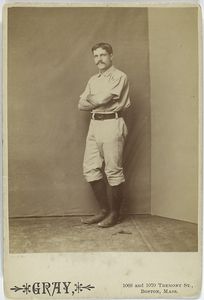
A biographical detail about Farrar that particularly appeals to me is the fact that her father, Sidney, was a major league baseball player from 1883 to 1890. A first baseman, he played most of his career for the Philadelphia National League franchise. In his last season, he bolted to the maverick Players League, still playing in Philadelphia. He appeared in 943 games and, in the dead-ball era, had 905 hits and a .253 batting average.
SIDNEY FARRAR
When Sid Farrar was through playing baseball, he opened a men’s clothing shop in Melrose, Massachusetts, in partnership with Frank G. Selee, a Hall of Fame major league manager. Farrar and his wife, Etta, were singers in their own right. Farrar was a baritone, and it was said of him that if he was speaking in what, for him, was a conversational tone of voice on one side of a street, he could be clearly heard from the other side.
When Geraldine went to Europe to study voice, her parents went with her and remained on the Other Side until Geraldine had made a name for herself in Berlin, Munich, Salsburg, Paris, and Stockholm and returned to the United States in 1906.
In later life, when he had been widowed, Sid Farrar was a familiar figure at Geraldine’s concerts, and she said that he was often surrounded by other old ballplayers who may have looked a little out of place in the classical concert hall. It dawned on her, she said, that those old guys weren’t there to see her; they were there to see her dad.
One of my favorite Caruso-Farrar recordings is their 1912 rendition of “O Soave Fanciulla” from La Boheme. Click HERE to hear it.
“When it’s twilight on the trail”
June 19, 2013

SLIM WHITMAN
I’ll wager that not many folks remember this lyric, but I’ll also wager that my son and daughters do:
Maggie dear won’t go out alone
Seems that she must have a chaperone
When we go out, no matter where we’re bound
There’s always someone around
She brings her father, her mother,
her sister and her brother
Oh, I never see Maggie alone
She brings her uncles, her cousins,
she’s got ’em by the dozens
I never see Maggie alone . . . .
That tune, with words by Harry Tilsley, was one of the songs I used to sing with or to my kids during our many car trips.
 I learned that song from an album by Slim Whitman, who died today at the age of 90. I still have that album and others by Whitman among the hundreds of vinyl LPs we retain and occasionally play. I obtained those Whitman albums in the 1950s, when I was caught up with what then constituted country-and-western music. The collection also includes Webb Pierce, Kitty Wells, Faron Young, Ferlin Husky, Little Jimmy Dickens, Hank Snow, Bob Gibson, Hank Williams, Elton Britt, Wilf Carter (Luke the Drifter), and Tex Ritter.
I was listening to doo-wop at the same time, and I already was immersed in opera and other classical music, but that brand of country appealed to me. My friend Michael P. Moran and I even had a country music show for a few years on the radio station at Seton Hall University.
Whitman had a significant following that was partly due to his romantic style. While many country singers liked to dwell on the futility of life (“There Stands the Glass”), Whitman favored love songs and romanticism in general. His voice was also more likely to appeal to an audience beyond the usual country crowd; he was a genuine crooner. And he was a wonderful yodeler — he and Elton Britt were my favorites in that regard.
I lost interest in country music as it became more and more the highly-produced form that defines it now. But I still go back to the vinyl from time to time to hear it done right. Speaking of that, listen to Slim Whitman at THIS LINK.
Books: “Love Song”
March 26, 2013
 I have always associated “September Song” with Jimmy Durante, who recorded it for an album in 1963. I like Durante’s version because it has a touch of melancholy that doesn’t come through with quite the same effect when the singer is Bing Crosby or Sammy Davis Jr.
Come to find out in Ethan Mordden’s book Love Song that the song was written by Kurt Weill and Maxwell Anderson specifically for another entertainer who had no singing voice — namely, Walter Huston. Huston played Peter Stuyvesant in the 1938 Broadway musical Knickerbocker Holiday and he more or less insisted that he should have a solo in the show. Weill and Anderson accommodated him, devoting only a couple of hours to writing the song. The show was designed to criticize the New Deal by portraying Stuyvesant as corrupt and dictatorial in his rule over the Dutch colony of New Amsterdam in the mid 17th century. The musical closed after about six months, although it was the basis for a later movie. The song didn’t attract too much attention until Walter Huston’s version of it was used in the 1950 movie September Affair. After that, it was recorded by many male and female vocalists, ranging in type from Ezio Pinza to Tex Ritter. Among the females who recorded it was Lotte Lenya, who was twice Kurt Weill’s wife and the love of his life — after his music.

KURT WEILL
The composer and the singer are the subjects of Mordden’s book, which is subtitled The Lives of Kurt Weill and Lotte Lenya, although Mordden devotes at least as much attention to Weill’s sometime collaborator Bertolt Brecht as he does to Lenya.
Pretty much everything in this book has been reported before, but Mordden brings to the story a knowledge of music and 20th century culture, and a sharp wit, that makes this a worthwhile profile of three fascinating figures — the trio who, among other things, brought the world The Threepenny Opera.
Weill was Jewish and totally absorbed in music; Lenya, who was born Karoline Blamauer, was flirty and unfettered. They separated and divorced once, but remarried and never really lost their mutual devotion. They became enamored of each other in Berlin during the hiatus between the two world wars, or during the pause in the one great war, depending on how you look at it.
This was the period of the ill-fated Weimar Republic, a part of German history perhaps not well known to Americans — certainly not to me. Mordden shares his own understanding of the uproarious time with its inept government, dead-on-arrival economy, and non-conformist arts scene, an odd recitative to the rise of Adolf Hitler.
LOTTE LENYA
It was in the Weimar incubator that Weill and Brecht hatched The Threepenny Opera, Brecht’s book lampooning the milieu in Berlin at that time. The show appeared in 1928 and is regarded as a classic, but the nascent Nazi crowd thought it smelled of socialism. Eventually, Nazism drove Weill, Lenya, and Brecht out of Germany. Weill and Lenya went first to Paris and then to New York where the artistic and personal freedom they experienced for the first time had a trans-formative effect on their lives.

BERTOLT BRECHT
The couple hadn’t planned to stay in the United States, but they did stay, and both became American citizens. It may have been inevitable, at least for Weill, because he had long had an interest in using American themes in his compositions.
Weill was prolific and versatile; his work included cantatas, orchestral pieces, chamber works, and film scores, but he is best remembered for what he wrote for the stage, including the musical plays Johnny Johnson; Street Scene – ostensibly an American opera; One Touch of Venus, which introduced the song “Speak Low”; and, of course, Knickerbocker Holiday and The Threepenny Opera.

LOTTE LENYA
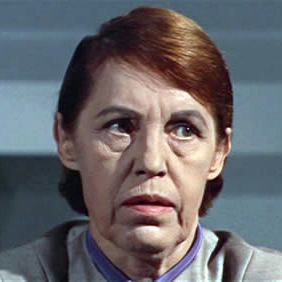
Lenya’s career as an actress and singer had its ups and downs. After Weill died in 1950, she became the central figure in a revival of his work. She recorded many of his songs. In 1952, she sang in Leonard Bernstein’s concert version of The Threepenny Opera at Brandeis University; that led to a New York production that ran for 2,706 performances. Lenya won a Tony Award for her performance, even though the show ran off Broadway.
In 1966, she created the role of Fraulein Schneider in the original Broadway production of Cabaret, believed to have been inspired by Weill’s work, and she had highly visible movie roles in The Roman Spring of Mrs. Stone and From Russia with Love.
Brecht, with whom Weill worked on several projects, settled in East Berlin where, Mordden writes, he was a “stooge” for the Communist regime. “Oathed to the extermination of oppression,” Mordden writes, “Brecht allied himself with the most oppressive regime of the century, and he lived by recognizing no one’s rights but his own.’’
Brecht comes across as a character who many found magnetic but who was offensive in many respects, including his abusive treatment of actors and his substandard personal hygiene.
“Babes in Arms”
November 4, 2012

JUDY GARLAND and MICKEY ROONEY
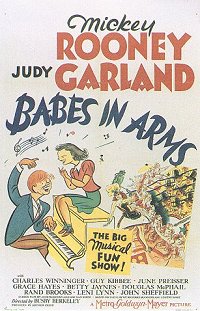
Knowing that a storm visitor was a fan of Judy Garland, I picked out Babes in Arms from the On Demand list, and wound up watching it myself. I did that because this 1939 film was based on a 1937 Broadway musical by Richard Rodgers and Lorenz Hart. I’ve always been curious about that show, but I’ve never seen it produced on stage. I knew well before the movie was over that the stage show has to have been better.
This was one of the “let’s put on a show” movies that Garland made with Mickey Rooney. It turns out that it was only loosely based on the Broadway show. In fact, I have since read that once the brains at MGM got the rights to the show, they made wholesale changes to the script and threw out all the songs except the unmemorable title song and the memorable “Where or When,” which was introduced on Broadway by Ray Heatherton (who later had a long run on television as the “Merry Mailman”) and Mitzi Green.

RAY HEATHERTON
That means, that MGM — specifically producer Arthur Freed — cut “My Funny Valentine,” “I Wish I Were in Love Again,” “Johnny One Note,” and “That’s Why the Lady is a Tramp” (which is heard only as incidental background music). Freed added two old songs of his own — “I Cried for You” and “You Are My Lucky Star” — and he and Nacio Herb Brown wrote “Good Mornin'” especially for this movie. E.Y. Harburg and Harold Arlen, who had contributed three classic songs to The Wizard of Oz, were employed on this movie to write “God’s Country,” a heavy-handed finale that was influenced by the war under way in Europe.
This film was directed by Buzby Berkeley in an era when the canteen didn’t stock de-caf coffee. It is, in a word, exhausting. The production numbers with their quick-step marches are dated and Rooney in particular, as talented as he is, is manic — a fault that is made more conspicuous by the fact that Garland’s performance is comparatively understated.
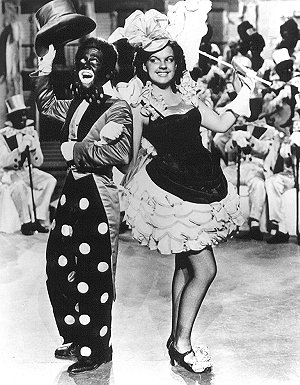
Apparently there was some racially insensitive material in the Broadway production, and there is an offensive minstrel sequence in the movie. Blackface was common into the 1950s; in fact, when I was a kid, my parish used to stage annual minstrels complete with end men in burnt cork exchanging idiotic banter with “Mr. Interlocutor.” It’s as hard to watch now as it should have been then.
Rooney and Garland in blackface
I’ve read some attempts to rationalize this display, including one argument that the caricatures were mild, but there is nothing mild about Rooney’s lampooning in particular. He’s Jolson in overdrive.
There is a clever number in which Rooney and Garland do good-natured send ups of Franklin and Eleanor Roosevelt. This scene was cut from copies of the film distributed after FDR died in 1945, but it has been restored and is one of the most worthwhile things in the movie.
“It’s all in the game”
October 28, 2012
 As we left for a long drive the other day, I grabbed a Johnny Mathis CD to play along the way. Among the songs was “All in the Game,” a favorite of mine and a song with a unique history: It’s the only song with a melody written by a man who both served as vice president of the United States and won the Nobel Peace Prize.
The composer was Charles G. Dawes, who served as vice president in the Calvin Coolidge administration — from 1925 to 1929. Dawes is forgotten today, but he was a prominent man in his time. His great-great grandfather was William “Billy” Dawes, who rode with Paul Revere, but somehow escaped Longfellow’s notice. The latter Dawes was a lawyer, banker, politician, and humanitarian. He was an army officer during World War I, and then President Warren G. Harding appointed him the first director of the Bureau of the Budget. In 1923, President Calvin Coolidge appointed him to the Allied Reparations Commission, and Dawes shared in the Nobel Peace Prize for his work on a plan to stabilize the economy of Germany, which had been devastated by the war and its aftermath.

CALVIN COOLIDGE and CHARLES G. DAWES
Dawes was about the fourth choice to run for vice president with Coolidge, who was elected to a full term of his own after finishing the term of Warren Harding, who had died in office. Dawes was clumsy in the position and alienated Coolidge from the first day of the administration. President Herbert Hoover appointed Dawes ambassador to Great Britain, and Dawes served effectively in that post for three years.
In 1911, Dawes, who played the piano and the flute, wrote a composition called “Melody in A Major.” The sheet music was published without Dawes’ knowledge, and it became an popular violin piece; in fact, the great violinist Fritz Kreisler used it to close his recitals.
In 1951, after Dawes had died, songwriter Carl Sigman modified the melody somewhat and wrote the lyrics that made the song a standard in American popular music: “Many a teardrop will fall , but it’s all in the game. …”
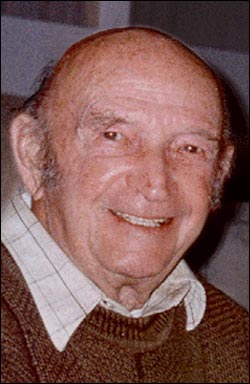
CARL SIGMAN
Sigman, who was a member of the New York Bar and a hero in World War II, compiled quite a track record for writing memorable lyrics. His songs include “Arrivederci, Roma,” “Ebb Tide,” “Shangri-la,” “What Now, My Love,” and the theme from the film Love Story.
“All in the Game” has been recorded by Dinah Shore, Nat King Cole, Louis Armstrong, Andy Williams, Robert Goulet, Johnny Ray, Jackie DeShannon, Cass Elliot, Van Morrison, Neil Sedaka, Merle Haggard, Barry Manilow, and many others.
Tommy Edwards had a major hit with it in 1958, and that recording is ranked No. 38 on Billboard’s Top-100 list. You can hear Tommy Edwards’ recording at THIS LINK.
“You’ve got to be taught to hate and fear”
October 23, 2012
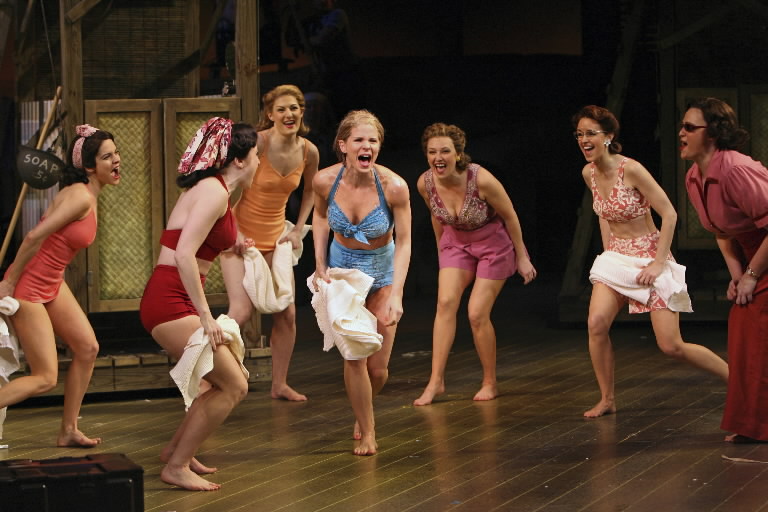
Nellie Forbush (Kelli O’Hara) and the navy nurses sing “I’m Gonna Wash that Man Right Outta My Hair” in the Lincoln Center revival of “South Pacific”
On one of our first dates, I took Pat, now my wife, to see a major production of South Pacific, the Rodgers and Hammerstein musical. Betsy Palmer played Nellie Forbush and William Chapman played Emile de Becque. Neither of us had ever seen the show on stage, but both of us had seen the 1958 film with Mitzi Gaynor and Rossano Brazzi (with Giorgio Tozzi dubbing Brazzi’s songs), and both of us owned the cast albums from that film and from the original Broadway production with Mary Martin and Ezio Pinza.

JAMES MINCHENER
The musical play, which first appeared in 1949, was based on James Minchener’s 1947 book, Tales of the South Pacific. This book, which won the Pulitzer Prize, is a collection of loosely connected stories based on Michener’s experiences as a Navy officer on the island of Espiritu Santo. I find it an absorbing book because of its ability to transport the reader into the unique environment of the Pacific Islands during that war.
Rodgers and Hammerstein combined three of Michener’s stories to create the musical play, and they determined to deal with two instances in which romantic liaisons were disrupted by racial prejudice. One of those situations arises when Navy nurse Nellie Forbush, whose previous life experience was confined to Little Rock, Arkansas, falls in love with French planter Emile de Becque but discovers that he had previously lived and had children with a Polynesian woman. For reasons that she herself cannot articulate, Nellie is repulsed by the idea, and she undergoes a wrenching internal struggle.
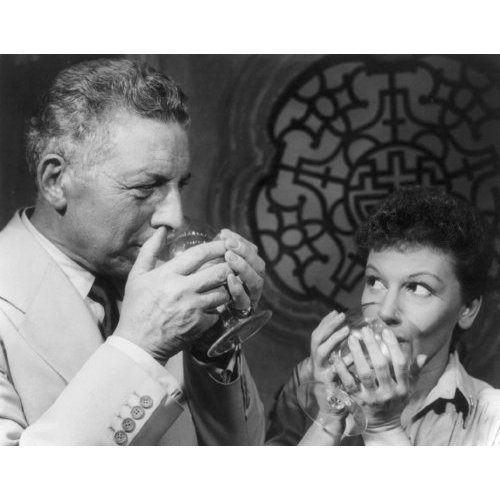
EZIO PINZA and MARY MARTIN
The other conflict involves a Marine lieutenant, Joe Cable, who falls in love with a Tonkinese girl who is not yet an adult, but refuses to marry the girl because of the color of her skin. In a scene in which De Becque and Cable discuss their contradictory crises, De Becque declares that he does not believe that racial prejudice is inborn, and Cable punctuates that idea with a lyric: “You have to be taught to hate and fear / You have to be taught from year to year / It has to be drummed in your dear little ear / You have to be carefully taught … to hate all the people your relatives hate.”
This lyric brought opprobrium down on Rodgers and Hammerstein from some quarters in the United States. Cable’s song was described as not only indecent, because by implication it encouraged interracial sex and — God forbid! — breeding, but that it was pro-communist because who but a communist would carry egalitarianism so far? Some Georgia politicians actually tried to stifle the song through legislation. Rodgers and Hammerstein’s position was that the song was about what the play was about and that, even if it sank the show, the song would stay.

RICHARD RODGERS and OSCAR HAMMERSTEIN
We saw the recent revival of South Pacific at the Lincoln Center twice, and this past weekend, we had the opportunity to see it again in a production at the non-profit Ritz Theatre in Haddon Township, New Jersey. One of the impediments to mounting this show is that it requires an outstanding cast and company; it can’t be faked. The Ritz was up to that challenge in every respect. In fact, Pat and I agreed that Anabelle Garcia was the best Nellie Forbush we had ever seen.
South Pacific was written shortly after World War II. The original production won a Pulitzer Prize and ten Tony Awards. In fact, sixty-two years later, it is still the only musical to win all four Tony Awards for acting.
What is striking about South Pacific is that although it is necessarily performed entirely in the milieu of the 1940s, it does not get old. Racism is still a serious issue in the United States, and some of the criticism directed at this show for addressing that issue sounds disturbingly like rhetoric we can still hear today.
“If it ain’t got that swing”
September 19, 2012

TAYLOR TEAGARDEN
Taylor Teagarden’s major league baseball career hasn’t amounted to much yet. As of yesterday, he had appeared in only 136 games in five seasons. He has shown a flair for the dramatic on a few occasions—last night being a notable example—but he hasn’t yet become the Jack Teagarden of the diamond.
Jack was another story altogether. As soon as I heard of Taylor T., I wondered if he and Jack were related. Naturally a guy would wonder that, what with the unusual last name and the fact that both of these Teagardens were from Texas.
Well, I say “naturally.” It was natural for me, because of a 78 rpm record that belonged to my parents. I loved that record when I was a kid, and I still do. It’s a rendition of a 1941 Johnny Mercer song, “The Waiter, the Porter, and the Upstairs Maid,” sung by Bing Crosby, Mary Martin, and Jack Teagarden. It’s one of those witty, sophisticated lyrics that Mercer wrote best. You can hear and see that trio singing Mercer’s song at this site: http://www.youtube.com/watch?v=_0e1DF4TUYY. Or you can come over Saturday afternoon, and I’ll play it for you on the Victrola. If you don’t know what a Victrola is, you probably already stopped reading.
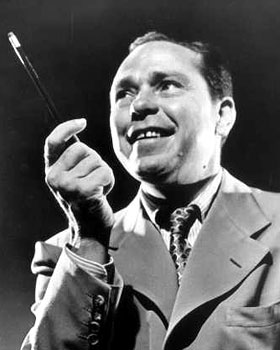
JOHNNY MERCER
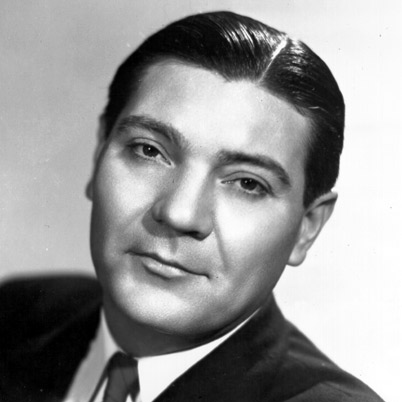
Jack Teagarden, who came from a family loaded with musical talent, was in heady company with Crosby and Martin, and he was a very good crooner himself, as well as a composer and bandleader. Among the highlights of his memorable career were his vocal turns with Mercer and Louis Armstrong. But he made his most indelible mark as an innovative jazz and blues trombonist. He is often referred to as “the father of jazz trombone.” You can learn a lot about this important figure in American cultural history at www.jackteagarden.info.
Although it’s a lot easier than it was in the pre-digital age to answer such questions as, “Is Taylor Teagarden related to Jack?”, I have had trouble finding out. Until I wrote this post, I had found only one reference, buried in an non-authoritative web site, reporting that the catcher thinks he might be the great great nephew of the musical genius. But my friend Brian VanderBeek, a sports writer with the Modesto Bee, responded to this post by reporting that he had met Taylor Teagarden in 2007 when Taylor was playing for Bakersfield in the California League and Taylor, on that occasion, confirmed that Jack Teagarden was his dad’s great uncle.
Taylor is with the Orioles now, and his season got a late start due to a back injury. It remains to be seen if he will leave in baseball a footprint like the one Jack Teagarden left in music, but Taylor has already taken advantage of baseball’s unique capacity for providing even the most obscure player with opportunities for heroics.
JACK TEAGARDEN
He came up with the Texas Rangers in 2008, and his first major league hit was a sixth-inning home run off Scott Baker of the Minnesota Twins. Baker had not given up a hit up to that point. And Teagarden’s homer produced the only run in what turned out to be a 1-0 game. When he came off the disabled list for the Orioles on July 14 of this year, he hit a two-run homer that broke up a 6-6, 13-inning tie with the Tigers.
Last night, Taylor got to play Mr. Clutch again as he pinch hit a single in the top of the 18th inning, driving in the winning run as the Orioles beat the Seattle Mariners and pulled into a virtual tie with the Yankees for first place in the American League East. No matter how the rest of his career goes, Taylor T. can always say with another lyricist, Ira Gershwin, “They can’t take that away from me.”
.
Books: “A Natural Woman”
April 27, 2012
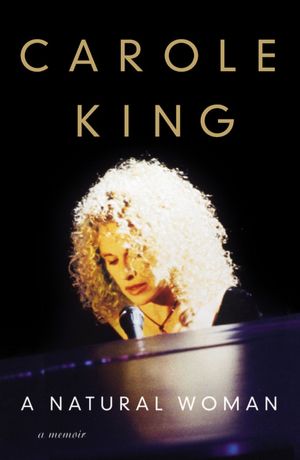 It may not be possible to dislike Carole King.
What’s not to like? She has written some of the best pop and rock songs of the past five decades, she has a record of social responsibility, and she’s a nice person.
In a way, her memoir, A Natural Woman, is similar: What’s not to like? It’s a conversational account of a remarkable American life; in some ways, it would be hard to believe if one didn’t already know that it’s true. King (Carol Klein) is a Brooklyn native who found herself in awkward straits in school because her mother enrolled her early, and then she skipped a grade — so she was perennially younger than her classmates and felt out of place.
She showed early signs of a bent for entertaining, and she was writing songs in her teens. In fact, she was only 18 when she and her husband, Gerry Goffin, wrote “Will You Still Love Me Tomorrow” for the Shirelles. She also became a mother for the first of four times at around the same time. Among the songs she has written since then, either on her own or with a collaborator, are “Where You Lead, I Will follow”; “I’m Into Something Good”; “It’s Too Late, Baby”; “The Loco-Motion”; “Take Good Care of My Baby”; “Go Away, Little Girl”; “I Feel the Earth Move;” “You’ve Got a Friend,” and “Natural Woman.’’

JAMES TAYLOR and CAROLE KING
For a long time, King saw herself as a writer and “sideman” — that is, one of the musicians playing and even singing behind a lead performer. By King’s account, James Taylor changed that single-handedly. It occurred in 1970 while Taylor was touring to promote his album “Sweet Baby James.” King was to play piano for Taylor at a performance at Queens College, which was her alma mater. As the show was about to begin, Taylor told King he wanted her to sing lead that night on “Up on the Roof,” a song she had written with Goffin and a favorite of Taylor’s (and mine, not that it matters).
King writes that she was taken aback by this request but had no time to talk Taylor out of it. When that spot in the set came around, Taylor introduced King to the audience as an alumna of the college and a co-writer of the song and, without rehearsal, she took her first turn as a lead singer. In time, of course, she become a good enough lead that her album Tapestry become one of the best selling collections of all time.

CAROLE KING and GERRY GOFFIN
King devotes a lot of space in this book to a personal life that is difficult for an outsider to fully understand. She married Goffin when she was 17, and the pair, barely more than children, settled into suburban life in West Orange. But Gerry got restless, he fooled around with drugs, he eventually plunged into serious depression. The marriage ended, but King and Goffin continued to be friends and collaborators. King had three more marriages, none of which, based on her own accounts, seem to have been well thought out. Two ended in divorce and one ended when her husband — who she says struck her on several occasions — died as a result of a drug overdose.
King emphasizes in this book that she didn’t like touring and that she didn’t seek stardom because of the baggage that came with it. She had a yen for a simple life, particularly as compared to life in the New York City and Los Angeles areas. From both a cultural and environmental point of view, she carried that quest to its logical extreme by buying a ranch in Idaho. Before she picked the spot, in fact, she and her fourth husband, Rick Sorensen, and her two youngest children lived for three years in a cabin that had no electricity, running water, or heat.
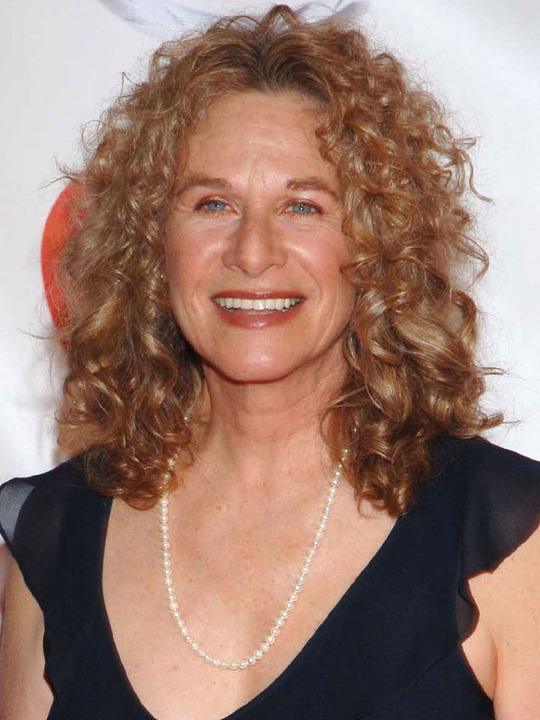 When King first decided to make Idaho her principal residence, her oldest child, Louise, then 17, declined to make the move, and she stayed behind in Los Angeles. Eventually, all of King’s children would wind up in California. All of those children apparently have had fruitful lives, but King’s priorities are still a little hard to grasp.
I found it disconcerting, too, that she devoted a chapter to her decision to practice yoga, remarking that the discipline helped her find her “center.” She presents this as a life-shaping event, but she never explains what she means by finding her center, and except for one glancing reference, she never mentions yoga again.
Perhaps because she is such a nice person, King chooses her words carefully when she’s describing her interactions with other people, even the husband who brutalized her. While it wouldn’t necessarily be useful for her to share any rancor she might be harboring, her approach is tentative enough to make a reader wonder what else she chose to withhold.
King mentions an editor in the acknowledgments, but I was happy to find that it seemed as if this book was largely King’s own work. It has the feel of a kitchen-table conversation. Apparently it is as much as King wanted to share, so it will have to do for now.
“You’ll go down in history!”
December 24, 2011
 There’s a radio station in these parts that started the week after Thanksgiving to play nothing but Christmas music. And that has been pretty much restricted to non-religious Christmas music, which sharply limits the available tracks, even with generic winter tunes like “Let it Snow” thrown in.

JOHNNY MARKS
We usually stick to the public radio classical music station, but once in while, when that station delves into music we find grating, we have switched to the commercial station, but the steady diet of what seems like a dozen songs can be nauseating. Earlier today, within less than 30 minutes, that station played yet again “Rudolph, the Red-Nosed Reindeer” by Gene Autry, “Rockin’ Around the Christmas Tree” by Brenda Lee, and “Have a Holly Jolly Christmas” by Burl Ives. It occurred to me as I reached for the remote that all of those songs were the work of Johnny Marks. That’s no small thing when one considers that relatively few pop Christmas songs have become standards.
“Rudolph, the Red-Nosed Reindeer” was actually a collaboration with Marks’s brother-in-law, Robert May, a Phi Beta Kappa graduate of Dartmouth, who worked as a copywriter for Montgomery Ward.

ROBERT MAY
For many years, the retail chain had been giving away Christmas coloring books to children who visited Santa Claus at Montgomery Ward stores, but in the 1930s, turned to creating its own book, which featured the tale of Rudolph, written in verse by Robert May. By 1946, more than six million copies of the book had been distributed. To its credit, Montgomery Ward, which originally owned the copyright to Rudolph because it had been written by an employee as an assignment, turned the rights over to May in 1947. Marks turned May’s poem into lyrics and set it to music. Although other singers turned down the chance, Gene Autry recorded the song for the Christmas season of 1949 and the disc sold more than 2.5 million copies the first year and has sold tens of millions since.
 Incidentally, May’s achievement was remarkable in its own right in that he managed to add a character to the ages-old Santa Claus legend.
Marks, who attended Colgate and Columbia universities, also wrote “I Heard the Bells on Christmas Day,” a musical adaptation of a poem by Henry Wadsworth Longfellow. The song was recorded by several major artists, including Harry Belafonte, Bing Crosby, and Kate Smith.
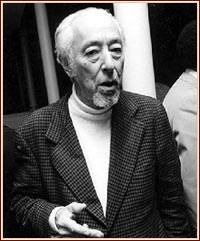
From what I’ve read, although “Rudolph” made Marks a rich man, he wasn’t crazy about being remembered only for that and a few other Christmas songs. As it happens, Marks also collaborated with Carmen Lombardo and D.L. Hill to write one of my favorite songs, “Address Unknown.” It was a big hit for the Ink Spots. You can hear their recording by clicking HERE.
JOHNNY MARKS
I don’t want to leave Johnny Marks without mentioning that he served with the U.S. Army during World War II — specifically, as a captain in the 26th Special Service Company — and he was awarded the Bronze Star and four battle stars.
Serving under General George Patton during the invasion of Normandy, Marks won the Bronze Star for leading 20 men in an attack on a castle and capturing the 100 Germans inside. 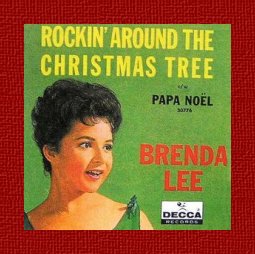
“It’s nobody’s business but the Turks” — Jimmy Kennedy
December 6, 2011

STEPHEN COLBERT
Stephen Colbert, in his recent irreverent commentary on the new English translation of the ritual of the Roman Catholic mass, said something to this effect: “For the record, consubstantial is now Istanbul.” For the benefit of the uninitiated, consubstantial is a technical term in the Nicene Creed that expresses something we Catholics and many other Christians believe about the nature of God. In the translation in use from around 1970 until Nov. 27, the Latin phrase consubstantialem Patri was rendered “of one substance with the Father,” but in the new rendition it reads, “consubstantial with the Father.”
Anyway, that was the occasion for Colbert to make that play on words.

JIMMY KENNEDY
That had the unintended result of reviving in my brain the memory of a song written in 1953, with lyrics by Jimmy Kennedy and music by Nat Simon, namely “Istanbul (Not Constantinople”). I don’t know how historically accurate Kennedy was trying to be, but the song in general refers to the fact that in 1930, the government of the relatively new Republic of Turkey declared Istanbul to be the one and only name of a city that had had many names — sometimes more than one at the same time — over its very long history. Istanbul was not a new name in 1930. Far from it, the name was known in some form since at least the tenth century.
Things like that used to interest song writers, and Kennedy turned out a lyric that, in part, went like this:
Istanbul was Constantinople
Now it’s Istanbul, not Constantinople
Been a long time gone, Constantinople
Now it’s Turkish delight on a moonlit night
Every gal in Constantinople
Lives in Istanbul, not Constantinople
So if you’ve a date in Constantinople
She’ll be waiting in Istanbul
Even old New York was once New Amsterdam
Why they changed it I can’t say
People just liked it better that way
So take me back to Constantinople
No, you can’t go back to Constantinople
Been a long time gone, Constantinople
Why did Constantinople get the works?
That’s nobody’s business but the Turks.
The ‘fifties being what they were, that was a big hit for the Four Lads.It was played on the radio again and again, and it was bored into my subconscious mind, where it rested happily until Colbert summoned it from the tomb.Kennedy, incidentally, was a very talented guy who wrote several standards, including “South of the Border,” “The Isle of Capri,” and “Red Sails in the Sunset.” Nat Simon and Charles Tobias teamed up in 1946 to write “The Old Lamp-Lighter.”
But Kennedy’s best-known work may be the lyrics he wrote in 1939 for “My Prayer,” which had been composed in 1926 by violinist Georges Boulanger. Glenn Miller and the Ink Spots had big hits with that song, but its most popular interation was the 1956 recording by The Platters.
“Istanbul (Not Constantinople)” has been recorded by many performers, including Bing Crosby and Ella Fitzgerald, Caterina Valente, Bette Midler, and They Might Be Giants.
You can hear the Four Lads’ version by clicking HERE.

 CharlesPaolino's Blog