“Roll ’em!”
March 16, 2009
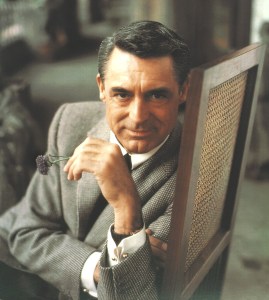
CARY GRANT
I don’t understand why a television channel that exists solely to present movies – and presents each movie with some kind of historical context – does not let the credits run at the end of the film. I am referring to Turner Classic Movies. It’s frustrating. Last night, for example, we watched “Talk of the Town,” a 1942 flick that starred Cary Grant, Ronald Coleman, and Jean Arthur. I was curious about the actor who played Coleman’s black valet, because the character was an elegant figure who exhibited a deep intellect and spoke with an almost Victorian propriety. No credits. I found out on IMDB that the actor was Rex Ingram, who was born on a riverboat in Mississippi and around 1916 became the first black man to earn a Phi Beta Kappa key at Northwestern University. Ingram – not to be confused with the white director of the same name – appeared in nearly 50 properties – most of them movies.

REX INGRAM
Anyone who goes to a movie with me knows enough not to get up before the screen goes dark for good, and I know I’m not the only one who likes to see the names of the best boy and the caterer and – especially important – the music credits. Frequently, too, there is a lot of care taken in choosing the music that plays over the credits. I would never turn off “Dominick and Eugene,” for instance, without watching the credits roll over “Goin’ Down to Rio.” But the least I expect is to read the names of the actors in case I want to find out more about them. But that’s me – never satisfied,
Netflix Update No. 2: “Junebug”
March 14, 2009

ALESSANDRO NIVOLA
Last night we watched “Junebug,” a 2005 film with Alessandro Nivola, Embeth Davidtz, Amy Adams, Benjamin McKenzie, and Celia Weston. The story concerns Madeleine (Davidtz), who owns an “outsiders” art gallery in Chicago. She gets wind of a primitive artist in North Carolina and decides to go in person to get him to sign on with her gallery. Her new husband, George Johnsten (Nivola), takes the trip with her in order to introduce her to his family, who live a short distance from the artist. This family – parents, a son, and the son’s pregnant and childish wife – Adams, who got an Oscar nomination for this performance – constitute a delicate balance of no-nothingism, introversion, and frayed nerves. Madeleine, who has not been prepared for this encounter and who understands nothing about this family or its environment, unwittingly becomes a kind of bizarro-world bull in the china shop. This film is an interesting psychological study of each of the major characters and a caution against judging folks based on their behavior alone. The director, Phil Morrison, likes silent landscapes and occasional black screens, as though he’s saying: “Hmmmm, let’s think about this for a minute.” That’s a good recommendation for the film as a whole. It’s the kind of film that requires at least one more person in the room – viewers are likely to discuss it as it evolves – and someone to talk with further later on.
The old order passeth
March 11, 2009
 When Dan was fixing the Beetle the other day, he pulled out the radio in order to get a code he needed. Don’t ask. The point is that when he pulled the radio out it fell apart in his hands. Literally – the facing and one of the circuit boards actually crumbled into bits. Dan is getting me another one from the VW dealer, and it’s going to be cheap, because the radio is obsolete in the sense that it plays audio casettes. I couldn’t be happier, because the radio in Pat’s car plays only CDs, and I have scores of audio tapes – store-bought and bootlegged. Life passes us by in such a hurry these days. Audio tapes were an inovation an eyeblink ago, and now they’re obsolete. The same thing applies to that Beta video player/recorder under my desk and all the Beta tapes that are squirreled away in the garage and in the den. I have all the “Taxi” episodes on Beta tapes. Why did I bother, Latka? Who knew that those tapes would so soon go the way of the flour sifter? The Baltimore Sun reported today on a video rental store in town that has been in business for 20 years – imagine! – and still does a brisk VHS business. One of the reasons for its durability is that the store has a very large selection and stocks hard-to-get stuff such as the complete works of the Russian director Sergei Einstein.
Dan is going to put the new radio in tomorrow. Where did I put those Jimmy Durante tapes?
http://www.baltimoresun.com/entertainment/movies/bal-americain0310,0,6848231.story
“Hey, aren’t you ….?”
March 8, 2009
 The man mixing it up with Carl Malden in this photo is George Mathews, whose face was as familiar as the next door neighbor for almost three decades. Mathews appeared in nearly 60 properties – mostly television, including many of the major series. He made himself immortal, in a way, when he played Harvey, the tough guy Ralph Kramden – with a lot of help from Ed Norton – challenges to a fight after a poolroom argument in “The Honeymooners.” I don’t know how much stage experience he had, but in this photo he is appearing with Paul Newman, Malden, Patricia Peardon, and George Grizzard in a 1951 Broadway production of “The Desperate Hours.” We saw George Mathews last night when we watched “Pat and Mike,” one of the seven movies costarring Katherine Hepburn and Spencer Tracy. Mathews, as always, played a heavy – one of a trio of thugs trying to pressure Hepburn, through Tracy, to throw a golf tournament. George Cukor had the three thugs play it for laughs, and Mathews contributed at least his share. He appeared on “Death Valley Days,” “The Phil Silvers Show,” “Alfred Hitchcock Presents,” “Gunsmoke,” and “The Untouchables,” among many other programs, and his movies included “The Man with the Golden Arm.” Mathews, who died in 1984, was the quintessential actor that everyone recognizes but no one can name. On the Internet, at least, it seems impossible to find out anything about the man beyond the dates and places of his birth and death and the list of his television and movie appearances. In death as in life, he is The Unknown.
Netflix Update No. 1: “Starting Out in the Evening.”
March 2, 2009
 At the suggestion of a friend who seems to have unerring taste, we watched “Starting Out in the Evening,” a 2007 film with Frank Langella, Lauren Ambrose, and Lili Taylor. This film, based on a book by Brian Norton, concerns Leonard Schiller, a retired professor whose run as a successful novelist is behind him. He keeps up a rigid routine as he works on his fifth novel, but it already has been ten years in the making. His books are out of print, and he is forgotten by everyone except the occasional literary wonk. One of the latter is Heather Wolfe (Ambrose), an Ivy League graduate student who wants to base her master’s thesis on Schiller’s work and who thinks she can simultaneously call him the reading public’s attention. Schiller at first rejects the idea of such a distraction, then cautiously agrees to cooperate with the student, and eventually becomes involved in a uniquely delicate personal relationship with the young woman. The secondary and related plot involves Schiller’s daughter, Ariel (Taylor), who is about to turn 40 and is anxious about her prospects for ever having children. Her decision to renew a relationship with a former boyfriend – for whom Leonard has no respect – is a source of tension between her and her father. Beneath both of these plots is a critical part of Leonard Schiller’s life – the turning point in his marriage – that he had hoped would remain buried in the past.
The complex story which explores issues of personal freedom is very nicely performanced by Langella, Ambrose, Taylor and Adrian Lester as Ariel’s rediscovered lover. Those who wish to can become engrossed in matters of literary criticism – the subject of a lot of the dialogue in this film – but the complex human stories these actors tell were enough to keep us from looking away.
 CharlesPaolino's Blog