Who is that woman?
June 15, 2010

ANNE SEYMOUR
At last, I know. I have been wondering for decades about an actress who had a brief role in an episode of “The Honeymooners,” and last night I found out by chance who she was.
The episode – one of the so-called “classic 39” – is a Christmas story in which Ralph Kramden saves money to buy Alice a present, but spends it on a bowling ball. Then he uses what money he has to buy a hairpin box that’s made of 2,000 match sticks glued together, believing the salesman’s story that the box came from the home of the Emperor of Japan. On Christmas Eve, before Ralph gives Alice this present, a neighbor – Mrs. Stevens – comes to the door and says she’s going to be away for the holiday and wants to give Alice a present before leaving. Of course, when Alice opens the package it’s a box just like the one Ralph bought, and the neighbor says she bought it at a novelty shop near the subway station.

ANNE SEYMOUR
The rest of that story doesn’t matter. What matters — to me, at least — is that I have always felt that the woman who played that small part was a wonderful actress. She created such a strong impression of Mrs. Stevens as warm and self-effacing that, even as a kid, I had a feeling that I’d like her to be my neighbor or even a member of my family — an aunt, maybe. Every time I see that episode, I’m entranced by that actress’s performance. But “The Honeymooners” producers were stingy with the credits, so the actress wasn’t identified.
So the other might I watched the 1949 version of “All the King’s Men” on TCM. The film is based on a Pulitzer Prize-winning novel by Robert Penn Warren, and it is the story of Willie Stark, a corrupt politician modeled after Huey Long. I had not seen it before, and the first time I heard the voice of the actress playing Stark’s wife, Sally, I knew my question had been answered. A little Googling confirmed that the Kramdens’ neighbor was portrayed by Anne Seymour.
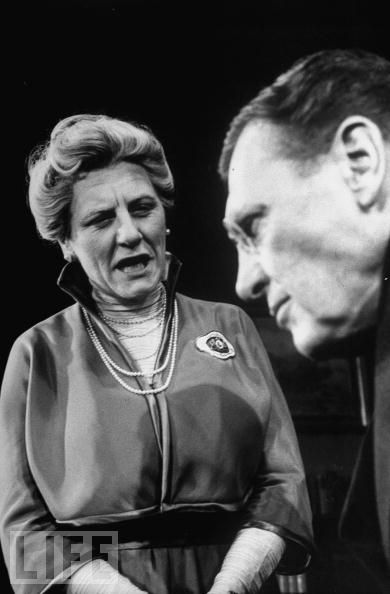
ANNE SEYMOUR and RALPH BELLAMY
Anne Seymour, it turns out, had an extensive career. The International Movie Database lists 121 film and television appearances for her between 1944 and 1988. “All the King’s Men” was her second movie. Her last was “Field of Dreams.” She played the newspaper publisher in Chisolm, Minnesota who helped Ray Kinsella learn about Dr. Archie “Moonlight” Graham.
The actress’s birth name was Anne Eckert, and her family was in the theater for at least seven generations dating back to the early 18th century in Ireland. Her brothers, James and John Seymour, were screen writers. Anne made her stage debut in 1928, and she later also worked in radio drama. Though she spent the bulk of her career working in television, she played Sara Delano Roosevelt, the mother of Franklin Roosevelt, in the 1958 Broadway production of “Sunrise at Campobello,” for which Ralph Bellamy won a Tony award for his portrayal of FDR. Although Anne Seymour got good review for her work in that play, she was not cast in the film version.
Netflix Update No. 33: “Melinda and Melinda”
June 10, 2010

Will Ferrell and Amanda Peet in a scene from "Melinda and Melinda"
We watched the 2004 film “Melinda and Melinda,” which was written and directed by Woody Allen. It was an uneven experience, and I think that was because the balance between comedy and tragedy — which goes to the heart of the film — wasn’t achieved. In my view, at least, the tragedy is to profound to be counterbalanced by the romance. The tragedy is what I expect to stay with me.
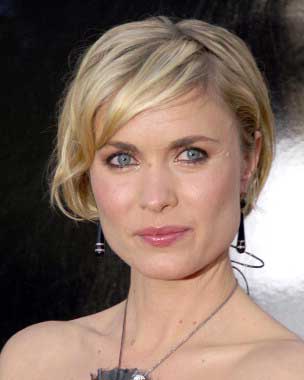
RADHA MITCHELL
The story, as one might expect of a Woody Allen film, is based on an offbeat premise. Two playwrights and several of their friends have dinner in a Manhattan restaurant, and their conversation drifts into the subject of tragedy and comedy as defining elements of everyday life. These playwrights, by the way, are limited parts wonderfully played by Larry Pine and Wallace Shawn. One of the dinner party describes what she says was a real-life incident in which a domestic dinner party was interrupted by the unexpected arrival of a female friend of the hosts. The two playwrights then concoct full-blown stories from that premise — one a tragedy and one a romantic comedy. In both instances, the unexpected visitor is Melinda – played in both cases by the magnetic Radha Mitchell.

TRAGIC MELINDA
In the tragic version, Melinda is a suicidal woman who — by her own account — squandered an idyllic life with her physician husband and two loving children, because she had grown bored with existence and blundered her way into the arms of an Italian photographer. That adventure cost her not only the marriage but any opportunity to even see her kids. She returns to Manhattan in a confused effort to build a new life for herself, but she winds up disrupting the lives of the couple she barges in on, a minor actor and a music teacher played by Johnny Lee Miller and Chloe Sevigny.

COMIC MELINDA
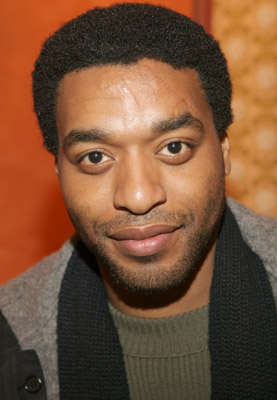
CHIWETEL EJIOFOR
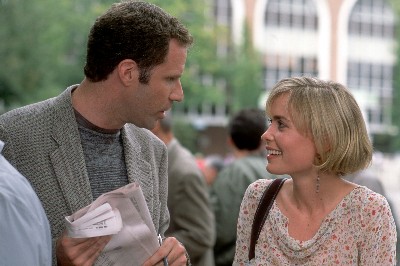
Will Ferrell and Radha Mitchell in a scene from "Melinda and Melinda"
Netflix Update No. 32: “What Just Happened”
May 27, 2010
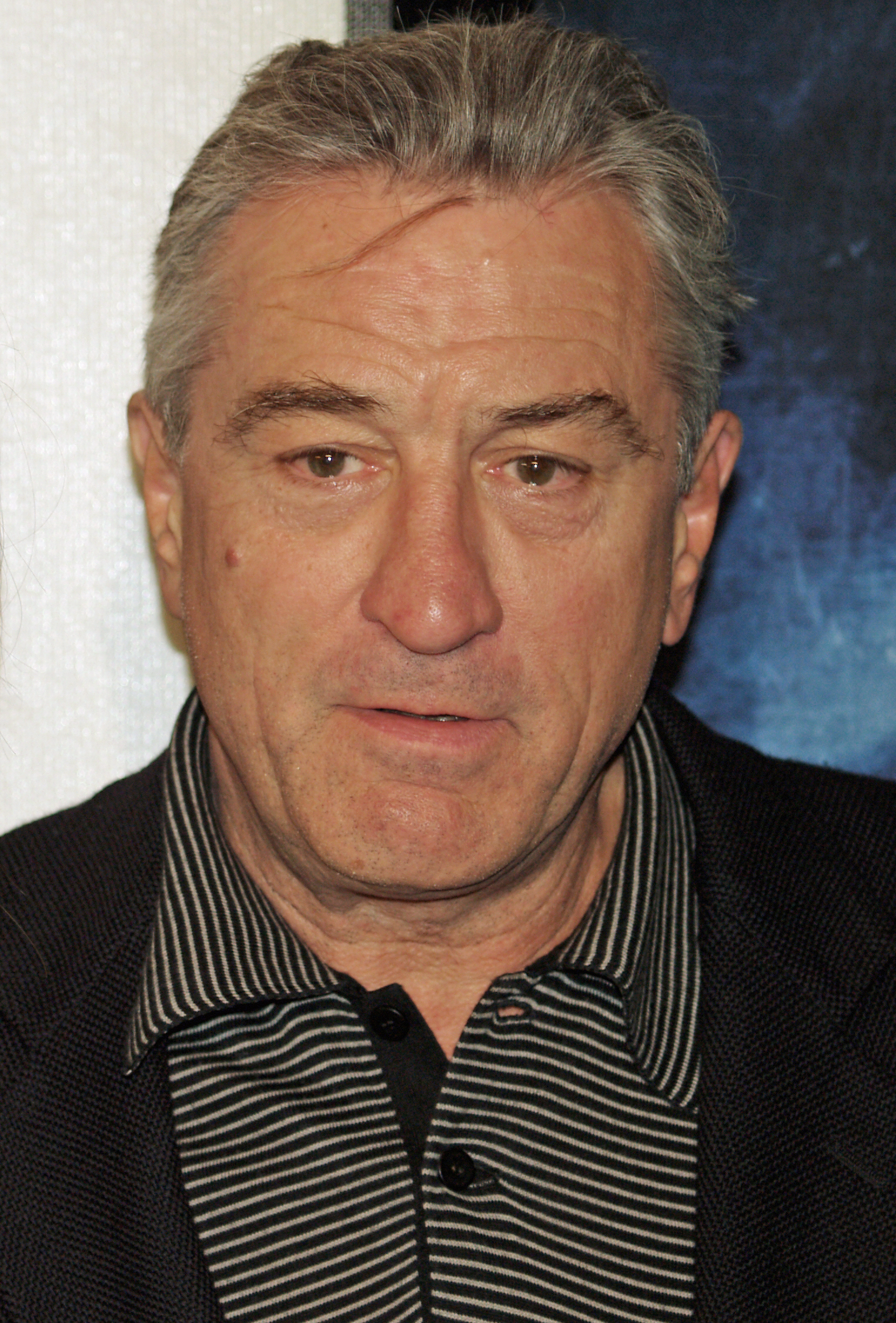
ROBERT De NIRO
We watched “What Just Happened,” an odd film starring Robert De Niro, who can’t be accused of never making interesting choices — “interesting” being a relative term.
This film was released in 2008 and was shown at the Cannes Film Festival that year. That was fair play inasmuch as the festival itself plays an important part in the movie. Although the title begins with an interrogative pronoun, it does not end with a question mark, which — as I tell my English students — mean that it is not a complete idea. The film is based on a novel which does have a question mark: “What Just Happened? Bitter Hollywood Takes from the Front Line” by Art Linson.
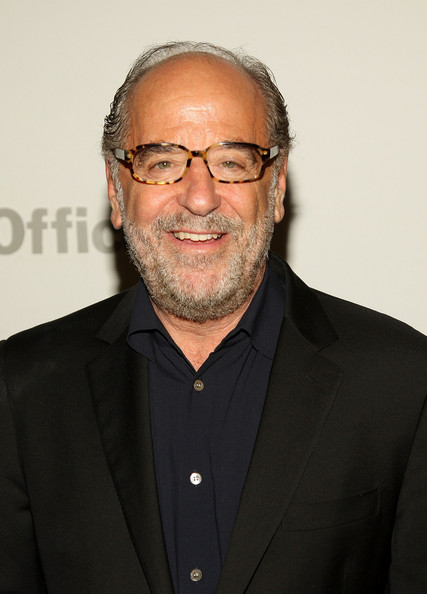
ART LINSON
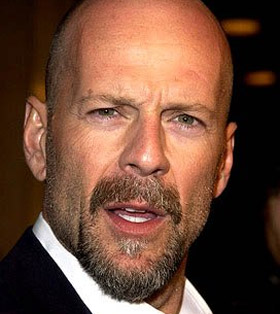
BRUCE WILLIS
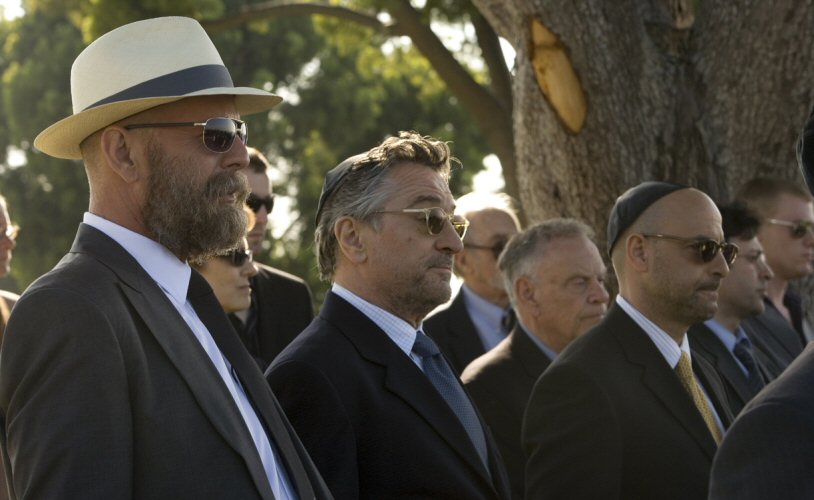
Bruce Willis, Robert De Niro, and Stanley Tucci in a scene from "What Just Happened"
Netflix Update No. 31: “Everybody’s Fine”
May 6, 2010

ROBERT DE NIRO
We watched the 2009 film “Everybody’s Fine,” starring Robert De Niro and Drew Barrymore, and it was — well — fine. The movie, which also stars Kate Beckinsale and Sam Rockwell, is based on an Italian flick, “Sono Tutti Bene.” The American version has earned about half of what it cost.
The premise is that a widower, Frank Goode (De Niro), who lives alone in upstate New York, has his mind set on getting his four children to gather around the same table. A reunion at the family home has been arranged, but the kids cancel on Frank. Frustrated by this outcome, he decides to travel across the country and visit them — unannounced — one by one. His first stop is New York City to see David, who is an artist, but David is not at home, and does not come home. Frank moves on to visit daughter Amy (Beckinsale), who is an advertising executive — married and the mother of one boy. Lying ineffectively because she’s hiding bad news about David and about her marriage, Kate tells Frank that his visit was ill timed, and she hustles him out of town as quickly as possible.

KATE BECKINSALE
Frank moves on to Denver, where, he mistakenly believes, son Robert (Rockwell) conducts a symphony orchestra. Robert also bluffs, says he’s about to leave on a tour, and gets rid of Frank — breaking his promise not to call ahead to sister Rosie (Barrymore), a dancer in Las Vegas with a couple of secrets of her own. Rose gives Frank a warmer welcome, but this time he is the one who decides to cut the visit short because he lost a needed medication during a mugging incident on his travels.
What Frank’s children are keeping from him concerning David is made clear from early in the movie. What unfolds gradually as Frank sees through the lies his offspring tell him is that they and their mother systematically shielded him from bad news in the family while he labored to support them by coating telephone lines with a toxic insulation.
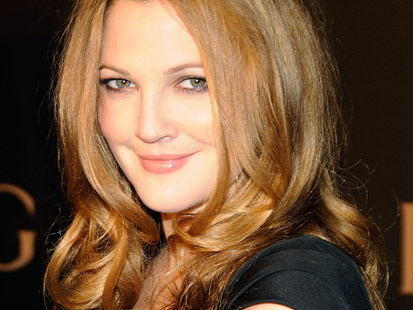
DREW BARRYMORE
The children also nurse a vague notion that Frank was a bit too hard on them when they were growing up, but this turns out to have been more complex than they describe.
De Niro is surrounded by talented actors in this film, but the movie also provides him with a low-key tour de force in which an aging man figures out who he has been and who he is going to be for the rest of his life. The children discover that Frank is sharper than they gave him credit for, and he discovers that, as his children, they have fulfilled any worthwhile ambition he may have had for them.
“Everybody’s Fine” didn’t get a lot of attention, but De Niro did win the Hollywood Film Festival “best actor” award, and Paul McCartney’s original theme, “(I Want to) Come Home,” was nominated for several awards, including a Golden Globe.
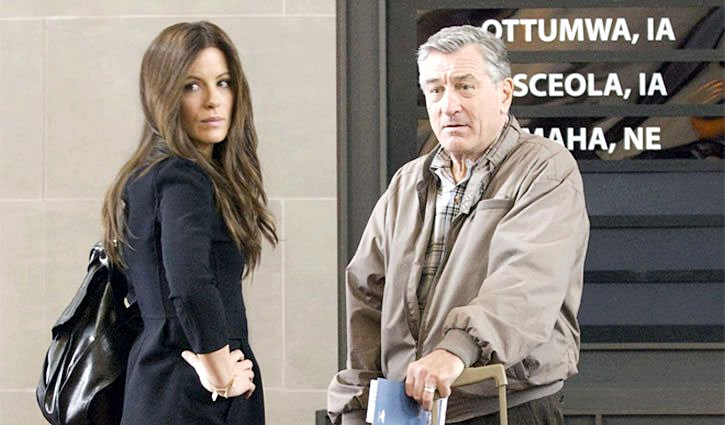
Kate Beckinsale and Robert De Niro in a scene from "Everybody's Fine"
Netflix Update No. 30: “A Kid for Two Farthings”
April 24, 2010
 We watched a 1955 Carol Reed movie, “A Kid for Two Farthings,” which is clumsy in some respects, but quirky enough to hold our interest.
The story takes place in a crowded mercantile neighborhood in London’s East End, where a young boy named Joe and his mother room with an aged Jewish tailor named Kandinsky. Joe’s father has been in South Africa for two years on a vaguely described quest to make his fortune. Whether he’s ever coming back is an open question, and the uncertainty is a source of anxiety for the boy and his mother.

DIANA DORS
Kandinsky has an assistant in the shop, a muscle-bound young man named Sam, who has been engaged for four years to a bleached blonde named Sonia, but hasn’t been able to afford a ring.
Sam hopes to win an international bodybuilding title so that he can afford to buy the ring, marry Sonia, and set up housekeeping, but a wrestling promoter, Blackie Isaacs, keeps pressuring him to take on a few rigged matches with the promise that he’ll earn enough quickly to carry out his plans. Under pressure from Sonia, Sam finally agrees to a rigged match with a has been that will lead to a bigger bout with a giant named Python Macklin.
Macklin ridicules Sam and bad blood develops between two, adding to the implications of their scheduled match.
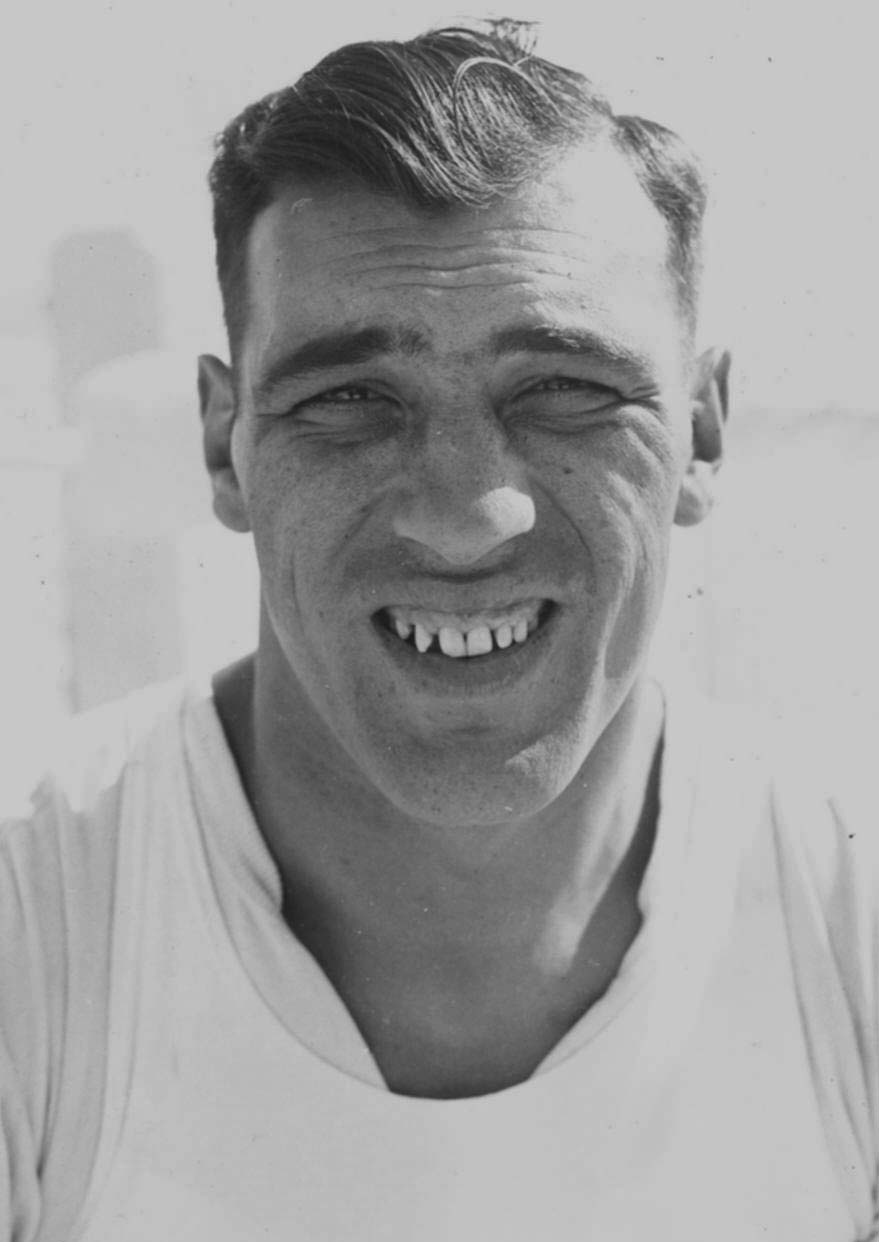
PRIMO CARNERA
Joe, the little boy, spends a lot of time listening to Kandinsky’s philosophy and learns from the old man about the magical properties of unicorns — specifically that they are capable of making dreams come true. The boy has a lot of dreams — his father’s return from South Africa, a ring for Sonia, and a steam presser for Kandinsky, who is still using an ancient iron. When Joe’s pet chick dies, Kandinsky gives the boy money to buy a dog, but Joe comes back with a sickly goat that has a single horn growing from its forehead. The arrival of this “unicorn” — real or imagined — drives the rest of the story.
This film is a visual treat because much of it takes place in the teeming market place, Kandinsky’s rusty old shop, and a seedy wrestling arena.
DAVID KOSSOFF
Celia Johnson as Joe’s mother, Joanna; David Kossoff as Kandinsky; and Lou Jacobi as Blackie Isaacs give especially good performances. Some commentators have speculated that Kandinsky is a metaphor for the lives of Jews in Europe after the Holocaust and the Second World War, and there is a rabbi in Old World clothing, praying and listening to an old Gramophone, who appears several times in the marketplace – including in the final scene of the movie.
In way that is unique to his own personality, Primo Carnera — the colossal former world heavyweight boxing champion — is very effective as the evil Macklin. On the other hand, Diana Dors as Sonia and Joe Robinson as Sam display as much acting acumen as two blocks of mahogany.
All in all, this is a sentimental, brooding, haunting film — far from perfect, but worth the time.
Netflix Update No. 29: “Speak”
March 20, 2010

KRISTEN STEWART
We watched “Speak,” a 2004 television movie based on a well-received novel by Laurie Halse Anderson, who specializes in books for teens and young adults. “Speak” focuses on Melinda Sordino — played by Kristen Stewart — who is entering high school at a pivotal time in her young life. She has been the victim of a sexual assault, and she has not been able to confide in anyone — a frequent dilemma for women and girls who have been abused. The assault on Melinda has indirectly estranged her from her former clique so that she enters the new school environment as a solitary and lonely figure. Her parents — played by Elizabeth Perkins and D.B. Sweeney — are not completely inattentive to Melinda, but they are preoccupied with their own problems and clueless about hers. In the event, as she is increasingly isolated, Melinda becomes less and less willing to engage anyone in conversation. The only people with whom she has any satisfactory relationships are a rebellious art teacher — played by Steve Zahn — who alternately goads and encourages Melinda to express her self through images of trees, and her lab partner — played by Michael Angarano — who seems immune to the social dynamics of the high school.
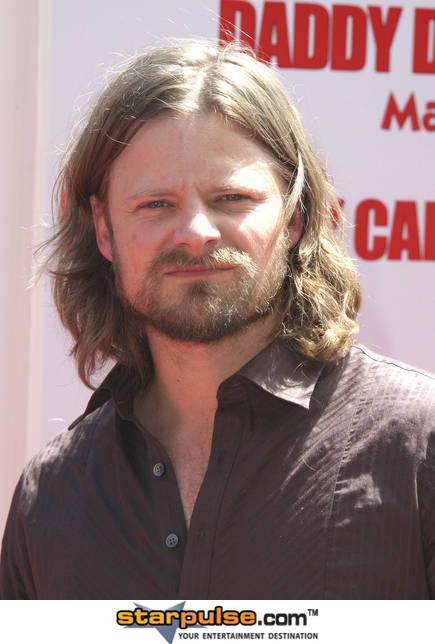
STEVE ZAHN
This is a well written and well told story. It’s all about Melinda, and therefore all about Kristen Stewart. And Kristen Stewart is up to the challenge. She is this movie, and the other players, perhaps with some help from director and screenplay writer Jessica Sharzer, give Stewart space. The actress has been busy since she made this movie at the age of 13, and it’s reasonable to expect that she’ll stay that way.
Melinda is presented as an observer of her own life, and her narration is laced through the story. Stewart’s understated delivery of the quick-witted teenager’s sardonic remarks adds palpable substance to the film. “It’s time for a mental health day,” Melinda explains. “So conjugate this: I cut class. You cut class. He/she/it cuts class.”
The Lifetime Channel will broadcast this film at 9 p.m. on Tuesday, March 23.
The bigger they are . . . .
March 16, 2010

HUMPHREY BOGART
Once again the other morning, instead of getting up I clicked on the TV and turned to Turner Classic Movies. Never a good idea. We ended up watching “The Harder They Fall,” a 1956 movie starring Humphrey Bogart, Rod Steiger, and Virginia Mayo. It was Bogart’s last film; he died the following year.
“The Harder They Fall” was ostensibly based on the life of Primo Carnera, and if it was, it wasn’t meant as a compliment to the Italian boxer. The film concerns an Argentine giant who is brought to the United States by an unscrupulous promoter (Steiger) whose angle is to build up the unwitting and incapable kid through a series of fixed bouts and then bet against him when he fights for the heavyweight title. As far as I know there is no proof, but there is a persistent story Carnera was used in just that way.

Jersey Joe Walcott
The cast of “The Harder They Fall” included Jersey Joe Walcott, who won the world heavyweight title in 1951, when he was 37 years old. Walcott — who served as sheriff of Camden County and chairman of the N.J. State Athletic Commission — played a trainer in “The Harder They Fall,” and seemed comfortable in the part.
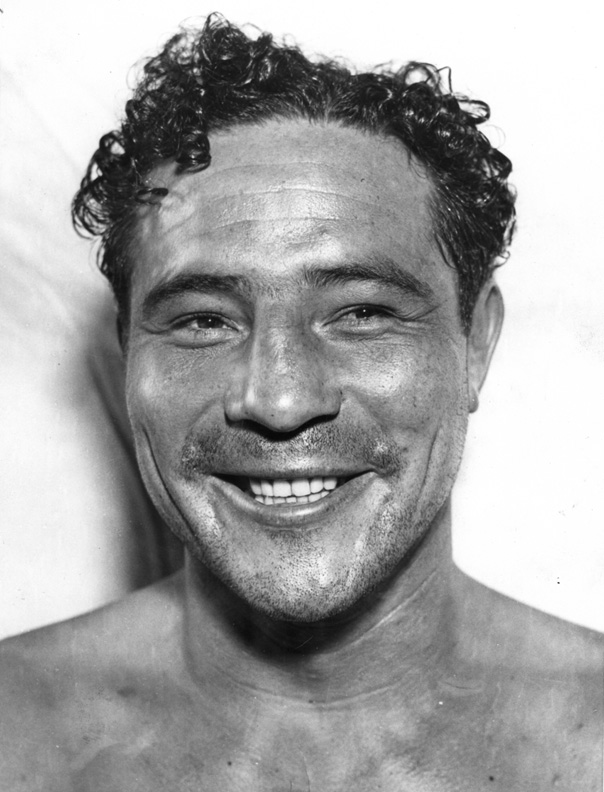
MAX BAER
Also in this cast was Max Baer, who played the heavyweight champion who beat the Argentine kid and put an end to his career. This appears to have been a none-to-subtle reference to the fact that Baer took the title from the 275-pound Carnera in 1934. There is also an episode in this film in which the boxer played by Baer gives his opponent such a beating that the man suffers brain damage and dies. That, too, happened in Baer’s career: In 1930, a fighter named Frankie Campbell — brother of Dodger star Dolph Camilli — died after a bout with Max Baer in San Francisco.

BUDDY BAER
Max Baer — father and namesake of the actor-director-producer who played Jethro in “The Beverly Hillbillies” — appeared in a couple of dozen movies and television productions. His brother, Buddy Baer — who was just as hard a puncher — had a record of 52 wins and 7 losses with 46 knockouts. He never won a title, but he had the distinction of once knocking Joe Louis out of the ring — in a fight that Louis ended up winning on a disqualification call. Baer claimed Louis had hit him and knocked him down after the bell ended the seventh round, and he refused to answer the bell for the eighth. Buddy Baer, too, appeared in numerous movies and television shows after he gave up boxing.
ROCKY GRAZIANO
There were other personable guys who dabbled in entertainment after they were through in the ring, including Rocky Graziano and “Slapsie” Maxie Rosenbloom.
Graziano was a New York street brawler and thief who did time on Riker’s Island and spent lots of time in other sorts of incarceration and under the protection of the Catholic Church. He went AWOL from the Army after punching an officer, and he was suspended from boxing for failing to report an attempted bribe and again for running out on a bout. He was a very good boxer and immortalized himself in the annals of the sport for his three bloody fights with Tony Zale in 1946, 1947, and 1948. The second of those fights made Graziano middleweight champion of the world.

MAXIE ROSENBLOOM
After his fighting career, Graziano — who, like a lot of guys with his background, was a charismatic figure — became a popular entertainer, especially on television comedies and variety shows.
Rosenbloom won the world light heavyweight title in 1932 and held it until 1934. On the one hand, his method of moving around the ring made it hard for opponents to land decisive blows, but that quality also meant that his fights often went the distance, and he took a lot of shots to the head. This eventually affected his physical health. Still, he capitalized on the image of a goofy pug and became a familiar figure on television. Although he wasn’t a serious actor, he played a significant role in Rod Serling’s “Requiem for a Heavyweight,” the iconic boxing story that starred Jack Palance and Ed and Keenan Wynn and included in its cast Max Baer.

PRIMO CARNERA
In an interesting parallel, Primo Carnera, who was even more unlikely an actor than Rosenbloom, also hit one high note in a limited screen career. Carnera was a giant. When he defended his heavyweight title against Paolino Uzcudun, the two fighters weighed a total of 488 3/4 pounds — the most weight ever in a title match. And when he defended the title against Tommy Laughran, the average weight of the two fighters was 227 pounds, but Laughran weighed only 184. It was the biggest disparity ever in a title bout.
Carnera used his size and generally menacing appearance to his advantage in the 1955 film “A Kid for Two Farthings,” and he won critical approval for his portrayal of villainous wrestler Python Macklin.

Rocky Graziano knocks Tony Zale through the ropes in their 1947 fight.

FRANK MORGAN
To hear Josh Olson tell it, he’s courting all kinds of trouble by writing a script for a proposed follow-up to MGM’s classic film, “The Wizard of Oz.” According to the Los Angeles Times interview with Olson, who wrote the 2005 film “A History of Violence” — don’t tell me he’s not versatile — he expects some pushback from purist fans of the original. Actually, what he said was the following: “You want to write something that takes people back to the fondness they had for the original. I’m aware of the fact that there are a couple million people who will come to your house and burn it down if you don’t get it right” — which would, after all, be one more chapter in the history of violence.

JUDY GARLAND and TOTO
However, the script Olson submitted to Warner Brothers is not intended as a re-make of the Judy Garland film, which is why I used the term “follow-up” earlier. The proposed new film, to be called simply “Oz,” would deal with a granddaughter of Dorothy Gale who visits the Other Side. This really would be in keeping with the history of the story introduced in 1900 in the form of a children’s book (“The Wonderful Wizard of Oz”) by L. Frank Baum. The book and a play adapted from it a couple of years later were very successful, and Baum — apparently nobody’s fool — wrote a total of 14 Oz books. Those books, plus 19 written by Ruth Plumly Thompson, two written by Frank Kramer, one written by Rachel Cosgrove, and a final one written in 1963 by Eloise Jarvis McGraw and Lauren Lynn McGraw, are considered the “canon” of Oz literature. Obviously, in the aggregate they wander far from the premises of the original story.

The title page from the original "Oz" book.
Literary critics with a lot of time on their hands have tried over the years to read political messages and other serious subtexts into Baum’s work, but Baum himself insisted that he had intended only to write stories for the entertainment of children. Oz, in other words, was not like Wonderland.
Olson’s premonition of an angry mob — tongue in cheek, of course — put me to mind of the furious gang that gathered outside the Binney & Smith plant in Easton, Pa., about a decade ago to protest the retirement of certain colors in the Crayola spectrum.
Change can be a buster.
The LA Times blog is at THIS LINK.

Dorothy meets the Cowardly Lion in W.W. Denslow's illustration of "The Wonderful Wizard of Oz."
“Poor, poor little Alice!” — G.K. Chesterton
February 27, 2010

MIA WASIKOWSKA
So Tim Burton’s “Alice in Wonderland” opened in London, and Chris Tookey of the Daily Mail says it’s long on visuals and short on story. Tookey’s take — get it? — is that Linda Wooverton diluted the project with her attempt to write a sequel to Lewis Carroll’s “Alice” books instead of re-telling the original stories — or, at least, one of them. So everybody — including Mia Wasikowska as Alice, Johnny Depp as the Mad Hatter, and Anne Hathaway as the White Queen — looks great, but has nowhere to go.
“The story becomes a very different beast from the ones Lewis Carroll created,” Tookey writes. “It’s a tale of feminist empowerment, with an entrepreneurial, pro-capitalist ending that is unlikely to endear it to readers of the Guardian.” In other words, it’s a 3-D version of the health-care summit.
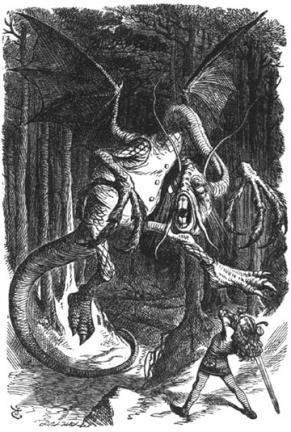
Sir John Tenniel's drawing of the Jabberwock
According to Tookey’s account, a central issue in this tale is that the Red Queen has enlisted the Jabberwock, the Jubjub Bird and the Bandersnatch as enforcers in her reign of terror. In Carroll’s dream within a novel, of course, these were characters in a poem, not “real” creatures. Alice reads about them in a looking-glass book, which means a book in which the print is backwards so that one has to hold it up to a mirror in order to read it.
This poem, which Carroll meant as a parody of overblown poetry and pointless criticism, has been subject to so much serious study that it’s a shame Carroll didn’t live to see it. G.K. Chesterton remarked on this in 1932: “Poor, poor, little Alice! She has not only been caught and made to do lessons; she has been forced to inflict lessons on others.”
“Jabberwocky,” incidentally, is a particular challenge to translators who want to make “Alice” available to the non-English-speaking world. There’s a French version that begins: Il brilque: les toves lubricilleux / Se gyrent en vrillant dans le guave …. A German translation begins: Es Brillig war. Die schlichte Toven / Wirrten und wimmelten in Waben ….
Chris Tookey’s review of Tim Burton’s film is at THIS LINK.
Read the book
February 15, 2010

CHARLES LAUGHTON
I turned on a TV yesterday morning — an unlikely thing for me to do — and wound up watching part of “The Hunchback of Notre Dame” on Turner Classic Movies. It was the 1939 version starring Charles Laughton as Quasimodo and Maureen O’Hara as Esmeralda. It is one of at least 14 movie and television adaptations of Victor Hugo’s novel “Notre Dame de Paris” — the formal name of the cathedral in Paris — and is generally accepted as the best of the lot. Among silent films, the 1923 version starring Lon Chaney was a benchmark achievement on several accounts — the sets recreating 15th century Paris, Lon Chaney’s portrayal of the deformed bell ringer, and the box office receipts of more than $3 million, Universal’s highest gross in the silent era.
I was pretty young when I first read Hugo’s novel, which is always marketed under the misleading title used on most of the films — misleading in that while Quasimodo might, ironically, be the most attractive figure in the story, he is not more important to the story than Esmeralda or Claude Frollo. Although the story has been retold 14 times on film TV, none of the re-tellings are entirely true to the original. Writers and directors have departed in many ways from Hugo’s plot and characters.
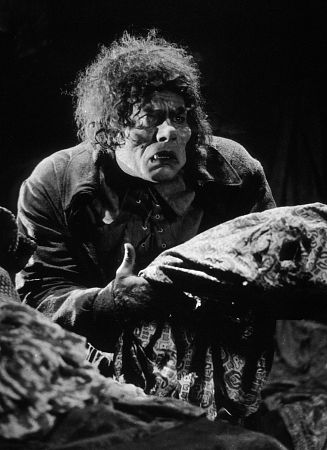
LON CHANEY
It is central to the tragedy of Hugo’s story that Esmeralda is executed and Quasimodo vanishes after her death, and Hugo leads his readers to believe that the bell ringer died in his grief, embracing Esmeralda’s body in a cemetery for social castoffs. In the Laughton version both characters are alive at the end of the film; in the Chaney version Quasimodo dies, but Esmeralda lives. These are not details; they are significant deviations from Hugo’s intent.
Among the other actors who have played Quasimodo are men as different as Anthony Quinn, Anthony Hopkins, and Mandy Patinkin — the latter in a TNT cable production in 1997. Quinn was paired with Sophia Loren in a 1956 French production in which he and Loren were the only actors who spoke English. The rest of the dialogue had to be dubbed over the French.
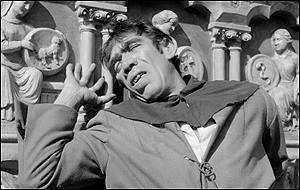
ANTHONY QUINN
That was the first color film based on the novel. Whereas Patinkin tried to duplicate as closely as possible Laughton’s image of Quasimodo, Quinn’s makeup was mild, not coming close to the grotesque features that Hugo describes and that constitute the context for the bell ringer’s place in — or, rather, outside of — society. In that version, Esmeralda is killed accidentally which, of course, dilutes the injustice inherent in the story. But who would want to execute Sophia Loren?

Walt Disney Productions
There have also been a couple of attempts to stray so far from Hugo’s work as to turn Quasimodo into a huggable cutie — as in Walt Disney’s 1996 animated feature — or even a comic figure, as in the 1999 French romp, “Quasimodo d’El Paris.”
I hope that folks who have seen even the best of these films don’t think they’ve experienced what Victor Hugo created in his novel. On the other hand, who has the patience to read classical novels in the Twitter age?
Incidentally, the bell ringer was named Quasimodo because, as an infant, he was abandoned at the cathedral by his mother and found on Quasimodo Sunday — the first Sunday after Easter. The Introit of the Mass for that day is taken from the second chapter of the First Letter of Peter: Quasi modo geniti infantes, rationabile, sine dolo lac concupiscite ut in eo crescatis in salutem si gustastis quoniam dulcis Dominus. That passage is often translated, As newborn infants do, long for pure spiritual milk so that through it you may grow into salvation, for you have tasted that the Lord is good.
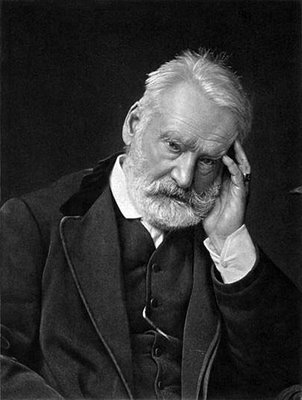
VICTOR HUGO
I have read what I consider to be a spurious explanation that Quasimodo’s name was a play on words — an idea that depends on translating quasi modo to mean “partly made” — meaning that Quasimodo was born incomplete. I can’t find my Cassell’s Latin Dictionary right now, but if memory serves me right, the literal translation of the first two words of the passage is not “partly made” but “in a similar way.”
 CharlesPaolino's Blog