“… names will never hurt me.”
September 16, 2009
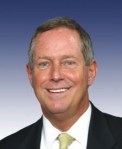
Rep. JOE WILSON
Well, the least that can be said of Joe Wilson is that he didn’t know what he would be unleashing when he pulled the cork out of that bottle — the bottle being his indiscreet mouth.
Not only has he been accused of racism for his heckling of President Obama from the floor of the House of Representatives, but he has been branded as a symbol of a latent racism far bigger than he. As though Congress weren’t already in a state of self-paralyzing partisanship, it was divided even more deeply by the vote to reprimand Wilson. Meanwhile the latter-day No-Nothings have adopted him as their hero. Can a Wilson-Palen ticket be far behind?
The mind races back to the first quarter of the 19th century — well, mine does, at least.

WILLIAM H. CRAWFORD
William H. Crawford of Georgia, the secretary of the treasury, is at the White House demanding to know what President James Monroe intends to do about a list of political appointments Crawford has recommended.
“That,” Monroe — perhaps injudiciously — tells Crawford, “is none of your damned business.” To which provocation Crawford responds by lunging at Monroe with a cane, calling him “you infernal scoundrel.” Monroe goes to the fireplace and grabs a poker to defend himself, and the secretary of the treasury is forcibly removed from the executive mansion, apologizing on the way out.
“You lie!” “You infernal scoundrel.”
At least Crawford had some style.
“Have you no shame, sir?” — Joseph Nye Welch
September 11, 2009
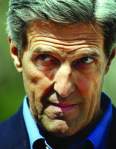
JOHN KERRY
We all know — Don’t we? — what the Democrats in Congress would be saying if it were Republicans who were trying to change a term-limit law to assure passage of legislation. And they’d be right. The campaign in Massachusetts to legislate a Democrat into the Senate by giving the governor the power to appoint a replacement for Edward M. Kennedy is unseemly, a terrible example of governance.
I am in the camp that believes that health-care reform is long overdue and that it should be passed while the Obama administration and the Democratic majorities in Congress — such as they are — are in place. But I can’t stomach the desperate measure now in the works in Boston, an act of expediency that should embarrass everyone involved — including Sen. John Kerry, who is promoting it.

MICHAEL BLOOMBERG
This measure is of the same stripe and odor as the action taken last year by the New York City Council to alter the law that would have prevented Mayor Michael Bloomberg from running for a third four-year term. Bloomberg, who asked for the change, signed the bill himself with nary a blush.
Although it’s none of my business, I don’t object to Bloomberg serving as mayor another four years or, for that matter, another eight years. But the law should be changed based on some intrinsic principle, not based on the near-term needs and desires of a politician or a political party.

MITT ROMNEY
As for Massachusetts, the hypocrisy of what is under way there is astounding. The executive power to make an appointment to a vacant Senate seat was rescinded five years ago by the Democratic majority in the legislature in order to prevent Republican Gov. Mitt Romney from filling the seat if John Kerry had been elected president.
It should go without saying that self-interest is the worst motive for changing the law. The grim implication of these shenanigans is that Congress is unable to function except as a partisan cock-pit and that there is not enough political leadership or political will in the legislature or the executive department to overcome the extremism and bullheadedness. A fine nation we have become if we can reform a broken health system only by sleight-of-hand.
“Down the road of life we’ll fly.” — Vincent C. Bryan
August 3, 2009
 The controversy of the federal government’s “cash-for-clunkers” program dramatizes the odd position we Americans have put ourselves in as victims of our own success.
The program provides a $4,500 subsidy for a qualified buyer who wants to trade in an old inefficient vehicle for a new and “greener” one. Everybody wins in this program: the buyer can afford a new car, the auto dealer and — by extension — the manufacturer gets rid of inventory, the environment is subject to one less outrage, and the junk yard gets another heap to turn back into cash. The program is so beneficial, and consequently so popular, that it went broke in a hurry, and the question of whether to re-fund it is now being debated in Congress.
 One of those opposed to more funding for this program is U.S. Sen. John McCain — Sarah Palin’s former running mate. McCain thinks this program is an unfair subsidy of the auto industry, as distinct from other classes of business that are at risk in this economic downturn. But the auto industry is getting this attention because it has become such a pervasive part of the overall economy; if it goes down, according to conventional wisdom, everything else goes with it.
 At the root of this phenomenon is the American obsession with cars and with new cars in particular. This has been out of control for a long time, but we were too giddy to notice. The industry produces too many cars, and whole sectors of the economy have grown around that practice like barnacles. This has happened in a country that has failed miserably at building an efficient mass-transit system, though it talks endlessly, and without blushing, about the need to get travelers off the roads and onto trains and buses and monorails and — while we’re daydreaming — into teletransporters. I don’t know if this is what McCain means by his opposition to this latest proposal to expand the federal deficit, but despite the rhetoric about reforming the auto industry, the game plan really seems to be to help it continue overproduction. And what do we think will happen in the long run if we win at that game? I admit to a prejudice here, because I drive a car until it has well over 150,000 miles on the clock, but if we continue the same behavior and expect a different outcome, aren’t we all — by definition — crazy?

"Beam me up"
Gratuitum prandium non existet.
July 31, 2009
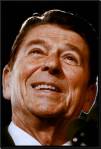
PRESIDENT REAGAN
Back in the days when I was somebody, I had lunch a couple of times at the White House. Well, in the interest of full disclosure I should admit that I had lunch at the White House precisely because I was nobody. I don’t know if this is still true, but for a couple of administrations anyway the White House would invite “out-of-town” editors to stop in for a day — “out of town” editors meaning those whose publications were not significant enough to have regular representation in the capital.
One of my visits occurred during the Reagan administration. It consisted of a series of individual briefings by the top cabinet members and by George H. W. Bush, who was then vice president. I took some great pictures of Jeane Kirkpatrick, giving no thought to what I would do with them.
At lunch time, we out-of-towners were ushered into the East Room, which had been done up for a banquet. A Marine chamber group played and we lunchers were served by the liveried staff as though we … well, as though we were somebody. There were other guests there — no doubt a little more influential than any of us — and Ronald Reagan gave a talk. That was our contact with the president.

PRESIDENT CARTER
My first visit was during the Carter administration. There were morning briefings similar to those in the Reagan era and a discussion in the Cabinet Room in which we and Jimmy Carter were the only participants. Between the briefings and the meeting with the president, we were ushered into a large mundane business office whose occupants apparently had been shooed away. On one of the desks were trays of sandwiches and canned soda. This, we were told, was “a Carter lunch.” Presumably there were messages in all this about access to the president and about care for the public’s money.
I see by the papers that the Obama administration has taken the second part of that message a little further and is requiring some visitors, and even some staff members, to pay for what they eat when they are chatting with his excellency. Calvin Coolidge would have liked that.
The story, from the Christian Science Monitor, is at this link:

DICK CHENEY
The report in the New York Times that Vice President Cheney tried to convince President
Bush to use federal troops to round up suspected al-Qaeda terrorists in Buffalo, N.Y. gives me a chance to brush the dust off my perenniel proposal that the office of vice president be overhauled. I have argued as nauseam that the vice president should head one of the cabinet departments — specifically that he or she should serve as secretary of state, secretary of defense, or secretary of the treasury. The advantages of this change would be as follows:
- It would discourage political parties from nominating non-entities like Spiro Agnew.
- It would avoid wasting the time of a valuable person like Hubert Humphrey.
- It would make it difficult for a president to deliberately ignore a vice president.
- It would keep the vice-president engaged in the legitimate, above-board daily business of the executive department — a particular advantage to a vice president whose background is principally legislative.
- It would give the vice president an opportunity to establish a track record as a top administrator.
- It would spare taxpayers from paying a salary for no work.
- It would keep people like Dick Cheney busy and obstruct them from behaving as though they had authority that the Constitution hasn’t given them.
Cheney had no understanding of — or respect for — the concept that government is at the service of the people, not the other way around. He established a pattern of operating in secrecy — again, without the authority to operate at all — that should outrage Americans of any political stripe. If the Times report is correct, it demonstrates Cheney’s disregard for well established principles of American governance — notably the broad constitutional prohibitions against using troops for what amount to police actions on domestic soil. Bush evidently listened to more responsible advisers in that instance. Incidentally, the Washington Post report on Cheney’s shadow “presidency” is still available at this link:
 CharlesPaolino's Blog