Say, who is that guy, anyway?
December 23, 2009

HERB VIGRAN
When we were watching the “Dragnet” Christmas episode the other night, a familiar face appeared. It was the clerk at a fleabag hotel. And as we do every time we see him, we said, “Wow, that guy must have made a thousand movies and TV shows.”
This time for a change, I decided to find out who he was, and he turned out to be character actor Herb Vigran. According to the International Movie Database, he appeared in 314 TV episodes and movies between 1934 and 1987. His last film, “Amazon Women on the Moon,” was released the year after his death.
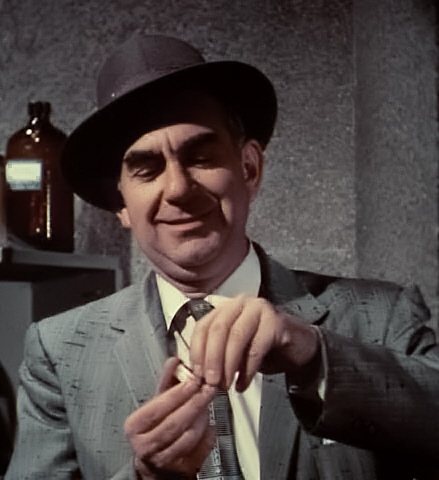
HERB VIGRAN
Vigran held a law degree, but he never practiced law because he was in love with acting. Besides all the TV and movies, he did some stage work, including the 1936 Broadway classic “Having a Wonderful Time” with John Garfield and Eve Arden. He also worked in radio and was a regular on “The Jack Benny Program” before doing three years of military service during World War II.
His hundreds of TV jobs included multiple appearances on “The Adventures of Superman,” the original “Dragnet” and the later revival, “The Jack Benny Show,” “I Love Lucy,” and “Gunsmoke.”
He was so successful as a character actor that he had one of the most familiar faces in America — he looked like your Uncle Ed — but he rarely played the same part twice and was known to most of his audience as “Wotzisname.”

Herb Vigran in an episode of "The Adventures of Superman"
“To love at all is to be vulnerable” — C.S. Lewis
December 18, 2009
 There are two things I still have to dig out in order to observe Christmas properly. One is the heirloom manger figures; the other is the DVD of the “Dragnet” episode in which the statue of the infant Jesus is stolen from a creche in a Los Angeles mission church. That’s the original 1953 version with Ben Alexander playing Frank Smith.

JACK WEBB and BEN ALEXANDER
For the benefit of the uninitiated, LA detectives Joe Friday (Jack Webb) and Frank Smith are called to a church in a Latino neighborhood by Father Rojas because the statue has gone missing as the Christmas morning Masses are approaching. The poker-faced cops mechanically set about looking for the culprit, but have to return to the church on Christmas Eve to tell the priest that they have come up dry. While they’re standing with him near the sanctuary, they hear a racket coming from the direction of the front doors, and a little boy, Paco Mendoza, comes up the center aisle pulling the statue in a wagon. When the priest questions him in Spanish, the boy explains that he had promised that if he got a wagon for Christmas, Jesus would get the first ride. Frank Smith wonders aloud that the boy has the wagon already, before Christmas arrives. In one of the great exchanges in television history, the priest explains that the wagon didn’t come from the usual source; it was one of the toys refurbished by members of the fire department. “Paco’s family,” he tells the detectives, “they’re poor.” To which Friday, glancing at the Christ child back in its crib, says in his monotone: “Are they, Father?”
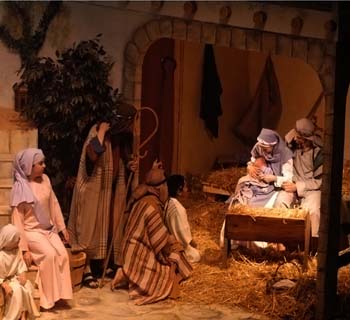 Our manger scene consists of white plaster figures, made in France, that belonged to my mother. She told me that she received the set from a Syrian priest when she was a child, and it wasn’t new then. Most of the figures have been broken and repaired one or more times, and one of the animals mysteriously disappeared about ten years ago. The set has a classic look to it, so we wouldn’t consider replacing it. It’s a few cuts above those translucent, illuminated plastic ones that have appeared on various lawns in the past week or so.
The tradition of assembling a manger scene — living or otherwise — originated in the 13th century with Francis of Assisi. The “Dragnet” crowd apparently wasn’t familiar with the tradition in which the image of the child is not placed in the manger until Christmas Eve, in time for the midnight Mass. A church like the one depicted in that episode would almost certainly have adhered to that custom. I have noticed that the child hasn’t been placed even in many of the lawn scenes that are out there now.
 The child, of course, is the centerpiece of the feast, the vulnerable, innocent child who is both God and man in the belief of hundreds of millions of Christians. Why would God appear in human form — and as a newborn child? There is a learned and lovely reflection on this question on the blog “This Very Life,” written by Tania Mann in Rome. Those who are going to celebrate this holy day — and are very busy getting ready for whatever it implies for them — might want to spend a few minutes contemplating the reason for it all. If so, click HERE.
“. . . and in a manger cold and dark, Mary’s little boy was born” — Jester Hairston
December 15, 2009
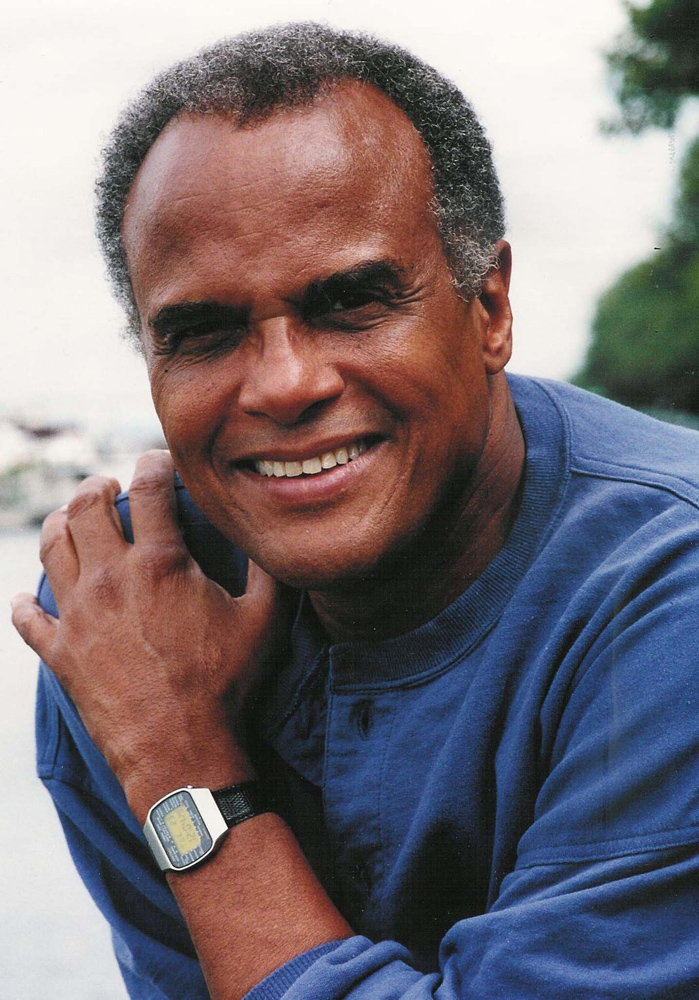
HARRY BELAFONTE
One of the songs we listen to every year while we’re decorating our Christmas tree is “Mary’s Boy Child,” sung by Harry Belafonte, who first recorded it for an album in 1956. When it was reissued as a single, it reached No. 1 on the charts in Britain the following year. It was the first song to sell a million copies in England. Mahalia Jackson also recorded it in 1956. It has been covered by dozens of other artists ranging from the Maori soprano Kiri Te Kanawa to the disco group Boney M, which took it back to No. 1 in the UK in 1978.
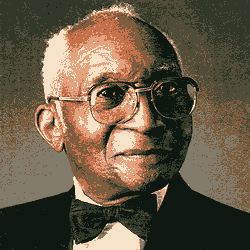
JESTER HAIRSTON
It isn’t widely known, but this song was written by Jester Hairston — an unusually talented and versatile figure in American music and entertainment. Hairston (1901-2000) was a composer, songwriter, arranger, choral conductor, and actor. The grandson of slaves, he was born in North Carolina but lived from an early age outside of Pittsburgh. He graduated with honors from Tufts University and studied music at the Julliard School. His lifelong passion was for choral singing, and he conducted ensembles on Broadway and all over the world. In 1985, when such events were rare, he took the Jester Hairston Chorale, a multi-ethnic group, to sing in China.
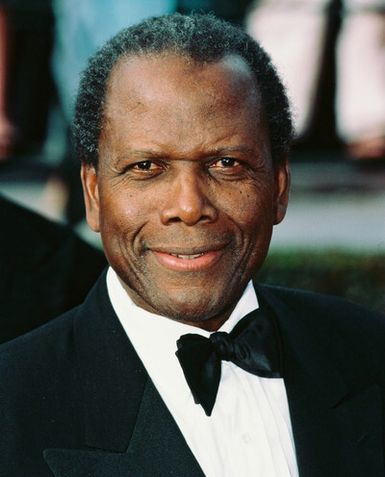
SIDNEY POITIER
Hairston did a lot of musical work for films. His most familiar work is probably the song “Amen” from the 1973 movie “Lilies of the Field” in which Sidney Poitier plays a young handyman who gets bamboozled into doing a lot of heavy labor for an order of German nuns in Arizona. Poitier won an Oscar for that performance, the first best-actor award to a black man. Poitier didn’t do any singing in that film, however. He lip-synched “Amen”; the voice was Jester Hairston’s.
Hairston had a lot of small roles in films — some of them demeaning, some without credit. He also appeared in the radio and television versions of “Amos ‘n Andy” — notably as Henry Van Porter, a high-end member of the Mystic Knights of the Sea lodge, which was the epicenter of much the action on the television series in particular. He also played Leroy, the brother-in-law of George “Kingfish” Stevens. More recent television audiences might remember Hairston for his role as Rollie Forbes in the series “Amen” that ran from 1986 to 1991.
You can hear Belafonte’s version of “Mary’s Little Boy” by clicking HERE. You can watch an amusing video HERE of Jester Hairston conducting a large choir in Odense in 1981 as they learn to sing the Christmas song in Danish.
There are interesting biographical notes about Jester Hairston HERE and HERE.

Jester Hairston, as Henry Van Porter, is front and center in this "Amos 'n Andy" publicity shot with -- clockwise from left -- Nick Stewart, Alvin Childress, Johnny Lee, Tim Moore, Spencer Williams Jr. and Ernestine Wade.
“You sing a bingo bango bingo” — Tom Glazer
October 27, 2009
 During the last ALCS game, I got this lyric stuck in my head: “So who would want these diamond gems? / They’re diamonds in the rough. / A baseball team needs nine good men. / One guy just ain’t enough.”
I remember hearing that on television about 50 years ago. It was sung to the tune of “Yankee Doodle,” and it got stuck in my head. Every once in a while it comes to the surface.
When it came to the surface the other day, I decided to do what I always tell my students to do — look it up. In the Internet age, that’s a lot easier than it used to be, although this song seemed so obscure that I didn’t expect to track it down.
 By searching on a phrase from that lyric I actually found one reference to it. It turns out that it’s part of a jingle that was used in one of a series of public service announcements sponsored by the American Jewish Committee. An application for a grant to help fund the series turned up on a site that houses the archives of the AJC. Among the documents was a page from an issue of TV Guide dated April 28, 1951. On the page was a short article about this animated short that was part of a larger, award-winning anti-bigotry campaign by the AJC. The short was designed to reinforce the idea that people of many backgrounds contributed to life in the United States.
 The animated cartoons were by Fred Arnott and the song was written by Lynn Rhodes. I could find out nothing more about either of them. However, the song was sung by Tom Glazer, who had a decent reputation as a folk singer. A lot of people of a certain generation will remember his novelty song “On Top of Spaghetti,” a children’s song he recorded in 1963. He also wrote “Because All Men Are Brothers,” which was recorded by the Weavers and by Peter Paul, and Mary, and “Talkin’ Inflation Blues,” which was recorded by Bob Dylan. Glazer wrote idiotic and kind of racist lyrics to “Skokian,” a Zimbabwean song that was popular in multiple versions. Glazer’s version was recorded by the Four Lads.
Anyway, the song he sang for the AJC went like this:
Though every player is top flight / Our team just falls to pieces / With every game they have to play / The number of flubs increases.
To figure why they fall apart / You needn’t be too clever / With no teamwork the team’s big star / Will die on third forever.
The shortstop simply cannot play / With the jerk who’s second sacker / The pitcher can pitch to anyone / But certainly not to his catcher.
So who would want these diamond gems? ‘/ They’re diamonds in the rough / A baseball team needs nine good men / One guy just ain’t enough.
A nation’s like a baseball team / It’s run by teamwork too. / And every race and every creed / Works with Y-O-U.
Play ball with all your neighbors / Pitch in a little more / Americans, join your teammates all / Roll up a winning score.
“Trust me — like it says on the money” — line written by Larry Gelbart for George Burns in “Oh, God”
September 12, 2009

LARRY GELBART
While we were distracted by other matters, Larry Gelbart slipped away. I didn’t know Gelbart; I wish I had.
He had an ear for language, for how real people talk, and he combined that with a unique wit to produce some of the most memorable dialogue ever heard on the stage or screen. There is no better example than “M*A*S*H.” That show may have gotten bit too aware of itself but the writing when Gelbart was still working it was some of the best television has ever offered. Fortunately, that show is still being rerun, and when I watch it I marvel at how it never ages, never loses its edge.
Alan Alda and Larry Gelbart were a perfect match, and I think that’s because Alda has a classic sense of comedy – not the what-can-I-get-away-with drivel that passes too often for comedy today but the literate, witty kind of comedy one associates with S.J. Perelman and George S. Kaufman.

ALAN ALDA
Alda — particularly in the role of “Hawkeye” Pierce — has often been compared to Groucho Marx; in fact, he has been accused of aping Groucho Marx. But Marx was never the comic actor Alda is and, in that sense, any similarity in their delivery is more a compliment to Groucho than it is to Alda. I think that perception had to do with Gelbart, who brought that wise-ass attitude we saw in Groucho Marx to a much higher plain in Alan Alda.
The loss of someone as singularly talented as Gelbart is bad enough in itself, but it also is a reminder of how the quality of writing for television in particular has declined over the decades. Gelbart wrote for the “Duffy’s Tavern” radio series, for Bob Hope, and for Red Buttons, and he was a member of the legendary stable of writers on Sid Caesar’s television show. Most writers today don’t have that kind of background, but that’s what Gelbart brought to “M*A*S*H” and “Tootsie” and “Oh, God,” and “Sly Fox” and “A Funny Thing Happened on the Way to the Forum.”
GRETCHEN WYLER
Back when I was still considered employable, I wrote a column taking note of the death of Gretchen Wyler, whom I did know and admired very much both as an actress and as a human being. We had seen Gretchen in “Sly Fox” when the cast included Vincent Gardenia and Jack Gilford, and I mentioned that in the column. I don’t know how Larry Gelbart found out about it, but he sent me two e-mail messages thanking me for remembering Gretchen and expressing his own respect and affection for her. The fact that Gelbart, when there was nothing in it for him, took the trouble to respond to a relatively obscure writer spoke to his loyalty as a friend and colleague.
Larry Gelbart was 81. A detailed obituary is at this link:
http://www.latimes.com/news/obituaries/la-me-larry-gelbart12-2009sep12,0,2812430.story?page=1
The lady and the dragon
August 11, 2009

KUKLA, OLLIE, and FRAN ALLISON
The stamps the Postal Service issued today under the title “Early TV Memories” omit broadcasting legend Gertrude Berg but do include the influential puppet show “Kukla, Fran and Ollie,” which first appeared 60 years ago. The show adopted the medieval format of hand puppets on a miniature stage, but added on-camera human being Fran Allison to interact with the characters. The major figures were Kukla — a bald creature inexplicably dressed as a clown, and Ollie – a dragon. They were joined as the situation dictated by about a dozen others, including Beulah Witch, Madame Oglepuss, Colonel Crackie, and Fletcher Rabbit, a letter carrier who was always singing “Buffalo Gal, Won’t You Come Out Tonight?”
The show, which was live when it first appeared, was done without a script. While Fran Allison was sort of an innocent, many of the puppet characters were wise-crackers. The impromptu gags often brought on audible laughter from the crew — with whom the characters frequently exchanged remarks. There is an instance of that kind of interaction — a gag about ad agencies — in the 1951 episode at the link below. That episode also has an example of a commercial — this one for a brand of shampoo — that is worked into the story line, a common device in early televison. There is also a more conventional commercial for Tide at the end of the program. The half-hour show included only those two commercials.

KUKLA and OLLIE
“Kukla, Fran and Ollie” was the brainchild of Burr Tillstrom, who appears briefly at the end of the episode I have linked to. Tillstrom worked all the puppets and provided their voices. What is most striking about his concept in this show is that it was not played for slapstick laughs and it was not condescending to children. It was conducted on such a thoughtful level, in fact, that its audience among adults was reputed to be at least as large as its audience among children. In the episode I have linked to, the characters make several references to “Tallulah” and “Tallulah’s place in New York.” Those were references to the stage and film actress Tallulah Bankhead, who was one of many public figures who were enthusiastic followers of the show.
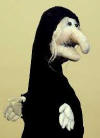
BEULAH WITCH
The leisurely pace of “Kukla, Fran and Ollie” was in sharp contrast to the frenetic programming that dominates television today. Tillstrom’s show relied heavily on character, and that was an important part of its attraction for adults. In this and other respects, the show foreshadowed — and, in fact, led to — the Muppets. The simple and silly figure of Oliver Dragon — who could be at turns romantic and manipulative — became as real and sympathetic to his audience as Burt and Ernie and Kermit became to theirs. Tillstrom and Allison recognized that; in fact, Ollie unblushingly discusses his charisms in the episode at this link:
http://video.google.com/videosearch?gbv=2&hl=en&q=kukla%20fran%20and%20ollie&ie=UTF-8&sa=N&tab=iv#
A Los Angeles Times story about the release of a DVD collection of later episodes of “Kukla, Fran, and Ollie” is at this link:
http://www.latimes.com/entertainment/news/la-et-kukla11-2009aug11,0,1322349.story
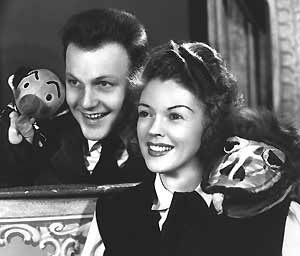
KUKLA, BURR TILSTROM, FRAN ALLISON, and OLLIE
Sui generis
August 5, 2009

GERTRUDE BERG
A few months ago, I wrote in this journal that my wife and I had discovered and watched on line a few episodes of the television series “The Goldbergs.” Those episodes are at http://www.archives.com.
After I wrote that blog, I heard from a publicist who was handling a new documentary film about the owner, writer, and star of “The Goldbergs” — Gertrude Berg — who was one of the most remarkable women of the second half of the 20th century. As a result of that contact, I wrote the following story, part of which has appeared in the Courier-Post of Cherry Hill and has been picked up on other blogs:
When the U.S. Postal Service issues its “Early TV Memories” stamps this summer, don’t look for Gertrude Berg.
The New York City native, who 80 years ago created the domestic situation comedy, and became a media mogul, was not included with the likes of Lucille Ball and Harriet Nelson, who decades later followed her into American homes.
But Berg is being reintroduced to the American public in a documentary film – “Yoo Hoo, Mrs. Goldberg” – written and directed by Aviva Kempner.
The title evokes the phrase associated with Berg during the radio and television runs of the show she created and controlled, most widely known as “The Goldbergs.”
The principal character, Molly Goldberg, and her neighbors in a Bronx apartment building, interacted by leaning out their windows and calling: “Yoo Hoo, Mrs. Goldberg … Yoo Hoo, Mrs. Bloom.”
From her window, Molly – portrayed by Berg – invited listeners and viewers into the Goldberg household to share the lives of her husband, Jake; their children, Sammy and Rosalie; and Molly’s brother, David Romaine.
The show ran on radio from 1929 to 1946 – five days a week for much of that time – and on television from 1949 to 1956. Berg herself wrote every script in longhand.
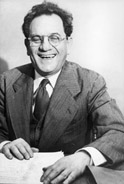
PHILLIP LOEB
There were also a stage play, a movie, a lucrative vaudeville tour, a comic strip, a jigsaw puzzle, a newspaper column, a line of women’s dresses, and a popular cookbook – although Berg couldn’t cook.
Berg’s rise to prominence, Kempner emphasized, occurred “at the time of the greatest domestic anti-Semitism in America, and during the rise of Adolf Hitler in Europe.’’
Berg presented the family as Jewish – adopting a mild Yiddish accent and a unique use of language that became a hallmark of the character:
As Molly shows off a hat, a neighbor asks: “With what dress are you going to wear it?’’
“With mine periwinkle,’’ Molly answers, striking a pose: “Visualize!”
And Berg didn’t shy away from difficult issues affecting Jews.
The documentary points out that in 1933, the year Hitler became dicator of Germany, she had a rabbi conduct a Seder service on the program. And after Kristallnacht in 1938, she wrote an episode in which a stone smashed an apartment window while the Goldbergs were celebrating Passover; Molly calmed the children and urged Jake to continue leading the Seder.
“And yet,’’ Kempner said, “Molly Goldberg was universal. You didn’t have to be Jewish to love her.’’
This urban mother first appeared on radio a month after the stock market crash, and the Goldbergs became so important to the national psyche during the Great Depression, as people maintaining the family circle in spite of want, that Franklin Roosevelt himself acknowledged it.
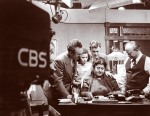
THE CAST OF "THE GOLDBERGS"
Kempner – based in Washington, D.C. – made the documentary through her Ciesla Foundation, whose goal is to “produce films about under-known Jewish heroes.” Kempner – whose work includes a 2000 film about baseball legend Hank Greenberg – said that although the Gertrude Berg film is complete, she is still raising money to pay for it.
The new film includes vintage photos and motion pictures and input from members of Berg’s family, actors, her biographer and others, including U.S. Supreme Court Justice Ruth Bader Ginsburg.
The story they tell has its dark sides.
Berg, born in 1898, did not grow up in the kind of setting she portrayed in her shows.
“She never had a nurturing mother like Molly Goldberg,’’ Kempner said. “She created what she didn’t have.’’
Berg’s own mother sunk into depression after the early death of her son and ended her life in a mental institution. Berg’s father badgered Gertrude into working at resorts he opened in the Catskills and in Florida but never supported her career as an actress and producer.
By contrast, her husband, Lewis Berg, a chemical engineer, typed many scripts from his wife’s handwritten originals.
Especially unsettling in Gertrude Berg’s life was the impact of “Red Channels,” the publication that purported to expose Communists working in radio and film.
One of those identified was Philip Loeb, an actors’ union leader, who played Jake Goldberg on the television series. Berg herself was listed as a “sympathizer.”
CBS and her sponsor pressured Gertrude Berg to fire Loeb. She refused, and her show was cancelled. NBC eventually picked up the show, but Loeb had accepted a cash settlement out of consideration for Berg and the other actors. Blacklisted from radio and film, he committed suicide in 1955.
Berg won an Emmy for her portrayal of Molly Goldberg, and a Tony for her 1959 Broadway performance in “A Majority of One,” and her autobiography was a best seller.
Still, only a small percentage of Americans today know who Gertrude Berg was, Kempner said, “and I want to restore her correct place in our cultural history.’’
The home web site for the film is at http://www.mollygoldbergfilm.org/home.php Information about theaters showing the film is available there.
The Ciesla Foundation web site is at http://www.cieslafoundation.org/
“I hear you knockin’, but you can’t come in”
July 6, 2009

GALE STORM
It escaped my notice until this morning that Gale Storm died a few days ago at the age of 87.
She was a charming personality on early television; while her series “My Little Margie” was in its first run of 126 episodes, I was getting old enough to notice that she was very cute, too.
I bought a DVD with several episodes of that show. It’s not the kind of comedy that sells today, but it’s still entertaining — especially the conflicts between Margie Albright — Gale Storm’s character — and her father, Vern, played by Charles Farrell. In our household, this series had something for everybody — well, almost everybody. Charles Farrell had been a romantic film star, and he was right up there with Cesar Romero in my mother’s pantheon. I imagine Dad liked Gale Storm’s looks, but if he did, he didn’t say so.
I kind of lost interest in Gale Storm when she went into her second series, “Oh, Susanna,” but I was in high school by then and was spending significantly less time watching television. I rediscovered her when she recorded several hit songs, including “I Hear You Knockin’ ” and “Dark Moon.”
After a couple of setbacks, Gale Storm overcame alcholism, which is always an uplifting thing to hear. Like most people, I suppose, I know several people who struggle with substance addictions. In no case does it appear that they will rid themselves of that problem. I don’t pontificate about such things the way I do about other topics, because I deeply sympathize with the addicted person. I have trouble breaking much less lethal habits, habits that don’t involve substance dependency. I don’t say anything about the habits of others, except in prayer.

GALE STORM and CHARLES FARRELL
“Yoo hoo! Mrs. Goldberg ….”
April 25, 2009

GERTRUDE BERG
We were happy last night to find that the web site http://www.archive.org has several episodes of the television series “The Goldbergs,” a program far superior to most half-hour shows today, with allowances for the technical advances that have taken place since the ’50s. This is a warm show, humorous without being silly, with a solid dramatic basis. The show starred Gertrude Berg, who also owned it and wrote it and insisted on such things as everday situations and no laugh track. The Goldberg family consisted of Molly Goldberg; her husband, Jake, who was in the wholesale garment business; her uncle, David Romaine; and her children, Rosalie and Sammy – to whom Molly always referred as “my Rosalie” and “Samalie.” The family first appeared in a long-lived radio series and also was portrayed in a Broadway play written by Berg and in a film. The episode we watched last night was the final season in what was not a continuous run. In this 1955 show, the family had just moved to the suburbs from The Bronx – mirroring what was actually going on with a lot of urban Jewish families at the time – and Molly was having a hard time adjusting to an unfamiliar neighborhood. The dialogue in this show is priceless; Berg had a good ear for how people talk. Molly and David, in particular, use a peculiar verbal shorthand one doesn’t hear often. For instance, when Molly wants to say, “Give me a minute to write that down,” she says, “Pardon me while I jot.” We’re grateful for whoever preserved these shows.

GERTRUDE BERG and PHILIP LOEB
There was a shadow over “The Goldbergs.” Philip Loeb, who was cast as Jake when the television series was on CBS, was fingered as a Communist by Lee J. Cobb and Elia Kazan in their testimony in 1950 before the House Un-American Activities Committee. Berg was pressured to fire Loeb, and she refused, so CBS dropped the show. Loeb resigned and accepted a monetary settlement, but he committed suicide in 1955. Eight months after CBS dropped it, NBC picked the show up with another actor in the role.
Netflix Update No. 5: “I Remember Mama”
April 11, 2009
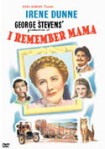 We watched the 1948 movie “I Remember Mama,” a masterpiece directed by George Stevens. I started to watch this on TMC a few weeks ago, but it would have ended at 2 a.m., so I gave up and put it in the Netflix queue. This film was based on Kathryn Forbes’ novel, a fictionalized memoir titled “Mama’s Bank Account.” The novel inspired a play that ran on Broadway for two years. The play led to this rather expensive movie, and the movie led to a successful television series – “Mama” – and an unsuccessful musical play, the last work of Richard Rodgers.
In all cases, the story concerns a Norwegian family living in San Francisco shortly after the turn of the 20th century. The central figure is Martha Hansen, the “Mama” of the title, played in this film by Irene Dunne and in the TV series by Peggy Wood. Irene Dunne was perfect in the role – as was Peggy Wood – and Dunne’s contributions were complemented by the fact that the rest of the casting was just as highly inspired. That included Barbara Bel Geddes as one of the Hansen daughters – Katherine – who narrates the film. Other choices that turned out to be strokes of genius were Rudy Vallee in the poker-faced role of a doctor who performs mastoid surgery on young Dagmar Hansen and Edgar Bergen in the comical role of a funeral director who courts one of Martha Hansen’s sisters.
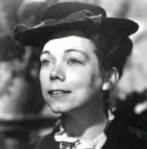
ELLEN CORBY
That sister, Trina, was played by Ellen Corby, who later played the grandmother on the TV series “The Waltons,” and appeared in nearly 230 movies and TV shows. In this film, she is charming in her earnestness and naievete. A pivotal member of the cast was the prolific Austrian actor Oskar Homolka as Chris Halverson, the blustering uncle of Martha Hansen and her three sisters – but, it turns out, the most complex figure in the film. Dunne, Homolka, Corby, and Bel Geddes were nominated for Oscars for this film, and Nicholas Musuraca won the award for black-and-white cinematography. He certainly deserved that for the evocative images of both turn-of-the-century San Francisco and the intimacy of a work-a-day home.
Everything about this film was carefully done. It deals with the most commonplace of issues, but does it with profound insight. The story is a reflection on the resources of the human spirit, presented in a manner that is both uplifting and convincing.
 CharlesPaolino's Blog