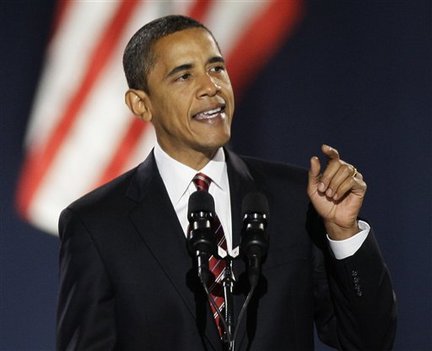


“Ma, ma, where’s my pa? Gone to the White House, ha ha ha!”
January 22, 2010

JOHN EDWARDS
John Edwards’ melodrama is interesting because, among other things, of how it both resembles and departs from the experience of Grover Cleveland. Edwards was a viable candidate in last year’s presidential primary campaign, and he knew at the time that he had had an affair and fathered a child. Something similar happened to Cleveland during his presidential campaign against James G. Blaine in 1884. Blaine (“the continental liar from the State of Maine”) was beset with a corruption accusation, but the Republicans planned to counter by reporting that Cleveland had sired a child while he was an unmarried attorney in Buffalo. When this scandal started to emerge, Cleveland told his campaign staff — and here’s where the stories diverge — to “tell the truth.”

GROVER CLEVELAND
The truth was that Maria Crofts Halpin, the woman who had named Cleveland as the father of her child, had had relationships with other men. Cleveland didn’t know with certainty that he was the father of her child, but he accepted the responsibility and made support payments to the woman — apparently because he was the only one of her lovers who was unmarried. People had different values then.
There was no happy ending to that story. Mrs. Halpin had a troubled life, complicated by alcohol. Cleveland did what he could to help her and her son, but eventually the boy was adopted into a stable home and Cleveland’s connection ended.
The lesson, Sen. Edwards, is that Cleveland didn’t try to hide his mistake and he won the popular vote for president in 1884, 1888, and 1892. He came short on electoral votes in ’88, and took four years off. I don’t think the public has changed so much in all the intervening years that it doesn’t still suffer a bungler before a liar.

“…respecting an establishment of religion”
January 20, 2010

I am usually a proponent of the separation of church and state, agreeing wholeheartedly that both government and organized religions are better off if they keep their entanglements to a minimum. I do like some common sense with my coffee, however, and I don’t find any in the case of Donna Kay Busch, the Pennsylvania woman who was barred from reading five verses from the 118th Psalm to her son’s kindergarten class.

Getty Images
These are the verses, from the King James Version, that Mrs. Busch proposed to read:
O, give thanks unto the Lord, for He is good: because his mercy endureth forever. / Let Israel now say that his mercy endureth forever. / Let the house of Aaron now say, that his mercy endureth forever. / Let them now that fear the Lord say, that his mercy endureth forever. / Let them now that fear the Lord say, that his mercy endureth foever. / … The Lord is my strength and song, and is become my salvation.
 Mrs. Busch – an Evangelical Christian – said she chose these verses because they made no reference to Christianity. Here’s the explanation from the Christian Science Monitor:
The reading was to be part of an in-class assignment in which the children were invited to present important aspects of their lives to their classmates. As part of this “All About Me” week-long assignment, Busch’s son, Wesley, made a poster displaying photographs of himself, his hamster, his brothers, his parents, his best friend, and a construction-paper likeness of his church.
One part of the “All About Me” curriculum included inviting parents to “share a talent, short game, small craft, or story” with the class that would highlight something about their child. Busch said her son asked her to read the Bible to the class, an activity she and her son shared together at home.
Mrs. Busch told the kindergarten teacher in advance what she proposed to read, and the building principal objected to it on the grounds that reading a religious text to public-school children who were required to be present would amount to state-sponsored endorsement (“establishment”?) of one religion over others.
A federal judge and then a federal appeals court upheld the principal’s decision, and now the U.S. Supreme Court has, in effect, done the same by refusing to hear Mrs. Busch’s appeal.
I like a dissenting opinion from one of the appeals court judges who argued that the school had invited students and their families to participate in a program by expressing what they thought was important in their lives. Barring members of this family from expressing this particular aspect of their lives seems unfair, hypocritical, and overzealous. I wonder exactly what the school system and the courts thought would be the result if Mrs. Busch had read those verses to the kids? Which does more damage – reading a few verses of Hebrew scripture to children, perhaps with an explanation that Judaism and Christianity are two of many religions in the world, or pretending that a curriculum is preparing children to live in the wider world without educating them to the fact that religious expression is a major factor out there?
You can read the Monitor’s story on this case by clicking HERE.
“My mind is my own church” — Thomas Paine
January 17, 2010
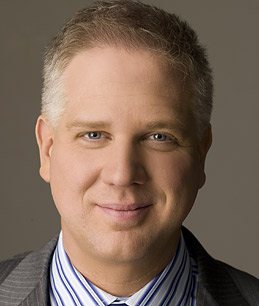
GLENN BECK
In their learned discussion this week, political philosopher Glenn Beck and stateswoman Sarah Palin evoked the spirits of the “founding fathers” — a term, by the way, that was coined by an earlier genius, Warren G. Harding. After his own apotheosis of George Washington, Beck inquired of Gov. Palin, “Who is your favorite founder?” Apparently not wanting to offend the disciples of any one of our forbears, Gov. Palin demurred: “Ummm … you know … well, all of them.” Beck, clearly trying to uphold his reputation as a hard-hitting and objective interviewer, expressed his reservation by dismissing the governor’s attempt at delicacy as “bull crap” and demanded to know who was her favorite. The two great minds, as it turned out, were superimposed much like a prophetic convergence of heavenly bodies. Gov. Palin’s choice was George Washington. She made her reason clear: She empathized with Washington’s indifference to public office, except as a temporary duty, and his disdain for notoriety in general. So it was a natural choice for the former city council member, mayor, and governor, and unsuccessful candidate for lieutenant governor and vice-president — and recently engaged Fox News commentator. Neither Beck nor Palin brought up slave-holding or land speculation, but it was only a one-hour program.

THOMAS PAINE
Given the spiritual underpinnings of the two thinkers, their discourse naturally turned to religion. They agreed that religious faith was an important motivation for the “founding fathers,” although Glenn Beck darkly noted, “except Thomas Paine — we think he might have been an athiest.” As far as the others were concerned, Gov. Palin twice tried to assure Beck — who didn’t seem to be listening — that “we have the documents.”
Paine might have run afoul of Glenn Beck and Gov. Palin anyway inasmuch as he eventually described Washington with words like “hypocrite,” “apostate,” and “imposter.” However, unless the “we” who share Glenn Beck’s suspicions know something that historians do not know, Paine was not an athiest but a deist — deism being all the rage at the time, including among many of the “founders.”
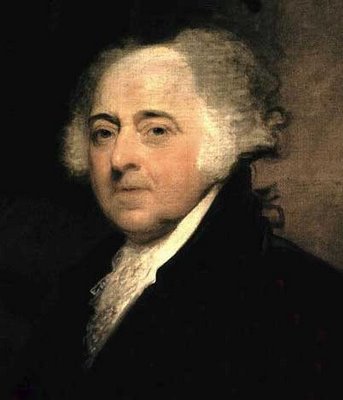 As for the “documents” the governor referred as evidence that the republic somehow was founded on religious principles, perhaps she will be specific when she settles into her role as a commentator or when she publishes her next book. Presumably she is not referring to the Declaration of Independence, which is not part of the organic law of the land, nor such things as Thanksgiving proclamations. Nor can she mean the treaty with Tripoli, ratified by the Senate and signed by the deist founding father and president, John Adams — a treaty that explicitly rejects the idea that the government of the United States was founded on Christian principles. If Gov. Palin can find religion — except a prohibition against establishing it — in the federal Constitution, which is the law of the land, she has an obligation to expose it for the rest of us.

Children at Theresienstadt. Yad Vashem Archives.
It’s been a good reading season squeezed in between semesters. The pace will slow down when classes resume next week, though I just started a fascinating book about Isaac Newton’s little-known career as the scourge of counterfeiters. Of that, more later.
I just finished “The Girls of Room 28” by Hannelore Brenner, which describes the lives of children who were incarcerated at the Jewish ghetto in Theresienstadt, Czechoslovakia, between 1941 and 1944. An estimated 13,000 children passed through there; 25 survived. Some died of disease or other consequences of neglect. Most died in the concentration camps further east. Brenner presents first-hand accounts from some of the survivors as well as material from diaries and other such documents. She also records how the Nazis bamboozled the International Red Cross into thinking that Theresienstadt was a model community for Jews, founded on the benevolent nature of Adolf Hitler. There is a lot of information and photographs about the ghetto on the YAD VASHEM web site.

Abraham Lincoln reading to his son Tad.
I can’t read too many books about Abraham Lincoln, and I was delighted with “Lincoln, Life-Size,” a volume that includes digitized reproductions of all 114 known photographs of Lincoln, most of them portraits. The book was assembled by three descendants of Frederick Meserve, one of the best-known collectors of Lincoln images. The authors used high technology to calculate the size of Lincoln’s head. The head was cropped from each of several dozen photographs and reproduced on the facing page in life size. The result is fascinating and, at times, unsettling. The authors also accompany each photograph with texts drawn from a variety of sources, some putting the photo in context, others illuminating some aspect of Lincoln’s public or private life.

GERTRUDE EDERLE
“America’s Girl” is a biography of Gertrude Ederle, a young woman from New York City who, in 1926, not only became the first woman to swim the English Channel, but far surpassed the previous record — set, obviously, by a man. Ederle did not lead an exciting life in the long term, but in the weeks and months after her achievement, she was a celebrity of proportions that have only rarely been exceeded — even in our own age of instant notoriety. More important, really, is that her accomplishment had a significance that transcended her personal fortunes. Ederle confounded the widely accepted assumption that women were not capable of feats like the one she performed. Her crossing helped to accelerate brewing changes in how women were regarded and what they were permitted to do in a society in which only men were allowed to vote until only five years before. The book was written by Tim Dahlberg with Mary Ederle Ward – the swimmer’s niece – and Brenda Green.

Yogi Berra jumps into Don Larsen's arms after the last out of the perfect game.
“Perfect” by Lew Paper, is based on Don Larsen’s perfect game in the 1956 World Series between the New York Yankees and the Brooklyn Dodgers. Paper examines the well-worn but still fascinating fact that this feat – achieved only once since the World Series was inaugurated in 1903 – was carried out by a mediocre pitcher whose name would long have been forgotten if it hadn’t been for that day. But Paper makes his book good winter reading for baseball fanatics by devoting each of his 18 chapters to one the half-innings in that game, and focusing each chapter on one of the players who participated. In one instance only, he profiles two players – Jackie Robinson and Gil McDouglald – in a single chapter. In each case, Paper recounts the personal history that brought the player – Mickey Mantle, Enos Slaughter, Gil Hodges, Pee Wee Reese – to that historic moment in sports. Not the least of these figures is Dale Mitchell of the Dodgers who was pinch hitting for starting pitcher Sal Maglie in the top of the ninth when he took the called strike that sealed Larsen’s place in history. Mitchell, who had one of the best batting eyes of his era, thought the pitch was high. So, according to Paper, did most of the Yankees on the field. But, as one baseball wag observed, when the umpire calls strike three on you, even God can’t get you off.

Authorities estimated that a third of the population of New York City - about two million people - turned out for this ticker-tape parade for Gertrude Ederle. It remains the largest such event to honor an individual athlete. (© Underwood & Underwood/CORBIS)
Which president was the best football player?
January 8, 2010
 The relationship between baseball and presidents of the United States has been well documented; in fact, there is a room devoted to the subject at the National Baseball Hall of Fame in Cooperstown, NY. The earliest association seems to be with Abraham Lincoln and it is most graphically represented by this Currier & Ives political cartoon, published in 1860, after Lincoln had outlasted three opponents to win the presidency. Lincoln is saying, “Gentleman, if ever you should take a hand in another match at this game, remember that you must have a good bat to strike a fair ball and make a clean score and a home run.”

ANDREW JOHNSON
How close Lincoln was to the game seems to be a matter of debate, but it is documented that his successor, Andrew Johnson, was the first president to witness an intra-city game and the first president to invite a baseball team into the White House. Among his papers are several honorary membership cards in baseball organizations.
Another president who had a particular connection to baseball was Dwight Eisenhower, who loved the game and said more than once that he would have liked to have played professionally. There is a lingering discussion about whether he did, in fact, once play semi-pro ball under an assumed name — something that would have fouled the amateur status under which he played football at West Point. A number of prominent witnesses said that Eisenhower had admitted to this in later life, but Eisenhower never publicly owned up to it.

GERALD FORD
Meanwhile, the Christian Science Monitor has looked into the subject of presidents and football — specifically, which president was the best player. The candidates are Eisenhower, John F. Kennedy, Richard Nixon, Gerald Ford, and Ronald Reagan.
Even after one gets over the image of Nixon playing football, the answer isn’t as obvious as it may seem.
If you can’t guess, you can read about it at THIS LINK.
“Don’t you love your brother?” — Groucho Marx
November 15, 2009

BILLY CARTER
Dan and I were talking the other day about a time when you could look under the hood of your car and see the macadam of the street or driveway. That was when cars were mechanical devices, not automatons with minds of their own.
Dan said his dad told him that it was possible with some vehicles to stand in the engine compartment, with your feet on the ground, to pull the plugs or change the air filter. The kid who works in Dan’s garage looked incredulous, so I backed up Dan’s dad, even though I had never seen anyone do that.
I did see a guy named Sonny mount an engine as though it were a race horse so he could clean the carburetor. That happened at Frank DeMore’s garage, where I used to hang out with a lot of guys who probably could have been doing something more productive if their wives or mothers only knew where to find them. The era before cell phones had its advantages.
BILLY CARTER
I was sitting in my ’56 Chevy in the parking lot of that garage when I heard — on the radio — Bill Mazeroski’s home run that beat the Yankees in the 1960 World Series. That was the only Game Seven walk-off home run in World Series history, and I heard it in the parking lot of Frank DeMore’s garage. I was afraid to go home, what with my dad’s theory that the Yankees had proprietary rights to the world championship and all, but probably I wouldn’t have gone home even if the Yankees had won.
Frank’s garage and everything in it — including Frank — was covered with a film of grease. The grease was an animate thing, and it would migrate. When my mother laundered my clothes she used to wonder how a person could get so dirty by being idle, but my mother had never been to Frank’s garage.
JIMMY CARTER
Frank’s garage is gone now, and I regret that whenever I drive through that town. That place accounted for the lack of purpose in the lives of uncounted men and boys, and such things are not lightly lost.
I suppose if I had amounted to something, Congress might have considered appropriating money to convert Frank’s garage into an historic site — possibly one element in a tour that would include Pappy’s hot dog restaurant, the Kozy Korner soda shop, and the Hollywood Diner. Something similar is in the legislative hopper with respect to Billy Carter’s old gas station in Plains, Ga., but, of course, Billy’s sibling was sort of a president of the United States.
Some citizens who insist on looking at the big picture question the wisdom of spending money for such a purpose when the nation is broke. Others say the gas station is an irreplaceable remnant of the early life of James Earl Carter and ought to be preserved so that future generations can understand the president better — and so that tourists will continue to visit Plains once it is no longer possible to run across the Carters themselves. Well, at least they’re honest.

JIMMY and BILLY CARTER
“The last Republican president who cared about the poor was Richard Nixon.” — Garrison Keillor
October 17, 2009
RICHARD NIXON
The AARP recently pointed out in its monthly bulletin that President Richard Nixon in 1972 proposed a health-care reform program that was shot out of the sky, with U.S. Sen. Edward M. Kennedy wielding one of the guns.
“Nixon’s plan,” editor Jim Toedtman wrote, “required employers to provide health care insurance for their employees. It provided federal subsidies for the poor and created rural health clinics and a network of state committees to set industry standards, guarantee basic coverage and coordinate insurance for the self-employed. In the process, it would have extended health care coverage to almost all Americans.”

SEN. EDWARD M. KENNEDY
According to Toedtman’s commentary, Kennedy told the Boston Globe earlier this year that Nixon’s initiative was a “missed opportunity” and that, “We should have jumped on it.”
Should have. What were the chances that a Democrat, and a Kennedy at that, would support a sweeping program like that coming from Nixon? Ted Kennedy had his own ideas about health-care reform, and the twain never met. As a result, 37 years later, the problems perceived with health care then — cost and accessibility — are exponentially worse, partisanship still trumps the general welfare, and fundamental reform is no more likely, no matter what bill Congress may pass.
Nixon, meanwhile — if he can hear the debate from where he reposes — is probably as surprised as anyone to learn from his own party that he was a socialist.
“… names will never hurt me.”
September 16, 2009

Rep. JOE WILSON
Well, the least that can be said of Joe Wilson is that he didn’t know what he would be unleashing when he pulled the cork out of that bottle — the bottle being his indiscreet mouth.
Not only has he been accused of racism for his heckling of President Obama from the floor of the House of Representatives, but he has been branded as a symbol of a latent racism far bigger than he. As though Congress weren’t already in a state of self-paralyzing partisanship, it was divided even more deeply by the vote to reprimand Wilson. Meanwhile the latter-day No-Nothings have adopted him as their hero. Can a Wilson-Palen ticket be far behind?
The mind races back to the first quarter of the 19th century — well, mine does, at least.

WILLIAM H. CRAWFORD
William H. Crawford of Georgia, the secretary of the treasury, is at the White House demanding to know what President James Monroe intends to do about a list of political appointments Crawford has recommended.
“That,” Monroe — perhaps injudiciously — tells Crawford, “is none of your damned business.” To which provocation Crawford responds by lunging at Monroe with a cane, calling him “you infernal scoundrel.” Monroe goes to the fireplace and grabs a poker to defend himself, and the secretary of the treasury is forcibly removed from the executive mansion, apologizing on the way out.
“You lie!” “You infernal scoundrel.”
At least Crawford had some style.
Talkin’ baseball
September 3, 2009
DEREK JETER
Derek Jeter is on the verge of accumulating the most hits by any member of the New York Yankees – surpassing the record of 2,720 held since 1939 by Lou Gehrig. Gehrig would have had more, of course, had he not come down with ALS and died before he was 37 years old. That’s not Jeter’s fault; he got his hits one at a time like everybody else, and he deserves whatever recognition comes with them.
This not the kind of record that is subject to rationalization by people who don’t like the player — like those who say that Alex Rodriguez built up his records by driving in runs when his team didn’t need them. When a man gets 2,700 hits, there’s only one reason for it. He’s damn good.
LOU GEHRIG
Still, there will be some hint of melancholy around the hit that breaks Lou’s record. Maybe this is a generational thing. I don’t remember Gehrig, but I didn’t miss him by much, and my father — who saw him play scores of times throughout his career — kept the memory alive in our house. Younger people may not feel the regret that someone my age will feel when Lou is no longer Number One on that list.
One of the charms of baseball has always been that everyone who has ever played is still in the game. Today’s players compete against yesterday’s players in statistics and in memory. I wonder, though, if that is waning. I notice, for instance, that the frame of reference for the play-by-play and color announcers usually extends back only as far as they can remember. References to people like Gehrig are rare, and they often sound like references to fictional characters.

BILL DICKEY
I was in the Yankee clubhouse with Ed Lucas one day about 15 years ago, and Ed was talking to a young player who had come up from the farm for a cup of coffee. In the conversation, Ed mentioned Yogi Berra. Ed is blind, but I noticed the blank look on the player’s face, and I said, “You know who Yogi Berra is, don’t you?” The guy said: “I’ve heard of the gentleman.” I guess there would have been no point in asking the young man if he knew who Bill Dickey was — the Hall of Fame catcher who preceded Berra on the Yankees.
People of my generation lived through the phenomenon of grieving a record when Roger Maris hit 61 home runs in 1961 to break the mark set by Babe Ruth in 1927. I was rooting for Maris, partly, I suppose, because Ruth’s transcendent place in the game doesn’t depend on any of his individual records. But a lot of people resented Maris and said so. If anyone broke that record, it should have been Mickey Mantle, a legitimate power hitter year after year and a lifetime Yankee. That was the feeling. We were at Yankee Stadium the day Maris broke that record; the excitement was muted, to put it mildly, Phil Rizzuto notwithstanding. Henry Aaron went through something similar when he broke Ruth’s lifetime home run mark — and there was a strong racial ingredient in that — but Aaron was such a great all-around player for so many years, that only cranks were against him.
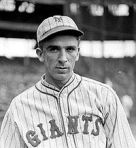
CARL HUBBELL
Speaking of Bill Dickey, he came to mind the other day when a friend of mine mentioned Carl Hubbell’s well-known feat in the 1933 All-Star Game, striking out in succession Babe Ruth, Lou Gehrig, Jimmy Foxx, Joe Cronin, and Al Simmons — all future Hall of Famers. Hubbell, a Hall of Fame pitcher himself, was a screwball-throwing left-hander and one of the best of his time — many would say all time.
It doesn’t come up often, but the batter who followed Simmons was Bill Dickey, who got a hit to break Hubbell’s streak. The next batter was Lefty Gomez, a pitcher with the Yankees and one of the great humorists of the game, and a notoriously bad hitter in the days when American League pitchers were fully employed and took their turn at bat.
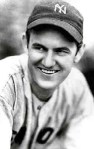
LEFTY GOMEZ
Gomez struck out, and when he went back to the dugout, he was ripping mad at Dickey.
“What did I do?” asked Dickey, who was flabbergasted. “It’s going to go down in history,” Gomez told him, “that Hubbell struck out five of the greatest hitters in baseball. If you had had the decency to strike out, it would have been seven, and I would have been one of them!”
The Times has a story about Jeter’s achievement in the context of the end of Gehrig’s career. It’s at this link:
http://www.nytimes.com/2009/09/04/sports/baseball/04gehrig.html?hp
 CharlesPaolino's Blog