Books: “The House that Ruth Built”
April 30, 2011
 “Jumpin” Joe Dugan, who spent a few seasons as Babe Ruth’s teammate, had this to say: “To understand him, you have to understand this. He wasn’t human.”
I get that. Ruth may not have had it all — he wasn’t much of a base stealer — but he had more of it than anyone else. There’s no point in arguing about it. I love Aaron, Mays, Banks, and Mantle as much as the next fellow, but none of them went 94-46 with a 2.16 ERA before becoming one of the best hitters in history and a fine outfielder to boot. In addition to that, his bombastic personality and his enormous charity revitalized a flagging game in a way that no one else could have done, making his name familiar to people around the globe — down to our own time — no matter how much or how little they know about baseball.
I get that. John McGraw didn’t get that. McGraw was the manager and a part owner of the New York Giants, and he was by reputation one of the best skippers ever. He believed in “scientific baseball,” which was the only way to play the game successfully in the dead-ball era. McGraw was all about place-hitting, bunting, stealing, studying your opponents and taking advantage of their weaknesses.
 McGraw was not about the long ball — especially not the home run — which was coming into vogue at the beginning of the 1920s. As Robert Weintraub explains in this lively and entertaining book, Babe Ruth – the first home run hitter par excellence – represented to McGraw the ruin of the game. McGraw, by Weintraub’s account, despised Ruth, called him a “baboon” and a “bum,” and predicted that he would hit into a hundred double plays a year.
Weintraub’s book covers the 1923 season, the Yankees’ first season in the original Yankee Stadium – not the knockoff they play in now. The team first appeared in the city when three New York guys bought the minor league Baltimore Orioles franchise and moved it north in 1903. The Highlanders, as they were known for most of the first decade, played in Hilltop Park — the present site of the Columbia Presbyterian Medical Center — until 1913, when they moved into the Polo Grounds as tenants of the Giants. At the point at which Weintraub picks up the story, McGraw was fed up with the Yankees in general and Ruth in particular.
 McGraw, as Weintraub recounts, was accustomed to being the toast of the town, and he became increasingly agitated as the Yankees gained in popularity. By 1921, he engineered the Giants management’s decision to tell the Yankees to move out of the Polo Grounds. This, it turned out, was a serious error, because it spurred Jacob Ruppert and Cap Huston — whom McGraw had inspired to buy the Yankees — to build Yankee Stadium just across the Harlem River.
McGraw had a brief period of satisfaction left to him, because the Giants and Yankees won their respective pennants in 1921 and 1922, so that the whole World Series was played in the Polo Grounds, where Giants pitching made a monkey of Ruth. After the ’22 affair, there was widespread talk that the Babe was through.
 In the ’23 season, though, Ruth — seriously chastened by his failures — made at least a show of curbing his appetites — sexual and otherwise — and he tore the league apart, winning the Most Valuable Player award. The rest of the Yankees, led by their dour little manager, Miller Huggins, had an outstanding year, and the momentum carried them to a World Series win that finally took the wind out of McGraw. McGraw was so bitter that he made the Giants dress at the Polo Grounds for the away games and cab it over to Yankee Stadium. The manager himself walked across the Macombs Dam Bridge.
The only bright spot for McGraw in that ’23 series was his reserve outfielder, “Casey” Stengel, who hit two game-winning home runs, one of them inside the park. During the off season, McGraw traded the aging Stengel to the Braves. “It’s a good thing I didn’t hit three home runs,” Casey said. “McGraw might have sent me out of the country.”
This is a colorful book, loaded with the characters of the ’20s – Warren G. Harding, Charles Chaplin, Damon Runyon, Fanny Brice. And, of course, all those ballplayers – Frankie Frisch, Bob and “Irish” Meusel, Everett “Iron Man” Scott, George “Highpockets” Kelly.
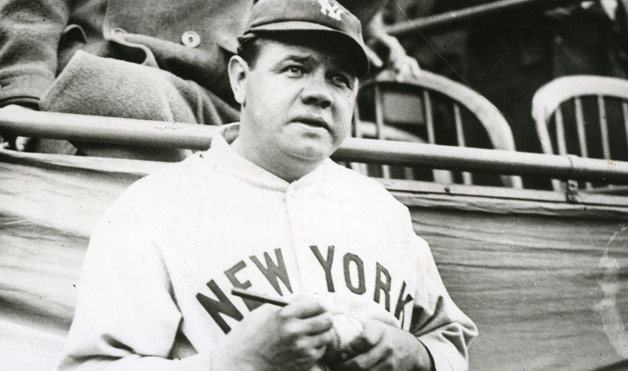 The real heart of this book, though, is found in the stories of McGraw and Ruth, two low-born, hard drinking, brawlers who clawed their way to the top where their lives intersected at a pivotal time in baseball in general and in New York baseball in particular.

AMELIA EARHART
Somewhere in this home office there is a 78 rpm recording of Jack Kaufman singing “Lucky Lindy” and “Lindbergh, the Eagle of the USA.” The record was part of the hype that followed Charles A. Lindbergh’s solo flight from New York to Paris in 1927. If a female aviator were going to be cast as Lindbergh’s counterpart, there was only one thing about Amelia Earhart that qualified her: She vaguely resembled the pilot. Where flying acumen was concerned, there were numerous women whose experience, skills, and breadth of knowledge far exceeded Earhart’s. As it turned out, that didn’t matter. Earhart had “the look” — or, at least, enough people thought so to make her marketable as “Lady Lindy,” and so, she became the legend and the other women are forgotten by all but students of aviation history. Some things never change.
I read about that in “Amelia Earhart: The Turbulent Life of an American Icon,” by Kathleen C. Winters.

Amelia Earhart and George Putnam
Winters, who died last August, was an aviation historian, biographer of Anne Morrow Lindbergh, and a licensed pilot. In short, she knew a lot about flying and her knowledge gives this book important context. I think it was because of her respect for flying that she took an unfiltered look at Earhart and presented her in what for many readers, including me, is a new light. Not that Winters went after Earhart; on the contrary, she seems to have recognized Earhart’s basic decency and approved of Earhart’s sense of adventure and her independence, her part in the campaign to promote commercial air travel, and especially her insistence and practical demonstrations that women were capable of undertakings once thought the sole province of men.
But Winters shows in some detail that Earhart was undisciplined, sometimes even careless, and that she wouldn’t take responsibility for her mistakes. But although there could have been no Amelia Earhart legend without Amelia Earhart’s cooperation, the magician who created the phantom heroine was Earhart’s husband, George Putnam.

1928 advertisement
Putnam, an opportunistic book publisher at the time, played a critical role in booking Earhart as the first woman to fly across the Atlantic Ocean — a year after Lindbergh’s solo flight. Earhart flew, all right, but she never took the controls, because she was incapable of handling the sea plane that made the flight and because she hadn’t learned to fly by instruments alone — something that could, and did, become necessary over the ocean. A two-man male crew handled the flight and Earhart was “baggage,” as she herself said. But Putnam created so much publicity — much of it exaggerated or just plain false — that Earhart became permanently larger than life, certainly larger than reality. Putnam, who eventually left his wife and married Earhart, also managed the rest of her career, encouraging her in a series of risky and often pointless performances and booking her in never-ending schedule of public appearances that financed the couple’s flamboyant lifestyle.
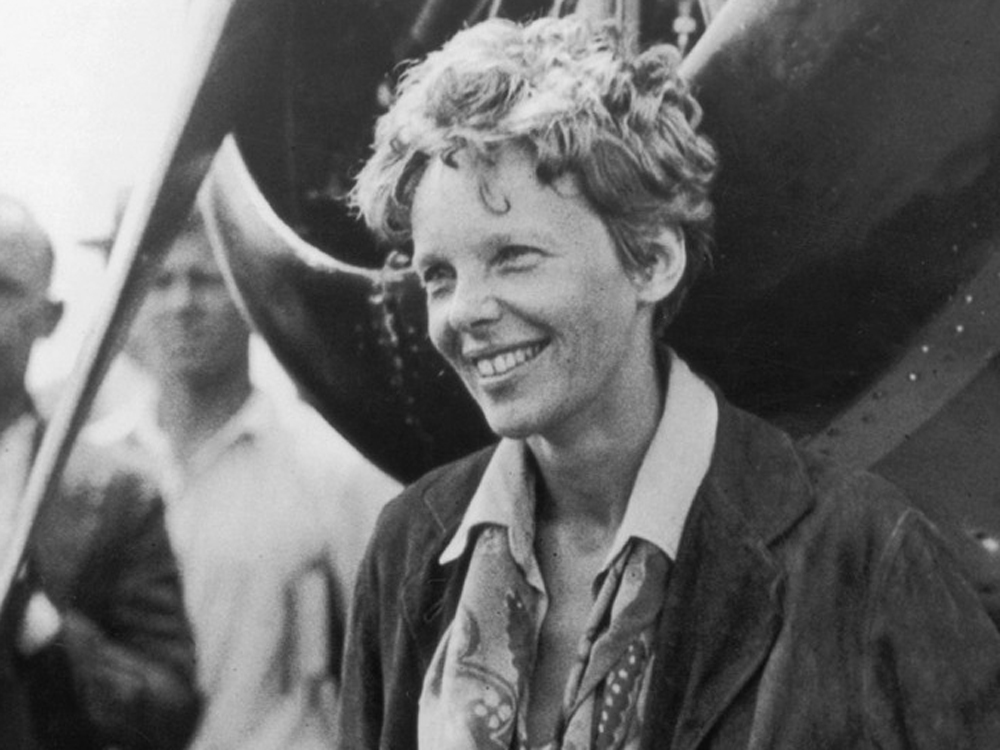
Amelia Earhart after her own solo transatlantic flight in 1932 - 1700 miles shorter than Lindy's.
It’s symbolic of Putnam’s whole approach to Earhart’s career that he signed her, over her objections, to appear in a print ad for Lucky Strike cigarettes, although Earhart did not smoke. The ad didn’t say she smoked, but the implication was clear. What Putnam didn’t anticipate was a strong negative push-back from a public — particularly a female public — that didn’t approve of women smoking.
Earhart was charming, and she did set some speed and distance records, but her indelible place in the public consciousness was based on Putnam’s manufactured image — and on her disappearance in 1937 while she and navigator Fred Noonan were over the Pacific Ocean during an attempt to fly around the world along the equator — a feat that would have had virtually no significance in aviation by that time. Winters points out that Earhart still had limited understanding of radio operation and that neither she nor Noonan knew Morse code. A naval vessel — in a typically improper use of public resources to support Earhart’s private escapades — was trying to monitor Earhart’s approach to tiny Howland Island where a landing strip had been constructed for her at public expense. The crew couldn’t keep contact with the flyer, and all indications are that she and Noonan couldn’t spot the minuscule island or wandered off course and wound up in the ocean. Bone fragments discovered late last year on a Pacific island are being examined for any connection to Earhart. Winters notes a melancholy detail: An experienced flyer encouraged Earhart to have the rudders and wing strips of her Lockheed painted red so that it would be easier to spot if it went down. Earhart liked the plane’s paint job fine just as it was.

Hilary Swank and Richard Gere as Amelia Earhart and George Putnam in the 2009 film "Amelia"
Amelia Earhart: Is it you at last?
February 22, 2011
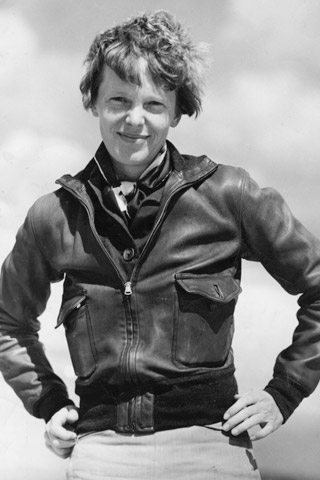 I see by the papers, as it were, that a scientist in British Columbia is going to try to identify bone fragments believed to be those of Amelia Earhart by using DNA technology. Earhart went missing in July of 1937 and was presumably killed along with navigator Fred Noonan during their attempt to fly around the world along the equator. Their bodies were never found, but bone fragments that were found on a Pacific island late last year are being examined at the University of Oklahoma to determine if they are the remains of Earhart. A story published today by The Canadian Press reported that a forensic archeologist at Fraser University in Vancouver is going to try to recover Earhart’s DNA from envelopes that contained letters written by Earhart. The letters were opened at the ends, so the flaps are intact. The premise of the study is that Earhart probably licked those flaps in order to seal the envelopes and that DNA from her saliva may still be present.
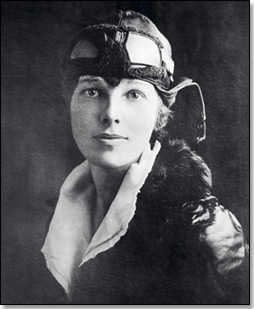 This news breaks while I’m in the midst of reading a recent biography of Earhart by Kathleen C. Winters. I’ll probably post a review here in a few days.
From a practical point of view, it may not matter very much whether those bones are Earhart’s or not. As there always are in such cases, there are folks who want to believe that the explanation for her disappearance is more complicated than that her plane went down, but there is no evidence to support them. On the other hand, anyone with a sense of history hates stories with missing conclusions. So a definitive finding that those bones belonged to Amelia Earhart would serve two purposes – putting unfounded theories to rest and putting the period to an historical epoch.
Books: “Franklin and Eleanor”
January 7, 2011

Franklin and Eleanor Roosevelt in 1941
“I hate it,” Charlie Brown once said, “when there are two sides to a story.” Actually, Charlie, there are at least two sides to every story, and none more certainly than the story of Franklin and Eleanor Roosevelt, probably the most complicated First Couple in American history. The sorting out of their relationship still goes on 65 years after FDR’s death, most recently in Hazel Rowley’s book “Franklin and Eleanor: An Extraordinary Marriage.”
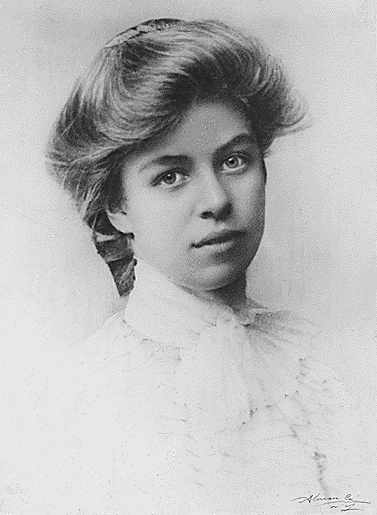
ELEANOR ROOSEVELT in1898
This is not the story of how the insatiable FDR cheated on his wife, leaving the pair in a marriage maintained only for the sake of appearances and finances. It’s a lot more complicated and — in Rowley’s view — a lot more important than that. It is well established by now that in 1918 Eleanor discovered love letters written by her secretary, Lucy Mercer, to FDR, and that the incident had a permanent impact on the marriage. It is also known that FDR promised never to see Lucy Mercer again and that he broke that promise — in fact, that Lucy was among those who were with him in Warm Springs, Ga., in 1945, when he suffered the cerebral stroke that resulted in his death. It is also known that Franklin Roosevelt was an incurable flirt, and that he highly valued his relationships with women who were both charming in their own right and — this was essential — who were charmed by him. Rowley explains that this tendency often irritated Eleanor, but that she came to understand and accept the importance of certain women in her husband’s life.
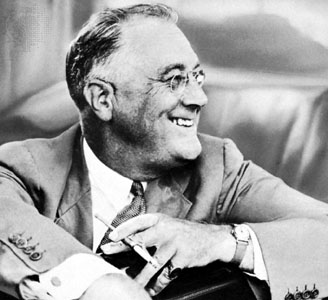
FRANKLIN ROOSEVELT
But the author explains that there was much more to the story than that. Physical intimacy disappeared from the Roosevelts’ marriage, but Rowley writes that Eleanor, who had six children in relatively rapid succession, thought of her sexual relations as a necessary but unwelcome burden. But Eleanor, like most human beings, had needs of her own with respect to affection and intimacy. She fulfilled these needs in more than one way, with both women and men, though how intimate these relationships were is largely a matter of conjecture. Rowley recounts that Franklin encouraged his wife’s friendship with a lesbian couple to the point of helping the three of them build a house and a workshop on property he owned near his mother’s home in Hyde Park, N.Y.
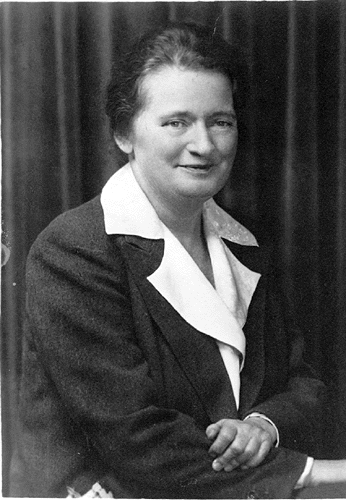
LORENA HICKOK
Eleanor also had an intense tie to Lorena Hickok, a pioneering Associated Press reporter who became so close to the Roosevelts that she herself decided she could no longer report on them objectively. By the time FDR was elected president for the first time, in 1932, Rowley writes, “Everyone in the political press corps knew that Lorena Hickok was a lesbian. By now most of the reporters had figured out that she was passionately in love with Eleanor and that her feelings appeared to be reciprocated.”
Whatever relationships Franklin and Eleanor forged outside their marriage, Rowley maintains, the two of them continued to love and support each other, and they formed a partnership whose vigor helped carry the nation through the Great Depression and the Second World War. At times they seemed to constitute a single person, as Eleanor traveled to places at home and abroad that were beyond her paralyzed husband’s capacity. Although Eleanor’s activism occasionally embarrassed the politically sensitive Franklin, they shared many of the same ideals of social justice.

LOUIS HOWE and FDR
In the process of describing the marriage of these two gigantic historical figures, Rowley draws portraits of many of the interesting characters in the Roosevelt clan and entourage — a crowd that FDR liked to think of as a big, happy family. Not the least of the players was Louis Howe, a disheveled ex-journalist who was one of FDR’s closest advisers for most of his political career, the tireless battery behind the campaigns that made Roosevelt governor of New York and president of the United States. Some of the people around Roosevelt — including his patrician mother, Sara — disapproved of this little man with cigarette ashes on his rumpled clothing, but Eleanor wasn’t one of them, and Rowley describes how it was Howe who repeatedly encouraged Eleanor to make herself heard on the issues that were important to her — a visionary attitude in that male-dominated era.
The land of the free
September 8, 2010
 I started walking into my editor’s office one morning about 35 years ago, but stopped after two or three steps past the door. This man was usually red-faced and loud; he usually would greet me with an obscenity and a coarse reference to my ethnicity — just to let me know he still loved me.
On this morning, I could see that there would be none of that, because he sat behind his desk, ashen-faced, with a New York City newspaper spread out in front of him and, when he was aware of my intrusion, only muttered something that I could not hear.

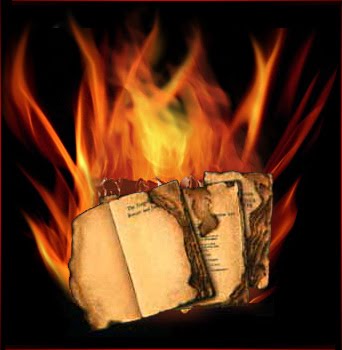
Nazi youth burning books
Eventually, I learned that he had just read a story about a group of students at a New York college who had reacted to some beef they had with the school administration by burning copies of the campus newspaper. While I didn’t need my editor to explain to me the principle that was at issue, seeing this brash man nearly made physically ill by the very idea of Americans burning a publication brought the weight of it down on me as nothing has before or since.
A great deal has been written and said about the plan to burn copies of the Qur’an at the Dove World Outreach Center in Gainesville, Fla. It is born of the ignorant idea that there is something inherently incompatible about being a Muslim and being an American — and idea John Adams debunked in the 18th century. John Adams — one of the “founding fathers” we hear so much about these days.

University of Alabama students burn desegregation literature in 1956.
There is nothing inherently incompatible about being a Muslim and being an American, but there is something inherently incompatible about calling ones self an American and burning books. And I wouldn’t be too quick — as some have been — to dismiss the Gainesville congregation as a fringe group. American “values” are being evoked these days by a lot of people who are not associated with that church but whose idea of American values is no less distorted. For every one willing to burn a book, there are plenty who would stifle any viewpoint other than their own. Anyone who hasn’t heard that in the rhetoric of the past two years hasn’t been listening hard enough.
Meanwhile, what comes after burning the Qur’an? Detention camps?
Books: “Lyndon B. Johnson” by Charles Peters
August 27, 2010

LYNDON B. JOHNSON
For my own amusement, I keep a file of presidential trivia, but there is one fragment of information about the 36th president that I have chosen to omit: Lyndon Johnson was the only president who conducted staff meetings in his bathroom while he was moving his bowels. The fact that he bullied his staff into participating in this bizarre behavior speaks to one of the worst characteristics of the president. And, I suppose — to the extent that they didn’t have enough personal pride to tell him to go take a whaddyacallit — it speaks to the self image of Johnson’s toadies. He was a coarse, loud-mouthed bully, and that went along nicely with his appetites for alcohol and women.
Johnson, in a few words, was no damned good. That is, he would have been if he hadn’t conducted the most successful domestic policy of any president except Franklin Roosevelt; if he hadn’t used his political brawn and skill to enact such measures as the Elementary and Secondary Education Act and the Voting Rights Act, and if he hadn’t sponsored such programs as Medicare. These contrasting realities about LBJ are described in “Lyndon B. Johnson” by Charles Peters, one of a series of short presidential biographies by Times Books.
 Maybe it has been true of every president including George Washington and Abraham Lincoln that the nation has had to accept the bad with the good sides of a man, but that lesson has hardly been more boldly drawn than it was in the case of Lyndon Johnson.
Peters, who was a member of the administrations of John F. Kennedy and Johnson, gives plenty of examples of Johnson’s petulance, pettiness, and cruelty, including his weakness for publicly humiliating the people around him. Peters reports instances in which Johnson obfuscated or simply lied, including to the American public, in order to get his way — although LBJ hardly originated that tactic. In fact, Peters describes the scenario in which LBJ, then vice president, was left out of the loop when Robert Kennedy secretly agreed to the withdrawal of American missiles from Turkey as a quid pro quo for the withdrawal of Soviet missiles from Cuba. LBJ succeeded to the presidency and pursued what turned out to be a very aggressive policy against North Vietnam and the Viet Cong without knowing how the missile crisis had been resolved.
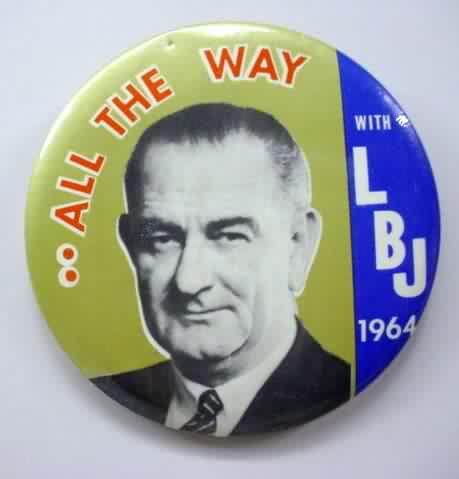 Johnson was an extraordinarily ambitious man, and he never made decisions without weighing the political consequences for himself. For instance, he abhorred the idea that he would be cast as a weakling if he publicly vacillated from a determination to prevent the fall of South Vietnam — even while he seriously doubted that the war could be won and made several efforts to achieve a negotiated peace.
The war — or, at least, the way the war was perceived by much of the American public by 1968 — was Johnson’s undoing. People may forget about Johnson showing off his surgical scar, using an aide’s lap as a footrest, lifting his hound by its ears, or even pursuing one sexual affair after another. However, as Peters notes, the bloodshed and the divisiveness and LBJ’s unprecedented decision to decline to run for reelection will always be associated with his memory.
Still, this unlikeable man took a courageous stand during a time of great uncertainty in the country and doggedly promoted his programs to help the poor, to assure medical care for the elderly, to assist students, and to finally bring true political equality to black Americans. Historians can spend eternity speculating whether all of that could have been achieved in the America of the 1960s without an SOB of Shakespearean proportions in the White House.
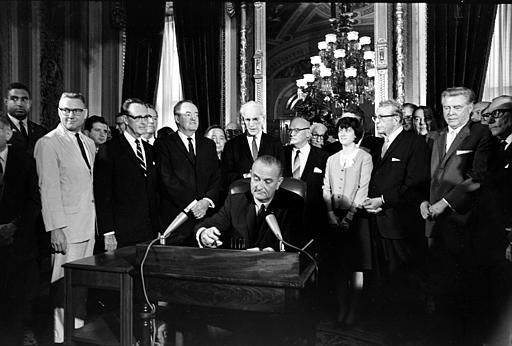
President Johnson signs the Voting Rights Bill in August 1965. Although previous legislation had guaranteed the franchise to all citizens, this bill was actually enforceable.
“Why are we here? Where are we going?” — Lew Brown
August 1, 2010
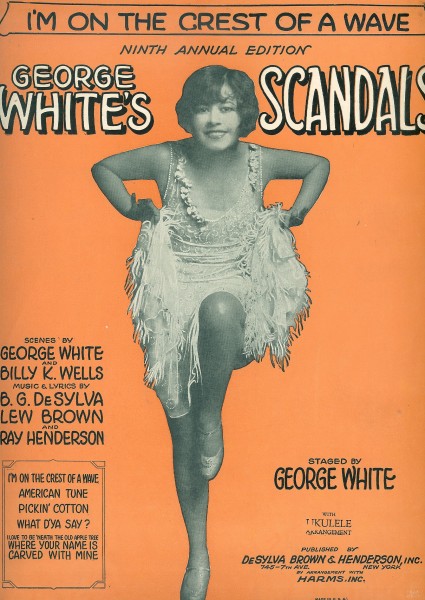 Sometimes we meet people in unexpected ways. For example, I met Lew Brown, who died 52 years ago, while I was struggling to write a sermon yesterday. We homilists are supposed to base our message on the readings of the day, and today’s readings have a consistent theme: Don’t neglect your spiritual well-being while you’re absorbed in accumulating possessions and other forms of material wealth. The first reading is from the Book of Ecclesiastes (“For what profit comes to a man from all the toil and anxiety of heart with which he has labored under the sun?”); St. Paul’s letter to the Christian community in Colossae (“Think of what is above, not of what is on earth”); and the Gospel according to Luke (“Though one may be rich, one’s life does not consist of possessions”).
It’s a message we hear often. In other words: Been there, done that.
 And so I thrashed around for several hours, trying to find a way into this homily. I looked back at hooks I had used the last few times these readings came up in the three-year cycle, but they seemed contrived and heavy-handed — as my writing often seems to me after some time has passed. Then, as we like to say in the church, the Holy Spirit put a song in my head: “Life is just a bowl of cherries / Don’t take it serious / Life’s too delirious / You live, you love, you worry so / but you can’t take your dough / when you go, go, go.”

Lyricist Harold Arlen, left, and Lew Brown visit with Eddie Cantor on the set of "Baby Face."
The lyric was a pop iteration of the central theme of today’s readings and, because the tune is still familiar, I decided to use it. When I set out to find out who wrote the lyrics, I found several web sites that attributed it to George Gershwin who, of course, was not a lyricist. I also found it attributed to Ira Gershwin, who was. That didn’t sound right to me, so I persisted, and I found out that the lyric was written by Lew Brown for the Broadway review “George White’s Scandals of 1931.” (Pay attention, boys and girls. You can’t trust internet sources.)
When the song is performed now, it usually seems to recommend a carefree life, but Brown wrote it at the onset of the Great Depression when it had a different connotation. As is frequently the case with popular lyrics, these at least touch on pretty serious ideas: “The sweet things in life / to you are just loaned / so how can you lose / what you’ve never owned?”

RAY HENDERSON
Like Irving Berlin, Lew Brown was born in the latter 19th century in tsarist Russia, and like Berlin, his family brought him to New York City when he was child. Brown began writing songs when he was still attending Dewitt Clinton High School in the Bronx and by 1912, when he was 19 years old, he had his first hit, “I’m the Lonesomest Gal in Town,” and he had another in 1916, “If You Were the Only Girl in the World (and I Was the Only Boy)”. The scores for both were written by Albert von Tilzner, with whom Brown collaborated on several other tunes. “If You Were the Only Girl in the World” became an American standard, and it would be only one of many for which Brown — either solo or as a collaborator — provided the words. He teamed up for a long time with composer Ray Henderson, and together they wrote the song that prompted this blog and one of my favorites, “The Thrill is Gone,” which was also written for the “George White Scandals.” Other songs he had a hand in were “The Beer Barrel Polka,” “Don’t Sit Under the Apple Tree (With Anyone Else but Me),” “Sonny Boy,” “It All Depends on You,” “The Best Things in Life Are Free,” and “You’re the Cream in My Coffee.”
Lew Brown — who was born Louis Brownstein — died in 1958, never expecting to help a tin-horn deacon preach the gospel. Thanks, Lew . . . for everything.

BARACK OBAMA
President Barack Obama’s foray into New Jersey and New York yesterday certainly was inspired at least in part by the Congressional elections coming up in November. The president obviously was trying to bolster his own party — which clearly is in political trouble along with Obama himself — and he was trying to undermine the Republican Party by accusing it of obstructionism with respect to such things as unemployment benefits. This kind of politicking is routine for modern presidents, although one has to wonder what effect it has in the 21st century, when the public is supersaturated with political messages.
Obama probably wasn’t conscious of it, but when he set off from Washington yesterday, he was emulating what, for him, was an unlikely model — namely, Andrew Johnson, the 17th president of these United States.
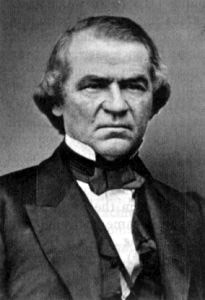
ANDREW JOHNSON
Johnson, who was Obama’s philosophical opposite in many ways, was the first president to conduct a campaign trip of that kind, but he did it to a fare-thee-well and with disastrous results that affected governance in the United States for decades. The short version of the story is that Johnson — a Democrat who had been elected vice president on a fusion ticket with the Republican Abraham Lincoln — abruptly succeeded to the presidency just as the Civil War was ending. He and the Republican majority in Congress were at odds over management of the defeated Confederate states and the former slaves and their disagreements degraded into an ugly struggle. There is no telling how Lincoln, with all of his political acumen, would have fared if he had survived to work things out with Congress on his own, but his death elevated the blunt and stubborn Johnson to the presidency under circumstances that he did not have the temperament to handle.

ANDREW JOHNSON
In an effort to uphold Democratic candidates for Congress and attract support from moderate Republicans, Johnson embarked in the summer of 1866 on an unprecedented 18-day grand tour — a “swing around the circle,” as he called it — that took him to 22 cities in Maryland, Pennsylvania, New York, Ohio, Michigan, Illinois, Missouri, Indiana, and Kentucky, with brief stops in other spots. He traveled with a large and glittering entourage that included such Cabinet members as Secretary of State William Seward, and military officers including Gen. Ulysses S. Grant, Gen. George Armstrong Custer, and Admiral David Farragut.

Adm. DAVID FARRAGUT
The trip went well as long as Johnson was in the friendly East, but things deteriorated when he reached Cleveland and started to encounter hostile audiences and exchanged insults with them as though he were still stumping for a legislative seat back in Tennessee. He opened himself to criticism and ridicule and did more damage than good for his objectives. The Republicans swept the Congressional elections, gaining a majority large enough to take control of the process of Reconstruction with no fear of presidential interference. In addition, as relations between Johnson and Congress became even worse, the House of Representatives impeached the president and included in the charges against him the intemperate speeches he made during the campaign tour. The legislative momentum was so great that the presidency was reduced in power and importance until the end of the 19th century.
Johnson was an admirable American in many respects, but at the end of the Civil War he was the Wrong Man at the Wrong Time, if ever there was one. He was acquitted of the impeachment charges, which were absurd on the face of it, and he eventually was reelected to the Senate — the same one that had tried him — where he was greeted with flowers and applause. We Americans are nothing if not forgiving. And although his campaign trip was a failure, it is a testament to his grit and self-confidence that he attempted it at all.

Extraordinary photograph shows Andrew Johnson at a banquet honoring him during the "swing around the circle." This event may have been held at Delmonico's in New York City. Johnson is in the center of the photo, between Secretary of the Navy Gideon Welles (in the white beard) and Gen. Grant.

HERM DOSCHER
One of the wonderful things about baseball is that it provides players with so many ways to be remembered — and many of those ways have little or nothing to do with success on the field.
Herm Doscher was an example. So was his son, Jack. In fact, together they constitute one example, because they were the first father and son combination to play the major leagues. Herm played third base for five different teams in the National Association and the National League from 1872 to 1882 – a spotty career for which there don’t seem to be a lot of statistics – and he was later a major league umpire. He was reputed to be hard-nosed in that role. He once ejected Rochester Broncos outfielder Sandy Griffin for arguing a call and, when Griffin wouldn’t leave the field, Doschler forfeited the game to the St. Louis Browns — who were leading 10-3 in the eighth inning anyway.
Jack Doscher (actually John Henry Doscher Jr.) was a pitcher from 1903 to 1908 with three teams including the Brooklyn Superbas, appearing in only 27 games. Doscher died in 1971 at the age of 90 and was at one point recognized as the oldest surviving player for the Brooklyn Dodgers, successors to the Superbas.
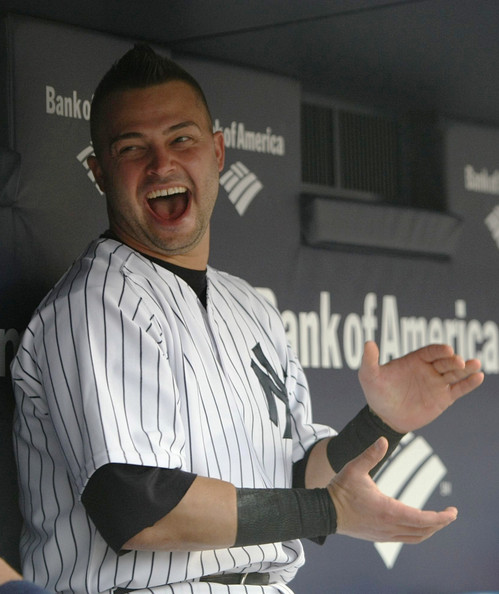
NICK SWISHER
The Doschers come to mind today because Major League Baseball announced this evening that Yankees outfielder Nick Swisher had been elected to the All Star Team. Whatever one thinks of the wacky manner in which those players are chosen these days, Swisher last season and this has made a good case for himself on the field. This is the first time Nick Swisher has been named to the All Star team, and it puts him in an exclusive baseball group — fathers and sons who have made the team. Swisher’s dad, Steve – a National League catcher for 10 years in the ’70s and ’80s – was on the 1976 team when he was with the Cubs, although he didn’t get to play. One of Steve Swisher’s colleagues on that ’76 team was Ken Griffey Sr., whose son also became an All Star — many times.
Altogether, 195 men who have played in the majors had sons who followed. A handful had two sons make it to the bigs. Three men — Sammy Hairston, Ray Boone, and Gus Bell — sent sons and grandsons to the majors. The Hairstons hold the record for multigenerational families with five major league players, although the Delahanty family had five of the same generation.

STEVE SWISHER
The Swishers are the tenth family to have a father and at least one son on the All Star team. (There have been three such families in the World Series.)
I was introduced to baseball by my father, who had managed a semi-pro team and knew a lot about the game. I would like to have been a better baseball player for his sake, but that gene went missing. Dad never expressed any disappointment about my weak performance; he wasn’t cut out that way. We made up for it with the many hours we spent together watching the Yankees in the Bronx and on TV or listening to them on the radio in our grocery store. We did other things together, but baseball provided the strongest bond. Dad’s been gone for more than 30 years, but I still watch baseball with him in mind. Meanwhile, it’s fun to speculate about the satisfaction Steve Swisher must be deriving from Nick’s success in general and from this benchmark in particular.
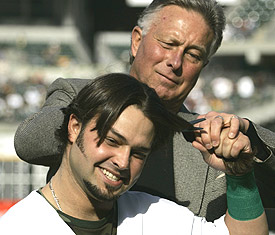
Steve Swisher cuts Nick Swisher's hair in 2007 on the field at the Oakland Coliseum. Nick Swisher had let his hair grow for 10 month so that he could donate it to a program that assists cancer patients.
Books: “Civil War Wives”
July 6, 2010
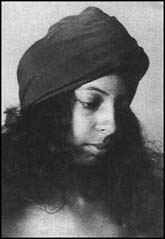
ANGELINA GRIMKE
When we learn about history, we learn mostly about men. This is something on the question of time. The curriculum in grade school and high school – and even in college for those who aren’t history majors – skims the surface. With respect to many epochs, that means leaving women out of the story, precisely because women were precluded from participating in what went on on the surface. Oh, we got an occasional glimpse of the other half of the population: Cleopatra, Catherine the Great, Queen Victoria, Betsy Ross, Harriet Beecher Stowe, Madame Curie, but the story overall was badly skewed.
This phenomenon is addressed in “Civil War Wives” by Carol Berkin, a book published last year. I read this book because I got it as a Father’s Day gift from one of my daughters — all of whom, by the way, are special women in their own rights, and that has a lot to do with their mother.
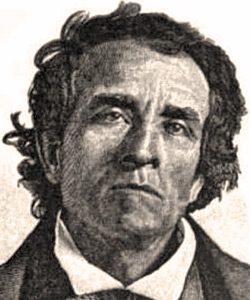
THEODORE WELD
Carol Berkin writes about three women who lived through the Civil War period and were directly affected by the war itself and the events and conditions surrounding it. These women were Angelina Grimke Weld, an abolitionist and feminist; Varina Howell Davis, who was married to Confederate President Jefferson Davis; and Julia Dent Grant, who was married to Ulysses S. Grant, Civil War general and postwar president.
I had some knowledge of Varina Davis and Julia Grant before I read this book, but I had not heard of Angelina Grimke Weld, who was an independent thinker from childhood. She was the daughter of a slave-holding plantation owner and judge in South Carolina, but she never accepted the precepts by which her parents lived — including human slavery, self-indulgence, and the notion that women should be happily subordinate to men.
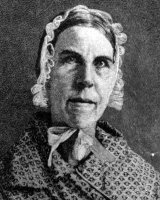
SARAH GRIMKE
Berkin recounts the process through which Angelina and her sister Sarah moved north and engaged in a prolific campaign against slavery and for women’s rights. Angelina Grimke in the 1830s was arguing for full citizenship for women — up to and including election to the presidency of the United States. (How impatient it must make her, wherever she reposes, to know that the nation still hasn’t chosen a female president.) She was making that argument at a time in which her public appearances, usually with Sarah, were regarded by many people as inappropriate for a woman – particularly when the sisters spoke to audiences of mixed gender and even of mixed race. Angelina married the abolitionist Theodore Weld, and Berkin reports that abolitionist organizations leaned on the husband — who bent a little — to discourage his wife from distracting from the antislavery message by arguing for women’s rights.
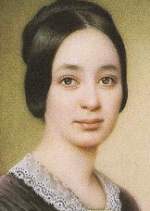
VARINA DAVIS
When Varina Davis first became engaged to Jefferson Davis, she was 17 years old and he was about twice her age. He had been married many years before, but his first wife died shortly after the wedding, and he may never have fully recovered from that loss. Varina Davis was loyal to her husband while they and their larger family were buffeted by illness, death, financial crises, infidelity, and the many shocks associated with the Civil War. However, theirs was hardly an ideal marriage. Varina was also the daughter of a southern slaveholder, but she was an independent thinker and her thoughts were not always in concert with those of her family or her husband. Jefferson Davis did not admire this trait in his wife, and he admonished her throughout their lives together about her penchant for expressing herself on public matters.

VARINA HOWELL DAVIS circa 1890
For Varina Davis, one of the most painful episodes of a life full of painful episodes must have been the imprisonment of her husband for two years at Fort Monroe in Phoebus, Virginia. She tirelessly but fruitlessly campaigned to get President Andrew Johnson to intercede on Jefferson Davis’s behalf. She persisted, however, and eventually succeeded not only in getting improved conditions for the prisoner but in getting permission to move into an apartment at the prison herself so that she could visit him regularly.
After the death of Jefferson Davis, Varina shocked southern society by moving north and associating with folks who were anathema in the former Confederacy. One of them was Julia Dent Grant, whose husband had taken compassion on Varina and intervened for the imprisoned Jefferson Davis. Varina also took up a career as a newspaper journalist for Joseph Pulitzer’s New York World.
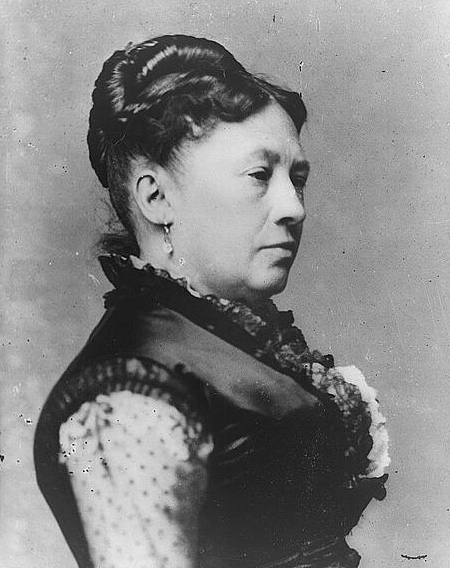
JULIA GRANT
Julia Grant was like the other two subjects of this book in that she was also the daughter of a slave-holding planter, but she was quite a different personality. She was a homely girl – and had a crossed eye to boot, but she was never allowed to think of herself as anything but a princess, thanks to a doting father. She was raised in leisure, and she celebrated that fact for the rest of her life. She did exhibit independence with respect to one, critical, point in her life. She persisted in her determination to marry Ulysses S. Grant over the objections of parents who didn’t think the soldier could provide the kind of life Julia wanted and deserved. Ulysses did leave the military after the marriage, but he was not cut out to be a businessman, and he failed repeatedly. His return to arms, of course, led to his greatest successes in life — all of them on the battlefield — and also led to his election to two terms as president, terms that were ridden with scandal, thanks to Grant’s friends and even, in one instance, his brother-in-law.
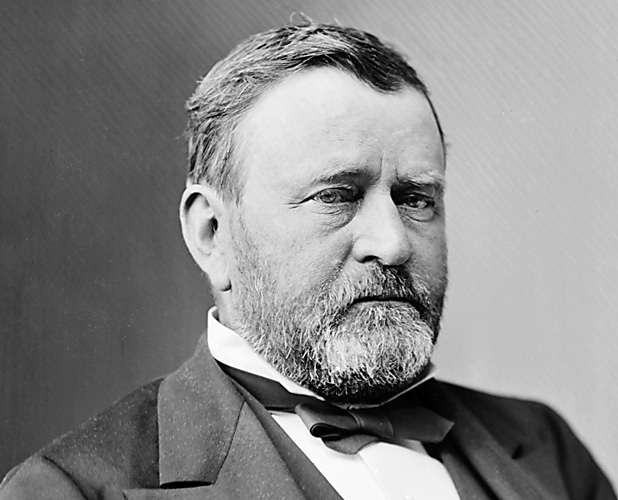
ULYSSES S. GRANT
Julia Grant was spoiled, but she was not petulant, and she weathered the changes in her life brought on by marriage to both an unsuccessful businessman and to a soldier. She reveled in her role as First Lady, and got generally good reviews for her performance as the social leader of the capital. She was not well informed about public affairs, and her occasional attempts to remedy that were not encouraged by her husband, who liked to think of her more as a loving spouse than as a helpmate. One thing was certain, as Berkin emphasizes: Julia and her “Uly” were in love — as much so on the day he died of throat cancer as on the day they were engaged.
Julia Grant, as a widow, was at West Point when she learned that Varina Davis was staying nearby. Julia went to Varina’s room and introduced herself, and the two became friends. It was a suitable gesture for Julia to make, both because Varina had never forgotten the general’s help for her imprisoned husband and because Grant — once the scourge of the South — had left instructions that his casket be carried to its tomb by equal numbers of Union and Confederate generals.
 CharlesPaolino's Blog