Radio days
December 10, 2009

JULIE STEVENS
The announcement by the CBS television network that it had cancelled “As the World Turns” got me to thinking about the soap operas my mother listened to on the radio. In that era, it was common for a radio to be on all day in a house, so what Mom listened to, the rest of us listened to. That is, unless we happened to be in the downstairs kitchen, where we listened to what Grandma listened to — namely, WOV, the Italian radio station in New York.
One of the shows I became quite familiar with was “The Romance of Helen Trent,” which, the announcer reminded us every day, was “the real-life drama of Helen Trent, who, when life mocks her, breaks her hopes, dashes her against the rocks of despair, fights back bravely, successfully, to prove what so many women long to prove, that because a woman is 35 or more, romance in life need not be over, that romance can begin at 35.” That show was on CBS radio from 1933 to 1960, with three actresses — Virginia Clark, Betty Ruth Smith, and Julie Stevens playing Helen. The one I remember was the gorgeous Julie Stevens, who played the Hollywood dress designer from 1944 until the show went off the air and later appeared as reporter Lorelei Kilbourne on the TV series “Big Town.”
DOUGLAS EDWARDS
Another radio show I vividly remember was a unique series called “Wendy Warren and the News,” which was on CBS every day at noon, beginning in 1947.
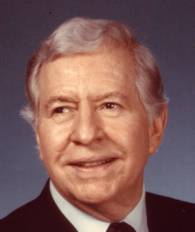
Wendy Warren, who was played by Florence Freeman, was a radio and print journalist, who got involved in all kinds of mysterious and dangerous situations. The show was injected with an unusual element of realism by including an actual daily newscast — with the redoubtable Douglas Edwards as the anchor — and by telling its stories in 24-hour increments. The show, which was broadcast on weekdays, even took the weekends into account in its scripts.

FLORENCE FREEMAN
Time, the news magazine, reported on the show as follows in its edition of July 7, 1947:
Sudsy daytime serials are easy targets for radio’s detractors. But soap operas go on & on because sponsors find them profitable. Last week, an outlandish new jumble of fact & fancy called Wendy Warren and the News (CBS, Mon.-Fri., 12 noon, E.D.T.) tried desperately to vary the formula.
The new twist: CBS Reporter Douglas Edwards leads off with a three-minute summary of the day’s headlines. A girl reporter named “Wendy Warren” (Actress Florence Freeman) follows him, shrills out 45 seconds of “women’s news,” promptly plunges into her tortured fictional love life. By the end of the first broadcast, the new heroine was in an old, all-too-familiar lather. “She turns deathly pale,” the announcer confided, “and, but for Gil Kendal’s ready arm, would fall.”

VIRGINIA PAYNE
I can still hear the announcer’s voice saying, “And now …. Oxydol’s own Ma Perkins.”
This show was broadcast on NBC from 1933 to 1949 and on CBS From 1942 to 1960. In an unusual arrangement, “Ma Perkins” was heard simultaneously on both networks from 1942 to 1949.
Ma Perkins was played by Virginia Payne, who didn’t miss a broadcast in 27 years. Her character, if you can believe it, was a widow who ran a lumber yard in a small town called Rushville. The story line was hometown stuff, all about Ma Perkins’ three children and her relationships with the locals. Payne was only 23 when she took the part, so an older model was used for public appearances at first, and Payne herself dressed up in a wig and spectacles so as not to ruin the image of the kindly old woman. An interesting quirk in this show was that Payne was never identified on the air as the actress in the title role until the final episode in 1960, when she made some farewell remarks at the end of the broadcast.
One more show came to mind today: “Our Gal Sunday.” I heard this one often enough, too, that I can recite the daily introduction. This was “the story that asks the question: Can this girl from a little mining town in the West find happiness as the wife of a wealthy and titled Englishman?”
Sunday, played by Vivian Smolen when I was listening to it, was an orphan who had been raised by two prospectors in a mining camp. She wound up as Lady Brinthrope, married to a titled Brit who lived on the East Coast of the United States. The stories often had to do with the tsurris caused by high-brow women making a play for Sunday’s husband, Lord Henry.
The memories of a misspent youth.

ANN ELSTNER, left, played the iconic radio character Stella Dallas. She is shown with VIVIAN SMOLEN, who played Stella's daughter on that series.
One hell of a sunset
December 9, 2009
DON HASTINGS
I see by the papers, as Phil Cook used to say, that “As the World Turns” has been cancelled by CBS after 13,661 episodes spread over 54 years – most of the history of commercial television. TV blogger Ava Gacser wrote about a sort of personal tie to the show, and there’s a link to her blog on the right of this page.
Like Ava, I took the news personally, and for a similar reason. I was never a daytime drama fan, but I watched “As the World Turns” several times because I was prepping to interview performers who appeared on the show.
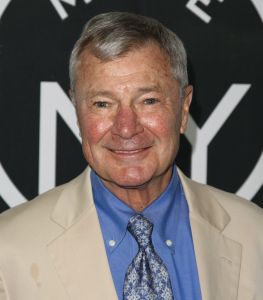
Chief among these was Don Hastings, who has been playing Dr. Robert Hughes for almost 50 years. Hastings has set some kind of record for hours on television. He started out when he was about 16, and in 1949 he started appearing as the second banana on “Captain Video and his Video Ranger,” a live sci-fi show for kids – when I was a kid. Among other gigs, he was on “The Edge of Night” for four years before signing on to “As the World Turns.” He has been one of the constants — maybe the most constant — on the TV screen for the past 60 years.
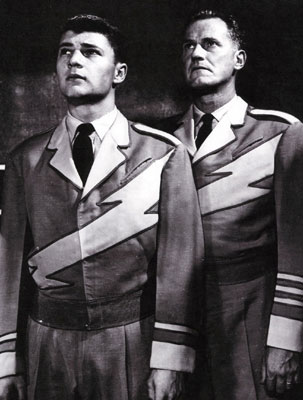
DON HASTINGS and AL HODGE (Captain Video)
I had lunch with Hastings many years ago. The occasion might have been his 25th annivesary on “As the World Turns.” He was a very pleasant man and had a lot of good stories to tell — including anecdotes about fans who had begun to confuse him with Dr. Hughes to the point that the would ask him for medical advice. As crazy as that sounds, that mentality was validated for me once by Joyce Randolph, who told me folks used to send curtains and table cloths to CBS because they thought the Kramdens actually lived in that drab apartment.
Hastings, who is 75, is the brother of Bob Hastings, who has also had a long acting career. His TV debut, by the way, was on “Captain Video.” Bob Hastings, who is about 11 years older than Don, has 144 credits listed on the International Movie Database site.
I also did a telephone interview with Eileen Fulton, when she was marking some benchmark in her “As the World Turns” resume, and I interviewed the gorgeous Lee Meredith, a New Jersey woman who had a short spin on the soap a long time ago. My interview with Lee didn’t have to do with that show, however, but with her role as the sketch nurse in a major production of “The Sunshine Boys.”
GREGG MARX
I also did a lunch interview with Gregg Marx, who in the 1980s had a recurring role on “As the World Turns” as a member of the Hughes family. He won a Daytime Emmy for that part. Gregg is the grandson of Milton “Gummo” Marx – the fourth of the five Marx Brothers. Like Don Hastings, Gregg is a sociable guy, and he was a pleasure to deal with.
For each of these interviews I had to tape the show for a week or so in order to talk intelligently about it to the actors. Fortunately I was working full-time back then. If I hadn’t been, I think I would have become addicted.
Maybe I’ll buy the boxed set.
“Hard to get happy after that one.” — Andy Kaufman (“Taxi”)
December 5, 2009

Sen. JIM BUNNING
Some baseball players lose their edge over time, but Jim Bunning ain’t one of ’em. He can still put them over the plate, as he demonstrated last week in his verbal assault on Ben Bernanke, who was appearing before a U.S. Senate committee that was considering Bernanke’s nomination to continue as head of the Federal Reserve.
Bunning, a Republican senator from Kentucky and one of the most conservative members of Congress, made a statement at the hearing in which he explained not only why Bernanke shouldn’t be reappointed but why — as my brother might put it — he has no reason to exist. Amid a detailed dissection of what Bunning considers Bernanke’s contributions to the nation’s financial crisis, the senator said: “You are the definition of a moral hazard … Your time as Fed Chairman has been a failure.” The complete statement was published by the Huffington Post at THIS link.

JIM BUNNING
Bunning holds a degree in economics, so for all I know he could be right about Bernanke and about Bernanke’s predecessor, Alan Greenspan, for whom the senator has at least as much affection. On the other hand, his political career has been peppered with bizarre incidents and statements, including his prediction of the death of Supreme Court Justice Ruth Ginsburg and his public pronouncement that he doesn’t read newspapers and gets all his information from Fox News. His approval ratings, for what they’re worth, are at present in the sewer. He has been unable to raise campaign funds — which he blames on a conspiracy against him within his own party — and he will not run for reelection.
Well, if his political career hasn’t been exemplary, that fact will never outweigh his baseball career. He was one of the very best pitchers of his time and is a member of the National Baseball Hall of Fame. He could throw strikes — oh, could he ever! He struck out 2,855 batters while walking only 1,000. Bunning was one of only 40 pitchers in the history of baseball to strike out the side by throwing nine pitches — all strikes. Try that sometime.

PAUL WINCHELL and JERRY MAHONEY
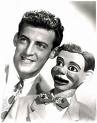
PAUL WINCHELL and JERRY MAHONEY
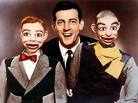
PAUL WINCHELL with JERRY MAHONEY and MORTIMER SNERD
Of men and music
December 2, 2009

PAU GASOL
So Pau Gasol likes opera, and he doesn’t care who knows it. The Lakers star was invited the first time by his boss — and what can you say? But Gasol was hooked, as a lot of people are, and his acquaintance with fellow Spaniard Placido Domingo has added a personal dimension. The LA Times story about Gasol and Domingo is at THIS link.
I was telling someone the other night about Eleanor Gehrig’s account of how her husband — Lou Gehrig — became an opera buff. She wrote in one of her biographies of Gehrig that she convinced him to go with her on condition that it be kept a secret. In the 1930s, Gehrig had good reason to fear that he would be heckled mercilessly if the other players found out that he had been to the Met.
Eleanor picked the tragic Tristan und Isolde and gave Lou a thorough prepping beforehand. During the performance, she glanced over at him and found him totally absorbed, then with tears in his eyes, and finally “an emotional wreck.”

LOU GEHRIG
What Eleanor hadn’t anticipated was that her husband, who had spoken German before he spoke English, was listening to the opera in the original language — not filtered by a half-baked translation such as we are usually subjected to.
Gehrig didn’t only became a frequent visitor at the Met, Eleanor wrote, but she would often come home and find him lying on the floor of their apartment listening to an opera on the radio while he followed along in the libretto.
“I discovered that this was no automaton, no unfeeling giant,” Eleanor wrote. “A sensitive and even soft man who wept while I read him Anna Karenina ….”
I’m guessing the Babe never knew.
 CharlesPaolino's Blog