“I hear you knockin’, but you can’t come in”
July 6, 2009

GALE STORM
It escaped my notice until this morning that Gale Storm died a few days ago at the age of 87.
She was a charming personality on early television; while her series “My Little Margie” was in its first run of 126 episodes, I was getting old enough to notice that she was very cute, too.
I bought a DVD with several episodes of that show. It’s not the kind of comedy that sells today, but it’s still entertaining — especially the conflicts between Margie Albright — Gale Storm’s character — and her father, Vern, played by Charles Farrell. In our household, this series had something for everybody — well, almost everybody. Charles Farrell had been a romantic film star, and he was right up there with Cesar Romero in my mother’s pantheon. I imagine Dad liked Gale Storm’s looks, but if he did, he didn’t say so.
I kind of lost interest in Gale Storm when she went into her second series, “Oh, Susanna,” but I was in high school by then and was spending significantly less time watching television. I rediscovered her when she recorded several hit songs, including “I Hear You Knockin’ ” and “Dark Moon.”
After a couple of setbacks, Gale Storm overcame alcholism, which is always an uplifting thing to hear. Like most people, I suppose, I know several people who struggle with substance addictions. In no case does it appear that they will rid themselves of that problem. I don’t pontificate about such things the way I do about other topics, because I deeply sympathize with the addicted person. I have trouble breaking much less lethal habits, habits that don’t involve substance dependency. I don’t say anything about the habits of others, except in prayer.

GALE STORM and CHARLES FARRELL
“. . . so help me God.”
July 4, 2009

Gov. SARAH PALIN
The decision by Gov. Sarah Palin to resign her office is another indication of the irresponsibility of the Republican Party in nominating her for the vice presidency last year.
Both her resignation itself and the manner in which she has presented it are evidence of her immaturity and lack of intellectual depth. The rationale she presented was that she had decided not to run for re-election next year and that “to embrace the conventional ‘Lame Duck’ status in this particular climate would just be another dose of ‘politics as usual,’ something I campaigned against and will always oppose.” This statement is either disingenuous or it is typical of the governor’s inability to grasp even common ideas. The term “lame duck” refers either to a public official or public body that holds office between an election and the end of its term. The only “lame duck” status Gov. Palin has is the one she has imposed on herself – the period between her announcement and her departure from office on July 26. She would not have had “lame duck” status for a year and a half if she had completed her term. She would have been a lame duck only between the election and the inauguration of her successor .
Explanations by the governor herself and by her spokesperson have been laced with references to the battering Palin has taken in the media and from political commentators since she was nominated for the vice presidency. Spokeswoman Meghan Stapleton, for instance, told Fox News: “This is a move that says, ‘Enough, I’m not going to keep hitting my head against this wall. I’m not playing politics as usual. You go play that game. I’ll go play it another way and at another court,’ so she can get something done and make a difference with the issues and values that are important to her.”
While the governor has been licking her wounds, she has given no reason beyond her resentment and hurt feelings why she should abandoned the trust the voters of Alaska placed in her only 19 months ago. What makes her think she doesn’t owe the state a better explanation? Is she resigning out of pique? Is she resigning so she can launch a campaign for the presidency? Can she even articulate why she is resigning?
The Republican Party had no business nominating this woman for the vice presidency. It was a cynical and desperate political act. By nominating her, the party not only doomed the candidacy of Sen. John McCain, but created in Sarah Palin’s head a wildly distorted idea of her capabilities. It’s a lot to answer for.
There are no small roles.
July 3, 2009

JOHN DILLINGER
Amid all the tsurris about Michael Jackson’s death bubbles the question of how long his fame will endure. He will have done well, it seems, if the public fixation with him lasts as long as its interest in John Dillinger, an anti-social holdup man and murderer who was shot to death 75 years ago. Once Independence Day is out of the way, we can focus our attention on John Dillinger Day, an observance that commemorates his death, which occurred on July 22, 1934.
There are those, of course, who say that it wasn’t Dillinger who was gunned down outside a movie theater in Chicago, and I suppose we’ll have to live with those who will claim that Jackson didn’t die in Los Angeles last week but is living in Buenos Aires with Adolph Hitler, Emilia Earhart, and Elvis Presley. At last, a fourth for bridge.
The reviews in the Christian Science Monitor and the Washington Post are unenthusiastic about the movie “Public Enemies,” in which Johnny Depp portrays Dillinger. Dan Zak writes in the Post:

JOHNNY DEPP
There’s no excitement in the bank-robbing, no thrill of the chase, no emotion over justice served or thwarted. Depp’s Dillinger is neither charming nor despicable, nor does he occupy that delicious gray area between the two. His spree unspools dispassionately, cold as a Colt .380.
Peter Rainer in the Monitor writes:
Mann’s hero-worshipy treatment of Dillinger is undercut by the film’s dreamtime existentialist aura. In reality, the working poor cheered Dillinger’s bank raids but in “Public Enemies” the Depression is just a prop, and so Dillinger’s populist hero status, what little we see of it, makes scant sense. (This is probably why we see so little of it.) Missing, as a result, is the knockabout tumult of a time when gangsters could ascend to the same stardom as the movie actors who played gangsters. Dillinger was, for a while, every bit as big as Jimmy Cagney. Mann pirouettes around the twin realities of the Depression and the star culture it engendered and offers instead a moody blues doominess. It’s a vacuum filling a vacuum.
So Depp becomes neither Clyde Barrow nor Robin Hood. Maybe, in his old age, he can play Bernie Madoff.

GOV. MARK SANFORD
It goes without saying that Gov. Mark Sanford wasn’t the first person to take a powder because of an affair of the heart. What may be more rare is the response from the governor’s wife, Jenny, who quoted the Fourth Psalm and Archbishop Desmond Tutu in explaining to the Associated Press why she might forgive her husband for his transgressions. The archbishop’s take, according to Jenny Sanford, is that “forgiveness is the grace by which you enable the other person to get up, and get up with dignity, to begin anew.” Presumably, Dina McGreevey doesn’t subscribe to this formula.
In a way, Sanford’s adventure has been done to death, but it turns out that the novelist Agatha Christie had a unique take on the unexplained disappearance. She vanished for 11 days in 1926 because her husband was having an affair. After throwing the British public into a panic and providing the newspapers with a sensational story, Christie turned up at a resort hotel where she had registered under the name of her husband’s paramour. This was never publicly explained, but it seems to have been part of an elaborate scheme to prod her husband — who had already asked for a divorce — into reconciling with her. It didn’t work, and she ended up in a satisfactory relationship with another man.
This is all spelled out in a new biography of Christie by Richard Hack. There’s an entertaining review in the Los Angeles Times:
http://www.latimes.com/features/books/la-et-book2-2009jul02,0,2014380.story

AGATHA CHRISTIE
Warp speed and other diversions
July 2, 2009
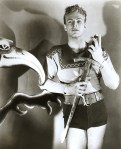
BUSTER CRABBE as Flash Gordon
I once saw a cartoon panel taped to the wall outside a psych professor’s office at Kean University. A man of middle age was slumped in an easy chair in what seemed to be a state of depression. His wife stood over him, hands on her hips, and addressed him more or less as follows: “What I can’t understand is why you would read a book called ‘Oblivion and the Abyss’ in the first place!”
Well, I just got around to reading “Physics of the Impossible” by Michio Kaku, who is a theoretical physicist. In this book, which came out last year, Kaku discusses the possibility that various achievements that human beings have imagined and even tinkered with will become practical realities. We’re talking here about such things as teleportation, telepathy, time travel, invisibility, and visitations from “outer space,” concepts that have been the fodder of science fiction from Jules Verne to Flash Gordon to Star Trek.
I don’t know why I was disappointed; I think I already knew the overall thrust of what Kaku would say. Certain of these concepts – invisibility and teleportation, for example – are not contrary to the known laws of physics and may be achievable within a forseeable amount of time, where what is forseeable might be measured in hundreds of years. (I’m oversimplifying this.) Others, such as travel to other galaxies, are not contrary to the known laws of physics but are beyond the capabilities of a civilization of our rudimentary level of advancement. Still others — perpetual motion and travel into the past, for example — are contrary to the known laws of physics and impossible, period.

SATURN
Intellectually, I’m not surprised, but I’m disappointed nonetheless. I would rather have continued nursing the fantasy, born while I watched Flash Gordon and Doctor Zarkov matching wits with Ming the Merciless, that some day, somehow, I would board a space-going vessel and leave the gravitational pull of this planet, at least for a long weekend.
But Kaku has taken the wind out of my sails, if I may be allowed the metaphor, and I look with a twinge of melancholy at the images of Saturn and her moons being transmitted by the Cassini craft — and particularly the one in which Alpha Centauri gleams in the perpetual night sky far beyond the great planet’s rings (http://saturn.jpl.nasa.gov/index.cfm).
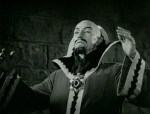
MING THE MERCILESS Charles Middleton
A friend of mine told me a couple of years ago that her employer had reserved a place for her on a voyage into space as soon as such a thing became available to consumers. That would have been all right as far as it went, but the trip envisioned would have been a little more than 300 miles each way. My ambition far exceeded that, and Kaku has made it clear that I was deluding myself.
Well, it was a relatively short time ago that some of the ideas that Kaku fools around with — such as an electron that can be in two places at the same time — were not only unknown but unimagined. So rather than put my vacation to Alpha Centauri out of my mind, I’ll put it on hold. After all, I’m only 66 years old. In the meantime, I still have to see the Grand Canyon.

CASSINI VIEW OF ALPHA CENTAURI OVER THE RINGS OF SATURN
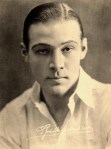
RUDOLPH VALENTINO
I noticed references to a public wake for Michael Jackson, and that got me to thinking about the manner in which previous celebrities of that magnitude have taken their leave, as it were.
I should qualify this observation immediately inasmuch as I’ve been hearing for several days that there has been no other celebrity of that magnitude — and today I heard the Chicago Tribune music critic say that there won’t be another, at least not among singers. These are meaningless statements, of course, because the magnitude of any person’s celebrity is affected by multiple factors, most of them subjective. Enrico Caruso, for example, was treated all over the world as if he were royalty — even by people who had never heard him perform, and 88 years after his death he is still the standard by which male singers are measured. His name, in fact, is a synonym for “male singer.”

BABE RUTH
A man whose status as an international celebrity was emerging just as Caruso died was Babe Ruth. He transcended the sport that his fame was based on to such a degree that Japanese soldiers during World War II, nearly a decade after his career had ended, would shout “to hell with Babe Ruth” as an insult to American servicemen. Like Caruso, Ruth remains the model to whom his successors are compared.
When Ruth died, he had been retired for 14 years. His body lay in state at Yankee Stadium where an estimated 100,000 people of every age and description bid him a solemn farewell. When Francis Cardinal Spellman celebrated Ruth’s funeral mass at St Patrick’s Cathedral in Manhattan, a crowd estimated at 75,000 filled the church and spilled out into the rain-swept streets.
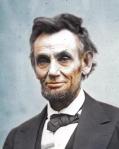
ABRAHAM LINCOLN
It is likely that no outpouring of grief in this nation, at least, has exceeded that which followed the murder of Abraham Lincoln. In retrospect, the reaction was not out of proportion to the importance of his death; in some respects, one might argue, the country has not yet fully recovered, given the debacle of Reconstruction and its aftermath.
Contemporary accounts describe the American people, including many who recently had excoriated Lincoln and his policies, as either numb with shock or crazy with anger. Millions of people stood along the right-of-way as the funeral train carried Lincoln’s body over the 13-day journey from Washington to Springfield.

RUDOLPH VALENTINO
Perhaps the instance that will prove the best analogy for the case of Michael Jackson is that of Rudolph Valentino, the silent film actor whose life and career were as tumultuous and controversial as Jackson’s. Valentino died in 1926 at the age of 31 from complications after surgery for appendicitis and gastric ulcers. His funeral, which was something of a circus, attracted an estimated 100,000 people in the streets of New York, a large number considering the limitations on travel at the time. The crowd erupted in a riot that lasted most of one day and required more than 100 mounted policemen plus police reserves to restore order. Several of Valentino’s fans committed suicide and the actress Pola Negri sent to the funeral home 4,000 roses in an arrangement that spelled out her name. During the wake period, Negri announced that she had been Valentino’s fiancee — something no one else was aware of — and promptly collapsed on his coffin in a fit of hysteria. She followed the funeral train from New York to California and was composed enough to stand for photographs whereever the train stopped.

POLA NEGRI and RUDOLPH VALENTINO
 CharlesPaolino's Blog